REVIEW · BERLIN
Berlin Private Street Art Tour – Off The Grid
Book on Viator →Operated by Alternative Berlin Tours · Bookable on Viator
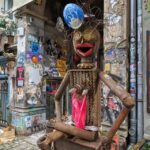
Berlin’s walls talk back. In this private street art and graffiti walk, artists explain the secrets, history, techniques, and the rules behind what you’re seeing—block by block. You’ll cover the street scenes where big murals sit beside tags, throw-ups, stencils, paste-ups, stickers, and the occasional paint-fueled surprise.
I especially love how the tour is guided by working artists. You get the human side—personal stories, how crews think, and what different styles are meant to communicate. You’ll also leave with a clearer map of Berlin’s off-the-grid visual language across Kreuzberg, Friedrichshain, and Schöneberg, not just pretty walls.
The main catch is simple: it’s a 3-hour walk and you need moderate physical fitness. Also, this is not a hop-on bus tour, so cold, rain, and cobblestones can matter more than you’d like.
In This Review
- Key things that make this tour worth your time
- Street art in Berlin works better with a guide than on your own
- The route: start at Wursthain, finish near the U1 in Kreuzberg
- What you’ll actually see: tags, murals, stencils, paste-ups, stickers
- The off-the-grid part: why Berlin’s wall culture has rules
- Trainbombing and the street art myths that get repeated
- Urban Nation: the gallery stop that helps you connect street and studio
- Meet your guide: names you might hear and why the guides matter
- Price and value: what $432.15 per person buys you
- Getting the most from the walk: how to prepare
- Weather and stamina: the one part you can’t ignore
- Who should book this off-the-grid street art tour?
- Quick FAQ before you decide
- FAQ
- How long is the Berlin Private Street Art Tour – Off The Grid?
- Where does the tour start and end?
- What’s included in the tour price?
- Is public transport included?
- Is this a private tour?
- What kind of art will we see?
- Does the tour cover specific neighborhoods?
- What if the weather is bad?
- Is there a fitness requirement?
- How does booking confirmation work?
- Can the tour be canceled after booking?
- Should you book it?
Key things that make this tour worth your time
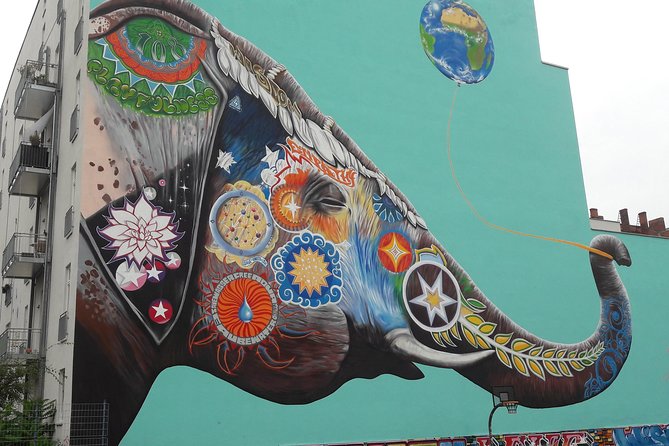
- Artist-led explanations of techniques, rules, and the personal stories behind graffiti and street art
- Off-the-grid focus on what’s happening in the streets right now, not just famous murals
- Covers Kreuzberg, Friedrichshain, and Schöneberg, so you get a spread of Berlin’s visual neighborhoods
- Urban Nation gallery stop included, giving context for what you’ve already seen outside
- See styles up close: tags, throw-ups, stencils, paste-ups, stickers, and huge mural walls
- Private group format, so your guide can tailor pacing and questions for your people
Street art in Berlin works better with a guide than on your own
Berlin street art is everywhere, but spotting it is only half the fun. The real reward is understanding why certain marks appear in certain places and what artists are trying to say—sometimes political, sometimes personal, sometimes just about style and reputation.
On this tour, artists break down the language of walls. You learn how tagging and throw-ups function as fast communication, while stencils and paste-ups can carry ideas in a more designed, repeatable way. You also pick up the smaller craft details that most casual walkers miss, like what makes a piece readable at speed and why some techniques stick to certain surfaces.
I like that you’re not being sent to a checklist of “the most famous spots.” Instead, the tour aims at the best and latest street art and graffiti in the areas you pass through. That means you’re walking with your eyes open, like you’re learning a new dialect while you hear it spoken.
You can also read our reviews of more tours and experiences in Berlin.


The route: start at Wursthain, finish near the U1 in Kreuzberg
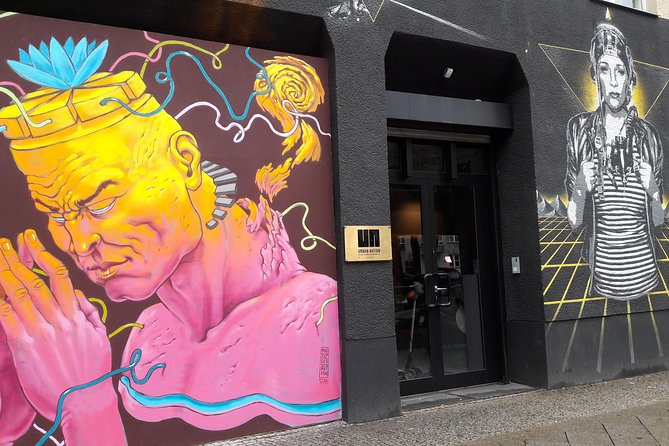
The tour starts at Wursthain, Warschauer Str. 54 (10243 Berlin) at 10:00 am. That’s a good practical time because your morning energy helps you keep moving while the city still feels fresh. It’s also nice because you’re not rushing at the end of the day to cram art stops.
You’ll finish in Kreuzberg, specifically near Wrangelkiez, close to the U1 line. That matters because you can more easily plan your next meal, museum, or transit connection once the tour ends. And since it’s a private tour, the guide can keep the pace steady for your group instead of herding strangers around.
There’s a simple feel to how the route works: you spend enough time in each neighborhood to notice how styles shift from one street to the next. You also get a sense of how Berlin’s walls are used as public boards, personal statements, and sometimes battlegrounds.
What you’ll actually see: tags, murals, stencils, paste-ups, stickers
The promise here is not vague. You’re going to see a mix of new and current street art and graffiti with plenty of variety in scale and technique.
Here’s how the mix typically plays out as you walk:
First, you notice the quick marks—tags and throw-ups. These are usually the fastest to appear and the easiest to miss if you’re only hunting for big art. A good guide helps you see them as signatures and shorthand, not just scribbles.
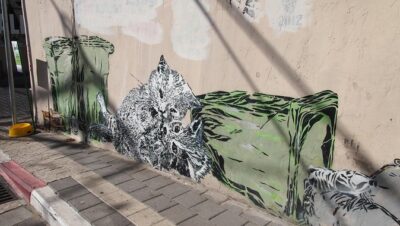
Then you start clocking the more designed methods: stencils and paste-ups. Stencils can look crisp and graphic, but the skill isn’t just in cutting the shape—it’s also in planning how the layers land. Paste-ups and stickers often feel like street-level posters: they can be loud, funny, political, or purely aesthetic.
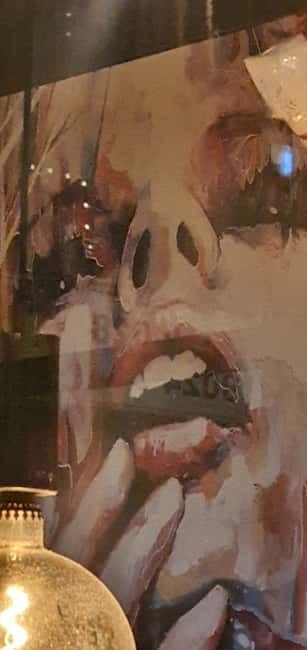
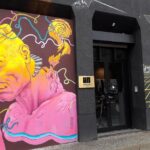
Finally, the bigger murals show up as the “why” behind all that motion. You’ll see huge walls and standout pieces that help you understand how street art can grow from small actions into large visual narratives across a city.
If you’re the type who loves to photograph, this tour is built for that. You’ll get your eyes trained to spot composition, lettering tricks, and recurring visual themes.
The off-the-grid part: why Berlin’s wall culture has rules
One of the most interesting things you learn on this kind of tour is that graffiti isn’t random. There are rules, and there are social systems around those rules—even when the work looks chaotic.
You’ll hear about the history and culture of modern graffiti as well as the modern-day scene in Berlin. Expect explanation of how writers and crews think about visibility, respect, territory, and style. Even if you don’t care about the politics, this part of the tour helps you read the city with more accuracy.
It also helps you understand why some pieces feel like public conversation while others feel like private messaging. That difference is huge. A tagging style can be a name you recognize over time. A stencil or paste-up can be a message you share in one clear hit. A mural can be a long-form statement that turns a whole wall into a chapter.
And yes, you’ll see the kind of “paint energy” that makes Berlin feel like it has a soundtrack—spraycan rhythm, paint drips, and the visual aftermath of someone making art at night.
Trainbombing and the street art myths that get repeated
Berlin has its legends, and one topic that often comes up in street art circles is trainbombing—the idea of tagging in motion and leaving marks where they’ll be seen by more people. Even if you’ve heard the term before, a guide can put it into context: what it means culturally, how it’s tied to visibility, and why it became a defining story of eras in graffiti culture.
The value for you is this: you stop treating street art as just a style and start seeing it as a movement with behavior patterns and consequences. You start to understand why certain locations get attention and why some methods show up where they do.
That context also makes the walking portion more satisfying. When you see a piece, you’re not guessing at the story. Your guide helps you connect the mark to the broader culture that created it.



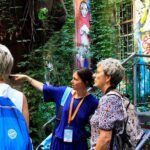

Urban Nation: the gallery stop that helps you connect street and studio
This tour includes the Urban Nation gallery. Think of it as your “translator” between street-level work and the larger art world.
On the street, you see the work in its environment: light, texture, weathering, and the immediate impact of location. In the gallery, the same art forms are presented with context, so you can understand techniques and references more clearly.
For you, that means better looking later. After the tour, you’ll recognize not just the style but also the intent—why something is made, how it relates to earlier movements, and how the city’s wall culture connects to museum-level conversations.
If you’re worried the gallery stop will feel like a detour, it won’t. The tour is designed so you keep building on what you just learned outdoors.
Meet your guide: names you might hear and why the guides matter
This tour is private, so the guide’s personality has real impact. In the feedback you provided, several guide names stand out: Jason, Trevor, Jonathan, JR, Jake, Dave, Antonio, Rob, and Becca.
The strongest common thread is how much energy the guides bring, even when the weather turns unpleasant. Jason, for example, impressed with new insight even for someone who had already visited Berlin a number of times. Trevor’s tour centered on how graffiti and street art communicate, not just what the art looks like. Becca was described as laid back but very knowledgeable, with a pace that worked well for a group outing.
That mix matters because street art is emotional. You’re hearing stories, not just instructions. A guide who makes the walk fun helps you stay focused enough to absorb technique and history as you go.
Price and value: what $432.15 per person buys you
$432.15 per person is not cheap. So here’s how I’d judge value—by what you get for that money in real time.
First, it’s private, meaning only your group participates. You’re not waiting for slow walkers or competing with other people’s questions. In a tour like this, that matters because street art interpretation is personal.
Second, the tour time is about 3 hours, and you pack in both street observation and an included gallery stop. If you were doing this alone, you’d probably spend time searching for the right walls and then guessing at technique and meaning. Here, you get the “why” while you walk.
Third, it’s built around off-the-grid street art—the latest pieces and the best spots your guide can find. Street art changes quickly. Paying for a guide is partly paying for freshness, not just narration.
One thing to consider: you’ll still need your own transit ticket. An AB Metro Ticket is not included, so budget for that if you rely on public transport to get around Berlin.
Getting the most from the walk: how to prepare
You don’t need special gear, but a few choices can make the difference.
Wear shoes you trust for hours of walking. You’ll be on city streets, and Berlin includes uneven sidewalks and cobblestones. Layers help too, since the tour is outdoors for most of the time and it’s best if you’re comfortable enough to stop for explanation and photos.
If you like street art, bring curiosity about letters and symbols. The guides often talk about rules and communication—so pay attention to how artists label, tag, and style their marks. If you only look for murals, you’ll miss a lot of the information that makes the city’s wall culture feel alive.
If you’re traveling with teens or mixed-age adults, this tour can work well. The experience is structured like a walk-through lesson, and the private format makes it easier to adapt to different energy levels.
Weather and stamina: the one part you can’t ignore
The tour notes moderate physical fitness. That’s not a warning sign—it’s a planning hint. You should be able to comfortably walk for about 3 hours, take frequent short pauses, and stand still long enough for the guide to point out details.
Cold or wet weather can turn uncomfortable fast for an outdoor walk. If you go in winter, dress for wind. If you go in shoulder season, bring a small rain layer. Your guide will keep moving, but you don’t want your comfort to become the main topic.
Who should book this off-the-grid street art tour?
I’d recommend this tour if you want a deeper read of Berlin than you can get from an Instagram scroll.
It’s a great fit for:
- First-time visitors who want a new angle on Berlin culture
- Repeat visitors who already know the famous landmarks but want the city’s street language explained
- People who care about technique—letters, stencils, paste-ups, and how styles differ
- Small groups who want a private guide to keep pace and questions focused
It’s less ideal if:
- You want a fully indoor, museum-style experience
- You dislike walking in neighborhoods without a clear route of major sights
- You’re on a tight budget and would rather spend money on transit and a couple of entry tickets
Quick FAQ before you decide
FAQ
How long is the Berlin Private Street Art Tour – Off The Grid?
It runs for about 3 hours.
Where does the tour start and end?
It starts at Wursthain, Warschauer Str. 54, 10243 Berlin and ends in Kreuzberg near Wrangelkiez, close to the U1 line.
What’s included in the tour price?
The tour includes a tour guide and a stop at Urban Nation gallery.
Is public transport included?
No. An AB Metro Ticket is not included.
Is this a private tour?
Yes. It’s private, so only your group participates.
What kind of art will we see?
You’ll see a mix of street art and graffiti, including huge murals, tags, throw-ups, and also stencils, paste-ups, and stickers.
Does the tour cover specific neighborhoods?
Yes. It covers Kreuzberg, Friedrichshain, and Schöneberg.
What if the weather is bad?
The experience is outdoors for a large part of the walk, so dress for conditions. The tour is still designed as a guided walk-through of street art.
Is there a fitness requirement?
It notes moderate physical fitness, since you’ll be walking for the full tour length.
How does booking confirmation work?
You’ll receive confirmation within 48 hours, subject to availability.
Can the tour be canceled after booking?
You can cancel for a full refund up to 24 hours before the start time. If it’s canceled because there aren’t enough passengers, you’ll be offered an alternative or a full refund.
Should you book it?
If you want Berlin’s street art in a way that feels readable—history, techniques, and the logic of the wall—this is an excellent use of a half day. The private format, the off-the-grid focus, and the Urban Nation context make it more than a photo walk.
If you’re fit enough for 3 hours outdoors and you’re willing to handle your own transit ticket, I’d say it’s worth booking early—especially because street art changes fast and you want a guide who’s looking at what’s current, not just what used to be famous.