REVIEW · LONDON
London: Street Art and Graffiti Guided Walking Tour
Book on GetYourGuide →Operated by Alternative London · Bookable on GetYourGuide
Street art turns London streets into open-air galleries. This 2-hour East London walk around Old Spitalfields Market lets you spot work from around 40 acclaimed artists, including Banksy, while the guide explains how the East End shaped the whole scene.
I love that you don’t just look up at walls—you learn how to read them, with the route built for spotting the small stuff as well as the big pieces. One thing to plan for: it’s an outdoor walking tour, so bring rain gear and expect uneven pavement underfoot.
In This Review
- Key points worth knowing before you go
- Why East London street art feels different with a guide
- The White Goat Statue start: where you get your bearings fast
- Spitalfields to Brick Lane: learning to read the walls
- Shoreditch and the 40-artist lineup: from famous names to street-level artistry
- How the guide turns spotting into understanding
- The practical route: pace, timing, and what two hours really gives you
- Price and value: is $33 fair for this kind of tour?
- Workshop add-on: when you want to try the craft (not just watch)
- Who should book this London street art and graffiti walk
- Should you book? My take
- FAQ
- How long is the London Street Art and Graffiti Guided Walking Tour?
- Where do I meet the guide?
- How do I get there from Liverpool Street Station?
- Is the tour suitable for beginners?
- What will I see during the walk?
- Does the tour include any guided workshops?
- What should I bring?
- Is the tour wheelchair accessible?
- What language is the tour guide?
- What’s the cancellation policy?
Key points worth knowing before you go
- Meet at Old Spitalfields Market under the White Goat Statue for a clear, easy start near Liverpool Street
- A focused 2-hour route that connects Spitalfields, Brick Lane, and Shoreditch
- Around 40 artists represented, from big names like Banksy to ROA, Invader, Shepherd Fairey, and Stik
- You get context with each stop—techniques, symbolism, and how the local culture shaped the art
- The tour stays fresh because street art changes constantly, so the walk evolves over time
- You’ll walk outdoors, so pack for weather and bring a layer
Why East London street art feels different with a guide
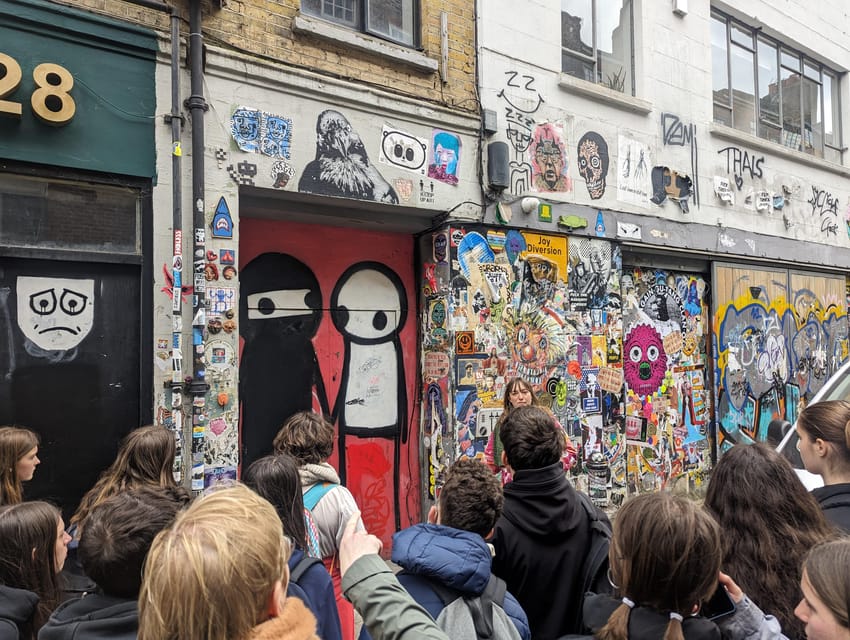
East London street art isn’t random decoration. It’s a running conversation between artists, neighborhoods, politics, pop culture, and whatever’s been happening on the street that week.
On this tour, I like the angle that the guide brings: not only pointing out famous names like Banksy, but also explaining why certain styles show up where they do. That makes the art feel less like a scavenger hunt and more like a living part of London’s identity.
Also, the time window is smart. At two hours, you get enough stops to notice patterns—how tagging differs from murals, how stickers work, how materials and scale change the message—without turning the day into a long slog.
You can also read our reviews of more tours and experiences in London.


The White Goat Statue start: where you get your bearings fast
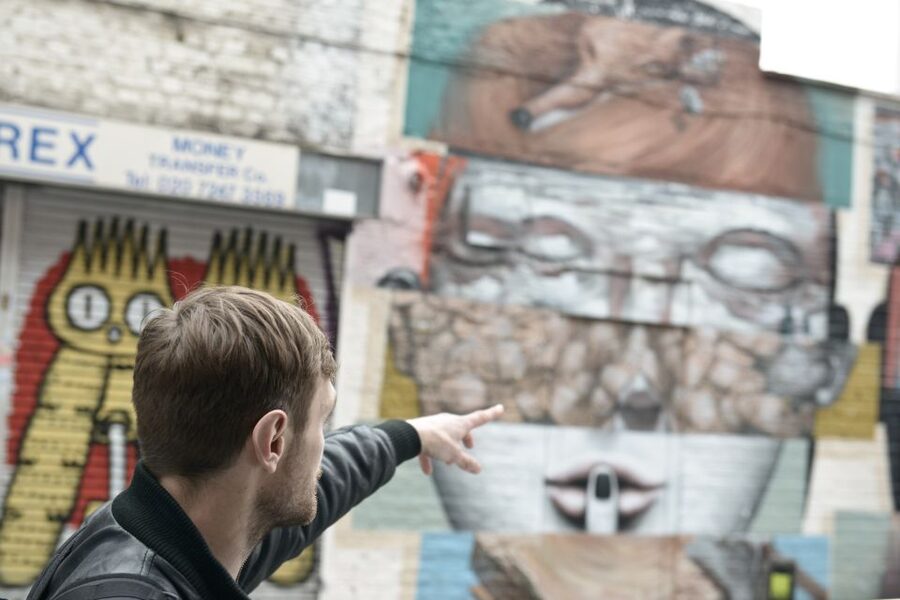
You meet under the White Goat Statue on Brushfield Street, just outside Old Spitalfields Market. The closest tube stop is Liverpool Street Station, and you’ll want to arrive about 10 minutes early so the group can start on time.
This matters more than you might think. A good street-art walk depends on tight timing, because pieces are scattered across different streets and small lanes. Starting from a known landmark helps you settle in right away, especially if you’re pairing this with other London plans afterward.
Expect to begin with a brief setup from the guide—how to approach what you’re seeing, what to notice first, and how the East End story connects to the art. From there, the walking rhythm builds naturally as you move through Spitalfields and toward Brick Lane.
Spitalfields to Brick Lane: learning to read the walls

East London’s street art can look like a collage at first glance. The guide’s job is to slow you down just enough so the images start making sense.
In this stretch, you focus on the East End’s cultural history and how it shaped what artists chose to paint, paste, or tag. You’re not just learning who made a piece—you’re learning the bigger why behind it. That makes famous artists feel less like names on a poster and more like people responding to a place.
You’ll also see the range of styles. The tour is built to include everything from tiny, tucked-away details to larger murals. That variety is key for understanding street art as a whole, because it’s not one single genre. Scale, material, and placement all change the way a message lands.
Practical note: Brick Lane and the nearby streets can be busy. You’ll still get chances for clear looks and photo moments, but you may need to step slightly aside when crowds pass through.
Shoreditch and the 40-artist lineup: from famous names to street-level artistry
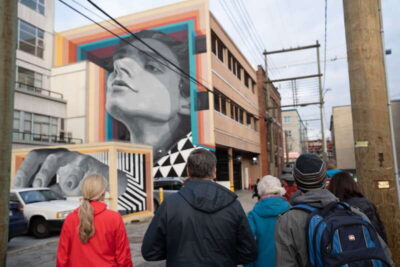
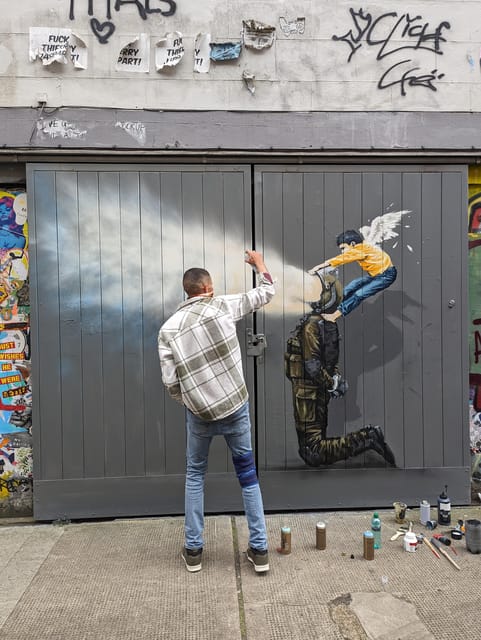
As the walk moves into Shoreditch, the vibe shifts toward what many people associate with modern street art: bolder murals, more visible compositions, and plenty of work that feels designed for discovery on the street.
This is where the tour’s promise—around 40 acclaimed street artists—really starts to click. You’ll hear about major figures in the scene, including ROA, Invader, Shepherd Fairey, and Stik, and you’ll also get context around artists like Banksy as part of the wider story.
What I like here is the mix of local and international influence. The East End has always been a magnet for different communities, and the guide uses that history to explain why the art feels both specific and global at the same time.
You should also know that street art constantly changes. That’s not a problem; it’s the point. The tour route evolves as pieces appear, fade, or get replaced. So if you come back later—or even if you’ve seen street art photos online—you’ll still get something new during your walk.
How the guide turns spotting into understanding
A big part of why this tour scores so high is the teaching style. Multiple guides on this experience are described as enthusiastic and hands-on with the subject, and some are artists themselves. That personal connection shows up in the way they point out small decisions—placement, scale, style, and how different techniques create different meanings.
You’ll hear technical and cultural context too. People on this walk consistently talk about learning the mindset behind tagging and graffiti, and why certain choices matter. That does a lot to reduce the common confusion new viewers have—like thinking the art is only about shock value.
Instead, you start seeing it as communication. Street art can be a protest, a joke, a tribute, a critique, a signal to insiders, or a marker of what a neighborhood felt like at a particular moment. The guide helps you separate what’s just visually striking from what’s intentionally saying something.
And if you like questions, this is the kind of tour that usually supports them. The walk feels more like a conversation than a lecture, which matters because street art is easier to understand when you can ask, What am I missing here?






The practical route: pace, timing, and what two hours really gives you
Two hours sounds short until you’re actually moving through East London and stopping regularly. The pacing is one of the most valuable parts of this tour format.
The guide keeps things flowing, but you still get time to look closely and to re-check details you’d otherwise miss. That’s how the small hidden pieces become rewarding instead of frustrating—because you’re learning what to seek out.
You’ll also come away with local pointers. After a good street-art walk, I like having a mental checklist for how to find more art later: where artists tend to place certain styles, how stickers and smaller works hide in plain sight, and how murals often connect to neighborhood narratives.
Also, expect plenty of photo opportunities. The mix of murals and close-up details gives you both wide shots and interesting zoomed-in frames.
Price and value: is $33 fair for this kind of tour?
At $33 per person for a 2-hour guided walk, the value is strong for one simple reason: the guide compresses context into time you’d otherwise spend chasing on your own.
If you do street art solo, you’ll see plenty—sure. But without someone explaining the references, techniques, and neighborhood history, you tend to miss the layers. Here, you get:
- a concentrated route through the areas most associated with this scene (Spitalfields, Brick Lane, Shoreditch),
- a long list of artists named and contextualized (around 40),
- and an East End history thread that makes the art feel grounded.
Even better, because the street art changes, you’re not just paying for a static gallery tour. You’re paying for a guide who helps you interpret what’s on the walls today.
If you’re the type who likes street art photos but wants more than pretty images, this is a good spend.
Workshop add-on: when you want to try the craft (not just watch)
This experience can also come as a combined walking tour and street art workshop option. There’s a shorter workshop version that runs daily and is listed for age 10 and up, and a longer version for age 12 and up that includes a break.
If some of your group wants to walk while others want to workshop, you can book those options for the same day as separate activities. If anyone in your group is under 16, the workshop info notes they must be accompanied by an adult throughout.
You’ll get the most out of the workshop if you’re interested in the making side—how materials and techniques influence results. If your main goal is seeing and learning the street art culture, the 2-hour walk alone still delivers a lot.
Who should book this London street art and graffiti walk
This is a great fit if:
- you want to see East London street art in a structured way rather than wandering randomly,
- you care about meaning, not just murals,
- you like history connections (how the East End’s past shaped the art),
- and you want a guide who helps you spot details fast.
It’s also ideal for first-timers. You don’t need prior graffiti knowledge to enjoy it, because the guide explains the basics in context as you go.
If you hate walking, have mobility limitations, or simply want to do your own slow photo hunt with zero stopping, you might prefer a self-guided plan. But for most people, the organized pace is exactly why this tour works.
Should you book? My take
Book it if you want street art that comes with stories, names, and “wait, that’s what that means” moments. The best part is the guide-led interpretation: you see more, understand more, and you walk away with a sharper way to look at walls across London.
Don’t book it if you’re only interested in the most famous murals and nothing else. This tour is about culture and context as much as visuals, and the payoff is strongest when you’re willing to look closely.
If your schedule allows and you can bring rain gear, this is an efficient, high-value way to experience East London street art at ground level.
FAQ
How long is the London Street Art and Graffiti Guided Walking Tour?
The tour lasts 2 hours.
Where do I meet the guide?
Meet under the White Goat Statue on Brushfield Street, outside Old Spitalfields Market. The closest station is Liverpool Street Station.
How do I get there from Liverpool Street Station?
Exit Liverpool Street onto Bishopsgate, walk left, then take a right onto Brushfield Street (between Pizza Express and the RBS building). Walk about 100 meters up Brushfield Street. The guide will be under the white goat statue.
Is the tour suitable for beginners?
Yes. The tour is designed to help you understand street art and graffiti culture as you walk, with the guide providing history and context.
What will I see during the walk?
You’ll see East London street art and graffiti from around 40 acclaimed street artists, including Banksy, and you’ll explore areas like Shoreditch and Brick Lane.
Does the tour include any guided workshops?
This activity is available as a combined Walking Tour and Street Art Workshop option, with both shorter and longer workshop versions listed.
What should I bring?
Rain gear is recommended.
Is the tour wheelchair accessible?
Yes, it’s listed as wheelchair accessible.
What language is the tour guide?
The tour guide operates in English.
What’s the cancellation policy?
Free cancellation is available up to 24 hours in advance for a full refund.