REVIEW · LONDON
The Original London Street Art Tour (French)
Book on GetYourGuide →Operated by Alternative London · Bookable on GetYourGuide
East London has stories on every wall, and this tour teaches you how to read them. You start at Old Spitalfields Market, then walk through Shoreditch and Brick Lane while the guide connects the street art to the area’s past, not just the paint. Two things I really like: the chance to see street art and tags up close from 40+ artists, and the way guides such as Laura and Gabriel bring the subject alive with clear, sometimes funny, explanations in French.
The only real catch is time. At 1.5 hours (the tour is also described as a 2-hour walk), it’s a lot of walls for a short window, so you’ll have less chance to linger on any one piece.
In This Review
- Key things you’ll notice on this tour
- Old Spitalfields Market: the best starting line for East End art
- Spitalfields to Brick Lane: tags, stencils, and the art of staying readable
- Shoreditch’s alt scenes: where the route feels like a living gallery
- The 40+ artists promise: value comes from context, not just photos
- Guides in French who actually teach: Laura and Gabriel’s approach
- How to pace yourself on a 1.5-hour street art walk
- Who this tour is best for (and who should skip it)
- Should you book the Original London Street Art Tour (French)?
- FAQ
- What’s the price of the tour?
- How long is the tour?
- Where do I meet the guide?
- What language is the tour in?
- Which areas of East London does the route cover?
- Is the tour about specific street artists?
- Is it wheelchair accessible and can I cancel?
Key things you’ll notice on this tour
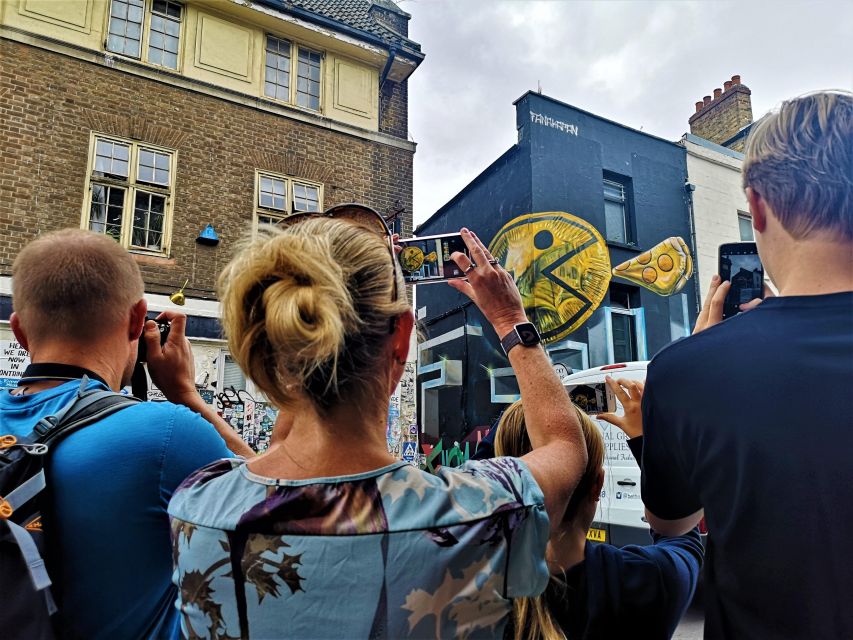
- Old Spitalfields Market meeting point: you meet by the statue with the white goat on top, just outside the City of London.
- Spitalfields to Brick Lane to Shoreditch: you cover the core East London zones where street art is everywhere.
- 40+ street artists on the route: you’ll spot work tied to big names such as Banksy, ROA, Invader, Shepherd Fairy, and Eine, plus others like Stik, Borondo, and Cranio.
- Street art techniques and context: you learn how graffiti and urban art connect to the East End’s culture and history.
- Tours can feel different: because street art changes, the route evolves on a regular basis.
- French-language live guide and wheelchair accessibility make it a straightforward, guided outing.
Old Spitalfields Market: the best starting line for East End art
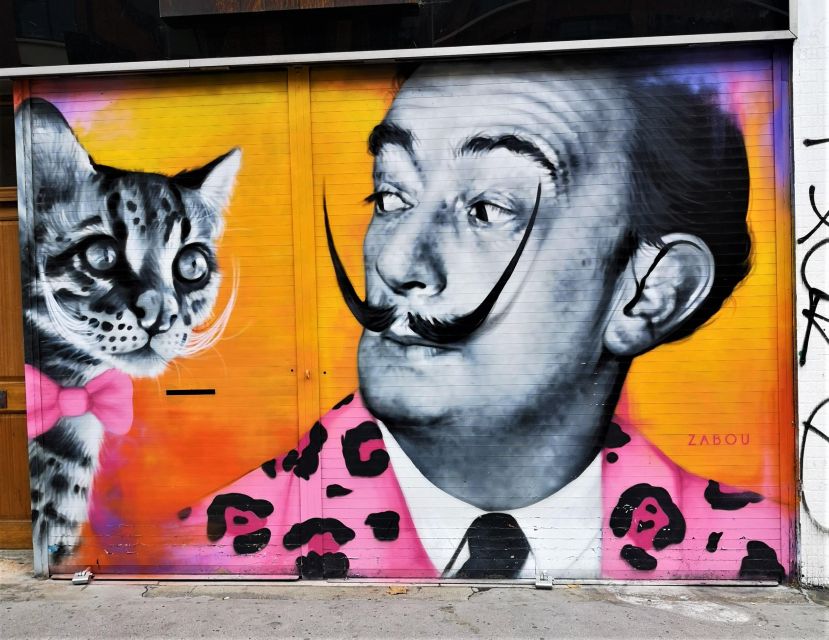
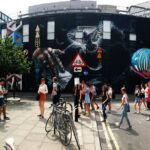
I like meeting a street tour in a place that actually makes sense for the story. Here, you begin near Old Spitalfields Market, just outside London’s historic financial district (the City). That location matters because it sets up the core theme: the East End has always been about work, migration, industry, and local identity. The guide then uses the streets as a living archive.
In practical terms, this is a good kind of start point: easy to find, not tucked in a random alley, and close to the neighborhoods you’ll actually walk through. Expect the vibe to shift quickly once you’re moving, because East London street art is not staged like a museum display. It’s layered into daily life.
You’ll also get the “how to look” foundation early. Instead of just naming artists, the guide explains street art as part of a broader graffiti culture. That makes the whole walk more rewarding, because you start noticing why something is there and how it’s done—not just what it looks like.
You can also read our reviews of more tours and experiences in London.

Spitalfields to Brick Lane: tags, stencils, and the art of staying readable
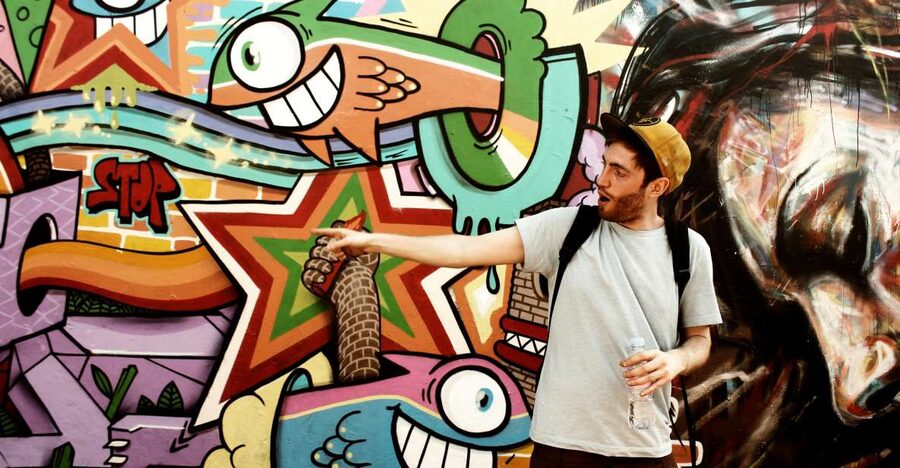
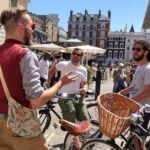
Once you’re walking, the route heads toward Brick Lane, with stops in streets covered in street art and graffiti-style tags. This is where the tour earns its keep. A 1.5-hour walk could easily turn into a blur of photos. Instead, the guide’s job is to slow you down just enough to spot patterns.
What you can look for (and what the guide helps you interpret) is the difference between styles and approaches. The tour focuses on urban art and graffiti culture, including the history behind how these works show up. One review specifically mentions learning about the neighborhood where there’s an endless quantity of works, plus the different techniques used—so you’re not only pointing at murals, you’re being taught what to pay attention to.
Brick Lane also matters because it’s a gateway into the East London street art “texture.” You’ll see street art that ranges from bold, recognizable imagery to more signature tag work. That variety is a big part of why I think this tour is smart for first-timers: it gives you a language for the scene rather than just a list of famous names.
A small consideration: if you have one or two specific works you’re hoping to find, don’t count on it. Street art constantly changes, and this tour is designed to match what’s there now, not to guarantee one exact wall.
Shoreditch’s alt scenes: where the route feels like a living gallery
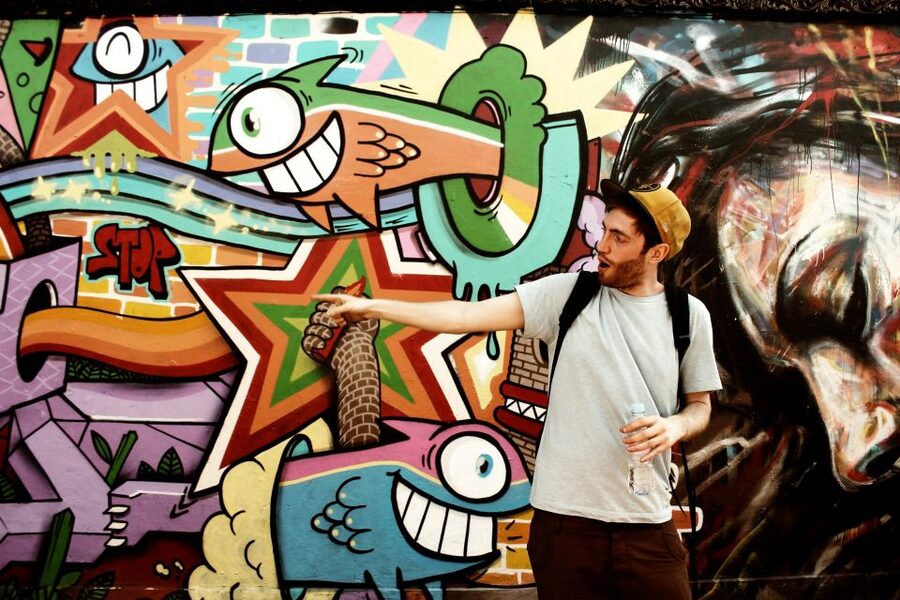
From Spitalfields and Brick Lane, you continue into Shoreditch, another key area for alternative scenes. This is where the tour leans into the idea that East London street art is tied to local energy and creative subcultures.
I like Shoreditch routes because the visuals are immediate: you’ll typically notice more layers, more variety, and more pieces that look like they’re part of an ongoing conversation. And that’s exactly the point here. The guide frames the art in a way that connects famous street artists to the broader local context of tags, stencils, and graffiti culture.
You’ll also get education on the “big names” without turning it into a history lecture. The tour specifically includes artists such as Banksy, ROA, Invader, Shepherd Fairy, and Eine. Those names are useful anchors. Once you’ve heard how they fit into the culture and style world, you can start recognizing how other artists use similar techniques or themes—even when the artwork isn’t tied to a single headline name.
The best part of this section is the balance: you get both art recognition and neighborhood context. That’s why the walk feels less like sightseeing and more like learning how to decode what you’re seeing.
The 40+ artists promise: value comes from context, not just photos
The tour highlights street art from more than 40 acclaimed street artists. On paper, that sounds like a lot. In a good street art tour, it also means something important: you’ll move through enough variety to see how styles differ across works, walls, and creators.
For value, think of it this way. At $26 per person, you’re paying for two things:
1) a structured walk across the art-dense East London zones, and
2) a guide who can explain what you’re looking at.
If you try to do this on your own, you can absolutely find street art in these areas. But the learning part—the connections between artists, techniques, and place—takes effort. This tour compresses that into a short guided format.
Also, the route evolves. Street art is constantly changing, and the tour is designed to evolve regularly. That means your experience isn’t tied to one fixed set of images. You’re seeing a snapshot of East London street culture as it exists today, guided by someone who knows the scene.
So yes, you’ll likely take plenty of photos. But the real “wow” tends to come from noticing details you would miss otherwise—like technique choices and how certain styles signal a specific street art identity.
Guides in French who actually teach: Laura and Gabriel’s approach
This tour is in French, with a live guide. Language matters because street art is full of references and cultural nuance. The benefit of French here is that the guide can explain what the images mean in the context of the community and the broader street art world.
The guide style shown in the experience data is also a big reason people rank this tour highly. One guide highlighted in the provided feedback is Laura, praised for telling details of street art with passion and humor. Another is Gabriel, described as very interesting, clear with explanations, and strong on historical context. There’s also a specific point that the guides are young artists, and that they teach techniques and the history of the area—so you get a mix of street-level credibility and real teaching.
For you, that translates to an easier experience. You’re not stuck trying to decode every piece alone. The guide sets you up to see patterns. And because it’s a walking tour, the explanation comes exactly when you’re looking at the relevant art.
If you don’t speak French well, you might still follow some visuals, but the teaching side is likely to be the main value.






How to pace yourself on a 1.5-hour street art walk
A short tour can be either great or exhausting. Here’s how to make it work for you.
First: wear comfortable shoes. This is a walking route across East London streets with frequent stopping. Even if the tour feels “compact,” you’ll still be on pavement for much of it.
Second: go in ready to look up. Street art can be at eye level, but plenty of it sits higher on walls, near corners, or around building edges. If your phone is glued to your hand at all times, you’ll miss the guide’s cues about technique and meaning.
Third: decide what you want from the experience. If you want names, styles, and a guided map of where to look next, you’ll be happy. If you want slow art gazing, you may wish the walk were longer—one piece of feedback notes it felt almost too short. That’s the trade: you get a concentrated overview, not a full day of wandering.
Finally: embrace the change. Street art is not static. If you see something covered or different from what you expected, that’s part of the reality of the scene, and it’s why these tours can feel fresh over time.
Who this tour is best for (and who should skip it)
This is a strong pick if:
- you want a fast, structured introduction to East London street art without planning a custom route
- you like learning about street art in a cultural and neighborhood context, not just a photo hunt
- you’re comfortable with a French-language guide
You might not love it if:
- you only travel with English-language tours and don’t want a French-only experience
- you’re the type who needs lots of time to sit with art—this walk is short
- you’re fixated on finding one exact artwork, since street art changes constantly
Should you book the Original London Street Art Tour (French)?
I’d book it if you want an efficient, guided way to see major street art areas—Spitalfields, Brick Lane, and Shoreditch—while learning what’s behind the imagery. The best reason is the combination of 40+ artists you’ll encounter and the guide-led explanations, including coverage of big names like Banksy, ROA, Invader, Shepherd Fairy, and Eine.
Book with caution if French is a barrier for you, or if you want a long, unhurried art walk. For everyone else who likes street art, this is good value: short enough to fit a busy day, focused enough that you’ll come away understanding more than you would from random wandering.
FAQ
What’s the price of the tour?
It costs $26 per person.
How long is the tour?
The duration is listed as 1.5 hours, and it’s also described as a 2-hour walking tour, so plan for a short, fast-paced walk. Check available starting times.
Where do I meet the guide?
Meet by the statue with the white goat on top, near Old Spitalfields Market.
What language is the tour in?
The live tour guide speaks French.
Which areas of East London does the route cover?
The walk focuses on East London street art, including Shoreditch and Brick Lane, starting from the Old Spitalfields Market area.
Is the tour about specific street artists?
Yes. The tour includes learning about street art by Banksy, ROA, Invader, Shepherd Fairy, and Eine, and you’ll also see work by many other acclaimed artists.
Is it wheelchair accessible and can I cancel?
It is wheelchair accessible. Free cancellation is available up to 24 hours in advance for a full refund.