REVIEW · LONDON
East End London Instagrammable Street Art and Graffiti Tour
Book on Viator →Operated by Tours by Foot London · Bookable on Viator
Street art makes East London feel alive. This 2-hour East End walk is built around Instagrammable street art and the behind-the-scenes stories—from graffiti wars to artists you’ll spot again and again—plus a moment to make your own street art.
I really like the way the route mixes huge wall pieces (easy to photograph) with small, fussy details you’d miss if you were wandering alone. I also enjoy the conversation side, especially at the Banksy viewing spot, where the guide encourages you to talk about art choices and what happens when work gets protected or moved. One consideration: a few stops involve narrow yards and tucked-in corners, so if you don’t love tight spaces, wear shoes you trust and keep an eye on where you step.
In This Review
- Key Things to Know Before You Go
- Starting Point at Whitechapel High Street: A Practical Launch
- What You’re Really Paying For: Guidance, Photo Angles, and Context
- Heneage Street: Big Hidden Walls and Phlegm’s Long-Creature World
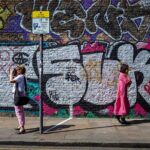
- Brick Lane Photo Angles: Door-Scale Pieces and the Need to Step Forward
- The Seven Stars: Stickers, Narrow Yards, and Making Yourself Part of the Art
- Princelet Street: Art for Community, Even After Defacing
- Hanbury Street: The Bird, the Handstand Figure, and Catching a Whole Scene
- Dray Walk and the Broccoli Craze: From Joke to Local Landmark
- Allen’s Gardens: A Graffiti Park Where Letters Become the Challenge
- Buxton Street and Ebor Street: Collaborations, Portraits, and Two Different Letter Styles
- Rivington Street: Banksy Behind Glass, Plus Otto Schade’s Ribbon Soldier
- Thierry Noir Heads and the City Edge: Street Art That Shows Up in Any Weather
- Art’otel Hoxton: When Street Art Gets Taken Away and Reinstated
- Shakespeare Bench and Romeo and Juliet Graffiti: Culture Collides with Pop Art
- New Inn Broadway Wallpaper Walls: Many Artists in One Big Building
- Finishing Near Liverpool Street: Wrap-Up and Why the End Matters
- Value for Money: Is $49 a Fair Deal?
- Who This Tour Suits Best
- Should You Book This East End London Street Art Tour?
- FAQ
- How long is the East End London Instagrammable Street Art and Graffiti Tour?
- How much does the tour cost?
- Where does the tour start?
- Where does the tour end?
- What time does the tour start?
- Is there a mobile ticket?
- Is making your own street art included?
- What is the group size limit?
- What is the cancellation policy?
Key Things to Know Before You Go
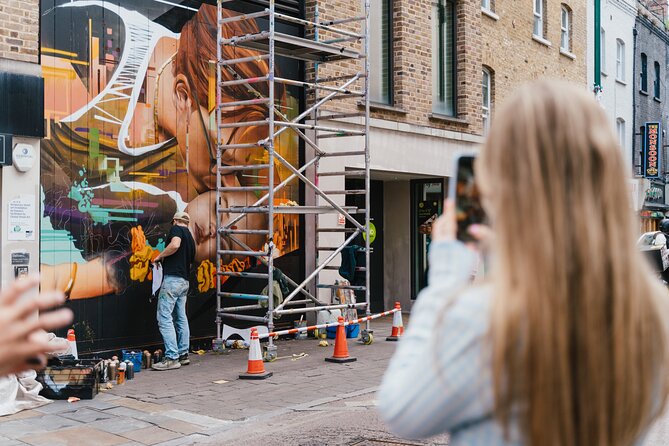
- Max 20 people keeps the walk manageable and photo stops less crowded.
- From Whitechapel to Liverpool Street area means you’ll see street art along the way to a very different city skyline feel.
- Artists you can identify fast: Phlegm, FanakaPan, ROA, Ben Eine, Otto Schade, Thierry Noir, and more.
- Banksy has a dedicated, discussion-focused stop with a recognizable presentation style.
- You get hands-on time to make your own street art during the tour.
- Street art changes over time at some locations, so bringing your camera-ready attitude matters.
Starting Point at Whitechapel High Street: A Practical Launch
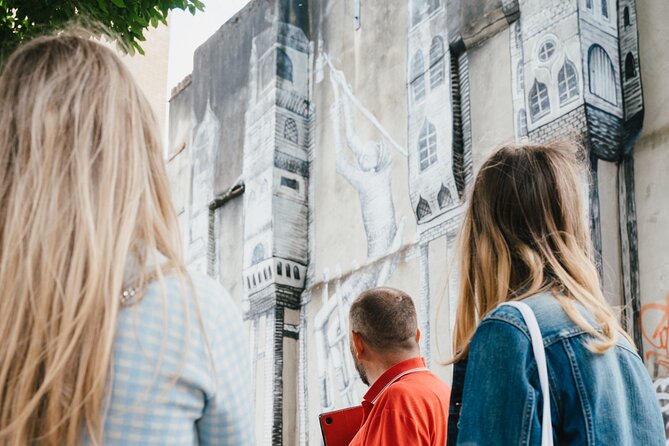
The tour starts at 80 Whitechapel High St (E1 7QX) at 11:00 am, and you end near Liverpool Street Station (the exact finish can shift depending on what’s on view). That’s a smart setup. You begin where the East End is already active, then you work toward one of the easiest transport hubs in London.
The whole thing runs about 2 hours, so you’re not committing to a half-day. And with mobile tickets, you can focus on the art instead of digging for paper confirmations. Small detail, big peace of mind.
You can also read our reviews of more tours and experiences in London.
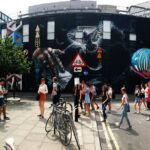
What You’re Really Paying For: Guidance, Photo Angles, and Context
At $49 per person, this isn’t just a casual look-around. You’re paying for a local guide who knows where to stand for the right angles, what to notice up close, and how to read the story behind each wall.
A lot of the stops are visually free to see from the outside, but guidance is what turns random graffiti into something you can actually follow. You’ll also get time to pose for photos with the street art as your backdrop, and you’ll learn a bit about past graffiti culture—then try making your own design.
If your goal is purely to take quick pictures and move on, you might feel like you could do it solo. If you want the “why” behind the “wow,” this format makes sense.
Heneage Street: Big Hidden Walls and Phlegm’s Long-Creature World
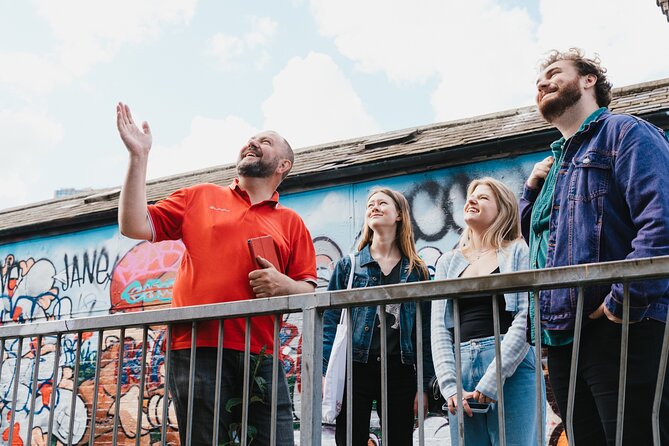
The walk begins with Heneage Street, where the best pieces aren’t on the main strip. You’ll look into small backyards for a couple of huge works that fill a full building wall.
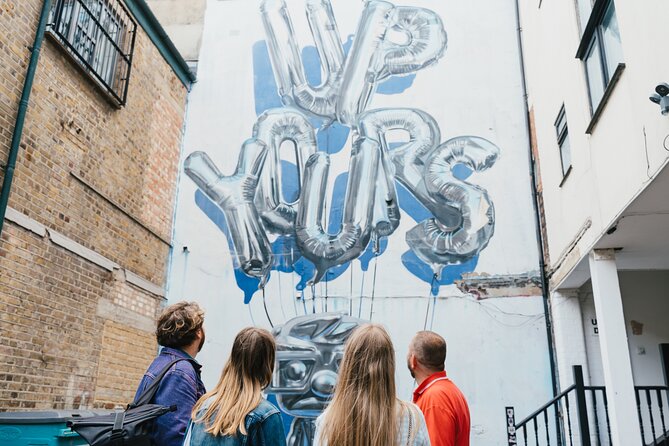
One highlight is Phlegm, whose signature long creatures stride above layers of other tags—so you get both scale and hierarchy in the same view. Across the street, you’ll also find FanakaPan, recognized for silver helium-balloon imagery that feels like it floats into the scene rather than sits on the wall. The practical takeaway here: you should literally look up. These pieces reward the “head tilted” posture.
Possible drawback at this stage: since some art is set back behind entrances, it can feel a bit hidden on purpose. Keep close to the guide so you don’t miss the access points.
Brick Lane Photo Angles: Door-Scale Pieces and the Need to Step Forward
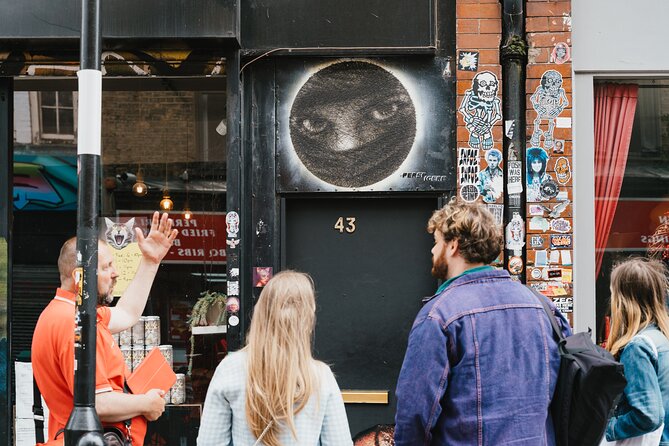
Next up is Brick Lane, where perspective matters. You start from a distance to take in larger-looking work, then you’re guided toward a closer view on smaller formats—especially pieces placed on doors.
This stop is a reminder that street art isn’t only about big murals. It’s also about technique: where the lettering is placed, how details survive on small surfaces, and how the composition changes once you step into it. The guide’s approach helps you notice technical choices you’d otherwise gloss over.
Tip for your photos: if a piece looks cool from far away, don’t assume it ends there. This route actively pushes you to find multiple viewpoints.
The Seven Stars: Stickers, Narrow Yards, and Making Yourself Part of the Art
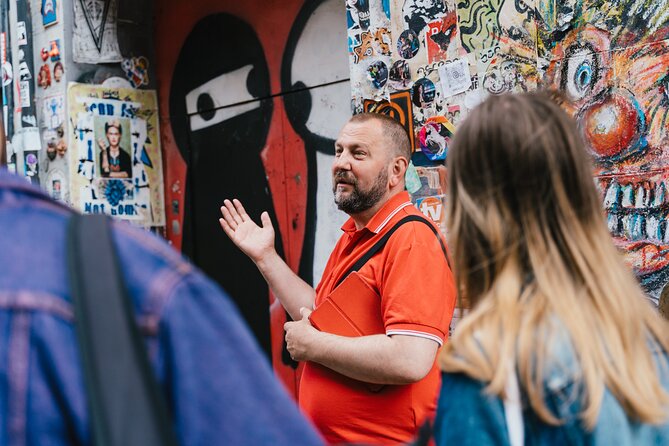
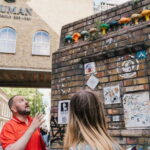
You turn from the street into a dirty, narrow yard, which can feel a little intimidating at first—but that’s the point of the space. Here, stickers are an art form in their own right, and the vibe shifts from murals and wall sculptures to something more like collage culture.
The idea of becoming the eighth star fits the mood. You’re not just observing; you’re encouraged to contribute in a fun, playful way. It’s a stop that often works well for both photo lovers and people who like the culture behind street posting.
Consideration: because this is a tucked-in yard environment, keep your footing and watch for damp spots. It’s London; the weather changes fast.





Princelet Street: Art for Community, Even After Defacing
On Princelet Street, the tour slows down for something with community meaning. You’ll see a work by Stik dedicated to the Muslim community, tied to the East End’s history of refugees and immigrants making the area home.
One of the most compelling aspects here is resilience. The piece has been defaced a few times, but it’s also been repainted, which turns the artwork into an ongoing conversation with the neighborhood rather than a one-and-done painting.
If you like street art that has real emotional weight, this is one of the stops that sticks with you.
Hanbury Street: The Bird, the Handstand Figure, and Catching a Whole Scene
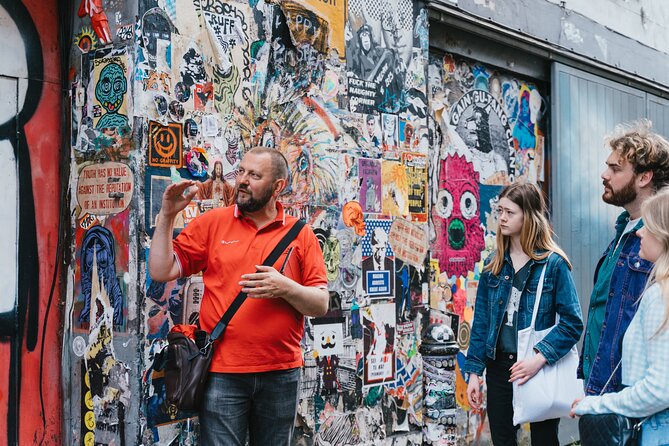
As you approach Hanbury Street, you’ll notice a huge bird on a side street—and then realize the area offers multiple layers. You’ll see stickers, black-and-white slogans, smaller graffiti that can change, and two major long-standing works.
The bird by ROA is a first-class “look up, then look again” moment. Then there’s a man upside down by Martin Ron, noted as being around for roughly 20 years in graffiti time (which is ancient, relatively speaking). The technical point the guide brings out is how the artist incorporates the existing building features—so the artwork feels like it’s grown with the wall.
This stop is a great example of why a guided walk beats a free wander. Once you start spotting the layers, you’ll want someone to help you prioritize what matters.
Dray Walk and the Broccoli Craze: From Joke to Local Landmark
At Dray Walk, you’ll run into the broccoli theme—starting with one attached to the wall and tied to the long-running trend on this stretch. Some broccoli pieces are realistic; others show up in rainbow colors, and here it becomes part of the street’s identity.
The guide points out that the artist Adrian Boswell started the trend, and even offers a framed-goods style of the idea through his own gallery. You get a sense of how street art can be both street-level play and career fuel.
This is the stop I’d recommend if you’re traveling with someone who thinks graffiti is only chaos. The broccoli concept is playful and human.
Allen’s Gardens: A Graffiti Park Where Letters Become the Challenge
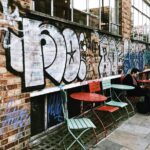
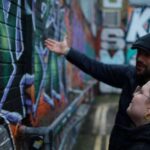
Now the tour steps into Allen’s Gardens, a graffiti park surrounded by walls full of work. Here, a lot of the art is done by writers who focus on letters, and the result can be almost impossible to read.
That sounds frustrating until you try it with the guide’s framing. The challenge is the point: can you appreciate color, movement, style, and composition even when the message isn’t readable like normal text?
A key thing to know: some pieces change quickly—every few days—so you’re encouraged to take photos while you’re there, because another layer may cover the current one.
If you hate the feeling of time pressure, this is still manageable. Just treat it like a living gallery: shoot, observe, and move on.
Buxton Street and Ebor Street: Collaborations, Portraits, and Two Different Letter Styles
From the park, you’ll see more. At Buxton Street, the tour highlights a section that appears to be a collaboration—more than one artist working together—plus you’ll be directed to look up for a recognizable number detail.
Then you shift to Ebor Street, where the mood turns more modern and trendy while the street art keeps showing up. You’ll see large-format painted adverts by graffiti artists and smaller pieces, including pink portraits by Neon that create faces almost like they’re drifting across the wall.
Later on the same street, the tour swings to Ben Eine, whose bold letters are designed to be readable from a distance. The style is consistent across works, but the fonts change—curved, elaborate, sharp, square—so it feels like the same language spoken in different dialects.
This contrast is worth paying attention to. It helps you see that graffiti isn’t one thing. It can be mural narrative, letter craft, advertising-style art, or portrait storytelling.
Rivington Street: Banksy Behind Glass, Plus Otto Schade’s Ribbon Soldier
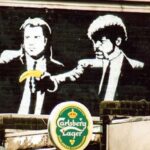
No street art walk here would be complete without Banksy. On Rivington Street, you’ll be taken to a secret place to see older Banksy works alongside other less-famous but strong pieces.
You’ll recognize Banksy pieces by a glass panel presentation. The guide doesn’t treat this as a simple fact-and-photo stop; you’re invited to discuss whether the glass protection makes sense and what it does to the artwork’s meaning in the moment.
It’s one of the most interesting parts of the tour because it’s a real-world art market question, not just an aesthetic one.
Then you’ll look again for another Otto Schade piece: half of a soldier from one angle, and a full view if you stand correctly on the corner. Otto Schade’s work often looks like it’s made out of ribbons, and the guide frames it as full of energy even when it seems empty inside. The stencil technique here is part of the visual trick.
Thierry Noir Heads and the City Edge: Street Art That Shows Up in Any Weather
Still on Rivington Street, you’ll see Thierry Noir. His colorful heads have been brightening walls for over 40 years, and the guide ties his broader work to his influence—including being known for groundbreaking art linked to the Berlin Wall in the 1980s.
In London, the key idea is simple: these characters show up whether the weather is good or not. Even when you’re tired of gray skies, bright faces can keep your mood moving.
Finally, the walk pushes toward Shoreditch High Street, transitioning from the older, scrappier art area to the glass-and-metal skyscraper feel of the City. The guide ends with one last story about graffiti wars, showing how conflict can produce new styles and bigger statements.
Art’otel Hoxton: When Street Art Gets Taken Away and Reinstated
At art’otel London Hoxton (Powered by Radisson Hotels), you’ll see an “archaeological” chapter of East London street art. A Banksy wall piece was painted earlier, then removed from its original spot and later reinstated where people can view it.
The point here isn’t whether you love the hotel context. The value is in seeing how street art can be treated as cultural material once the world decides it matters. The guide points out that it’s out in the street for everyone to view and discuss.
If you’re on the fence about street art in commercial spaces, this stop gives you something concrete to judge with your own eyes.
Shakespeare Bench and Romeo and Juliet Graffiti: Culture Collides with Pop Art
The tour takes a neat turn at Hewett Street, where you encounter William Shakespeare sitting on a bench marking the Curtain Theatre grounds. Next to the theatre area, you’ll also notice a graffiti of Romeo and Juliet, tied to the story as something people first heard here.
This stop works because it mixes old-world London with street-level reinterpretation. You’re reminded that urban culture doesn’t only live in museums; it also gets rewritten on walls, by modern hands.
It’s a good “breather” before the route finishes with more large-scale wall coverage.
New Inn Broadway Wallpaper Walls: Many Artists in One Big Building
At New Inn Broadway, you’ll face a building that’s basically covered like graffiti wallpaper—different color palettes, different styles, and different inspirations all layered together. Even a small policeman appears in the mix.
This is the stop for people who like variety without needing one central story. It’s “scan the whole wall” fun, and it photographs well from a step back distance to catch the overall design.
Finishing Near Liverpool Street: Wrap-Up and Why the End Matters
The tour ends within walking distance of Liverpool Street Station, so you’re not stuck in the middle of nowhere when your legs want a break. Since the finish can change depending on what art is currently on view, don’t plan a tight connection immediately afterward.
For your schedule, give yourself some wiggle room. That’s the best way to avoid stress when street art shifts.
Value for Money: Is $49 a Fair Deal?
For $49, you’re getting:
- A local guided walk with practical pointing and photo help
- Multiple stops with major artists and different styles
- Time that includes making your own street art
- A format that caps at 20 people, which usually keeps the tour more attentive
Many street art spots are free to look at on your own, but solo walking rarely gives you the context or the best angles. Also, the tour’s discussion component—especially around Banksy’s glass-panel presentation and the graffiti wars framing—adds something you can’t easily replicate by yourself.
The value is highest if you care about street art as culture, not just as decoration. If you only want a quick photo run, you might decide it’s more efficient to explore independently.
Who This Tour Suits Best
This is a strong fit if you want:
- Photo-friendly street art stops with guidance
- A mix of famous names and lesser-known works
- Clear explanations tying art to place, community, and conflict
- A hands-on moment to try making something
It’s also a good option for groups that vary in taste. The tour includes big murals, letter-focused graffiti parks, sticker collage energy, and pop culture crossover with Shakespeare.
Should You Book This East End London Street Art Tour?
I’d book it if you want East End street art with structure. The best part isn’t only the names on walls—it’s the way you’re taught how to look, where to stand, and how to interpret what you see, including the tricky conversations around Banksy’s presentation.
I’d think twice if you dislike walking for about two hours with outdoor stops, or if narrow yards make you uneasy. In that case, you can still enjoy the concept, but wear careful shoes and go with a calm, flexible mindset.
If you’re the kind of person who likes learning how cities tell stories through paint, stickers, and letter craft, this one is easy to justify.
FAQ
How long is the East End London Instagrammable Street Art and Graffiti Tour?
It lasts about 2 hours.
How much does the tour cost?
The price is $49.00 per person.
Where does the tour start?
It starts at 80 Whitechapel High St, London E1 7QX, UK.
Where does the tour end?
It ends at Liverpool Street Station, London EC2M 7QA, UK. The exact end point can change, but it should finish within walking distance of Liverpool Street Station.
What time does the tour start?
The start time is 11:00 am.
Is there a mobile ticket?
Yes, the tour includes a mobile ticket.
Is making your own street art included?
Yes. The tour includes an opportunity to make your own street art.
What is the group size limit?
The tour has a maximum of 20 travelers.
What is the cancellation policy?
You can cancel for a full refund up to 24 hours before the experience’s start time. If you cancel less than 24 hours before, the amount paid won’t be refunded.