REVIEW · LONDON
The Original London Street Art Tour
Book on Viator →Operated by Alternative London · Bookable on Viator
Street art feels personal on this guided walk. You get a local artist guide who points out why specific pieces matter, and you stop often enough to snap photos without rushing. Two big wins for me are that you don’t have to map the route yourself, and you get explanations you’d never guess just by looking. The only real catch: the group can run up to 18 people, so if you hate crowds, you may want to treat this like a popular small-group tour.
This is also a smart value play. For about $27.73, you’re paying for a focused 2-hour route where the guide does the talking and the route makes sense on foot, plus it runs in all weather. You’ll finish with a sharper eye for tags, slap-and-paste style pieces, and how East End history shapes what shows up on walls.
Plan on a moderate pace and comfy shoes. You’ll walk between neighborhoods where street art is part of daily life, and you’ll end near Hessel Street—so it’s easy to keep exploring after.
In This Review
- Key takeaways before you go
- Why East London Street Art Works Best in Real Life
- Price and what $27.73 buys you
- Meeting spot to finish line: the real logistics
- Stop 1: Old Spitalfields Market and the Brushfield Street intro
- Stop 2: Brick Lane and surrounding streets that tell stories
- Stop 3: Shoreditch High Street Station for angles, anecdotes, and context
- Your guide is the difference (and you’ll notice the street-artist credibility)
- What you’ll learn as you walk: style, tagging, and political undertones
- How to get the best photos without slowing everyone down
- Who should book this tour?
- The quick reality check: possible drawbacks
- Should you book The Original London Street Art Tour?
- FAQ
- How long is the Original London Street Art Tour?
- What does the tour cost?
- Where does the tour start and end?
- What are the main stops?
- Is admission included for the stops?
- What language is the tour offered in?
- Do I need to print anything?
- How big is the group?
- Is the tour suitable for kids?
- What’s the weather plan?
- Is there free cancellation?
Key takeaways before you go
- You get guided direction, not just a walk through East London street art hot spots
- Stops are frequent for photos and quick look-closer moments
- A professional guide with street-art credibility helps you read the details
- You’ll cover both well-known and easy-to-miss pieces and learn what you’re seeing
- Small group size (max 18) keeps the experience personal
Why East London Street Art Works Best in Real Life
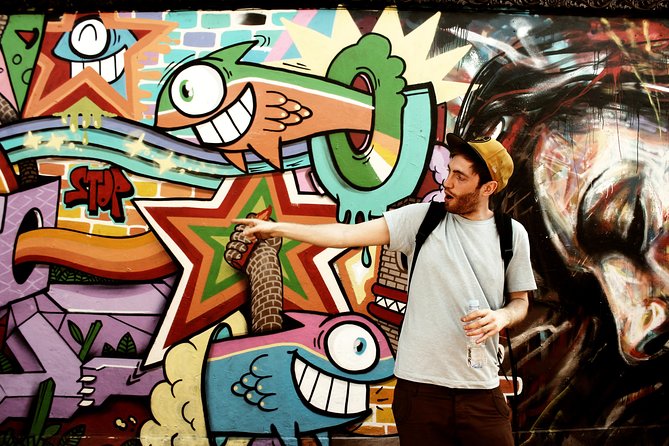
East London street art isn’t a museum display. It’s layered—style, politics, neighborhood identity, and even the way walls age over time. Walking it with a guide changes everything. You start noticing things you’d walk past at normal speed: the placement, the scale, the hand style, and what an artist was likely trying to say in that exact spot.
This tour is built for that kind of attention. It lasts about 2 hours, and the pace is slow enough to stop repeatedly. The guide also keeps the story moving, so the artwork doesn’t feel random. Instead, you begin to see how one street links to the next, and how a neighborhood keeps rewriting itself.
You can also read our reviews of more tours and experiences in London.

Price and what $27.73 buys you
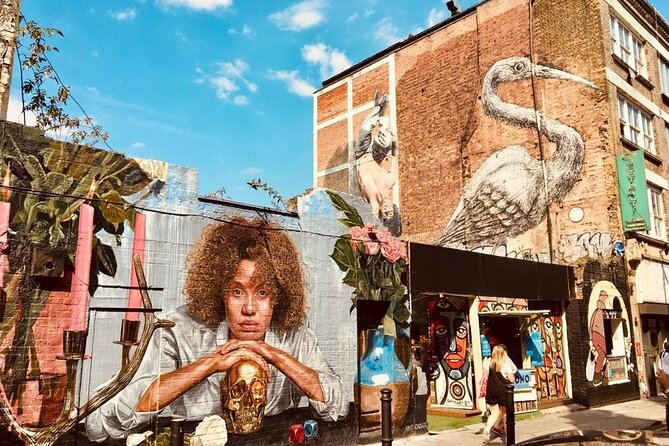
At $27.73 per person for roughly 2 hours, you’re not just buying photos and a route. You’re paying for interpretation. Street art can look like chaos if no one teaches you how to read it, and that’s exactly what this tour fixes.
What makes the price feel fair is how the experience is structured: you get a professional guide, you’re led end-to-end, and your stops happen often. Admission at the stops is free, which means you’re not stacking extra ticket costs on top of the tour price. You’re also getting a small-group format (max 18), which matters more than people think—fewer people means you actually hear the explanation.
If you like hands-on learning—seeing, listening, asking a question—this tour gives you a lot of output for the money.
Meeting spot to finish line: the real logistics
The tour starts at I Goat, Brushfield St, London E1 6AA and ends at 19 Hessel St, London E1 2LR. You’ll get a confirmation at booking, and you’ll use a mobile ticket.
Two practical tips that make a difference:
- Be at the start point on time. This route depends on the group moving together.
- Wear shoes you can walk in for a couple of hours. The tour is moderate fitness level, and you’ll be on foot the whole time.
The tour also runs in all weather, so bring a jacket you’ll actually wear.
Stop 1: Old Spitalfields Market and the Brushfield Street intro
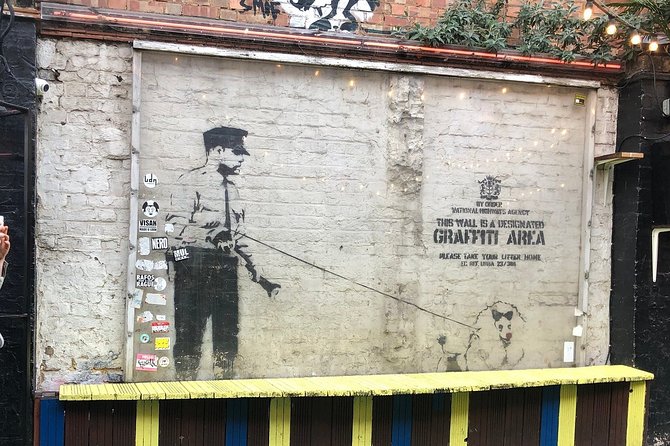
You kick things off at Old Spitalfields Market, walking down Brushfield Street to start learning how street art “works” on a real streetscape. This first stretch is the setup. The guide uses it to show you what to look for before you hit the bigger, more famous walls.
What I liked about this opening is that it helps you switch from tourist mode to reader mode. You’re not just collecting images—you’re learning how artists choose locations and how different styles can carry different intentions. Even if you’ve seen street art before, the guide’s framing usually makes you notice new details in pieces you thought you already understood.
A potential downside of an intro stop: if you’re already a hardcore street art fan, the early explanations can feel a bit “foundation-y.” Still, it’s a good foundation for the rest of the walk, especially for first-timers.
Stop 2: Brick Lane and surrounding streets that tell stories
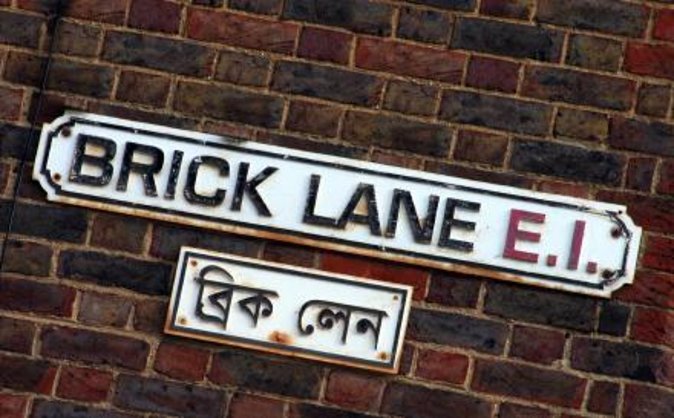
Brick Lane is the headline, but the real value is in the surrounding streets. This is where the tour shows you unique and well-known works, plus pieces you might not spot unless someone points them out.
Expect frequent stopping. The guide calls attention to meaning, style, and context—how an artwork fits the neighborhood and how the medium communicates. In this area, the story often goes beyond art technique. You’ll hear about the history and culture that surround the walls, and how the East End shaped what artists could say and where they could say it.
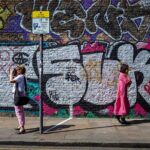
One thing this stop does well: it helps you separate street art from generic “graffiti.” The guide talks about different approaches and mediums, and you start understanding why one piece might feel like a statement while another feels like pure style. If you’ve ever wondered why tags, paste-ups, and bigger murals can feel so different, this is where it starts clicking.
A consideration: Brick Lane is busy. Even with a max of 18 people, you’ll share the space with regular foot traffic. Bring patience, and use the guide’s stopping points to get your photos when the group pauses.






Stop 3: Shoreditch High Street Station for angles, anecdotes, and context
The last featured stop is Shoreditch High Street Station (Stop F). This part of the tour feels like a change of gear. You’re still in the art zone, but the guide leans more into perspectives and anecdotes—why the medium shows up where it does and how the culture of street art lives in the city.
Station-adjacent street art often has an extra layer: visibility. People pass through, glance, and keep moving. That means the art tends to communicate fast. The guide helps you read those signals—scale, contrast, placement, and how an image can be designed to catch attention even at walking speed.
I also like this finale because it leaves you with something practical: you start looking for street art “systems,” not just individual pieces. After this stop, you’re less likely to miss art that’s tucked beside entrances, hidden along side lanes, or disguised until you’re standing in the right spot.
Your guide is the difference (and you’ll notice the street-artist credibility)
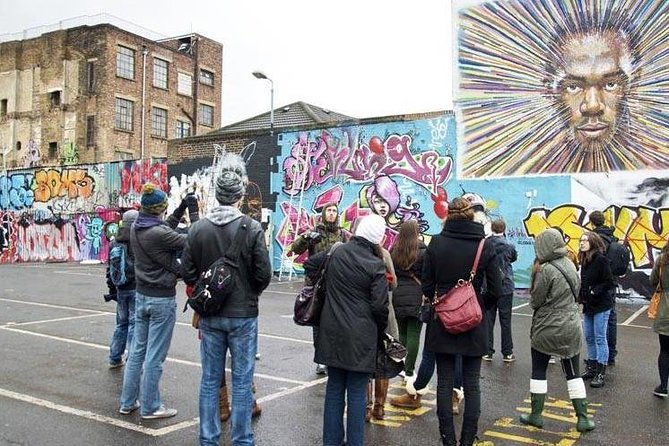
The biggest theme from the tour experience is simple: the guides aren’t just narrating. They’re doing it from inside the art world.
You may get different guides depending on the day, but names you might see include Eva, Gabby, Laura, Josh, and Natalie. What ties them together is that they bring a mix of art reading skills and neighborhood storytelling. One guide’s style may feel more witty, another more chatty, but the goal stays the same: help you understand what you’re seeing.
This is why the tour works for both new and returning street art fans. If you’re brand new, the guide explains the basics and keeps it clear. If you’ve seen a lot of street art, you can still learn how to spot nuances between artists and how the local history shapes what you see today.
What you’ll learn as you walk: style, tagging, and political undertones
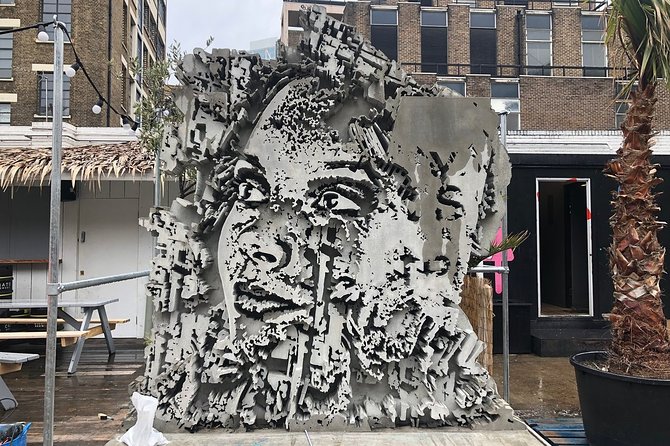
By the time you finish, you typically leave with a new appreciation for how much communication happens in street art. The tour framing often includes:
- Tagging and lettering as part of a bigger street language
- Slap-and-paste style work and why speed and placement matter
- Style differences between artists, including why pieces feel distinct
- Political and anti-establishment themes that show up in certain works
- How the neighborhood history links to the art culture
That last point is key. Street art isn’t floating in a vacuum. East London’s social and cultural background shows up in the themes, and the guide helps you connect the dots without turning it into a lecture.
How to get the best photos without slowing everyone down
This tour is built for photos. You’ll stop frequently enough to take pictures on foot, and the guide points out where to look so you’re not spending time searching for the “right wall.”
Still, street art photography has a few realities:
- Some walls are on busy streets. Quick shots work best during stops.
- You’ll get better results when you listen first, then step in for the photo. Understanding the “why” helps you frame the shot better.
- Bring a phone strap or secure grip if you’re adjusting lenses while standing near the sidewalk edge.
If you’re traveling with teens or adults who want a break from major attractions, this kind of walking tour gives everyone a shared topic.
Who should book this tour?
I think it’s a great fit if you:
- Want a break from classic sights and want an East London neighborhood feel
- Like learning about street art beyond the surface
- Prefer guided walking over trying to self-navigate tricky streets
- Enjoy photos but also care about meaning
It’s also a solid choice for families if the group includes kids who can manage a moderate walk. The tour is designed for mixed ages, and the guide’s explanations tend to work when you ask questions.
If you’re the type who hates being in a small crowd, remember the max group size is 18. Go in with the expectation that you’ll be sharing sidewalks with others.
The quick reality check: possible drawbacks
Nothing is perfect, so here’s what to consider:
- If you get stuck on “the biggest mural only,” this tour gives more equal weight to interpretation than to chasing one signature piece.
- You may want more time if you’re truly obsessed with street art, because the tour is only about 2 hours.
- Brick Lane can be lively, so build in patience during the stops.
That said, for most people, the structure and guide-driven learning outweigh those trade-offs.
Should you book The Original London Street Art Tour?
Yes—if you want street art with context, not just sightseeing. For a two-hour, led walk at $27.73, you’re buying something hard to DIY: the guide’s ability to point out what matters and explain the meaning while you’re standing right in front of it.
Book it especially if:
- You’re visiting East London and want something different from the usual list
- You want to learn how to look at street art, including tagging and street-level messaging
- You appreciate a guide who brings their own artist perspective
If you’re allergic to crowds or you’re only interested in large, famous murals, then you might prefer a longer solo exploration time. But for a fast, guided, high-signal intro to East London street art, this is a strong pick.
FAQ
How long is the Original London Street Art Tour?
The tour runs for about 2 hours.
What does the tour cost?
It costs $27.73 per person.
Where does the tour start and end?
It starts at I Goat, Brushfield St, London E1 6AA, UK and ends at 19 Hessel St, London E1 2LR, UK.
What are the main stops?
The tour includes Old Spitalfields Market, Brick Lane, and Shoreditch High Street Station (Stop F).
Is admission included for the stops?
Admission at the listed stops is free.
What language is the tour offered in?
The tour is offered in English.
Do I need to print anything?
You’ll use a mobile ticket.
How big is the group?
The tour has a maximum of 18 travelers.
Is the tour suitable for kids?
Children must be accompanied by an adult.
What’s the weather plan?
It operates in all weather conditions, so dress appropriately.
Is there free cancellation?
Free cancellation is available. You can cancel up to 24 hours in advance for a full refund.