REVIEW · LONDON
London : Shoreditch Street Art Walking Tour
Book on GetYourGuide →Operated by Guydeez Tours · Bookable on GetYourGuide
Street art moves fast in London. This tour helps you read it.
I like the private, customizable format: it’s your pace, not a herd schedule. I also like that the guide tries to give meaning, not just photos—so you’re not only looking at walls, you’re learning how artists build stories. One thing to consider: based on the range of guide feedback, you’ll get the most value if your guide truly engages with questions and context.
You’ll start near 80 Houndsditch, then work through Spitalfields to Brick Lane and on to Shoreditch, where the graffiti and murals are always changing. The best part is the way the route blends big-name streets with smaller side lanes, so you catch both recognizable walls and the quieter bits you’d miss on your own. The main drawback to watch for is that if your guide is light on commentary, the tour can feel like a stroll with less explanation than you hoped.
In This Review
- Key highlights to look for on this Shoreditch street-art walk
- Meeting at Houndsditch: where the tour starts and how to get oriented
- Old Spitalfields Market: the creative warm-up before Brick Lane
- Brick Lane: galleries, shops, and the street-art “in-between” streets
- Shoreditch: the ever-changing wall gallery that teaches you how to read it
- The private guide experience: what “customizable” should mean in practice
- Getting more than street art: the city tips that make the walk pay off
- Walking + possible public transport: why the route matters in a 2-hour window
- Price and value: is $63 per person fair for this kind of private walk?
- Who this Shoreditch street-art tour fits best
- Should you book it? My honest call
- FAQ
- FAQ
- How long is the London Shoreditch Street Art Walking Tour?
- Where does the tour start and end?
- Is this a private tour?
- What areas will we visit?
- Does the tour include public transport?
- What languages are the live guides available in?
- What’s included in the price?
- What’s not included?
- Can I cancel and get a refund?
- Is it wheelchair accessible?
Key highlights to look for on this Shoreditch street-art walk
- Private and exclusive: you won’t share your group with strangers.
- Real interpretation of street art: you’ll learn the stories behind pieces, not just what they look like.
- Fresh artwork can appear right before you: your guide may point out brand-new work.
- Side streets with variety: from small bronze castings to tall mural walls.
- You’ll also get London advice beyond street art—useful after the walk.
Meeting at Houndsditch: where the tour starts and how to get oriented
I like a street-art tour that starts in a place that feels like part of the city’s working life, not a postcard stage. This one begins at 80 Houndsditch, in the Shoreditch area, close to the Pan Pacific Hotel meeting point described in the plan. That matters because you’ll be in the right mood immediately—London here feels like it’s still under construction, with creativity showing up in the cracks.
Your guide is there when you arrive, and the tour is private, so you’re not listening to five different interests fighting for attention. If you care about themes (politics, identity, comedy, activism) or you want to understand the difference between tags, murals, and paste-ups, this format makes it easier to steer the route.
One practical tip: arrive a few minutes early and be ready to walk. This is a 2-hour walking experience, and even with public transport possibly included depending on what option you choose, you’ll still be doing your share of steps. If you’re the type who enjoys stopping often for photos, tell your guide early so they can adjust the pace.
You can also read our reviews of more tours and experiences in London.



Old Spitalfields Market: the creative warm-up before Brick Lane
Your first stop is Old Spitalfields Market, a strong choice because it sets expectations: street art is part of the neighborhood’s culture, not only something you find outdoors at random.
This is where you’ll get your bearings. Even if you’ve seen street art pictures before, Spitalfields gives you a calmer starting point than the later walls of Shoreditch. It’s a good place for your guide to set the rules of the game—how to look for symbols, styles, and messages that aren’t obvious at a glance.
Why this stop is worth it: markets are where foot traffic meets creators. When you see artwork in and around a market environment, it often feels more tied to daily life. And since your guide is meant to be immersed in the culture and street art, this start is ideal for learning how artists think about placement and audience.
The possible drawback: if you’re expecting nonstop walls immediately, Old Spitalfields Market can feel like a warm-up rather than the main event. But that warm-up is helpful. It trains your eye before you hit the heavier visual stops.
Brick Lane: galleries, shops, and the street-art “in-between” streets

From Old Spitalfields Market, you move into Brick Lane, one of the best-known names on the London street-art map. But the value here isn’t only that it’s famous. The tour is designed to take you along the main lane and then peel off into the side streets, where the details start to matter more.
Brick Lane is where you see the mix: art galleries, boutiques, and street scenes that feel layered rather than staged. You’re likely to pass walls with different levels of polish, from quick marks to big compositions. The guide’s job—when done well—is to help you understand what you’re seeing without turning it into a lecture.
One detail I’d pay attention to is the range of art styles described for this route, including small bronze castings as well as towering murals. Even if you don’t get a “catalog” of every medium, the variety signals the tour’s goal: show street art as a creative ecosystem, not a single look.
Where Brick Lane can disappoint: the experience depends on commentary. One booking feedback you should take seriously is that a guest felt the guide provided next to no inputs. That doesn’t mean the art isn’t there—it’s that the explanation felt missing. If you want deeper meaning, treat your questions like part of your own job on the walk: ask your guide what to focus on at each stop and whether they can explain the story behind the work you’re looking at.
Shoreditch: the ever-changing wall gallery that teaches you how to read it
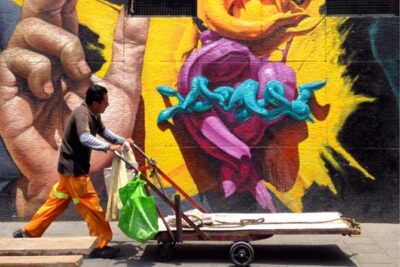
Then comes Shoreditch, the part most people picture when they think of London street art. This is the hub where the display is always shifting—new murals show up, older pieces get covered, and tags appear like signatures.
This is where the tour’s storytelling becomes most important. The plan emphasizes that your guide will help interpret the stories behind pieces, including brand new works that may appear just moments before you arrive. That’s a big deal for anyone who’s tired of static “then and now” tours. Street art is time-sensitive. If the guide knows where to look, the walk can feel current, not recycled.
I also like that Shoreditch is framed as a cultural read, not only a photo hunt. Street art often contains references—local slang, inside jokes, political cues, or personal identity. A good guide helps you notice those signals so the walls stop being random images and start becoming narratives.
The main consideration here is stamina and attention. Shoreditch’s abundance can overwhelm you. If you try to photograph everything without pausing to understand what you’re seeing, you can walk away with great images but little meaning. Since the tour is meant to interpret, you’ll get the best result if you slow down at the pieces your guide points out.
The private guide experience: what “customizable” should mean in practice
This tour calls itself private and customizable, and that isn’t just marketing language. In a street-art walk, customization affects what you notice.
Here’s what you can reasonably expect you’ll be able to tailor:
- Your guide can focus more on the artwork style you care about (murals vs. smaller works vs. sculptural elements like bronze castings).
- Your pace can shift: quicker photos or slower looking.
- You can ask for additional context as you go.
Language support is also a practical plus. The live guide is available in English, French, Italian, and Spanish, so you’re less likely to lose nuance. And if you’re traveling with limited time, two hours is long enough to cover the big areas while still short enough to fit into a busy London itinerary.
Now for the key reality check. The overall rating is modest, which usually means the tour experience can vary depending on guide performance. One booking praised a guide named Naomi as fun and passionate, with a feeling of walking with a friend. Another booking described a guide who was helpful but didn’t know the subject fully and another who gave almost no input. So the best move is simple: before you commit mentally, engage early. Ask what you’re looking at, and ask why it matters.






Getting more than street art: the city tips that make the walk pay off

A street-art tour can be fun and still feel “self-contained,” like it ends when the tour ends. This one aims to help you connect the dots.
Included in the tour experience is valuable advice about other things to do in London. That’s not just small talk. After you leave Shoreditch, you’ll have a better sense of where to go next—what areas feel worth your time, what to skip, and how to plan the rest of your day more smoothly.
I especially like tours that help you avoid common mistakes, like spending your limited hours in tourist traps. When a guide knows the neighborhood, their advice often reflects what’s actually around you, not what’s written on a brochure.
Walking + possible public transport: why the route matters in a 2-hour window
This is a 2-hour tour, and that time window is tight for a city that doesn’t stand still. The plan includes walking and public transport except if you select one of the options (the exact options aren’t spelled out in what you provided, so I can’t tell you which variation you’ll pick). The point is that the operator wants you to see more than you would if you only walked.
In practice, that means:
- You’ll cover the key zones without turning it into an all-day commitment.
- You can expect the guide to manage movement so you’re not constantly stopping to figure out routes.
If you’re the type who hates transit breaks, ask yourself how you feel about short pauses. A good tour should keep the flow. If you get stuck with long transit time, the art time shrinks—but in a two-hour schedule, it’s usually managed well.
Price and value: is $63 per person fair for this kind of private walk?
$63 per person for a private 2-hour street-art walk is not cheap, but it doesn’t feel wildly off for London—especially when you’re paying for a guide’s time and for a format that’s exclusive (no shared group).
Here’s how I think about value on tours like this:
- If your guide actively interprets what you’re seeing, $63 feels like it buys meaning, not just motion.
- If the guide is quiet or light on context, you’re basically paying for access to a route and a person who can point at things—which is harder to justify.
The best value scenario is the one described in the stronger feedback: a guide who’s energetic, locally grounded, and genuinely interested in street art. The risk scenario is the opposite—lots of art, but minimal explanation. If you care about learning, the guide quality matters as much as the location.
Who this Shoreditch street-art tour fits best
This walk is a strong match if you:
- Want a focused 2-hour introduction to Spitalfields, Brick Lane, and Shoreditch street art.
- Prefer a private experience where you can ask questions.
- Like neighborhood culture as much as the artwork itself.
It might be less satisfying if you:
- Expect a deep, structured lecture regardless of guide style.
- Want a purely “walk and photo” tour with no need for interpretation (since the tour’s main promise is storytelling and advice).
Should you book it? My honest call
I’d book this if street art is your thing and you want a guide who helps you read it. The route is well-chosen, and the private setup plus customization gives you a better chance of turning a good neighborhood walk into a memorable one.
But I’d go into it with one smart mindset: treat the guide like part of the experience. Ask questions early, and if you feel the commentary is thin, prompt the guide right away. With a guide like Naomi described as passionate and friendly, this tour sounds like it hits its target. With weaker guide feedback on input and subject depth, your success depends heavily on that day’s guide energy.
FAQ
FAQ
How long is the London Shoreditch Street Art Walking Tour?
It lasts 2 hours.
Where does the tour start and end?
You meet at 80 Houndsditch and return back to 80 Houndsditch.
Is this a private tour?
Yes. It’s private and exclusive, with no one else in your group.
What areas will we visit?
You’ll go to Old Spitalfields Market, Brick Lane, and Shoreditch.
Does the tour include public transport?
Walking is included, and public transport is also included except if you select one of the available options.
What languages are the live guides available in?
The tour guide is available in English, French, Italian, and Spanish.
What’s included in the price?
The tour includes the private walking tour, walking and public transport (depending on option), and help from the team to book tickets for desired visits.
What’s not included?
Food and drinks are not included.
Can I cancel and get a refund?
Yes, it offers free cancellation up to 24 hours in advance for a full refund.
Is it wheelchair accessible?
Yes, the tour is listed as wheelchair accessible.