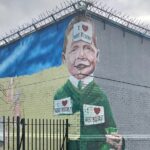
REVIEW · BELFAST
IRA Troubles Conflict Private Tour Museum Graves Murals and Political Analysis
Book on Viator →Operated by Giants Causeway Tours · Bookable on Viator
Belfast’s walls have stories. In three hours, you’ll get a private, Irish republican look at the Troubles through murals, memorials, and the Peace Walls. I love that the tour squeezes in real context fast: the guide explains how the conflict began and how it’s shaped Belfast up to today. I also love the access feel, with stops that include private museum access and places you won’t see on most big-bus routes. One thing to consider: this is deliberately from an Irish republican perspective, so if you’re hoping for equal time to Loyalist arguments, you may feel a bit underfed.
You’re in a private setup, so you can ask questions and get answers in plain language, not just a script. In reviews, guides like Barry, Joe, and Paula are praised for using personal, lived context alongside political history, and that combination is what makes the streets land emotionally. Bring a respectful attitude. This part of Belfast doesn’t treat history like a museum label—it treats it like a neighborhood memory.
In This Review
- Key things I’d put on your radar before you book
- A Belfast Troubles tour that feels like history with witnesses
- Price and time: what you’re really paying for
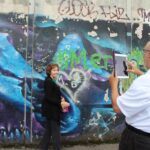
- Divis Street’s International Mural Wall: where the guide sets the tone
- Peace Walls and Peace Gates: writing your message inside the separation
- Shankill Road murals: Loyalist heartland on foot and up close
- Clonard Martyrs Memorial Garden: reading grief through names and dates
- Milltown Cemetery and the Red Hand: Bobby Sands and the meaning of marking graves
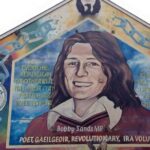
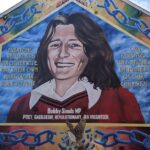
- Bobby Sands murals and D Company: when street art becomes a textbook
- The Eileen Hickey Irish Republican History Museum: the one part you can’t fake
- Clonard Monastery at the interface: when 1969 was right behind the walls
- Garden of Remembrance for D Company: Belfast Brigade geography, explained
- Divis Tower, Ballymurphy Road, and Divis: the Republican heartline through concrete
- Who should book this tour, and who might want a different one
- FAQ
- How long is the tour?
- Is the tour private?
- Is pickup available?
- What’s included during the tour?
- Which areas and landmarks does the tour cover?
- Does the museum always open?
- What’s the cancellation policy?
Key things I’d put on your radar before you book
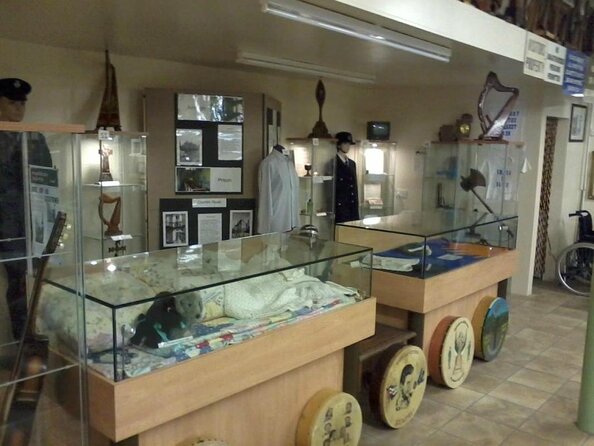
- Private museum access and meeting ex-prisoners at the Irish Republican History Museum (Eileen Hickey Irish Republican History Museum).
- Peace Wall participation, including a moment to write your name and message of peace.
- Falls Road and Shankill Road murals, including politically charged artwork associated with ex-prisoners and Loyalist groups.
- Milltown Cemetery’s Republican plots, marked with the Red Hand, including Bobby Sands’ resting place.
- Hands-on stop during the tour: you can see and handle plastic and rubber bullets used by British Crown forces.
- A tight, question-friendly route where the guide can adjust based on what you ask along the way.
A Belfast Troubles tour that feels like history with witnesses
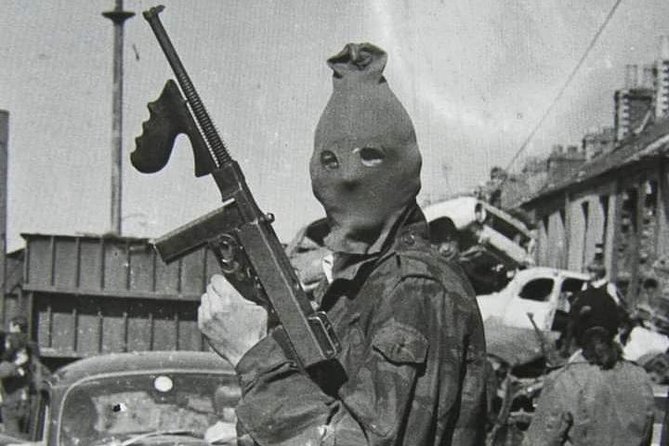
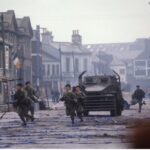
This isn’t the kind of Belfast tour where you spend the whole time staring out a window. You’re walking, looking closely at murals and memorials, and getting a running explanation of how the Troubles evolved from 1969 onward. You’ll also hear political analysis tied to the present-day peace process, not just old dates and names.
The private format is the quiet hero here. You’re not rushing to hear one more “fact” before the next group arrives. Instead, you can ask why certain areas are still separated, why specific murals were painted, or how a particular memorial is meant to be read. Reviews strongly highlight that guides can bring their own Belfast experiences into the storytelling, which makes the streets feel less abstract.
You can also read our reviews of more tours and experiences in Belfast.
Price and time: what you’re really paying for
At $255.50 per person for about 3 hours, this is priced like a serious private experience, not a casual city walk. You’re paying for the combination of: private transport (with air-conditioned vehicle), guided stops packed with included admissions, and the “pressure-free” time to ask questions.
You’ll also benefit from pickup being offered from a central meeting point (Leonardo hotel) and mobile ticketing. If you’re staying in central Belfast, that helps the whole day run smoother. The big value is not just the destinations—it’s the way the route is stitched together into one coherent story.
One practical note: the tour is booked quite far in advance on average (81 days). If your Belfast dates are fixed, it’s smart to grab a slot early.
Divis Street’s International Mural Wall: where the guide sets the tone
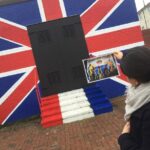
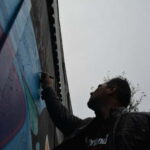
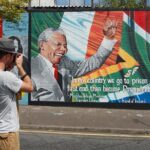
You start around the International Mural Wall on Divis Street. This is an opening stop that helps you understand how Belfast expresses politics in public art—especially murals painted by people with deep ties to the conflict.
Then you head toward the Falls Road, where your guide frames the Troubles from an Irish republican perspective: how the conflict began, how it developed for Republicans over time, and where the current peace process fits in. You’ll also hear why Peace Walls became a reality in the first place, and how the city’s layout became part of the story.
Why this stop matters: It’s not just a photo stop. It sets expectations for how you’re meant to “read” the murals and memorials that follow.
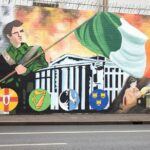
What to watch for: You’ll see political murals painted by ex-prisoners (POWs). Look closely at symbols and recurring themes—your guide will connect them to specific moments in the conflict.
Peace Walls and Peace Gates: writing your message inside the separation
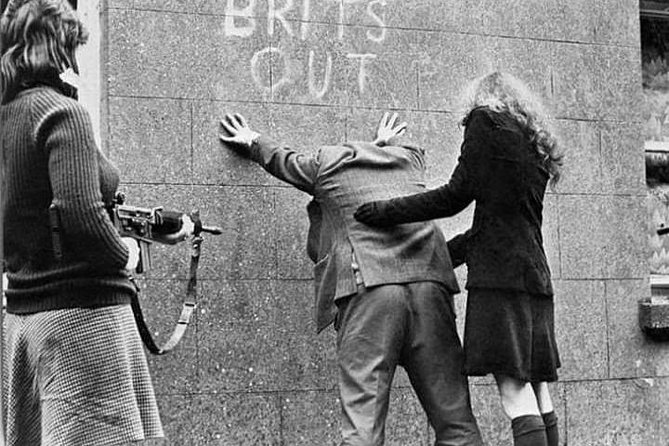
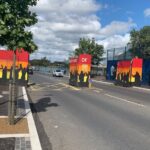
Next comes the Peace Wall. These are separation barriers that split predominantly Republican/Nationalist Catholic areas from predominantly Loyalist/Unionist Protestant neighborhoods. Even if you’ve heard of Peace Walls before, this is the part where Belfast’s division becomes real in your hands and on your route.
You visit both sides, hear why the wall was built, and then you get a small but meaningful activity: signing your name and writing a message of peace. You’ll also see how the communities are still divided in daily life.
Why this stop matters: The Peace Walls are a physical map of fear, memory, and safety choices. The tour makes it clear that they weren’t just “symbolic”—they were designed to prevent violence, and they kept operating long after.
A detail worth knowing: The first Peace Walls were built in 1969 after sectarian riots, and while most were constructed early in the Troubles, about one-third were added after 1994 when the IRA declared an effective ceasefire. That timeline is central to understanding why the walls never fully came down.
Shankill Road murals: Loyalist heartland on foot and up close
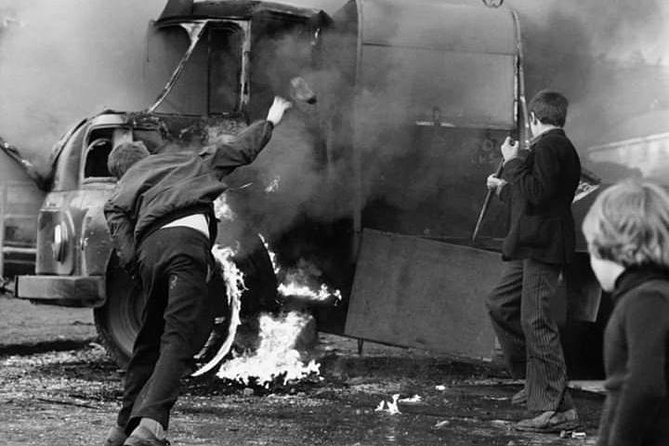
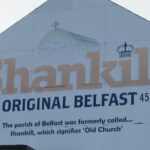
Then you move to the Shankill Road, described as the heartland of Ulster Loyalism. This is where murals connected with Loyalist paramilitaries (including UDA/UFF and UVF) appear prominently—often with masked figures and weapons.
You’ll get time to take photos and learn how Loyalism developed and evolved, plus what role it played during the conflict. The guide’s approach stays in line with the tour’s focus, so you’ll hear this through the lens of Irish republican history and analysis.
Why this stop matters: Murals here aren’t decoration. They’re a way of staking identity, telling stories, and projecting strength.
What to consider: If your goal is to collect competing narratives in equal measure, you may still feel like you’re seeing one side more than the other. This tour is clear about its framing.
Clonard Martyrs Memorial Garden: reading grief through names and dates
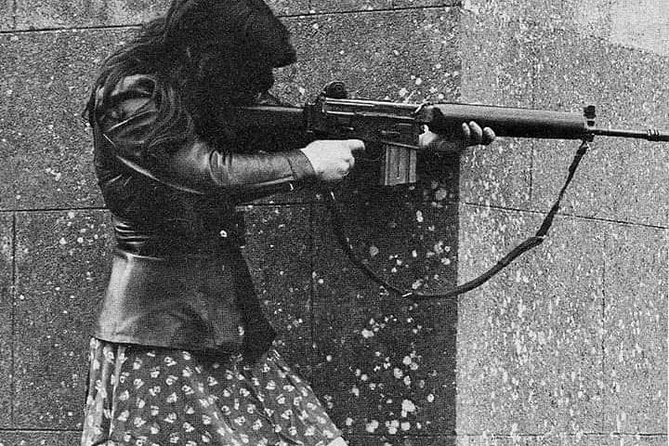
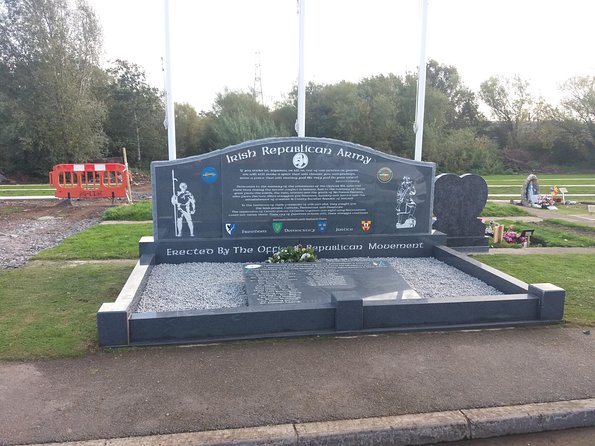
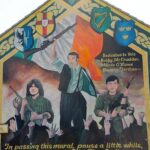
Clonard Martyrs is one of the most emotionally heavy stops. You’ll be visiting a memorial garden tied to fallen Volunteers of C Company, 2nd Battalion, Belfast Brigade, Oglaigh na hÉireann, and it also includes remembrance of civilian casualties from the Greater Clonard area and deceased Republican prisoners from 1916 to 1970.
The garden has black iron gates with a black and red rising phoenix, and the symbolism connects directly to the title theme: out of ashes came the Provisionals. Inside, the garden is divided into three separate yards, with plaques and panel inscriptions that lay out history by group and era.
Key things you’ll notice:
- A central yard with a black and white Celtic cross and inscriptions tied to memory of the dead.
- Granite plaques with Volunteer figures bowed in mourning.
- Panels that include remembrance of both volunteers and civilians, including those killed by Crown forces and loyalist murder gangs.
- Side-yard plaques arranged by time periods, spanning years such as 1921–1922, 1956–62, and into 1970.
- Benches dedicated to specific people, with small golden plaques listing names.
Why this stop matters: This is grief organized into a readable format. It’s not just a monument; it’s a historical index of loss.
Practical tip: If you’re sensitive to memorials, take your time here. Don’t rush the inscriptions just because the tour moves quickly.
Milltown Cemetery and the Red Hand: Bobby Sands and the meaning of marking graves
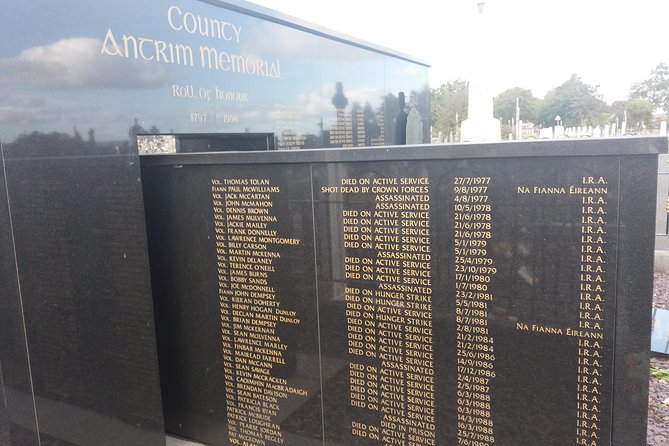
Milltown Cemetery is where the tour brings you to Republican plots and graves of people tied to IRA-related conflict across multiple eras. Graves here are marked with the Red Hand, and the tour explains that a lot of the work in the cemetery is carried out by the National Graves Association.
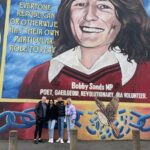
The standout name is Robert (Bobby) Gerard Sands. The tour connects him to the 1981 hunger strike in which republican prisoners protested the removal of Special Category Status. You’ll also hear that Sands was an elected MP at the time of his death on hunger strike after 66 days.
Why this stop matters: You’re not just hearing about hunger strikes in the abstract. You’re standing near the resting place that keeps that political moment present.
What to watch for: The tour notes the New Republican Plot includes the remains of 77 IRA Volunteers, including Óglach Mairéad Farrell. If you like seeing how memorial practices preserve identity, this section will feel powerful.
Bobby Sands murals and D Company: when street art becomes a textbook
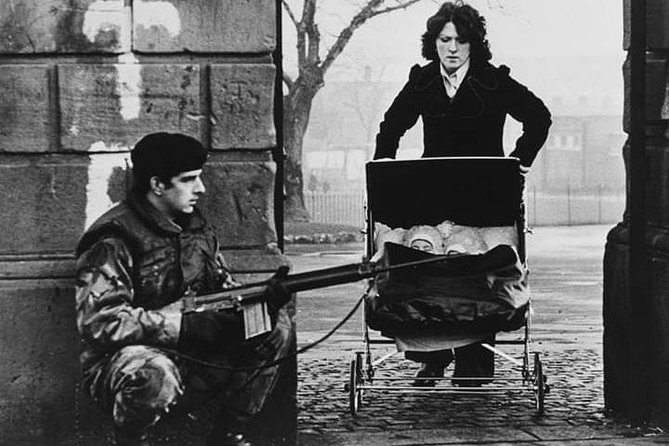
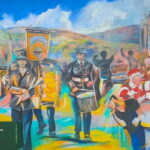
Back out on the streets, the tour returns to Bobby Sands through murals and nearby remembrance sites. One stop focuses on the Republican “heartland” and the IRA’s guerrilla war against the British, including the Battle of the Falls (1970) and the Falls Road Massacre (1920).
You’ll also hear about D Company, also called “The Dogs,” tied to the 2nd Battalion Belfast Brigade. The tour points you toward the Garden of Remembrance and notes there are photos of 12 of the 22 Hunger Strikers.
Why this stop matters: Murals here teach. They compress history into images you can’t unsee once you understand what they refer to.
Photo note: Expect the usual urban photo issues—crowds, angles, and traffic. A private tour helps because your guide can tell you when the street is easiest for photos.
The Eileen Hickey Irish Republican History Museum: the one part you can’t fake
The Irish Republican History Museum (Eileen Hickey Irish Republican History Museum) is a major stop because it moves from streets into a curated educational space. The tour describes it as focusing on resistance against British occupation across the last 800 years, and your guide is an Irish history specialist.
Another detail that raises the value: the tour notes you can meet ex-prisoners of war who share their experiences of the conflict. That’s the difference between reading history and hearing it.
Hours matter here: The museum only opens 10–2 Tuesday to Saturday. If it’s closed on your day, the tour says you’ll be shown around Ballymurphy instead.
Why this stop matters: In a city of murals and memorials, a museum room gives you a timeline you can hold onto while you’re walking afterward.
Clonard Monastery at the interface: when 1969 was right behind the walls
Clonard Monastery is Catholic church and monastery off the Falls Road, home to a Redemptorists community. Your guide connects Clonard directly to the interface reality of Belfast: it sits between the Falls Road district and the Shankill Road district.
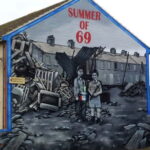
The tour explains that in August 1969 loyalist mobs from the Shankill Road launched attacks on Catholic homes on Bombay Street and Cupar Street. Residents fled, and many houses were burnt down, including the whole of Bombay Street. The priests from Clonard were involved from the outset in trying to safeguard local residents.
You’ll also hear about two key clergy associated with the peace movement: Frs. Alec Reid and Gerry Reynolds, who lived there.
Why this stop matters: It’s a reminder that the conflict wasn’t only “out there” in headlines. It was in streets where families lived, prayed, and sheltered.
Garden of Remembrance for D Company: Belfast Brigade geography, explained
The Garden of Remembrance stop focuses on D Company 2nd Battalion Belfast Brigade I.R.A. The tour also gives structure to how the Provisional IRA was organized in Belfast.
It notes the Belfast Brigade was founded in 1969 and organized into three battalions:
- First Battalion in the Andersonstown/Lenadoon/Twinbrook area (Southwest Belfast)
- Second Battalion in the Falls Road/Clonard/Ballymurphy district (West Belfast)
- Third Battalion in nationalist enclaves across areas such as Ardoyne, New Lodge, Ligoniel, the Markets, Lower Ormeau, and Short Strand.
Why this stop matters: If you struggle to picture Belfast as more than neighborhoods, this is the part where the guide turns streets into an organization map.
Divis Tower, Ballymurphy Road, and Divis: the Republican heartline through concrete
The tour moves into more of the Divis and Ballymurphy area. Divis Tower is described as overlooking the Falls Republican stronghold. It was the site of a British Army snipers’ nest and spy post up until 2005, and you’ll see names and murals connected to the first two victims of the Troubles.
Then comes a drive through republican Ballymurphy Road, with references to murals such as An Gorta Mor and local volunteers including Jim Bryson and his Big Louie machine gun, described as something that terrified the British Army.
You’ll also see the Welcome Wall and Divis as the “heartland” of the Irish Republican Army, plus time to view the biggest Peace Wall in Belfast from the road.
Why this section matters: You’re seeing how “watching” and “marking” shaped the conflict. Spying posts, walls, and murals all tell the same story from different angles.
Who should book this tour, and who might want a different one
If you’re visiting Belfast to understand the Troubles through an Irish republican lens, I think this tour is a strong choice. I especially like that it includes:
- Up-close Peace Wall context with participation
- Milltown Cemetery with Bobby Sands’ story
- Murals tied to organizations and hunger strikes
- A museum stop with ex-prisoners involved (when open)
- Hands-on artifacts like plastic and rubber bullets used by British Crown forces
Book it if you want a guided narrative that ties history to place, and you’re comfortable with the emotional weight of memorials.
Think twice if you want a balanced, back-and-forth presentation of Loyalist and republican arguments as equal pillars. This tour is explicitly rooted in Irish republican history and political analysis, and that framing will guide what you hear.
FAQ
How long is the tour?
The tour runs for about 3 hours.
Is the tour private?
Yes. It’s listed as a private tour/activity, so only your group participates.
Is pickup available?
Pickup is offered. Central Belfast pickup from the Leonardo hotel is free, while other locations have extra charges.
What’s included during the tour?
Private transportation, an air-conditioned vehicle, round-trip transfers from your hotel (with central pickup free), admissions tickets at listed stops, the Peace Wall writing activity, time at Milltown Cemetery, the museum visit, and the chance to see and handle plastic and rubber bullets used by British Crown forces are all included.
Which areas and landmarks does the tour cover?
You’ll visit mural areas and key sites connected to the Falls Road and Shankill Road, Peace Walls, Clonard Martyrs Memorial Garden, Milltown Cemetery (including Bobby Sands’ resting place), Bobby Sands murals, Clonard Monastery, Divis Tower, Ballymurphy Road murals, and the Garden of Remembrance areas.
Does the museum always open?
No. The Irish Republican History Museum (Eileen Hickey) only opens 10–2 Tuesday to Saturday. If it’s closed, the tour says you’ll be shown around Ballymurphy.
What’s the cancellation policy?
You can cancel for a full refund if you cancel at least 24 hours in advance. Free cancellation is available per the policy terms provided.