REVIEW · BELFAST
Famous 1.5 hour Belfast Murals Tour
Book on Viator →Operated by belfast mural tours · Bookable on Viator
Street art carries real grudges. This 1.5-hour Belfast Murals Tour uses a van and stops along the walls to explain The Troubles through what people chose to paint and post.
I especially love the photo-stop pacing. You get just enough time at each mural for pictures, then a guide connects the images to the real people and pressures behind them (with guides like Joe McCullough, John, Billy, Kieran, and Jackie earning standout praise for asking for your questions and answering clearly).
The main drawback is emotional weight. Even with a balanced approach, you are looking at conflict that still matters, so if you want light and fluffy only, this may feel too intense for an afternoon plan.
In This Review
- Key points before you go
- Street art that actually explains the Troubles
- How the van tour runs (and why that’s a smart choice)
- Divis: the starting point for real division
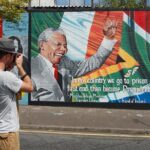
- Divis Street’s International Mural Wall: why the walls became a message
- Bobby Sands mural: a name that keeps showing up
- Clonard Monastery: faith, community, and a pause in the route
- Peace Wall: seeing how a barrier became a page
- Shankill Road: the murals after the line is drawn
- Why the guides matter more than the walls
- Price and value: what $83.18 buys you
- Timing, pickup, and what to plan around
- Who this tour suits best (and who might want something else)
- Should you book the Belfast Murals Tour?
- FAQ
- How long is the Famous 1.5 hour Belfast Murals Tour?
- Where does the tour start and end?
- Is food or drinks included?
- What’s included in the price?
- Is this tour private or shared?
- What language is the tour offered in?
- What start times are available?
- Can I cancel for a full refund?
- Are there any age limits or requirements for booking?
Key points before you go
- Private small-group feel: your group stays together on the van, so the story doesn’t get watered down.
- Admission tickets included at each mural stop, which helps you avoid extra small add-ons.
- Peace Wall stop: a short but memorable moment to see how a physical barrier became a public messages wall.
- Stops built around the Troubles: Divis, Bobby Sands, Clonard Monastery, Shankill Road, all tied to names, communities, and grievances.
- Guides with lived perspective: the best part here is personal, human context, not just dates and dates.
- Mobile ticket and multiple start times: you can choose a time slot between the morning and early afternoon.
Street art that actually explains the Troubles
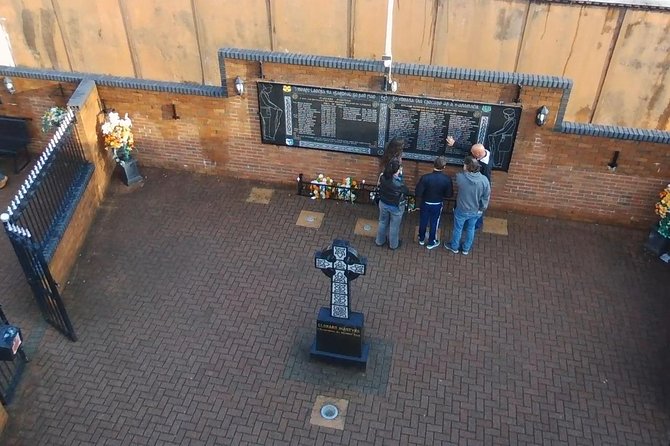
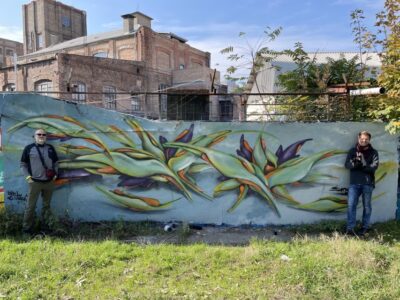
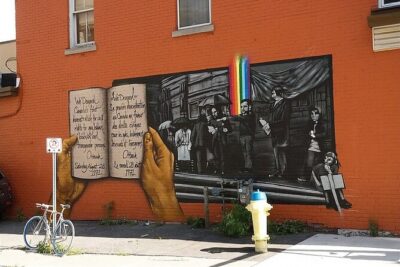
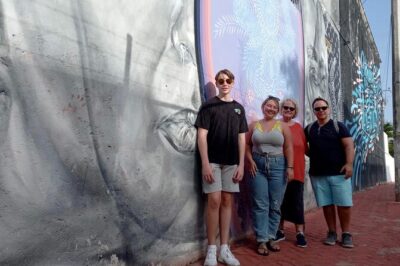
Belfast murals are not decoration. They are public statements, community memory, and sometimes protest in full color. On this tour, you get a guided lens for seeing what you’re looking at, instead of treating every wall like the same kind of street art.
Here’s why that matters for you: Belfast can feel complicated fast. Politics, religion, identity, neighborhood lines, and long timelines all collide in one city. The murals give you a map you can read, then the guide helps you make sense of it without turning it into a dry history lecture.
And you’ll notice something else right away. Even when the details are hard, the tone is usually personal and grounded. Guides are praised for being fair between sides, while still not pretending the suffering was equal or the pain was imaginary.
You can also read our reviews of more tours and experiences in Belfast.

How the van tour runs (and why that’s a smart choice)
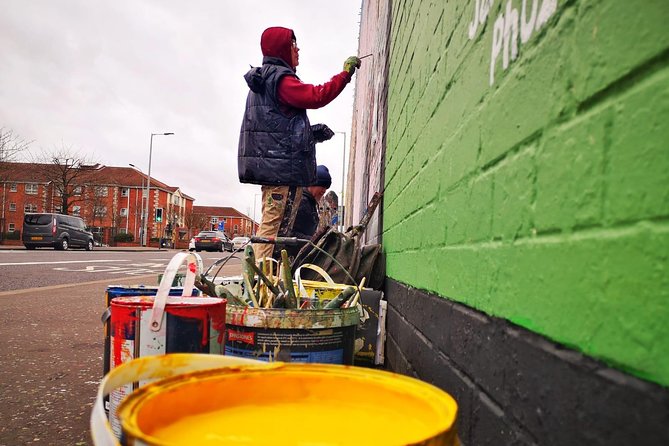
This is a 1 hour 30 minutes tour by van, and you’re not expected to cover everything on foot. That matters if you have limited time, want a comfortable pace, or just prefer to let someone else handle the routing.
You start and end at Leonardo Hotel Belfast, Great Victoria St, Belfast BT1 6DY. The tour is offered in English, and it includes a professional guide plus an air-conditioned vehicle. You’ll also carry a mobile ticket, which is convenient when you’re moving from stop to stop.
Most stops are around 10 minutes each. That can sound short, but it’s set up for a very specific rhythm: pull up, look closely, take photos, then get the story that turns the paint into context. If you’re the kind of person who loves reading every plaque slowly, you may feel a tiny bit rushed. But if you want your day to flow and your understanding to jump forward quickly, the timing is effective.
Divis: the starting point for real division
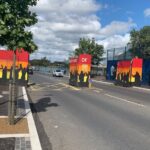
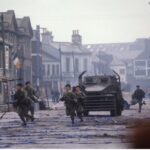
The tour begins at Divis with a photo stop and historic narrative. Divis matters because it sets the tone. You’re not starting with the most famous wall first. You’re starting where the sense of separation and pressure shows up clearly in the neighborhood view.
In practice, this first stop helps you get oriented fast. Your guide’s explanation at Divis gives you a framework for how murals function here: they’re not random; they’re tied to place, community identity, and the events people associate with that place.
A quick tip for you: at the first stop, be ready to look before you aim your camera. If you can follow the story while you see the streets, the rest of the murals start making stronger sense.
Divis Street’s International Mural Wall: why the walls became a message
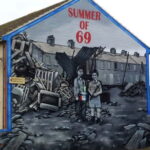
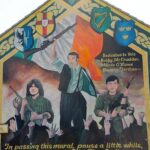
Next up is the International Mural Wall at Divis Street. It’s another photo stop with narrative explaining the stories behind the famous murals. This is the point where you’ll likely notice the scale and intention of the artwork more than at Divis.
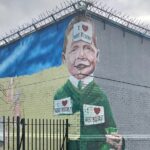
The value here is not just that you see more murals. You learn how Belfast street art can function like a living bulletin board. Over time, walls became one of the most visible ways for communities to record grief, pride, and political points of view.
If you’re trying to understand how people saw the conflict at the time, this stop is where the tour starts turning from observation into comprehension. You’ll begin noticing repeated themes: memorial figures, commemorations, and messages directed outward.
Bobby Sands mural: a name that keeps showing up
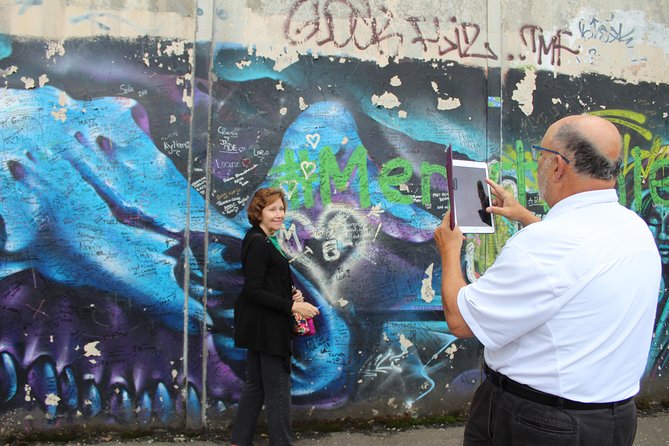
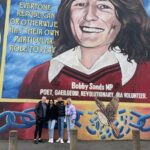
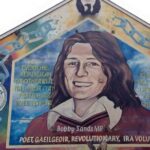
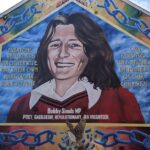
Then comes the Bobby Sands mural. Expect a photo stop plus narrative. Sands is one of those names that can feel like a headline when you only read it in passing. On the wall, you get the human weight behind that name and why it still lands hard.
This stop is also a good checkpoint for your own comfort level. The Troubles are not a distant museum exhibit. They’re a set of memories still connected to real communities. If you’re open to learning, the guide’s explanation here helps you see why murals can feel like both remembrance and argument.
What I like about a dedicated stop like this is that it avoids the common problem of hearing one mention of a figure and then moving on. You get time to actually look, then the story clicks.
Clonard Monastery: faith, community, and a pause in the route
The tour shifts to Clonard Monastery for a photo stop and visit with narrative. This is one of the moments where the tour broadens out from wall-to-wall pictures into a more grounded setting tied to community life.
Even when you only have about 10 minutes, a monastery stop can change the feel of the whole tour. It reminds you that the conflict did not sit only in headlines or political speeches. It moved through institutions, neighborhoods, and everyday routines.
For you, the practical takeaway is simple: don’t treat this stop as a break from learning. Use it as a reset. Look at how the guide frames what you see and compare it to what you just learned at the murals. The connections start to feel more real.
Peace Wall: seeing how a barrier became a page
The Peace Wall is next, with a photo stop and sign wall narrative. This is one of the tour stops you’ll probably remember the longest. A barrier is one thing. A barrier covered in messages is something else.
The most useful part for you here is the explanation. You learn how physical separation becomes cultural separation, and how both sides can use public writing to tell their story. The tour keeps it factual and human, not theatrical, so you can absorb what you’re looking at without getting swept into one-sided slogans.
A small caution: this is the sort of stop that can feel intense even if you’re only viewing from the outside. If you need a moment to breathe, take one before you start snapping photos. You’ll get better pictures when you’re calmer.
Shankill Road: the murals after the line is drawn
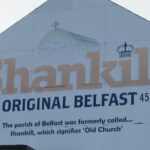
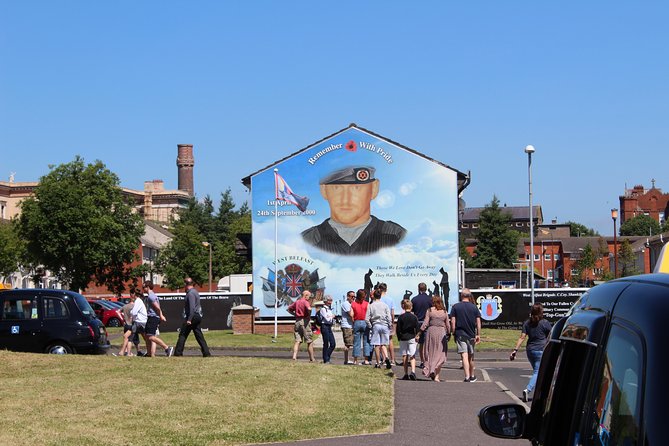
Finally, the tour goes to Shankill Road for another photo stop and narrative. Shankill Road is a strong closing chapter because it puts the earlier stops into a fuller picture. You can see how the murals keep pointing back to community identity and political perspective, not just individual artwork.
This is also where you’ll likely notice the “balance” people talk about in their reviews. The stronger guides make sure you understand what each community believed it was fighting for, even when you disagree with the methods. That doesn’t make the history easy. It makes it clearer.
For you, I recommend you end by asking yourself a question: what did each mural try to say, and to whom? If you can hold onto that, you’ll come away with more than a checklist of famous walls.
Why the guides matter more than the walls
The most consistently praised part of this tour is the guide. People mention a lived perspective and a fairness that still doesn’t hide the pain. Names that come up with strong positive notes include Joe McCullough, John, Billy, Kieran, and Jackie.
Here’s what you should take from that, practically: a murals tour is only partly about murals. The other part is interpretation. The best guides answer your questions directly and openly, and they do it with the kind of credibility you get from having seen how this conflict shaped daily life.
You’ll also notice how guides shape the emotional tone. One person praised how the guide was personally emotional but still communicative and balanced. Another highlighted how the guide encouraged questions and shared lived experience that changed their view of the IRA and what it wanted to achieve. That range of reactions tells you something important: you won’t get a single canned message.
If you want to get the most out of the tour, treat it like a conversation. Ask what you don’t understand. If you hear unfamiliar terms, ask for plain explanations. The short stop timing makes questions even more valuable.
Price and value: what $83.18 buys you
At $83.18 per person for about 1 hour 30 minutes, this tour sits in the “worth it if you care about meaning” category. If you’re just looking for a quick photo loop, you could probably do something cheaper on your own. But if you want context, this price starts to make sense fast.
Here’s the value math that you can actually feel:
- Professional guide (not audio-only)
- Air-conditioned vehicle
- Admission tickets included at each stop
- A route that hits major mural points: Divis, the International Mural Wall, Bobby Sands mural, Clonard Monastery, Peace Wall, Shankill Road
The “included tickets” part is easy to miss when you’re shopping. Since each stop explicitly includes an admission ticket, you’re not likely to face surprise entry fees.
Also, the tour is private for your group and described as small-group, which usually means you get more attention than on big coach-style tours. Group discounts are also part of the offering, which can help if you’re traveling with friends or family.
Timing, pickup, and what to plan around
Start times are offered throughout the morning and early afternoon, including 8:00am, 9:00am, 10:00am, 11:00am, 12:00pm, 1:00pm, and 2:00pm. You should state your pickup point and preferred time when booking.
Your tour begins at the Leonardo Hotel and returns there at the end, so you can build the rest of your day around it. The tour doesn’t include food or drinks, so plan a meal either before you go or after. If you’re thinking lunch, aim to be flexible, because you’ll be mentally busy during the ride and stops.
Comfort-wise, you’ll likely be doing short standing photo moments and rolling forward by van. Wear clothes you can move in and bring a camera strap or phone grip so you can take photos quickly when you have the chance.
Who this tour suits best (and who might want something else)
This tour is a strong match if you:
- want a fast way to understand the context behind Belfast murals
- prefer guided explanation over reading scraps on your own
- like tours where you can ask questions and get direct answers
- want the emotional realism that people keep praising
It may be less ideal if you:
- want a purely “art only” tour with no heavy political or conflict context
- get overwhelmed by the topic quickly
- need long, unstructured time at each site rather than short photo-stop windows
It’s also a good city-entry plan for first-timers. You’ll get your bearings quickly: where the murals are, why they’re there, and how different neighborhoods shape the story.
Should you book the Belfast Murals Tour?
Yes, if you want meaning, not just photos. The tour hits the core mural sites people come to Belfast to see, but the real payoff is the guide’s ability to connect paint to people, institutions, and the long arc of the Troubles. The consistent 5-star feedback for guides like Joe McCullough, John, Billy, Kieran, and Jackie isn’t just about being friendly. It’s about making a complicated, painful subject understandable.
Before you book, check your expectations. This is moving material. If you treat it like a serious learning stop, you’ll get a lot for your money, including admission tickets and a comfortable van route.
If you’re ready for context and conversation, book a time slot that gives you breathing room afterward for dinner and reflection. Then show up with one simple goal: look first, listen closely, and ask your questions.
FAQ
How long is the Famous 1.5 hour Belfast Murals Tour?
It runs about 1 hour 30 minutes.
Where does the tour start and end?
It starts at Leonardo Hotel Belfast, Great Victoria St, Belfast BT1 6DY, UK, and ends back at the same meeting point.
Is food or drinks included?
No. Food and drinks are not included.
What’s included in the price?
The tour includes a professional guide, an air-conditioned vehicle, and admission tickets are included for the stops.
Is this tour private or shared?
It’s described as a private tour/activity, and only your group participates. It’s also promoted as a small-group tour.
What language is the tour offered in?
The tour is offered in English.
What start times are available?
You can choose from 8:00am, 9:00am, 10:00am, 11:00am, 12:00pm, 1:00pm, or 2:00pm. You should state your preferred time and pickup point when booking.
Can I cancel for a full refund?
Yes, free cancellation is available. You can cancel up to 24 hours in advance for a full refund.
Are there any age limits or requirements for booking?
The minimum age is 0 years, and there is a minimum of 2 people required per booking. Service animals are allowed.