REVIEW · BELFAST
Black Taxi Tour of Belfast – Politics, Murals peace walls Tour
Book on Viator →Operated by Tucks Tours · Bookable on Viator
Belfast’s walls tell stories you can’t scroll past. This black taxi tour strings together murals, memorial gardens, and the Peace Walls in a tight 1.5-hour route that helps you make sense of what’s changed, what hasn’t, and what people still live with today.
What I like most is the way you get both sides of the city—Falls Road to Shankill Road—and the stop choices land on places tied to public memory. I also love how the guide’s personal angle makes the Troubles feel less like a textbook and more like real life.
The only real drawback to keep in mind: this experience is weather-dependent. If conditions are poor, your tour may be rescheduled, and the plan is more about seeing streets and walls than museum time.
In This Review
- Key highlights to know before you go
- A Black Taxi Tour of Belfast That Makes the Troubles Feel Understandable
- Meeting Point and Pickup: Where to Show Up Ready to Roll
- West Belfast to the Falls Road: Murals, Stopping Power, and St. Comgall’s
- Crossing the Peace Gates to Shankill Road: A Different Perspective in the Same City
- Bombay Street Memorial Garden: When the Tour Turns Quiet and Personal
- Clonard Monastery and the 1998 Agreement: Peace Talks Made Real
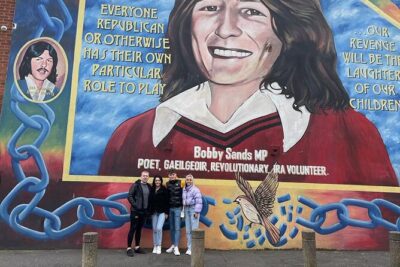
- Ending at the Bobby Sands Mural: A Final Symbol You’ll Carry With You
- Price and Value: Is $88.65 Worth It?
- Guide Style That Converts Facts Into Understanding (Robert’s Impact)
- What This Tour Teaches You About Belfast’s “Now,” Not Just Its Past
- Timing, Weather, and Comfort: How to Prepare for a 90-Minute Street Route
- Who Should Book This Black Taxi Tour (and Who Might Skip It)
- FAQ
- FAQ
- Where does the Black Taxi Tour of Belfast start?
- Does the tour offer pickup?
- How long is the tour?
- Is this a private tour?
- What language is the tour offered in?
- What stops are included on the route?
- Is admission included for any stops?
- Is there a weather requirement?
- What’s the cancellation window?
- Are service animals allowed?
- Should You Book This Black Taxi Tour of Belfast?
Key highlights to know before you go
- Black taxi, small-group feel: A Lux 8-seater Mercedes Vito keeps the ride intimate.
- Two-community perspective: You cross from Falls Road to Shankill Road through the Peace Gates.
- Peace Walls on your route: You’ll see the barriers that still divide communities today.
- Meaningful memorial stops: Bombay Street Memorial Garden and other remembrance sites are central to the walk-throughs.
- Peace talks connection at Clonard Monastery: You visit the place where discussions ahead of the 1998 Agreement took shape.
- Bobby Sands mural as a strong final note: The tour ends at a mural that has become a symbol far beyond Belfast.
A Black Taxi Tour of Belfast That Makes the Troubles Feel Understandable
If you’re even slightly curious about Belfast, you’ll quickly learn it’s a city where art, politics, and daily life overlap. A taxi tour works well here because you move fast between the places that matter, without trying to figure out a patchwork of neighborhoods on your first day.
This is also the kind of tour where the guide’s voice matters. On this one, you’re not just shown photos and dates—you get a personal route built around what those murals and memorials mean to people in the present.
You can also read our reviews of more tours and experiences in Belfast.

Meeting Point and Pickup: Where to Show Up Ready to Roll
The tour starts at room2 Belfast hometel, at 32–36 Queen St, Belfast BT1 6EE. You also finish back at the same meeting point, which keeps the logistics simple.
Pickup is offered. You can be picked up at the Belfast cruise terminal, and there’s pickup from Belfast station at an agreed location. If you’re coming from somewhere else, it’s worth confirming your exact pickup spot ahead of time so you’re not wandering Queen Street with a deadline.
The group is private, meaning it’s just your party in the vehicle. That matters because you can ask questions without feeling like you’re interrupting a packed bus.
West Belfast to the Falls Road: Murals, Stopping Power, and St. Comgall’s
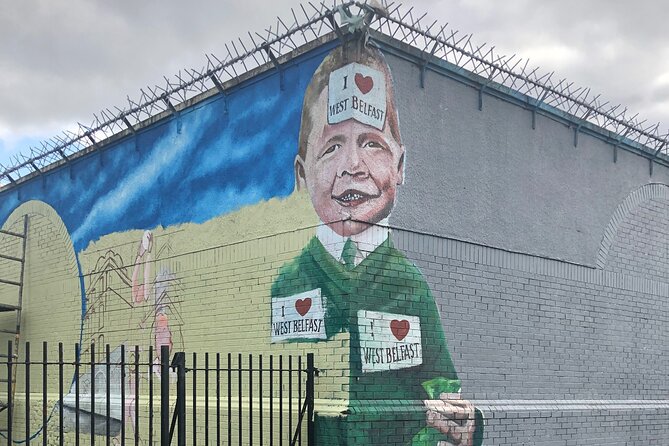
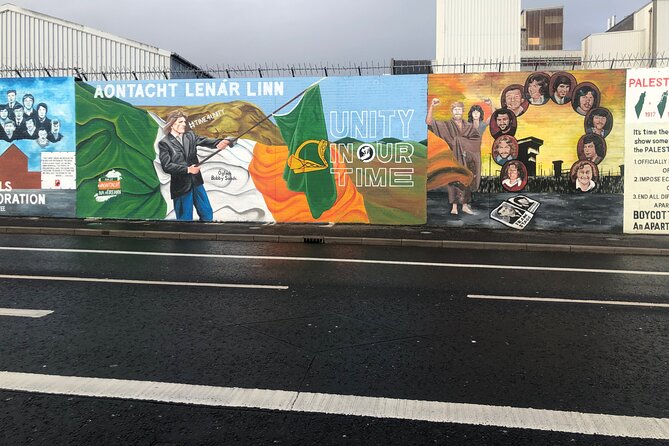
The tour begins on the Falls Road, one of the most important corridors for understanding how Belfast’s murals became public storytelling. You’ll see powerful murals and landmarks that connect to the city’s past and to how communities remember it.
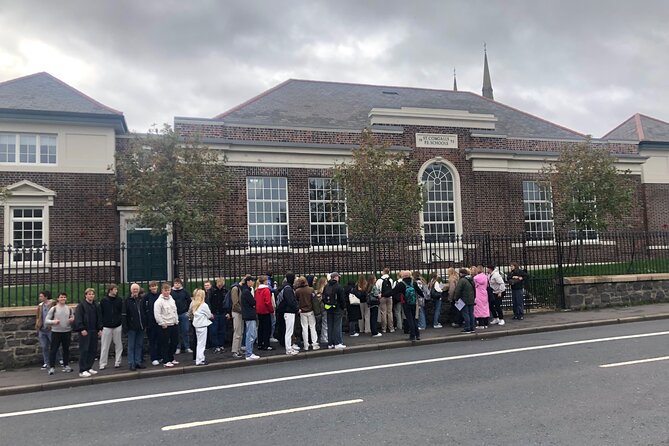
One standout on this stretch is that you pass St. Comgall’s, which gives you a sense of how local history sits right in the middle of ordinary life—schools, streets, and daily routines, not just distant monuments.
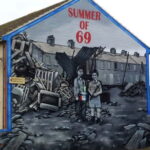
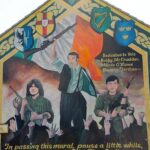
You’ll also be looking at murals up close, not from far away. That’s a big deal, because Belfast mural art often includes layered meanings: symbols, names, and visual cues tied to identity, grief, resilience, and political messaging.
Tip: Bring your patience. Some stops turn into longer conversations, especially when the guide is explaining what specific images are getting at.
Crossing the Peace Gates to Shankill Road: A Different Perspective in the Same City
After the Falls Road, you cross through the Peace Gates toward the Shankill Road. This is where the tour earns its keep, because it doesn’t treat Belfast like one uniform story.
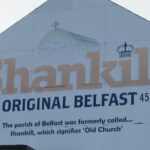
On the Shankill side, you’ll visit the Memorial Garden, including murals featuring the King and Queen. Even if you don’t instantly recognize every symbol, the garden setting helps you understand that these aren’t just decorations—they’re part of how groups mark meaning and belonging.
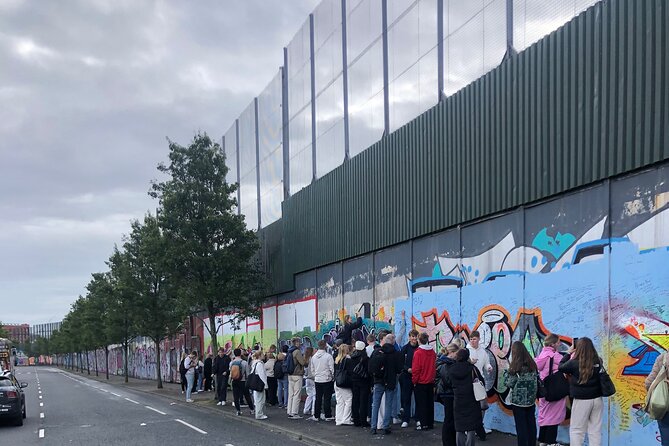
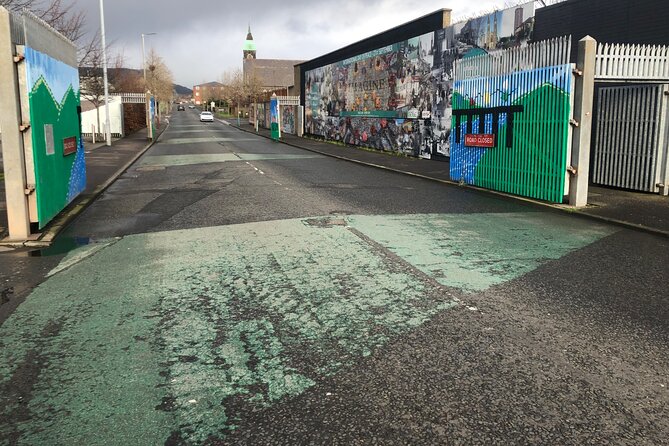
Then comes a moment you can’t really skim: you’ll see the towering Peace Walls still dividing communities today. Seeing them in person is different from reading about them. You grasp the physical reality of separation—how it shapes routes, sightlines, and that feeling of walking through a line people have to live next to.
Bombay Street Memorial Garden: When the Tour Turns Quiet and Personal
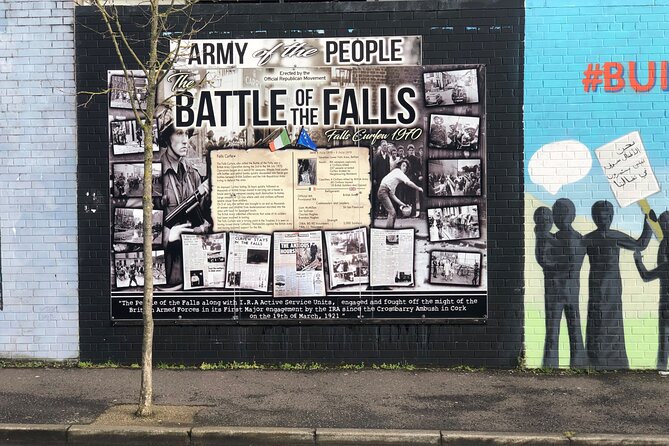
One of the most emotionally loaded stops is Bombay Street Memorial Garden. The name alone hints at the significance, and on this tour it’s treated as a key remembrance point rather than a quick photo stop.
What I appreciate about including this kind of site is that it balances the more visually loud murals with a calmer, reflective space. You get a chance to slow down and think about why memorials in Belfast are so central to civic identity.
This isn’t the kind of stop where the guide rushes. You’ll get time to take in what’s there and ask questions if you want more context.

Clonard Monastery and the 1998 Agreement: Peace Talks Made Real
Another high-value stop is Clonard Monastery. This is where key peace talks were held ahead of the 1998 Agreement, and the tour uses the visit to connect street-level murals to the political process behind them.
It helps you understand a basic point: peace in Belfast didn’t arrive as a single event. It was negotiated by people, meetings, and long, imperfect steps—while communities continued to experience the consequences on the ground.
If you like context that fits into a walking route (not a lecture), this stop gives you that. The monastery setting also makes it easier to keep your mind on the purpose of remembrance: understanding, acknowledgment, and moving forward.
Ending at the Bobby Sands Mural: A Final Symbol You’ll Carry With You
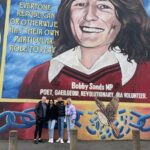
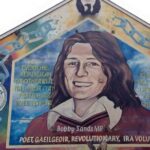
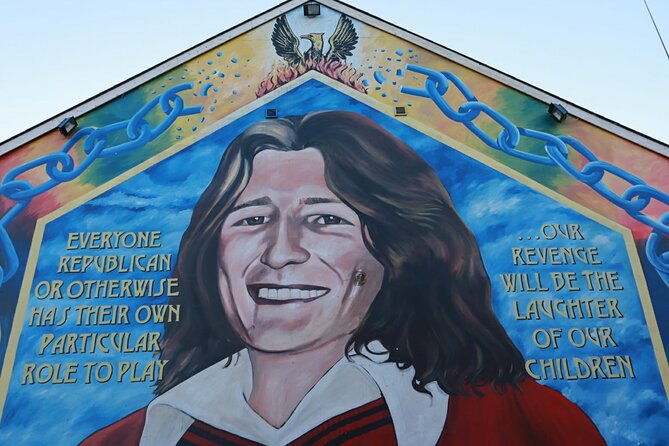
The tour finishes at the famous Bobby Sands mural. By the end of the route, you’ve already seen how murals can be political, personal, and communal all at once. This last stop ties those themes together with one of the most widely known figures in the Troubles era.
It’s a strong finale because it gives you a focal point. After the Peace Walls, memorial gardens, and monastery stop, the Bobby Sands mural feels like a bookend: a symbol that keeps showing up in how people talk about that period.
Practical note: You’ll likely want a clear moment for photos and a bit of extra time to absorb the meaning. Don’t plan a tight connection right after the tour ends; let it land.
Price and Value: Is $88.65 Worth It?
At $88.65 per person for about 1 hour 30 minutes, the price isn’t “cheap,” but it can be good value if you care about context and not just sightseeing.
Here’s why it can feel worth it:
- You’re getting an efficient route across multiple key areas without figuring out transport across neighborhoods.
- The tour is private to your group, so you aren’t getting squeezed into silence.
- The guide’s personal storytelling (more on this next) can turn the whole experience from information into something memorable.
What you’re paying for is mostly the guide’s perspective and the selection of stops that connect murals to memorial sites and peace-related locations. If you want a short, guided way to build understanding fast, the cost starts to make sense.
If you prefer self-guided walking with maximum control and you already know the basics, you might decide this is not your best spend. But if you’re unsure where to start, this is a clean, focused intro.
Guide Style That Converts Facts Into Understanding (Robert’s Impact)
The most praised part of this tour is the guide, and the name that comes up most is Robert. His personal story and lived experience around the Troubles add weight to what you see. You get a sense of why the murals and memorials were created—not just what they depict.
You’ll also get an extra layer of care. Robert takes pictures and videos during the tour and sends them afterward. On top of that, he shares documentaries for further context, so the experience doesn’t end when the taxi door closes.
That combo—storytelling plus follow-up material—is what turns a 90-minute ride into something you can reflect on later without starting from scratch.
What This Tour Teaches You About Belfast’s “Now,” Not Just Its Past
The tour’s strongest idea is balance: it doesn’t pretend Belfast is only about one community or one timeline. You see how different neighborhoods hold memory, how murals act like public statements, and how the Peace Walls show the present tense of division.
Even if you come in with no background, the sequence helps you build a simple framework:
- murals communicate identity and belief,
- memorial gardens mark loss and meaning,
- peace-related sites connect those messages to negotiation and political change,
- and the Peace Walls show that the story continues in physical form.
It’s not tidy. Belfast rarely is. But this route makes the mess understandable.
Timing, Weather, and Comfort: How to Prepare for a 90-Minute Street Route
This experience requires good weather. Since the tour depends on seeing outdoor murals and walls, plan for the reality that you may need to bundle up or dress for wet sidewalks.
Bring comfortable shoes. You’ll be spending most of the time standing at mural sites and memorial areas, with short movement between locations.
Also, remember the tour length is about 1.5 hours. It’s not a half-day crawl. So if you’re the type who likes long stops everywhere, you’ll still get time, but the schedule is intentionally tight.
Who Should Book This Black Taxi Tour (and Who Might Skip It)
This tour fits you best if:
- you want a guided intro to murals, memorials, and peace walls without doing serious planning,
- you’re okay with a sensitive subject handled through personal storytelling,
- you want both Falls Road and Shankill Road perspectives in one compact route,
- you like the idea of photos/videos and follow-up documentaries afterward.
You might consider skipping if:
- you want only upbeat, light sightseeing with zero political context,
- you dislike emotionally heavy memorial spaces,
- or you know you’ll need a long, slow pace rather than a focused 90-minute overview.
FAQ
FAQ
Where does the Black Taxi Tour of Belfast start?
The tour starts at room2 Belfast hometel, 32–36 Queen St, Belfast BT1 6EE, UK.
Does the tour offer pickup?
Yes. Pickup is offered from the Belfast cruise terminal, and there is pickup from Belfast station at an agreed location.
How long is the tour?
The tour is approximately 1 hour 30 minutes.
Is this a private tour?
Yes. It’s private, and only your group will participate.
What language is the tour offered in?
The tour is offered in English.
What stops are included on the route?
You’ll visit key areas such as the Falls Road murals, locations around the Peace Gates and Shankill Road (including the Peace Walls and Memorial Garden), Bombay Street Memorial Garden, Clonard Monastery, and the Bobby Sands mural.
Is admission included for any stops?
The provided details note that there is free admission for a 15-minute segment.
Is there a weather requirement?
Yes. The tour requires good weather. If it’s canceled due to poor weather, you’ll be offered a different date or a full refund.
What’s the cancellation window?
You can cancel for free up to 24 hours in advance of the experience for a full refund.
Are service animals allowed?
Yes, service animals are allowed.
Should You Book This Black Taxi Tour of Belfast?
I’d book it if you want a fast, meaningful Belfast introduction with structure and context. The route covers the places that help you understand the city’s divisions and its peace process, and the best part is the guide’s personal storytelling—especially Robert’s—plus the thoughtful follow-up (photos/videos and documentaries).
If you’re sensitive to political and memorial content, go in with the expectation that the tour will be reflective. For many first-time visitors, that’s exactly why it feels valuable.