REVIEW · BELFAST
Belfast Troubles Murals Street Art and Peace Wall Walking Tour
Book on Viator →Operated by belfastology walking tours · Bookable on Viator
You can learn Belfast in one long, moving walk. The Belfast Troubles Murals Street Art and Peace Wall tour turns murals into a guided story of the city’s past and its push for peace.
I love how the tour balances political murals with community street art, so you don’t just hear dates and slogans. And I like that you get a local guide, Marti, leading the way through neighborhoods where the artwork still matters day to day.
One thing to consider: this is brisk and fact-heavy. If you want a slow pace with lots of back-and-forth questions, you might find the experience more structured than casual.
In This Review
- Key highlights worth planning for
- Entering Belfast’s Cathedral Quarter: modern murals and the re-imaging idea
- Shankill Road: Loyalist murals and local street art side-by-side
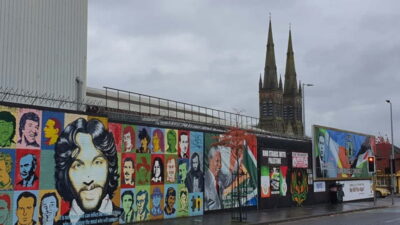
- Divis Street International Mural Wall: a world map made of causes
- The Peace Wall: a brief stop with heavy weight
- Bobby Sands Mural: why one image gets photographed so often
- Marti’s method: tying Troubles history to mural messages and peace work
- Pace, weather, and what to wear (so the tour feels good)
- Discounts and small comforts that make the walk easier
- Price and value: what $36.11 buys you in Belfast street-art storytelling
- Where the tour finishes: keep walking or call it a day
- Should you book this Belfast Troubles murals and Peace Wall tour?
- FAQ
- How long is the Belfast Troubles Murals and Peace Wall walking tour?
- How much does the tour cost?
- Where do you meet and where does the tour end?
- Is the Peace Wall included in the price?
- Is this tour suitable for children or teens?
- What should I wear or prepare for?
Key highlights worth planning for
- Small group size (max 8) means less waiting and more attention on the walk.
- No microphone and a brisk pace means comfy shoes and staying with the group matter.
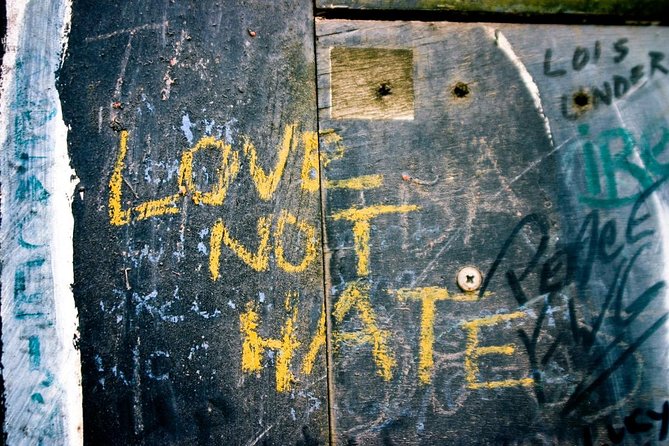
- Peace Wall stop gives you a clear, physical sense of separation and rebuilding.
- Belfast street art beyond politics: you’ll also see international and community-led mural work.
- Marti’s story focus links the Troubles to today’s peace efforts across multiple generations.
Entering Belfast’s Cathedral Quarter: modern murals and the re-imaging idea
The tour starts in the Cathedral Quarter area, using it as your launching pad into Belfast’s street-art language. You’re set up for two tracks at once: newer mural work with international influence, plus older, more controversial political murals as you move west. It’s a smart way to understand Belfast quickly because street art here isn’t just decoration. It’s how people talk back to history.
A big theme in this first stretch is what locals want to put on their own walls now. You’ll hear about a project called re-imaging, aimed at bringing the kind of street art and murals that communities choose to share—work that reflects current voices rather than only past conflict. In practice, it makes the tour feel future-facing. You’re not stuck staring only at the hardest symbols.
The tour also builds context before you reach the most sensitive areas. You’ll hear how Northern Ireland is working with locals to create peace, and how mural projects can become part of that long repair process. This is the section where you’ll get your bearings fast—watching the artwork while the guide connects it to what you’re seeing on the ground.
You can also read our reviews of more tours and experiences in Belfast.

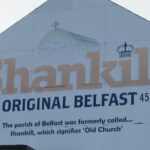
Shankill Road: Loyalist murals and local street art side-by-side
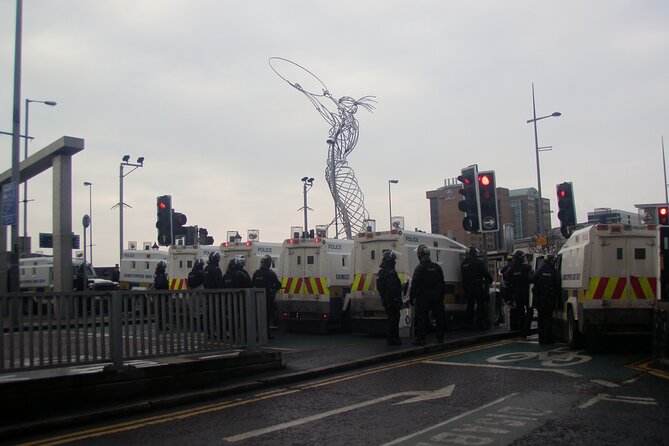
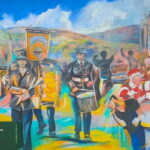
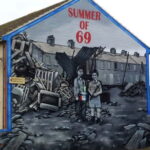
Next up is Shankill Road, where you’ll see Loyalist murals along with local street art. This stop is only about 15 minutes on the schedule, so it’s not a long photo walk. Think of it as a focused look: you take in the wall, you listen to what each visual language is trying to say, and then you move on.
This is one of the stops that most clearly shows why walking matters. If you drive past these areas, you miss the density—how closely the murals sit in lived neighborhoods. On foot, you notice storefronts, streetscapes, and how the artwork is woven into everyday routes, not isolated like a museum exhibit.
Also, this is where you’ll want to keep your own pace. The tour is walk-first, listen-while-moving. If you stop to read every detail like it’s a textbook, you might feel rushed. Better strategy: take the guide’s lead, then circle back briefly at the end if time allows.
Divis Street International Mural Wall: a world map made of causes
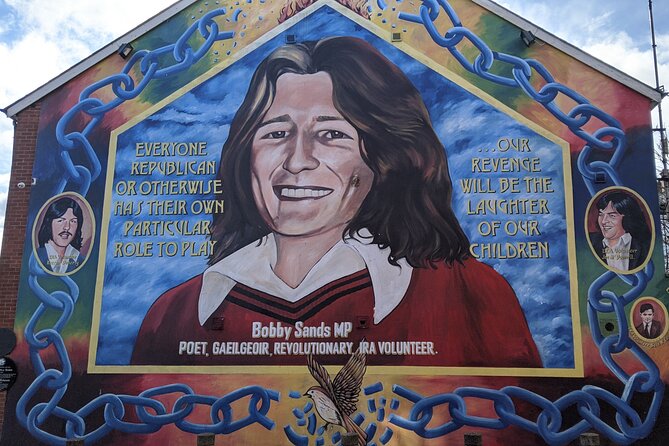
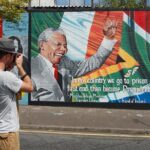
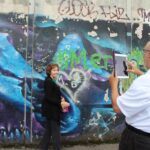
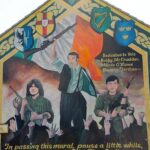
At the International Mural Wall on Divis Street, the mood shifts. Instead of only Belfast’s internal messages, you’ll see murals for causes all over the world. The idea here is simple but powerful: Belfast’s walls have opinions, and some of those opinions are global.
This stop helps you broaden your lens. It’s easy to treat Troubles-era murals as strictly local history, but the international mural wall reminds you that art travels. People connect through shared themes—identity, rights, remembrance, solidarity. Even when you’re standing in West Belfast, the message can reach beyond it.
Because the stop is short (about 15 minutes), it works best if you come ready to absorb rather than research. You’ll get the meaning the guide wants you to take away, and you can decide later which artwork you want to photograph for a closer look.
The Peace Wall: a brief stop with heavy weight
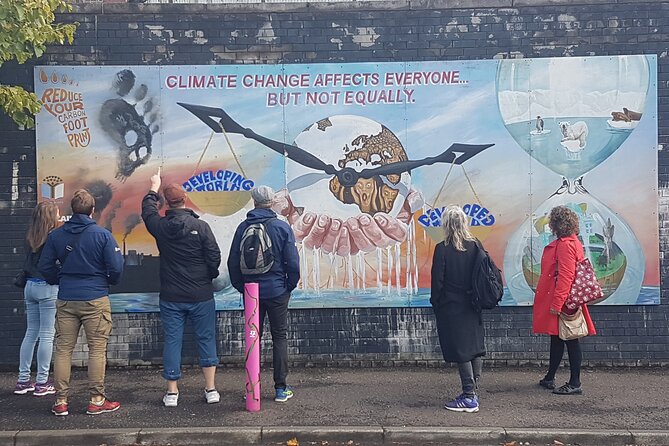
The scheduled stop at the Peace Wall is about 10 minutes, and it’s labeled as not included in admission. That combination is important for how you plan your mindset and your wallet.
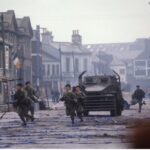
This is the moment where the tour becomes physical. The murals explain conflict and identity, but the Peace Wall is about the outcome: separation. Even in a short visit, you feel the line between communities, and you understand why art and peace-building efforts are such a big deal here.
If you’re the kind of traveler who likes context first, you’ll appreciate what comes before this: the guide sets up the “why” so the “what you see” lands. And if you’re hoping for lots of time standing still, you may wish the stop were longer—but the tour format is clearly designed for an overview plus a steady flow through multiple neighborhoods.
Bobby Sands Mural: why one image gets photographed so often
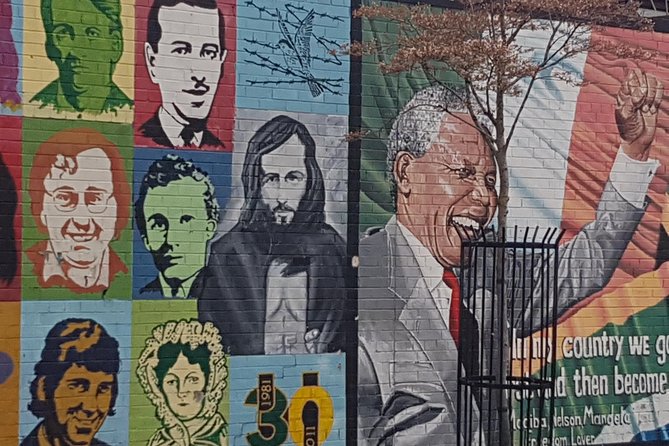
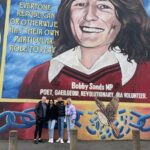
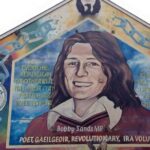
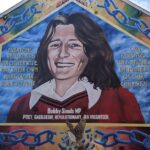
In the Republican area of West Belfast, you’ll see the Bobby Sands Mural, described as the most photographed mural there. It’s a quick stop (about 5 minutes), but that’s not a flaw. It’s actually part of the reality of how these images work: people come, they take in the meaning, they move on with the story.
Because it’s a single, iconic image, it can feel like it carries a whole chapter by itself. You’ll hear enough context from the guide to understand what’s being symbolized, and then you’ll be ready to keep walking instead of getting stuck at one spot.
This is also a good place to do a quick photo and then shift your attention back to listening. Street art on this subject is not just “interesting visuals.” It’s public memory, and it’s tied to specific people and specific political eras.
Marti’s method: tying Troubles history to mural messages and peace work
The tour is led by Marti, and the way he presents the material is a big part of the experience. Based on the tone people describe, he tends to be direct and story-driven, using murals as anchors. The aim isn’t just to list events. It’s to help you understand why murals look the way they do and why they persist.
A theme you’ll hear repeatedly is how the Troubles connect to the present day—and how healing doesn’t happen overnight. One comment that stands out from the tour perspective is the idea that healing takes three generations. Whether you agree with the phrasing or not, the point is clear: trauma and conflict leave long shadows, and peace is a process, not a light switch.
Marti is also described as working to keep the tone balanced and respectful. You’ll be walking both sides—Loyalist murals and Republican-area murals—without turning the tour into one long debate. That matters because Belfast’s street art can push strong emotions. A good guide helps you hold the tension without turning the walk into a shouting match.
One practical note: the tour does not use a microphone. That means your position in the group matters, and you’ll want to stay close enough to hear clearly. Also, the pace is brisk. People noted they walked more than 6 km in around 3 hours, so this is not a slow “stroll and stop for coffee” setup.
Pace, weather, and what to wear (so the tour feels good)
This is a walking tour for adults, with a moderate fitness level recommended. The route is paced so you cover multiple neighborhoods and stops within about 3 hours. If your legs are easily tired, wear footwear that can take a beating.
Weather in Belfast can be unpredictable. The tour information specifically warns that it can rain and feel colder than you’re used to. Sunglasses might help on sunny days, and sunscreen can be a good idea in summer—so yes, you can bring both sun protection and rain protection without sounding like a doomsday prepper.
If you tend to get cold, dress in layers. If you hate wet feet, bring waterproof shoes or plan for water-resistant footwear. Most of all: comfy shoes are not a suggestion here. They’re the difference between enjoying the story and focusing on your sore arches.
Discounts and small comforts that make the walk easier
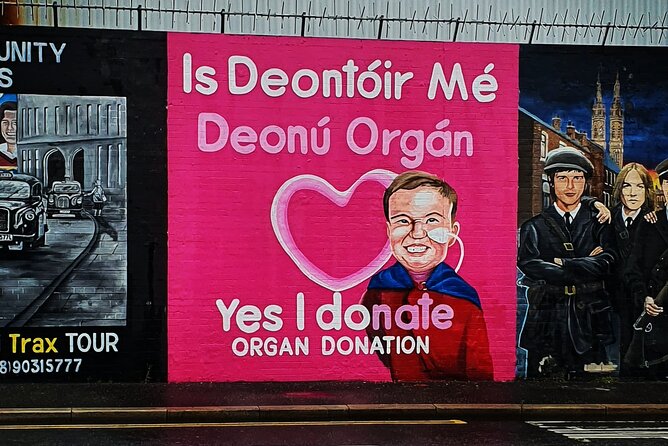
Along the route, the tour offers shopping and restaurant discounts. That’s a small but real value-add because the walk naturally takes you into areas where you may want a snack or a stop after the tour.
The tour also uses a mobile ticket, and it runs in English. Near public transportation, it’s easier to build into a broader Belfast itinerary without stressing about how you’ll get back to your base.
Group size is capped at 8 travelers, which generally means you’re not stuck behind a large crowd trying to listen at a wall. On a tour dealing with sensitive history, that smaller scale also helps keep the experience respectful and controlled.
Price and value: what $36.11 buys you in Belfast street-art storytelling
At $36.11 per person, this tour sits in the “good value” range for a guided, neighborhood-based experience. What justifies the price isn’t just that you get a guide. It’s that you’re getting a focused route with multiple high-impact stops—Cathedral Quarter murals, Shankill Road, Divis Street’s international mural wall, the Peace Wall, and the Bobby Sands mural—within about 3 hours.
You also get interpretation. Murals like these can look “readable” at a glance, but the meaning depends on context: who put it up, why it matters, and how it connects to ongoing peace-building efforts. Without that guided thread, you’d likely spend your time guessing and your photos wouldn’t come with much understanding.
This is also a tour where the guide’s presence changes the pacing and the emotional tone. People highlight Marti’s storytelling and his emphasis on peace, and those are the kinds of details that often make the difference between a $30 walk that feels like sightseeing and a $36 walk that actually helps you understand what you’re looking at.
Where the tour finishes: keep walking or call it a day
You finish back near the city center, with the tour ending at 32 Bank St. You’ll also pass more street art and political murals along the way, so you’re not dropped at a random corner with nothing left to see.
If you want to continue, the information notes a short walk to City Hall at 2 Royal Avenue, in a local community center area. And there’s also a finish point option linked with Kellys Cellers, which is useful if you’d like a straightforward place to grab a drink or a meal afterward.
Should you book this Belfast Troubles murals and Peace Wall tour?
Book it if you want a practical, on-foot way to understand Belfast beyond headlines. This tour is a strong fit for people who like street art with a story, and who want a guide to connect the murals to the Troubles and today’s peace efforts. The small group size and multiple neighborhood stops make it efficient.
Skip it—or at least go in with eyes open—if you’re sensitive to a faster pace, lots of information, and a more structured guide style. Also, because it’s adults only (not suitable for under 18s), it’s for grown-ups who are comfortable walking through politically charged spaces respectfully.
If you’re ready to see Belfast up close, with murals acting like your timeline, you’ll likely feel like you’ve gotten a clear grip on the city’s past, present, and future in just a few hours.
FAQ
How long is the Belfast Troubles Murals and Peace Wall walking tour?
It runs for about 3 hours.
How much does the tour cost?
The price is listed as $36.11 per person.
Where do you meet and where does the tour end?
You start at Exchange Street West, Belfast BT1 1, and you finish at 32 Bank St, Belfast BT1 1DA. The tour finish also mentions Kellys Cellers, and a short walk to City Hall at 2 Royal Avenue.
Is the Peace Wall included in the price?
Admission for the Peace Wall is not included, while other stops are marked as free ticket admission.
Is this tour suitable for children or teens?
No. It is adults only and not suitable for under 18s.
What should I wear or prepare for?
Wear comfortable walking shoes, dress for possible rain and colder weather, and consider sunglasses and sunscreen depending on the day. The tour also has a moderate physical fitness level expectation and a brisk pace with no microphone.