REVIEW · JOHANNESBURG
Johannesburg: Street Art and Culture in Maboneng!
Book on GetYourGuide →Operated by City Skate Tours Pty Ltd · Bookable on GetYourGuide
Street art in Johannesburg has meaning, not just style. In Maboneng, I love how the walls turn into a living lesson on Place of Light history and local culture, guided by people like Ayanda who explain the art and the neighborhood like it’s home. I also like the real-world pacing: coffee first, then a guided walk that mixes murals with places you can actually picture yourself visiting. One drawback to keep in mind: you’ll share the streets with informal traders, so if you get distracted by shopping, the timeline can feel a bit fast.
This tour is a strong intro to inner-city Johannesburg through art. My favorite part is how you connect the 2009-to-today evolution—from old industrial area to today’s creative precinct—to what you see on the walls, including work tied to artists such as ESPO Powers and DBongz. The other big plus is the stop at the Hide-Out Bar at Curiocity Backpackers, described as an alleged hideout for anti-apartheid activists, which adds context beyond murals. A consideration: if you already know a lot about Joburg redevelopment and anti-apartheid history, you may feel some sections cover familiar ground.
English-only keeps things simple. In my view, it’s a good fit when you want a walk that feels practical and local, with a clear safety briefing and time for questions. Just note the tour is built around walking streets, so comfy shoes help, and you should be ready for a neighborhood that’s active—not staged.
In This Review
- Key things you’ll notice on this Maboneng street art walk
- Where Maboneng turns murals into city history
- Starting at Home of the Bean, plus a 15-minute safety set-up
- Murals first: reading the walls across the Maboneng precinct
- What I like about this mural approach
- The possible drawback
- Maboneng Arts Village: where creativity is also commerce
- The alleged Hide-Out Bar story at Curiocity Backpackers
- Viewpoint moments and understanding Maboneng’s layout
- Evolution from 2009 to today: why art helped reshape the area
- Price and value: what $40 buys you in 2 hours
- Who this tour suits best (and who might want a different option)
- Tips to get the most out of your Maboneng street art experience
- Should you book this Maboneng street art tour?
- FAQ
- Where is the meeting point?
- How long is the street art and culture tour in Maboneng?
- Is the tour offered in English?
- What’s included in the price?
- Is food or drink included?
- Should I bring cash or a card?
- Is the tour wheelchair accessible?
- What if my plans change last minute?
Key things you’ll notice on this Maboneng street art walk
- Coffee at Home of the Bean gets you started in the right spot (and the right mood)
- Murals with names and meaning, not just pretty paint
- Artists like ESPO Powers and DBongz give you anchors for what you’re seeing
- Maboneng Arts Village shows the creative economy, not only the art
- The alleged Hide-Out Bar story adds anti-apartheid context
- A view stop en route makes it easier to understand the neighborhood layout
Where Maboneng turns murals into city history
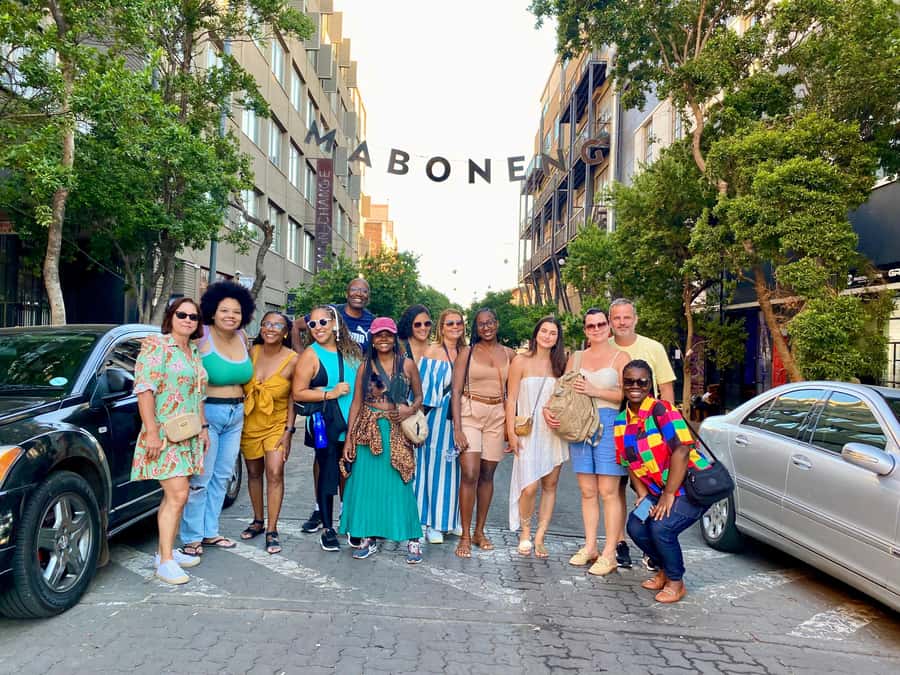
Maboneng is often described as the Place of Light, and you’ll feel why fast. The area’s story is written across walls, shopfronts, and creative spaces. This tour leans into that idea: you’re not just looking at street art, you’re learning how art reflects who lives here, what Johannesburg has been through, and where people hope the city is going next.
The best street art tours don’t treat murals like decorations. Here, the murals are treated like messages—sometimes political, sometimes personal, often both. That matters because Johannesburg’s inner-city story is complex. The tour’s goal is to help you read that complexity at street level, with context you can actually use while you’re walking.
You’ll also get a sense of how Maboneng mixes old industry with new creativity. The neighborhood is described as having evolved from an industrial area (with the older mining-era context of the region in the background) into a cool, culture-driven precinct starting around 2009 and continuing to today. Even if you only catch parts of the story on this 2-hour walk, it gives you a framework for what you’ll see later on your own.
You can also read our reviews of more tours and experiences in Johannesburg.
Starting at Home of the Bean, plus a 15-minute safety set-up
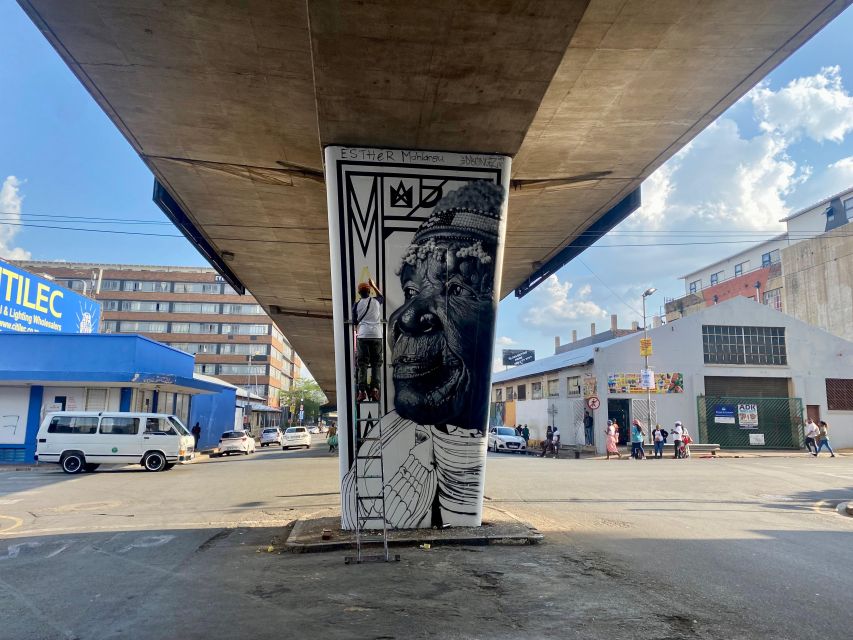
Your tour begins at Home of the Bean, right at the corner of Fox and Berea Street under the bridge. The outside looks like an old industrial building, so don’t worry if it doesn’t scream tourist-friendly. The key tip: wait inside the coffee shop. That small detail saves you stress, especially if you arrive a bit early.
Before you head out, you’ll get a safety briefing. This isn’t hand-wringing; it’s practical. Think of it as the moment the guide sets expectations for how to move through busy areas with confidence and good situational awareness. In the small details from past tours, guides have even helped with real-life needs like finding an ATM or parking options for people arriving by car—signals that the whole experience is meant to feel organized.
If you’re nervous about walking in any inner-city area, that briefing is exactly the kind of thing you want. It helps you stop guessing and start watching. Once you’re out there, you can focus on the art and the people.
Murals first: reading the walls across the Maboneng precinct
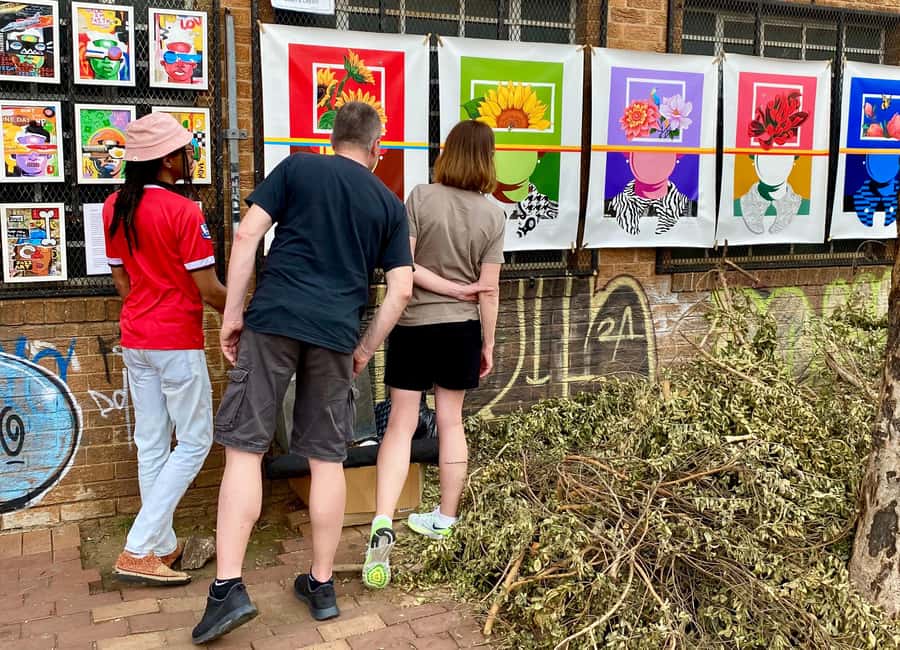
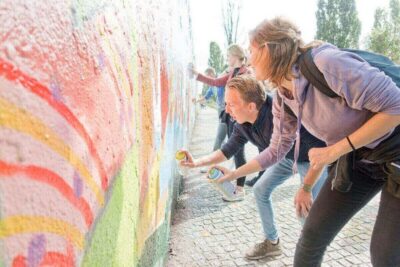
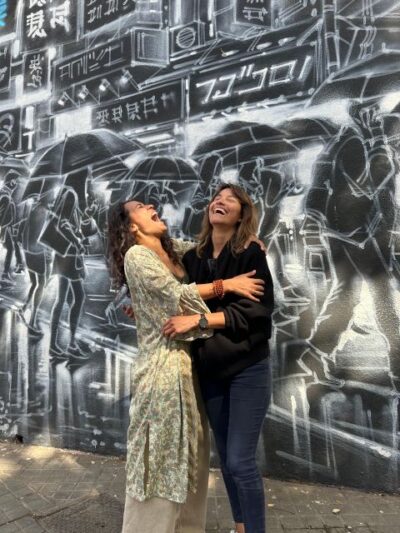
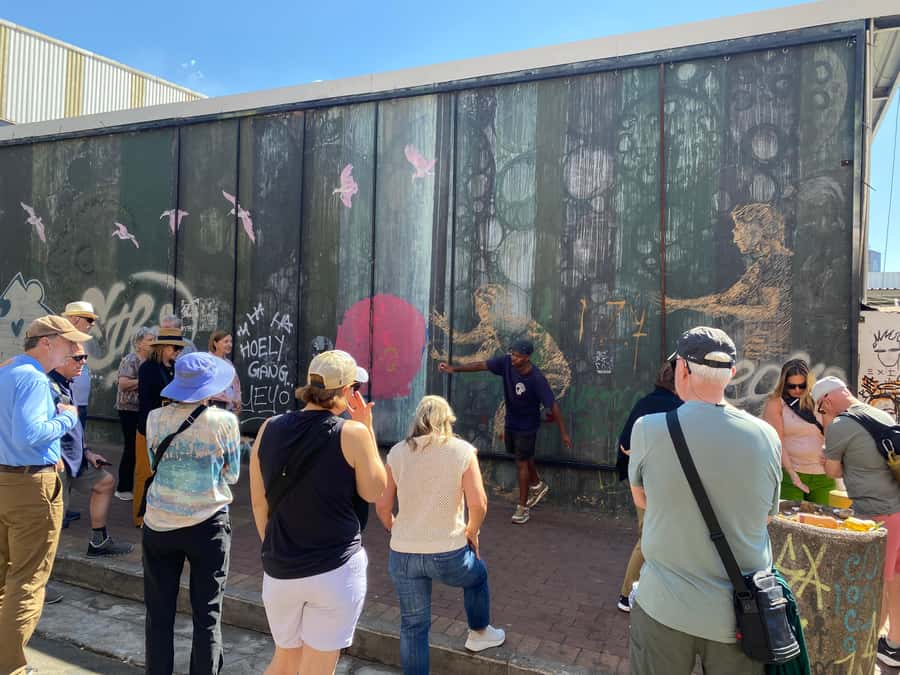
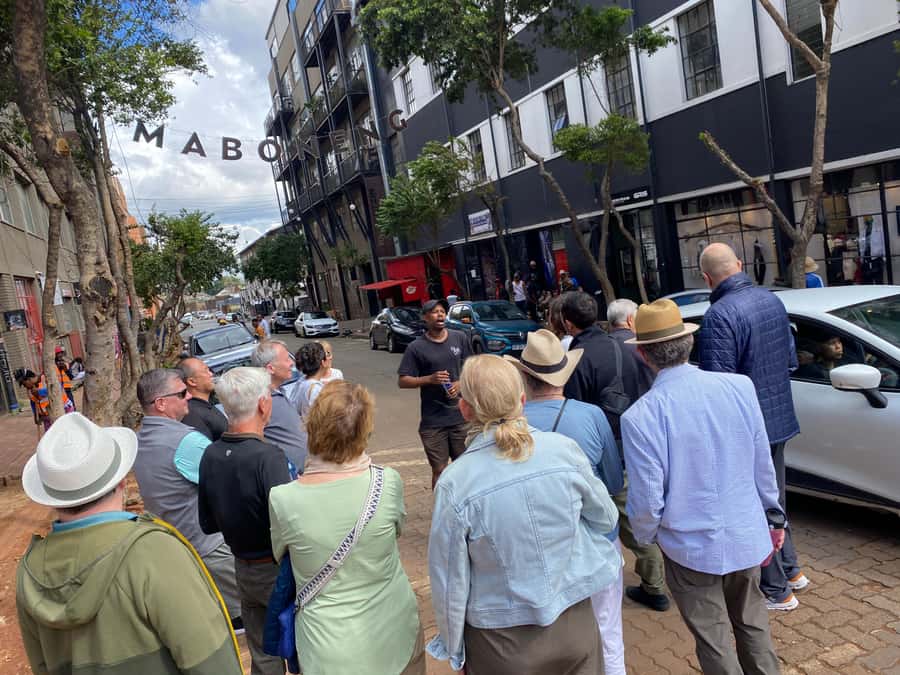
Most of the time is spent walking through Maboneng to see street art across the precinct and talk about the murals’ meaning and the artists behind iconic pieces. You’ll hear explanations that connect the visuals to local realities—how people express identity, memory, tension, and hope through public art.
You also get specific artist references. Names like ESPO Powers and DBongz come up, and that’s useful because it turns street art from random colors into a set of recurring voices. When you know an artist or a style has a story, your eyes change. You start noticing symbols, recurring themes, and the way different murals respond to their surroundings.
The pacing helps, too. You don’t just walk past walls without stopping. You’ll make time for looking, listening, and asking questions. Past tours have also had guides such as Ayanda, Bonny, Kaiser, and Michael, and the consistent thread is that the guide’s personality is part of the value. In particular, you’ll hear explanations that come from real connection to the area—not just textbook info.
What I like about this mural approach
- You learn how to interpret. You don’t leave thinking only about what you saw; you leave thinking about what it meant.
- The neighborhood context stays attached. You hear how the art connects to the area’s shift and its residents.
The possible drawback
If you’re already well-versed in Johannesburg’s redevelopment and street art culture, you might find some of the context repeats itself as the guide reinforces the themes at different stops. It’s not bad—just something to consider if you want ultra-specific new info every minute.

Maboneng Arts Village: where creativity is also commerce
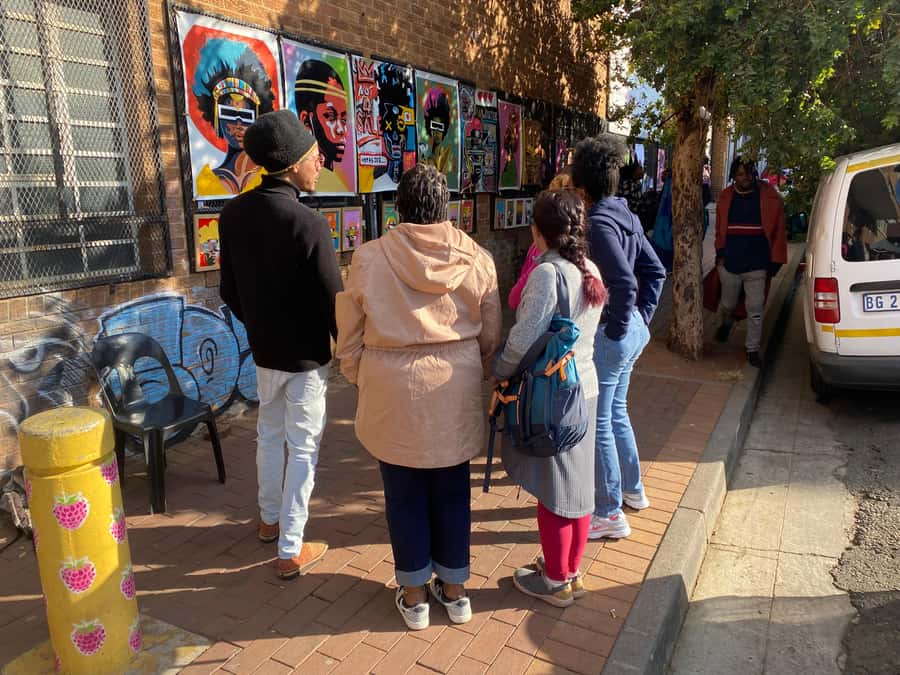
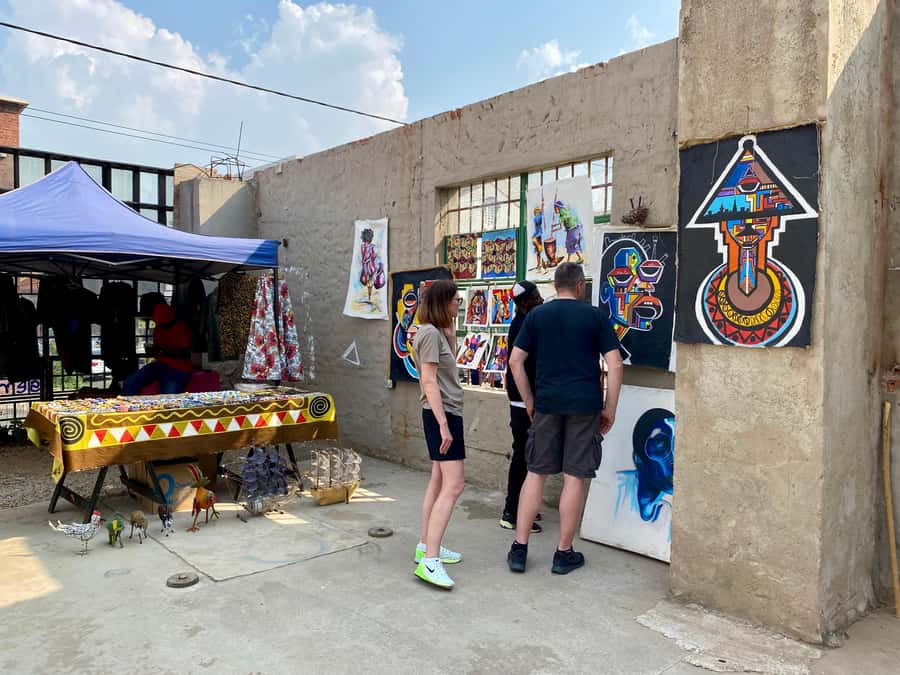
One of the stops that makes the tour feel more real is Maboneng Arts Village. This is where you’ll see how street art connects to an actual creative community—artists and creatives selling their work, not just painting walls for decoration.
Why it matters: street art is often treated like a free spectacle. Here, you get a glimpse of the other side—how artists turn creativity into income and how the community keeps moving. For you, that means you can look at the murals and then understand the ecosystem that supports them.
As you walk, you’ll also pick up on the broader mix of shops and spaces in the area—art galleries, curio and gift stores, and restaurants. You’re not just passively touring; you’re learning what kinds of businesses exist here and why tourists and locals both find reasons to linger.
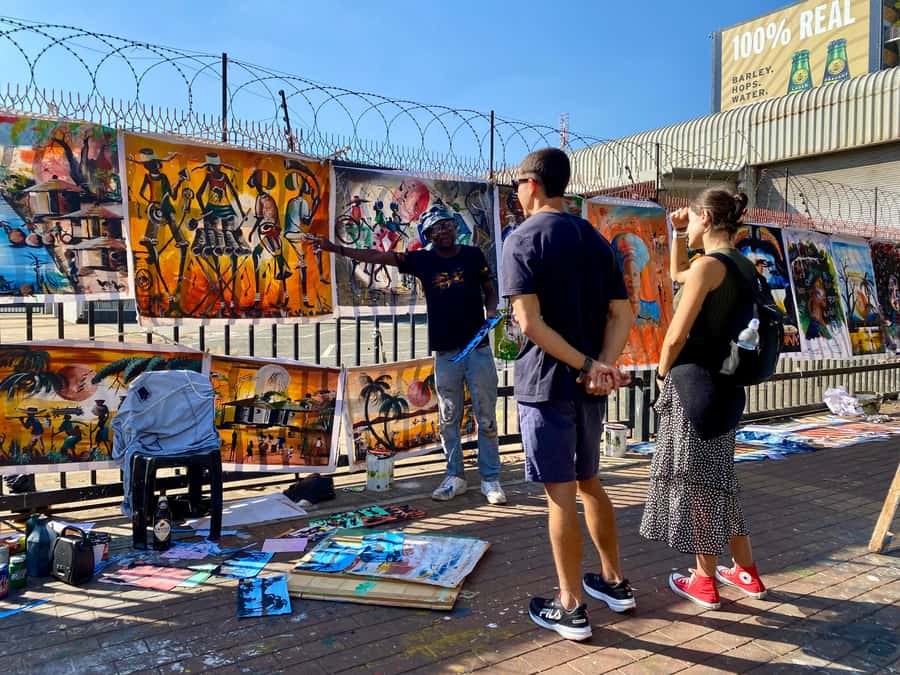
Practical tip: the area has street artists and informal traders around. If you want to buy anything, bring some cash or a card. The tour itself doesn’t provide food or drinks, and having a bit of spending flexibility helps you enjoy the neighborhood without waiting.
The alleged Hide-Out Bar story at Curiocity Backpackers
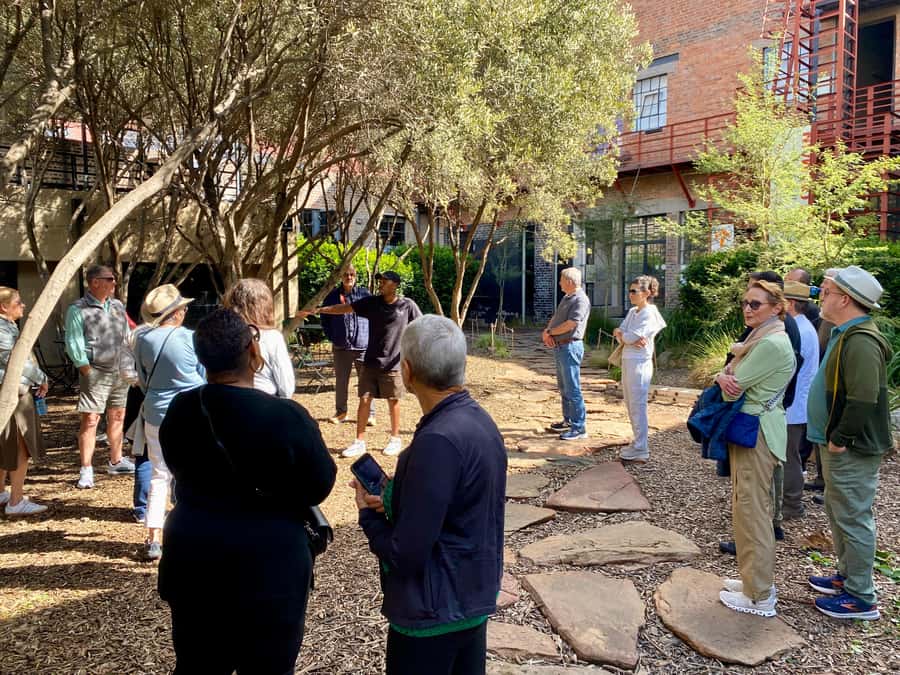
At Curiocity Backpackers, you’ll visit the Hide-Out Bar, described as an alleged hideout for anti-apartheid activists, including a connection to Mandela and others during apartheid. Whether you take every detail as legend or historical fact, the point of the stop is clear: it adds political and historical weight to the art you’ve been seeing.
This is important because street art in South Africa often carries more than aesthetic value. It can be a tool of protest, identity, remembrance, and survival. When the tour places a mural-heavy walk next to a story tied to the anti-apartheid struggle, you can see how public creativity became part of a bigger social narrative.
Also, you get a break from constant walking. That little pause is useful, especially if you’re trying to absorb a lot of history in a short time.
Viewpoint moments and understanding Maboneng’s layout
Between the mural stops and indoor/outdoor creative spaces, the tour includes a viewpoint stop with scenic views along the way. You might be thinking: why do I need a view in a street art tour? In this neighborhood, it helps a lot. From above or from an open spot, you can better understand how streets, walls, and creative venues connect.
That mental map matters if you plan to keep exploring on your own after the tour. Even a quick scenic moment can help you orient yourself: where you’ll return for coffee later, which blocks feel calmer, and what areas seem more active.
It also breaks up the concentration required for reading murals. After a few walls in a row, your brain needs a reset. The viewpoint does that while still staying connected to the neighborhood story.
Evolution from 2009 to today: why art helped reshape the area
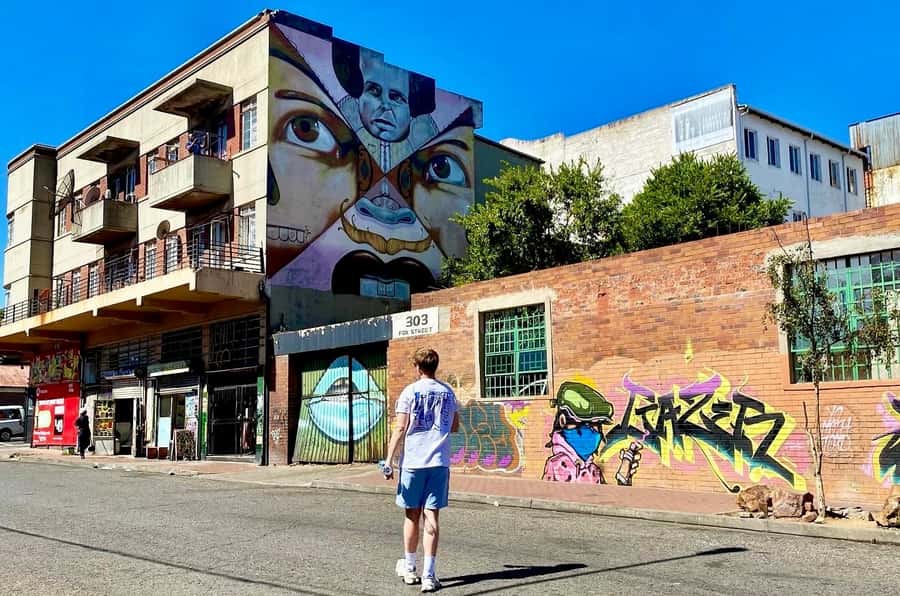
A recurring theme throughout the tour is the evolution of Maboneng. You’ll hear it described as starting as an old industrial area and then transitioning into a cooler neighborhood around 2009 and onward. The tour frames this shift as more than “new buildings showed up.” It’s linked to culture, creativity, and how people have turned the public space into a shared canvas.
This is where the tour is especially useful for you, because it provides a lens for what you’re seeing even after you leave. When you look at a mural later, you can ask: Is this responding to the neighborhood’s transformation? Is it commenting on past hardship? Is it part of a new identity?
Some of the best guidance on this topic comes from how the guide relates redevelopment to real life. I like when the guide can explain not only the art, but how the neighborhood change has been funded and what the vision is behind it. That kind of explanation turns the walk into a story with cause-and-effect, not just a list of murals.
Price and value: what $40 buys you in 2 hours
At $40 per person for about 2 hours, you’re paying for three things: guided interpretation, timed access to specific stops, and entry to the sites included. The tour includes entry to all sites visited. Food and drink are not included, so you’ll handle that yourself.
Is $40 worth it? In my view, yes if you care about context. Street art is visual, but meaning is the hard part. Without a guide, you can absolutely see murals. You just might miss why they were painted, what they reference, and how they tie to Maboneng’s shift over time.
This tour also saves time. You’ll hit multiple meaningful stops—Home of the Bean, Maboneng Arts Village, the Hide-Out Bar, plus a viewpoint—without needing to figure out the route on your own. That’s part of the value.
Who this tour suits best (and who might want a different option)
This is a great fit if you want:
- a walk focused on street art meaning, not only photos
- a first taste of inner-city Johannesburg through the Maboneng lens
- a guide who can connect the art to the neighborhood’s 2009-to-today evolution
- time for questions and a relaxed pace with a short safety briefing
It may not be ideal if:
- you dislike walking (it’s a streets-and-stops style outing)
- you only want art viewing and nothing about local history or politics
- you already know a lot and want brand-new information every minute (some context can repeat)
Tips to get the most out of your Maboneng street art experience
Before you go, keep these practical ideas in mind:
- Plan for street-level activity. You may see artists and informal traders, so keep your attention flexible.
- Bring cash/card if you want to buy artwork or small items.
- Start with a coffee at Home of the Bean if you’re early. It’s an easy way to settle in.
- Bring a curious mindset. You’ll get more from this tour if you treat the murals like conversation starters.
One more small note: the tour is English only, so make sure that works for your group. If English is your comfort zone, you’ll get the full benefit of the guide’s explanations.
Should you book this Maboneng street art tour?
If you’re visiting Johannesburg and you want a fast, friendly way to understand Maboneng beyond Instagram photos, I think you should book it. The combination of mural interpretation, specific artist references, and stops like Maboneng Arts Village and the alleged Hide-Out Bar makes it more than a walk-by experience.
Go for it especially if you value context and want to ask questions while you’re seeing the work in place. If you want a pure museum-style experience with zero street energy, you may prefer something else—but for most people, this is one of the most practical ways to learn the city’s culture on foot.
FAQ
Where is the meeting point?
You meet at Home of the Bean coffee shop at the corner of Fox and Berea Street under the bridge. Wait inside the coffee shop, especially if you arrive before your tour starts.
How long is the street art and culture tour in Maboneng?
The tour lasts about 2 hours.
Is the tour offered in English?
Yes. The tour is English only.
What’s included in the price?
Entry to all sites visited is included.
Is food or drink included?
No. Food and drink during the tour are for guests to pay for on their own.
Should I bring cash or a card?
It can help. There are street artists and informal traders around, and if you want to buy anything, bringing some cash or a card is useful.
Is the tour wheelchair accessible?
Yes. The tour is wheelchair accessible.
What if my plans change last minute?
You can cancel up to 24 hours in advance for a full refund, and you can reserve now and pay later to keep plans flexible.