REVIEW · SHANGHAI
Hands On Chinese Cave Murals with Local Expert
Book on Viator →Operated by Wenislands Cultural Heritage Preservation Workshop · Bookable on Viator
Shanghai art comes with a pencil in hand. This hands-on workshop lets you recreate Dunhuang-style cave mural designs in a quiet studio setting, with expert guidance focused on technique and meaning.
I especially like the mix of structure and freedom: you pick a traditional pattern (from Buddhas to Nine-colored Deer) and then trace or paint it your own way. I also love the material detail—natural mineral pigments and tools designed to feel like the methods behind historic mural work. One thing to consider: this is a creative craft workshop, so you’ll get the most out of it if you’re comfortable slowing down and making something step by step, not just watching art happen.
In This Review
- Key highlights worth your time
- Why This Hands-On Dunhuang Mural Workshop Works in Shanghai
- Choosing Your Design: Buddhas, Bodhisattvas, and the Nine-colored Deer
- The Materials: Mineral Pigments and Clay Boards (The Part You’ll Feel)
- What the 3-Hour Session Feels Like, From Check-In to Finish
- Expert Guidance: When the Teacher Makes the Whole Difference
- Price and Value: Is $99 for 3 Hours Worth It?
- Logistics That Matter: Getting There and What to Bring
- Who Should Book This Workshop (and Who Might Skip It)
- Should You Book It?
- FAQ
- How long is the Hands On Chinese Cave Murals workshop?
- Where is the meeting point in Shanghai?
- What designs can I choose for the mural?
- Is the ticket digital?
- How big are the groups?
- Is there free cancellation?
Key highlights worth your time
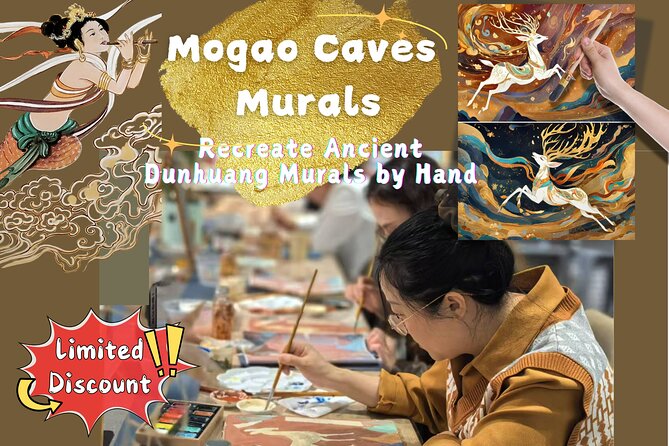
- Pick your own mural subject like majestic Buddhas, graceful Bodhisattvas, or the mythical Nine-colored Deer
- Work with authentic-feeling materials such as mineral pigments, clay boards, and traditional tools
- Learn directly from a Dunhuang art specialist who can explain cultural context while you create
- Enjoy a peaceful, meditative classroom setup that keeps the focus on hands-on technique
- Small groups (up to 20 people) mean you can get help when you need it
- Walk away with a finished artwork you made yourself
Why This Hands-On Dunhuang Mural Workshop Works in Shanghai
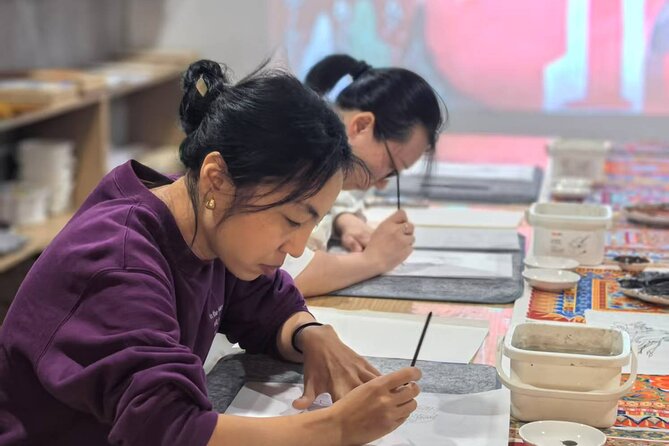
Shanghai has a way of moving fast. That’s why I like workshops like this one: it gives you a reason to slow down on purpose. In a calm studio atmosphere, you’re not just learning about Chinese cave murals—you’re recreating them with your hands, using materials that feel closer to traditional practice than typical souvenir crafts.
The real win here is the pairing of art and guidance. The instructor brings deep expertise in Dunhuang art and culture, so you’re not guessing at what you’re drawing or why certain forms matter. You get an approach that feels practical: choose a design, use the tools, follow techniques, and build your piece step by step.
The other reason this works is the setting. The classroom atmosphere is described as serene and meditative, which matters more than people expect. When you’re working with pigments and fine brushwork, a quiet room keeps your concentration steady—and it turns the workshop from a quick activity into something you’ll remember.
Choosing Your Design: Buddhas, Bodhisattvas, and the Nine-colored Deer
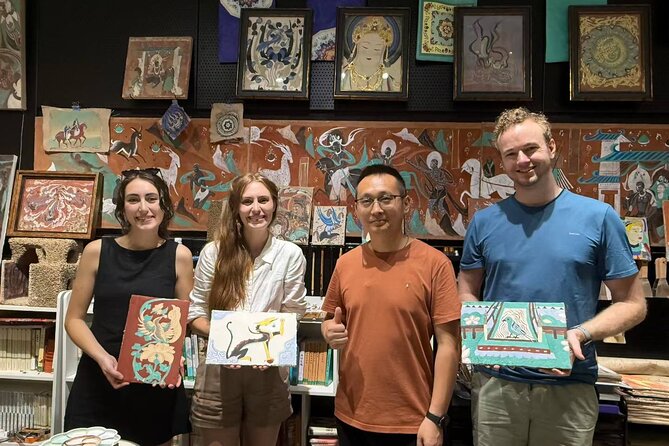
Your first big decision is the mural pattern. You’ll be able to choose from traditional options that match different styles and moods, such as majestic Buddhas, graceful Bodhisattvas, or mythical creatures like the Nine-colored Deer found in ancient Chinese folktales.
This choice is more than decorative. Cave murals often function like visual storytelling—spiritual figures, symbolic creatures, and icon-like patterns meant to carry meaning. When you choose a subject, you’re selecting the emotional tone of your whole piece: a Buddha design tends to feel balanced and centered, while a bodhisattva pattern often feels graceful and flowing, and a mythical creature can add a playful spark.
The process also supports personalization. You trace or paint the chosen pattern, then you can add your own touches. In the best moments, that combination—traditional template plus personal marks—creates the feeling that you’re continuing a long artistic conversation, not just copying an image.
Tip for picking: if you want something that feels structured, choose a larger central figure. If you want something that invites color play, choose a mythical creature with distinct features. Either way, you’re starting with a clear mural design rather than staring at a blank page.
The Materials: Mineral Pigments and Clay Boards (The Part You’ll Feel)
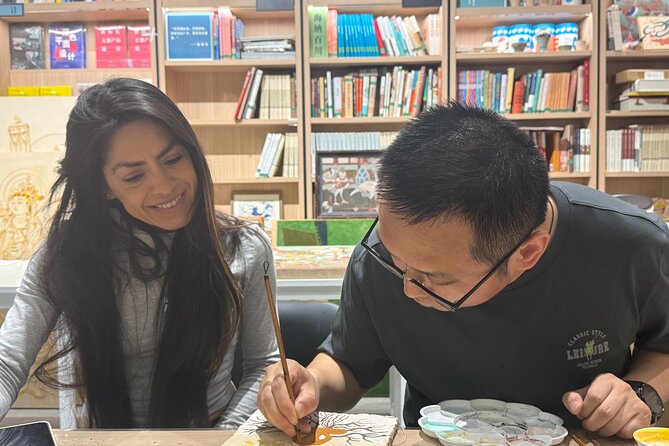
Most art workshops tell you you’ll use “materials.” This one actually specifies what you’ll work with, and that’s a big part of the value. You’ll use authentic materials such as mineral pigments, clay boards, and traditional tools.
Why does that matter for your experience? Texture. Mineral pigments behave differently than many modern paints, and clay board surfaces can change how strokes sit on the page. That means your finished artwork won’t just look different—it will feel different when you’re painting, especially if you’re the type who cares about craft details.
You’ll trace or paint with natural mineral pigments, and you’ll use brushes and techniques inspired by methods that date back centuries. Even if you’ve never done mural art before, the structure of tracing or guided painting helps you get started quickly. Then, as you build layers of color and line, you’ll notice the workshop isn’t about speed. It’s about steady hand control and patience.
One more practical benefit: working with a kit-like setup (mineral pigments, board, tools) keeps things simple. You’re not scrambling to source supplies or worrying that you’ll ruin a canvas because you brought the wrong brush.
What the 3-Hour Session Feels Like, From Check-In to Finish
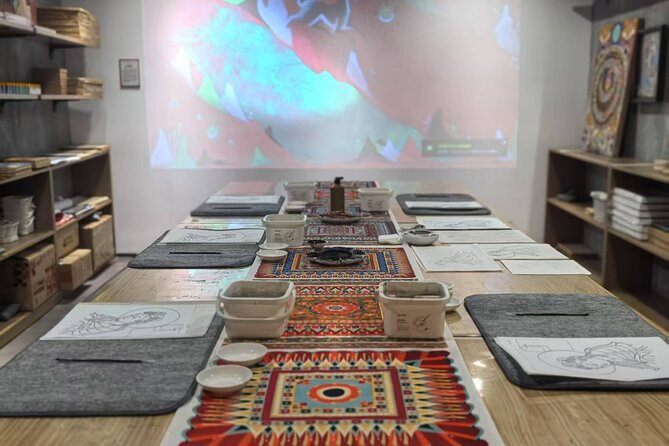
This activity is about 3 hours and starts and ends at the same meeting point. Because the workshop is only half a morning or afternoon length, the flow is designed to keep you moving without rushing your art-making.
Here’s the typical rhythm you can expect based on how the session is described and how it’s taught:
1) Meet and settle in at the starting point
You’ll meet at 515 Yi Shan Lu, Xu Hui Qu, Shanghai 200235. From there, you move into the studio space for the workshop portion. Since it ends back at the meeting point, you’re not dealing with complicated navigation across town.
2) Choose your mural pattern
Before you paint, you select from traditional mural designs—Buddhas, Bodhisattvas, and mythical creatures like the Nine-colored Deer. This step matters because it shapes your entire session. Picking early helps you focus on technique instead of decision-making later.
3) Guided tracing and painting techniques
Then the instructor guides you through recreating the mural style by hand. You’ll trace or paint using natural mineral pigments, and you’ll follow brushes and methods inspired by older practices. The goal is not perfection; it’s learning a process.
4) Add color and personal touches
This is where many people end up smiling. The workshop supports creativity—one person might choose a Bodhisattva image and add personal touches, while another might want help mixing colors. The instructor can assist with creating colors so the result matches the mural aesthetic.
5) Finish and leave with your artwork
You’ll end by wrapping up with the final artwork you created. Since the workshop is short but hands-on, you’re not stuck in “almost finished” limbo. You’ll have something real to take home.
Because the space is described as peaceful, the pacing feels more like mindful craft than a rushed class. If you enjoy art workshops where you can concentrate, this format is a good fit.
Expert Guidance: When the Teacher Makes the Whole Difference
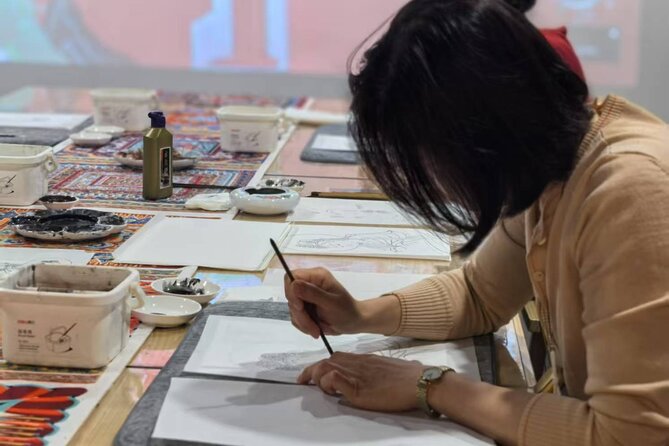
The instructor is a major part of the experience. The workshop highlights deep expertise in Dunhuang art and culture, and that shows up in how the class is described: professional knowledge, strong teaching ability, and real care for students.
In plain terms, this is the difference between copying a pattern and learning how to control your line, color, and brush habits. When you have a teacher who understands both the art and the cultural meaning, you’re less likely to feel lost halfway through the session.
It also sounds like the instructor is patient. That matters because mineral pigments and traditional tools can be unfamiliar if you’ve never worked with this kind of medium before. A patient approach keeps the class calm—and that supports the meditative, serene feel of the workshop.
And yes, the guidance extends to practical help. If you want to be creative with color, the instructor can help you mix or create colors so your final artwork looks intentional instead of random.
Price and Value: Is $99 for 3 Hours Worth It?
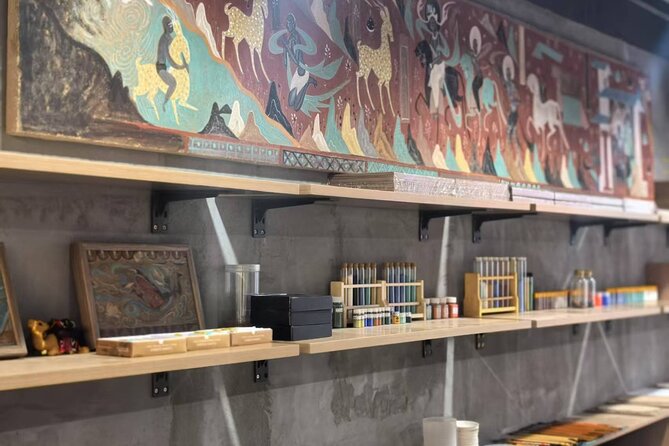
At $99 per person for about 3 hours, this workshop is priced like a small-group, expert-taught cultural craft—not a bargain art activity. But it still makes sense when you look at what’s included and what you’re paying for.
You’re paying for:
- An instructor with specialist knowledge in Dunhuang art and culture
- Hands-on use of materials explicitly described as mineral pigments, clay boards, and traditional tools
- A small group environment (up to 20 people), which makes it easier to get individual help
- A completed artwork you make yourself, not just a take-a-photo souvenir
If you compare it to paying for a standard museum visit plus generic workshop supplies, the value is clearer. Museums can show you art at scale; this workshop lets you experience the process at human speed, with expert coaching. You’re not just looking. You’re making a mural-style piece using the medium and methods the teacher emphasizes.
If you hate crafts that require concentration, it might feel like a lot. But if you enjoy hands-on learning—even moderately—you’ll likely feel that the price buys more than time. It buys instruction, materials, and calm focus.
Logistics That Matter: Getting There and What to Bring
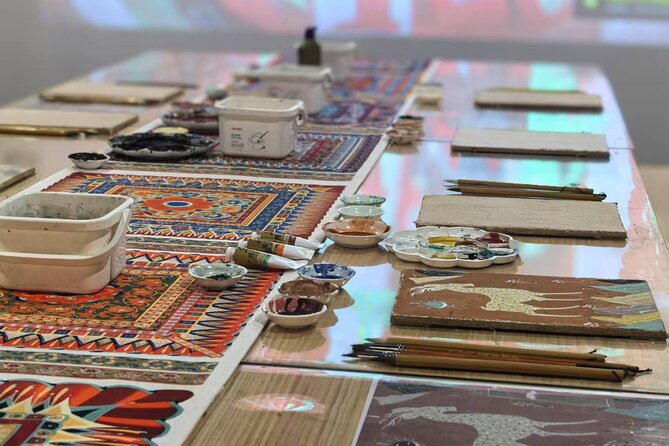
This workshop is based in Shanghai at 515 Yi Shan Lu, Xu Hui Qu, Shanghai 200235. It’s also described as near public transportation, which is a real advantage in a city that can be unpredictable depending on traffic.
You’ll use a mobile ticket, which simplifies check-in if you’re already traveling with your phone. Confirmation is received at booking, so you’ll have that reassurance ahead of time.
As for participation, it’s stated that most travelers can participate and service animals are allowed. The workshop is small enough (maximum 20 people) that the room likely stays organized and manageable.
What you should bring is basically a mindset: patience, a willingness to start with a guided pattern, and a light curiosity about how traditional mural techniques translate into a modern classroom.
Who Should Book This Workshop (and Who Might Skip It)
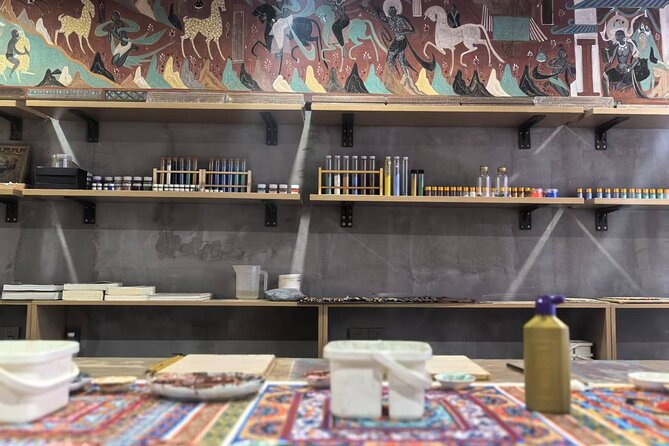
This is a great choice if you:
- Want a hands-on art experience in Shanghai that goes beyond sightseeing
- Like learning through technique, not just through explanations
- Enjoy calm, focused settings where you can take your time
- Are curious about Chinese cave mural traditions, especially Dunhuang-related art themes
You might want to skip or consider carefully if you:
- Prefer high-energy tours with constant movement and stops
- Don’t enjoy making something by hand (even if it’s guided)
- Expect a big museum-style lecture rather than a studio workshop
For couples, solo travelers, and small groups, the class format can be especially pleasant because it’s structured and supportive, without feeling like a formal classroom.
Should You Book It?
If your idea of a memorable Shanghai day includes quiet focus and making real art, this workshop is an easy “yes.” The combination of Dunhuang expertise, hands-on mineral pigment work, and a peaceful classroom atmosphere makes it more than a craft—it’s a cultural learning experience you can hold in your hands.
I’d book it sooner rather than later if you like traditional patterns and want guidance that helps you add personal touches. And if you’re traveling with a person who’s not sure about crafts, this one often works because the instructor supports you step by step and keeps the pace calm.
FAQ
How long is the Hands On Chinese Cave Murals workshop?
The workshop lasts about 3 hours.
Where is the meeting point in Shanghai?
The meeting point is at 515 Yi Shan Lu, Xu Hui Qu, Shang Hai Shi, China 200235, and the activity ends back at the meeting point.
What designs can I choose for the mural?
You can choose from traditional mural patterns, including majestic Buddhas, graceful Bodhisattvas, and mythical creatures like the Nine-colored Deer.
Is the ticket digital?
Yes, it uses a mobile ticket.
How big are the groups?
The workshop has a maximum of 20 travelers (people).
Is there free cancellation?
Yes, free cancellation is available. You can cancel up to 24 hours in advance of the experience for a full refund.