REVIEW · PARIS
Paris: Street Art Tour with a Street Artist Guide
Book on Viator →Operated by Memories France · Bookable on Viator
Street art in Paris feels like a living map. This guided walk takes you through neighborhoods where old-school names and today’s makers share the same walls, with stops timed for watching, photographing, and learning. You’ll go on foot with a small group and a guide who has lived the scene, including the techniques behind what you’re seeing.
I especially like that you get two strong neighborhood options (Montmartre or La Butte-aux-Cailles), so you’re not stuck doing one thing no matter what you’re into. I also love the way the guide connects the art to people and methods, from classic artists’ footsteps to styles like le pochoir.
One thing to watch: each tour has a different meeting point, depending on which neighborhood you choose, so double-check before you head out. That little detail matters in a city where taxis can be slow to find and time is tight.
In This Review
- Key Things You’ll Notice on This Street Art Tour
- Why a Paris Street Art Tour Works Better Than Only Museums
- Picking Your Neighborhood: Montmartre vs. La Butte-aux-Cailles
- Montmartre (the art-lane angle)
- La Butte-aux-Cailles (the street-art timeline angle)
- Montmartre’s Artist Lanes: From Picasso Footsteps to Swed Oner Details
- What you’ll actually do on the walk
- A possible drawback to consider in Montmartre
- La Butte-aux-Cailles: The Pochoir Thread and Hidden Works
- How the guide shapes your experience here
- The artists and styles you’ll likely hear about
- A small “you might get lucky” moment
- Possible drawback for Butte-aux-Cailles
- The Street-Artist Guide Advantage: Stories, Techniques, and Real Context
- Why small-group attention pays off
- Take-home tips you can use immediately
- Timing, Pace, and How It Fits Into a Busy Day
- What to plan around
- Price and Value: Does $47.54 Make Sense for What You Get?
- Should You Book This Paris Street Art Tour?
- FAQ
- How long is the Paris street art tour?
- What is the price per person?
- Is the tour offered in English?
- Are there different neighborhood tours, and can I choose one?
- How large is the group?
- Is admission required for the stops?
- Can I bring a service animal?
- What’s the cancellation window?
Key Things You’ll Notice on This Street Art Tour
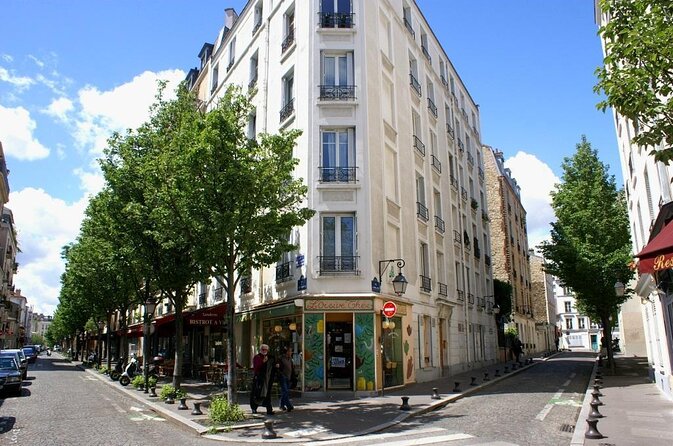
- A street-artist guide (from the 1980s era) explains what you’re seeing in plain language, not textbook terms
- Small group size (max 15) means you can actually ask questions while you walk
- Two neighborhood choices let you tailor the tour to your interests: Montmartre’s famous lanes or Butte-aux-Cailles’ street-art timeline
- Hands-on art techniques come up naturally, including le pochoir and the look of glued paper, stencils, and graffiti
- Photo-friendly pacing with frequent stops for murals, wheatpastes, and details you’d miss on your own
Why a Paris Street Art Tour Works Better Than Only Museums
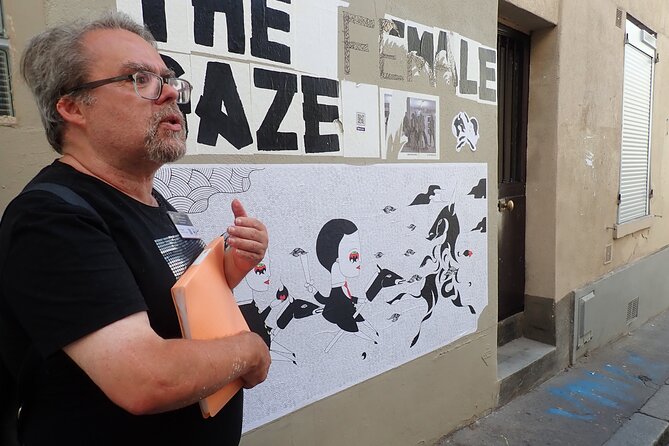
Paris can overwhelm you with big-ticket sights. This type of tour gives you a different rhythm. Instead of racing from one landmark to the next, you move street by street, and the city’s walls become the “exhibits.”
What makes it work is the guide’s approach. A street artist sees what most visitors miss: the craft choices, the layers, the way a stencil looks different from wheatpaste or graffiti tags. You’re also not forced to stare at one wall for 20 minutes. The walking plan is short enough to fit during a sightseeing-heavy day, with enough breaks to catch photos and read the small stuff.
And since it’s offered in English and stays small (up to 15 people), you’re more likely to get answers to the questions you’re actually curious about, like how a particular technique ages on the street or why some pieces stay visible while others get tucked away.
You can also read our reviews of more tours and experiences in Paris.

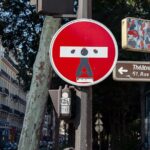

Picking Your Neighborhood: Montmartre vs. La Butte-aux-Cailles
At booking, you choose which neighborhood to explore. That choice changes the vibe and the kinds of works you’re likely to focus on, along with the meeting point.
Montmartre (the art-lane angle)
Montmartre is where the past feels close. The tour in this area starts with walking through the alleys and cobbled lanes, then shifts into the story of famous artists and their connection to place. You’ll hear about places where artists such as Picasso, Van Gogh, and Renoir lived and created work, and the guide helps you find addresses of workshop sites tied to that era (when pointed out during the walk).
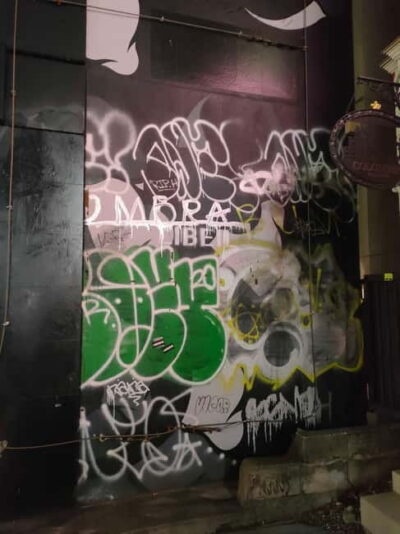
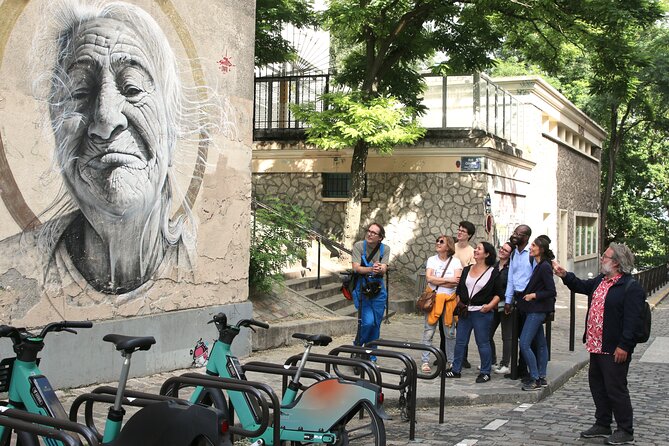
From there, the tour turns to modern street art. You’ll look for murals, glued paper works, stencils, and graffiti that brighten up streets in ways that feel like they’ve been part of the neighborhood for years. The guide points out specific names and styles, including works associated with Swed Oner, Gregos (3D faces), Twotma (glued papers), The End, and Space Invader, plus more local pieces such as Pply.
La Butte-aux-Cailles (the street-art timeline angle)
The Butte-aux-Cailles option is about continuity and change. The big idea here is that it acts like a street-art timeline in one neighborhood: you can see works connected to the 1980s and then follow the thread toward emerging artists today.
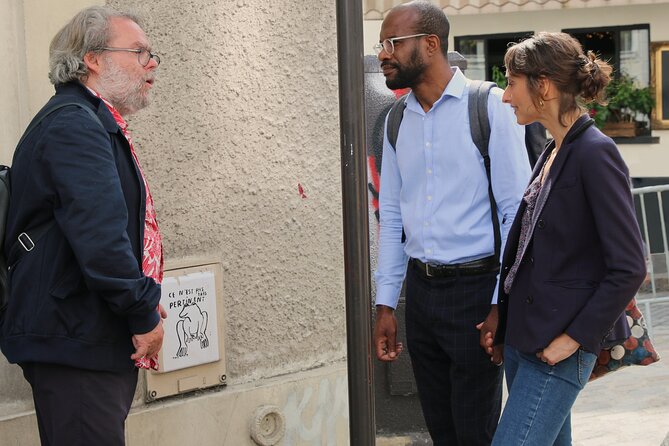
Some artworks are easy to spot. Others are more hidden, depending on how shy the artist is that day. Part of the fun here is learning to notice what’s there even when it’s not screaming for attention. The guide also teaches technique and context, with a specific focus on le pochoir and the French street-art line associated with it.
You’ll hear about artists such as Jeff Aérosol, Miss Tic, Le Long, and Princess Ecchymose, then you’ll get pointers on what to look for stylistically as you walk.
Montmartre’s Artist Lanes: From Picasso Footsteps to Swed Oner Details
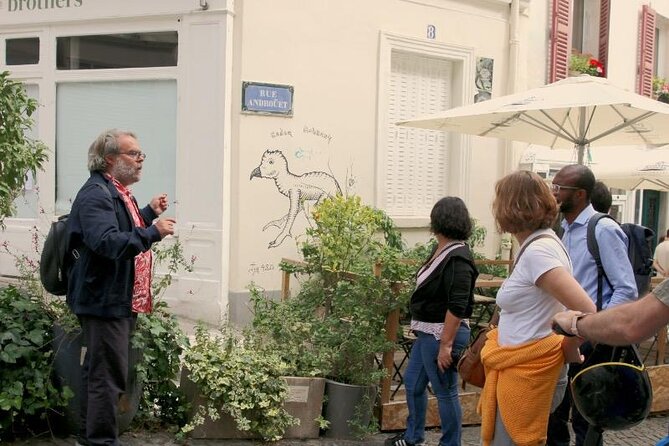
If you picture Montmartre as a pretty maze, you’re right. But this tour adds a second layer: you’re not just wandering, you’re hunting for clues linking art to specific places.
You start by wandering the “delightful alleys” and using the guide’s art lens to orient yourself. The guide talks about how Montmartre functioned as a 19th-century artist district, then explains how urban art now flourishes there. That matters because the neighborhood isn’t treated as a museum-style backdrop. You’re meant to see how the street continues to host art—old names, new names, and everything between.






What you’ll actually do on the walk
Expect frequent stops. The walking pace is designed for photo breaks and close-looking. You’ll look for:
- Murals and fresco-like pieces associated with names like Swed Oner
- 3D faces credited to Gregos
- Glued paper and collage-type street works connected to Twotma
- Stenciled and graffiti work, including the kind of dedicated pieces associated with The End
- Space Invader-style installations, which are recognized far beyond Paris
- Additional, less-known work such as Pply, pointed out by the guide as you move
A nice aspect here is that the tour highlights parts of Montmartre that can feel less tourist-packed. The description specifically notes that some stretches away from the busiest crowds haven’t changed much for decades. In practice, that means you’re more likely to find the kind of textured streetscapes street art looks best on—quiet corners, older buildings, and walls that feel like they’ve held layers of art over time.
A possible drawback to consider in Montmartre
Montmartre can get crowded even when you try to dodge the heaviest tourist flow. If you’re the type who hates crowds, choose the timing of your day carefully and be ready for some foot traffic. The tour is short enough to manage, but it’s still Montmartre.
La Butte-aux-Cailles: The Pochoir Thread and Hidden Works
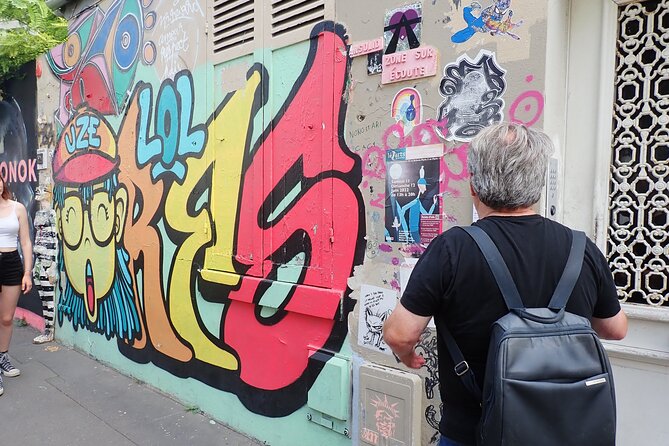
If Montmartre is where the past shows up loudly, Butte-aux-Cailles is where street art feels more like an ongoing conversation.
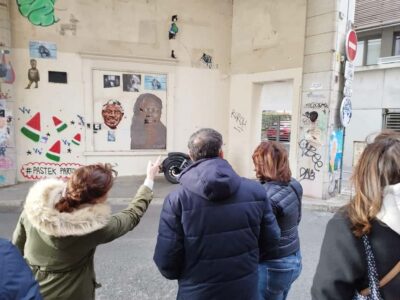
This neighborhood is described as one of the best places to understand street art’s development in Paris, from artists of the 1980s to people working now. As you walk, you’re asked to pay attention to visibility. Some works are “more or less hidden.” Others feel deliberately shown off. That difference is part of the story.
How the guide shapes your experience here
You’re not just spotting art; you’re learning how to read it. The guide knows many of the artists and can explain:
- the history of urban art in Paris
- styles and techniques you’re seeing on the walls
- why certain pieces appear where they do
- how le pochoir fits into the wider “French Touch” story
The tour specifically calls out le pochoir as a flagship technique. So when you see stencil work here, you’ll have a better frame for why it looks the way it does and what it means in the street-art tradition.
The artists and styles you’ll likely hear about
You’ll get names like Jeff Aérosol and Miss Tic, plus Le Long and Princess Ecchymose. Even if you don’t know the names before the walk, the guide’s job is to connect them to recognizable visual approaches and the broader street-art evolution of the neighborhood.
A small “you might get lucky” moment
One of the best things about this neighborhood option is the chance to see street art in the act of being made. A guide named Thierry was praised for being passionate and for even witnessing an artist working in the middle of a new piece during the afternoon. You can’t count on it every time, but it’s the kind of thing that makes this tour feel alive rather than staged.
Possible drawback for Butte-aux-Cailles
Because some works are tucked away and the art can be subtle, you’ll get more out of the tour if you’re willing to slow down and look closely. If you prefer quick, big, easy visuals only, you may need to push yourself a bit during the “hidden” moments.
The Street-Artist Guide Advantage: Stories, Techniques, and Real Context
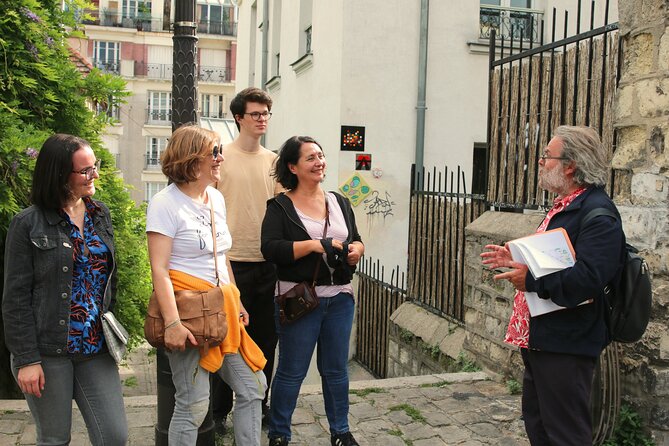
This tour doesn’t pretend street art is just decoration. The guide’s background matters because it changes how the walk feels.
You’re exploring with someone who has lived the scene. The experience description highlights that the guide lived it as a street artist in the 1980s, and that shows up in how the tour explains the work. Instead of treating each mural like a random find, the guide ties pieces to techniques and to the people and place behind them.
Why small-group attention pays off
With a maximum of 15 people, the guide can actually respond to your questions. That’s a big difference from the classic “here’s your audio app, good luck” style of touring.
Also, having a guide who knows names and techniques helps your eyes. After a couple of stops, you start noticing:
- stencil edges and how layered designs behave
- the look of pasted paper versus paint
- how tags and signatures differ from larger composed pieces
- what kinds of work tend to last longer on certain walls
Take-home tips you can use immediately
The tour also emphasizes tailored tips for the rest of your trip. That’s useful because street art in Paris isn’t confined to one neighborhood. If you’re leaving with a better sense of what you’re looking for, your remaining time in the city turns into active discovery rather than random wandering.
Timing, Pace, and How It Fits Into a Busy Day
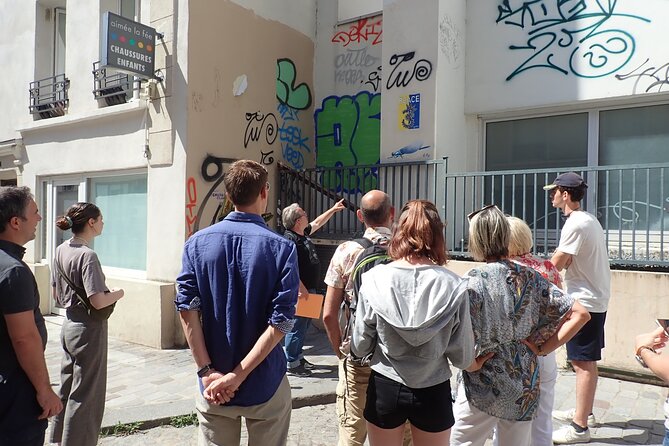
The tour runs about 1 hour 30 minutes to 3 hours, depending on the neighborhood you choose and the walk plan that day. Either way, it’s short enough to fit into a typical Paris schedule without derailing your main sightseeing.
On-foot tours have a real benefit: you can stop often. And with street art, the details are the point. If you only get a glance while walking past, you’ll miss the difference between a stencil and wheatpaste textures or the kinds of faces and patterns people build into larger murals.
What to plan around
Because you’ll be walking and stopping frequently, build in time to transition afterward. Don’t stack another timed activity right at the end unless you’re close by. Also, because the meeting point varies by chosen neighborhood, confirm your exact location before the day starts so you can reduce stress and get into the fun faster.
Price and Value: Does $47.54 Make Sense for What You Get?
At $47.54 per person, this is a mid-range walking experience. The value comes from three things you’re getting in that price:
- a fully guided walking tour rather than a self-guided route
- a guide with deep street-art experience, including technique knowledge
- small-group attention and multiple photo-ready stops
Because the tour length tops out around three hours, you’re not paying for a long day that might compete with other must-dos. Instead, you’re paying for guided interpretation—what to look at, why it matters, and how it connects to Paris’ artist culture over time.
Also, the tour itself includes walking and guidance; the descriptions for the neighborhood segments list admission as ticket free, so you’re not likely to face surprise paid entry fees to reach the art you’re seeing.
So for street-art fans, or anyone who’s tired of only seeing official museums, the price can feel fair. You’re basically buying expertise plus time savings. Without that guidance, you might still enjoy the art, but you’d miss the “why” behind many of the pieces.
Should You Book This Paris Street Art Tour?
Book it if you want Paris street art with context, not just photos. The combination of a street-artist guide, a small group, and neighborhood-specific focus (Montmartre or Butte-aux-Cailles) is exactly what makes this kind of walk work.
I’d skip or reconsider if you only like loud, obvious sights and dislike crowds. Montmartre in particular can get busy, and Butte-aux-Cailles asks you to slow down for works that can be more hidden.
If you’re flexible about walking, and you want to come away knowing techniques like le pochoir and recognizing names tied to Paris’ street-art evolution, this is a strong way to spend a couple of hours in the city.
FAQ
How long is the Paris street art tour?
It runs about 1 hour 30 minutes to 3 hours, depending on the neighborhood tour you choose.
What is the price per person?
The price is $47.54 per person.
Is the tour offered in English?
Yes, it’s offered in English.
Are there different neighborhood tours, and can I choose one?
Yes. At booking, you choose the neighborhood tour you want (Montmartre or La Butte-aux-Cailles). Each tour can include different sites, and the meeting point differs by tour.
How large is the group?
There is a maximum of 15 travelers.
Is admission required for the stops?
The neighborhood segments are listed as Admission Ticket Free, so you’re not paying entry tickets for the stops.
Can I bring a service animal?
Yes, service animals are allowed.
What’s the cancellation window?
You can cancel up to 24 hours prior to departure for a full refund. Refunds aren’t possible for missed tours.