REVIEW · PARIS
Paris: Street Art Walking Tour with a Street Artist Guide
Book on GetYourGuide →Operated by Memories France · Bookable on GetYourGuide
Paris street art feels personal when someone who makes it leads the way. This 90-minute walk is guided by a former street artist, and you’ll connect what you see on the walls to how Paris got here. I especially liked the chance to watch the tour turn into a real conversation about craft and materials, not just photos on a phone.
Two things I really enjoyed: the hands-on street artist perspective from the guide, and the specific artwork stops that include Twotma, Gregos, Swed Oner, and Space Invader. One thing to consider up front: it’s a walking tour, and if you pick Montmartre you’ll deal with hills.
In This Review
- Key points to know before you go
- A street artist guide, not a museum stroll
- Montmartre vs La Butte aux Cailles: pick your Paris mood
- Montmartre: Twotma, Gregos, Swed Oner, plus the artists behind the myth
- La Butte aux Cailles: tiny houses, wheat-pasted papers, and le pochoir culture
- What the history talk adds to your street-level eye
- The 90-minute pacing: enough time to notice, not enough to get bored
- Price and value: where the $47 makes sense
- What to bring and what to expect on the ground
- Who should book this tour
- Should you book this Paris street art tour?
- FAQ
- How long is the street art walking tour?
- Which neighborhoods can I choose from?
- What language is the guide?
- Do I need comfortable shoes?
- Is hotel pickup included?
- Can I cancel if my plans change?
Key points to know before you go
- Former street artist guide: you learn how artists think about scale, placement, and technique
- Real neighborhoods, real textures: cobbled streets, picturesque houses, and small green pockets
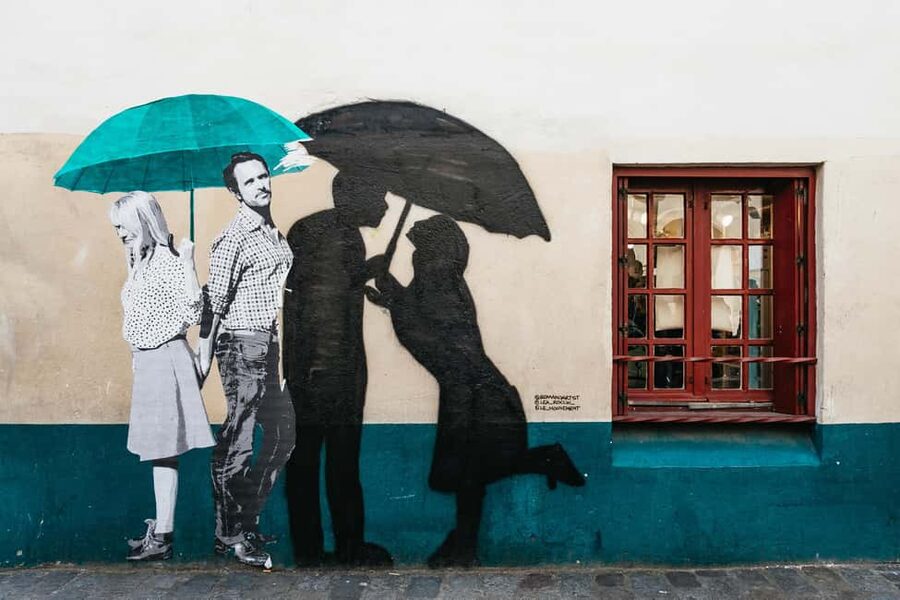
- Artwork by name: Twotma’s glued paper works, Gregos 3D faces, Swed Oner frescoes, plus Space Invader
- Two area choices: Montmartre (big names and workshops) or La Butte aux Cailles (tiny-house village vibes)
- French stencil culture: you’ll hear about le pochoir and see multiple generations of artists
A street artist guide, not a museum stroll
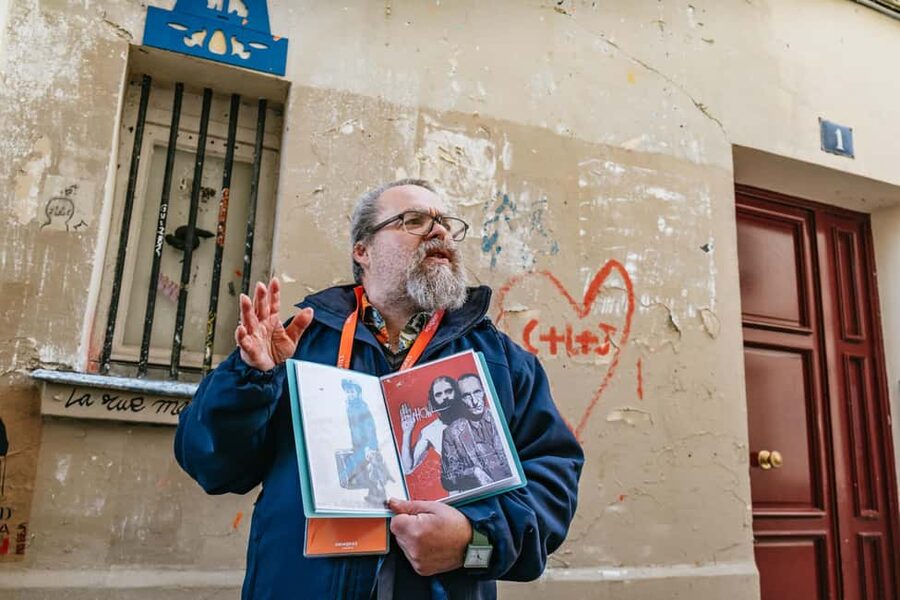
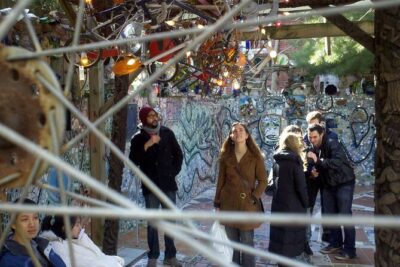
Street art in Paris can look random until you learn the language behind it. On this tour, you’re not just seeing murals and pasted paper. You’re getting the artist view: what a piece is trying to do, how it fits the street, and why the same city can feel different block by block.
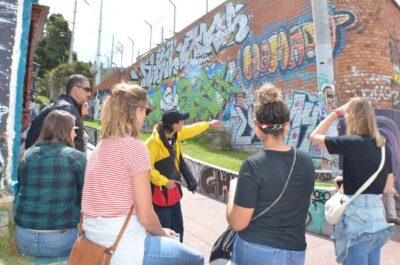
I like that the experience is built around a guide who is also a street artist. That changes the tone. The walk moves at a pace that lets you actually notice things. You’ll spend time where the artwork is, rather than rushing past it with a quick pointing session.
You also get a mix of past and present. The tour doesn’t treat street art as one time period. It frames it as something that evolves, with older styles still influencing what’s going up today.
You can also read our reviews of more tours and experiences in Paris.


Montmartre vs La Butte aux Cailles: pick your Paris mood
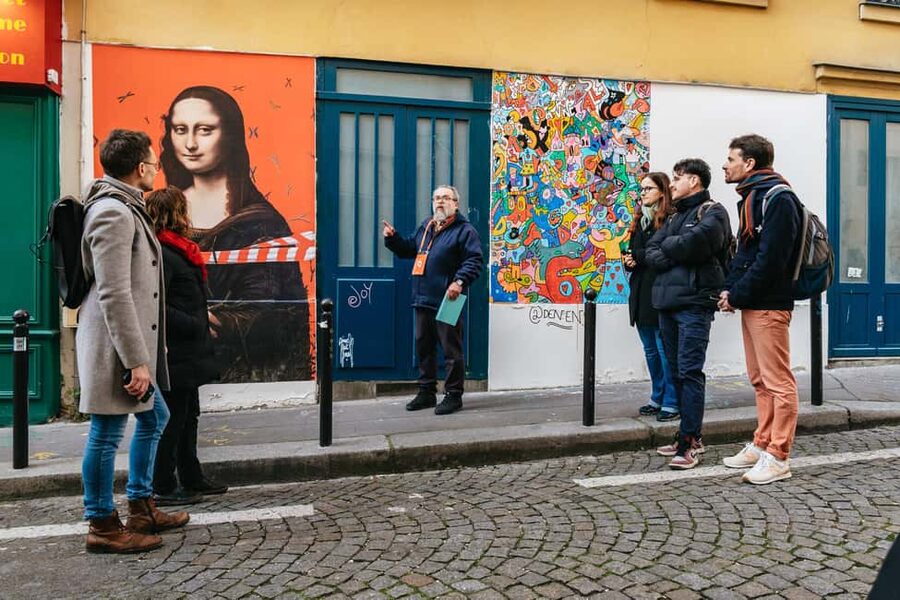
You get two different neighborhood options. Both are worth it. Your choice is really about what kind of street art day you want.
Montmartre is for history with a view. You’re in the hilly part of Paris where the streets wind up and down. The tour follows that energy, and you’ll also connect the wall art to the artists who worked there long ago, including addresses tied to major names like Picasso, Van Gogh, and Renoir.
La Butte aux Cailles is the calmer alternative. You leave some of the city noise behind and explore a smaller “village” feel with tiny houses, gardens, and cobbled lanes. It’s a great option if you want street art that feels tucked into everyday life instead of perched on a famous hill.
If you hate steep walking, choose La Butte aux Cailles. If you love the dramatic streets and don’t mind hills, Montmartre is the more classic choice.
Montmartre: Twotma, Gregos, Swed Oner, plus the artists behind the myth
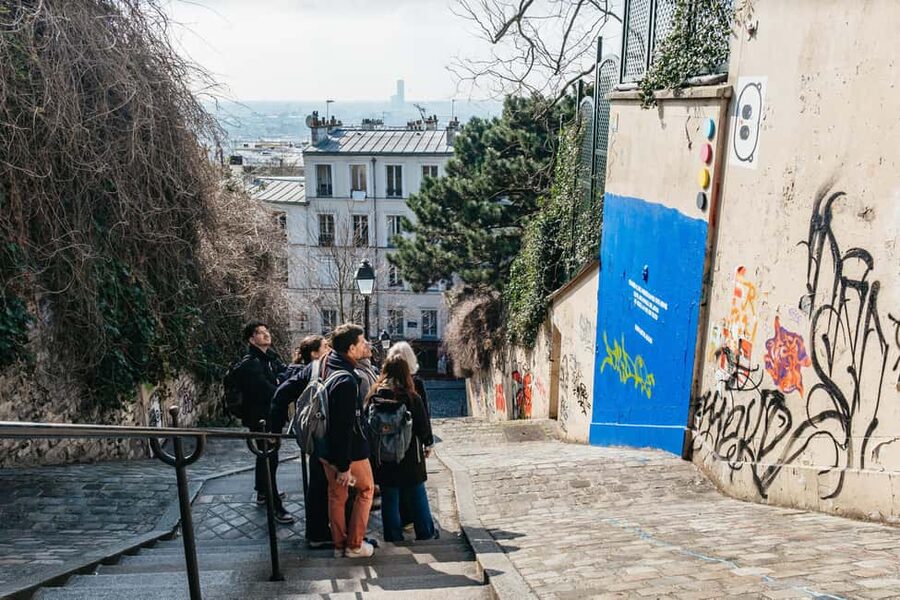
Montmartre is where the tour leans into both street art and the broader art story of the neighborhood. You’re not just staring at walls. You’re learning why the area became a magnet for artists in different eras, and how that legacy still shows up today.
One of the big strengths here is the stop list. You’ll see standout works such as:
- Twotma and glued paper works
- Gregos and 3D faces
- Swed Oner and fresco-style pieces
- Works by The End
- Space Invader, including the kind of playful visual language that made it famous
- And you’ll hunt for a hidden work by a secretive artist
What I like about naming artists like this is that it trains your eye. After you’ve heard what Twotma is doing with glued paper, you’ll start noticing the physical choices—texture, layers, and how the piece sits on the street surface. After Gregos’ 3D faces, you’ll see how depth changes the way you read a face, especially as you move your position on a sloped street.
You’ll also get the “why here” part. The tour includes addresses connected to artists from the past, including workshop locations for Picasso, Van Gogh, and Renoir. That matters because it turns Montmartre from a postcard into a map of creativity—then the guide ties modern-day street art back into that same neighborhood logic.
One practical note: Montmartre streets are hilly. Even with a good guide, you’ll still be climbing and descending. Bring comfortable shoes and plan for a real 90 minutes of motion, not a light stroll.
La Butte aux Cailles: tiny houses, wheat-pasted papers, and le pochoir culture
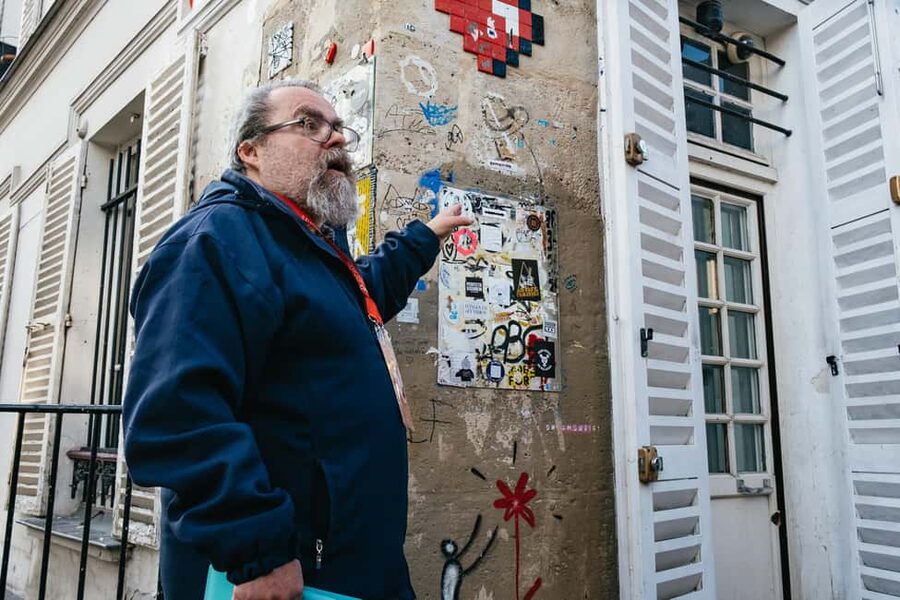
If Montmartre is the big-name stage, La Butte aux Cailles is the quieter scene that rewards slow attention. The tour walks through cobbled streets lined with tiny houses and gardens, and the mood shifts fast from wide city energy to a pocket where street art feels integrated into daily life.
Here, the art you’re hunting leans heavily into paper and stencil styles. You’ll look for:
- Murals
- Wheat-pasted papers
- Stencil graffiti, connected to the French technique called le pochoir
This is where I found the tour especially satisfying if you like technique. Le pochoir is about control—layering, shapes, repeatable forms, and that crisp street-ready look. Seeing it alongside wheat-pasted papers makes it easier to understand how different artists solve different problems: visibility versus texture, permanence versus message speed.
The tour also spans generations. You’ll spot artwork from earlier decades through today’s emerging scene. Names mentioned include Jeff Aérosol, Miss Tic, Le Long, and Princess Ecchymose. I like that the guide doesn’t treat “modern street art” like a single wave that arrived yesterday. You see the lineage.
One more thing: the neighborhood itself works like part of the show. The tiny houses and gardens make it easier to imagine street art as something the community lives with, not something put up only for tourists.
What the history talk adds to your street-level eye
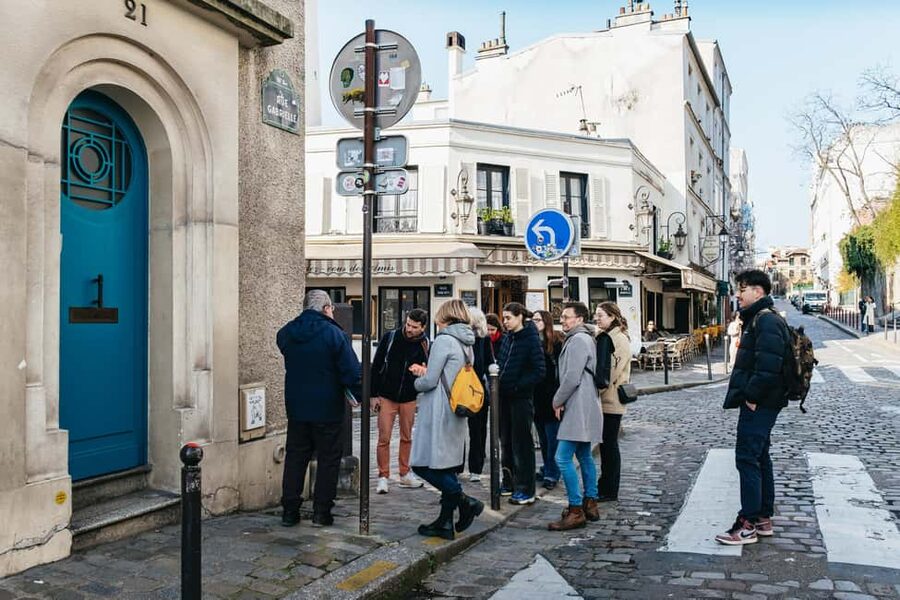
A lot of street art tours show art. This one tries to explain how that art got made and why it keeps changing.
You’ll learn about the history of Parisian street art in a way that stays practical: what came before, and what’s visible now. That’s useful, because otherwise street art can feel like a random gallery of styles. With a short history framework, you start grouping what you see: paper-based work, fresco-style pieces, 3D faces, wheat paste, and stencils.
The “past and present” approach also helps you understand the names. When you hear about iconic artists who worked in Montmartre, it’s not just trivia. It becomes a clue: the street has long been a place where artists tried ideas on public surfaces, then evolved their methods over time.
And since the guide is a former street artist, the history section tends to feel grounded in craft. You don’t just get dates and labels. You get why certain techniques make sense for streets in Paris—especially when the city itself is part of the artwork’s background.






The 90-minute pacing: enough time to notice, not enough to get bored
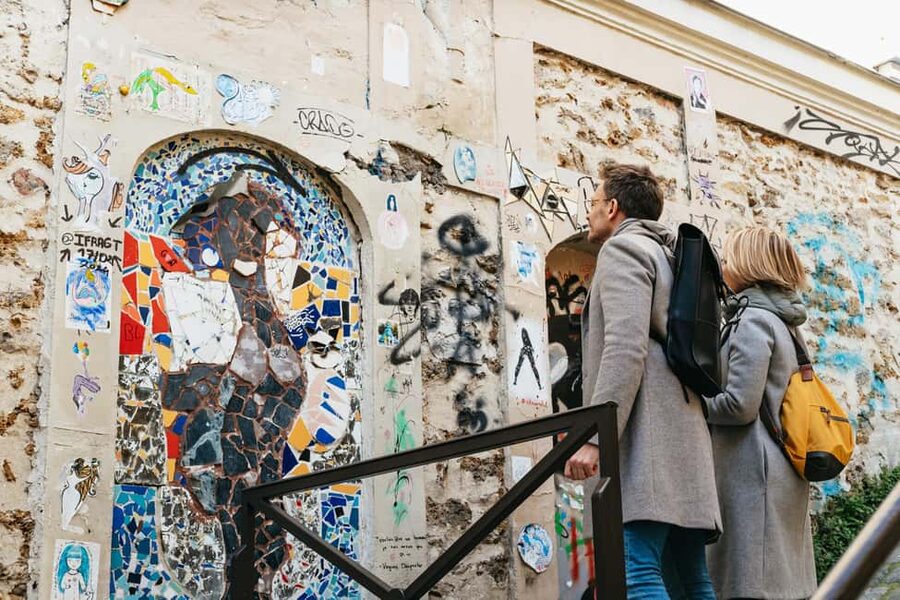
Ninety minutes is the sweet spot for a city walk like this. Long enough to see multiple key works and get some real context. Short enough that you’re not exhausted before the best wall.
The pacing is important here because street art rewards attention. A 90-minute format also helps you get multiple stops without turning it into a slog. One standout detail from real-world feedback is how well the tour tends to flow. People highlight that the guide took his time and kept things engaging, with an expert guiding style rather than a scripted march.
For you, that means you can ask quick questions, look longer at the pieces that grab you, and still finish without feeling rushed out the door.
Price and value: where the $47 makes sense
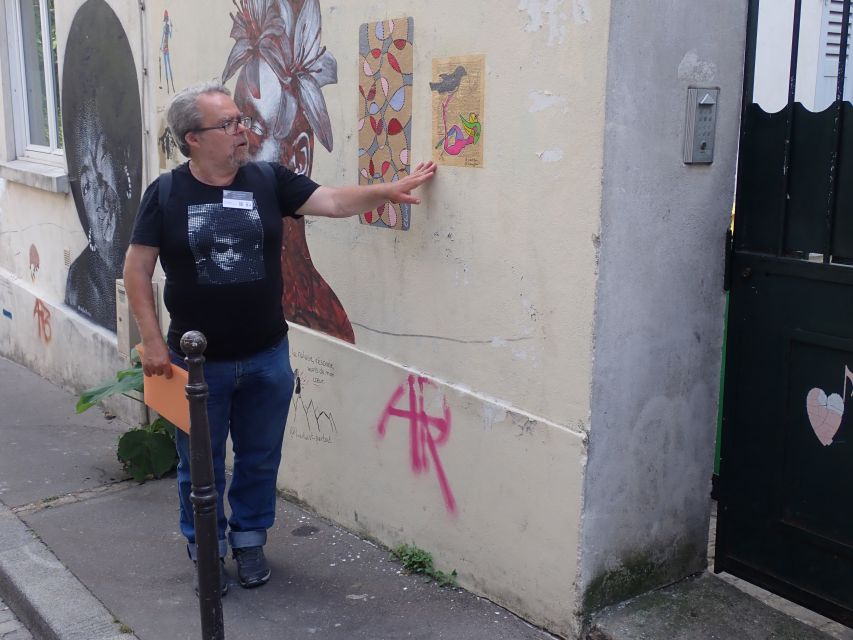
At about $47 per person for 90 minutes, this is not a budget-only activity. But it is value-heavy if you care about street art as art, not just decoration.
Here’s what you’re paying for:
- A live guide who’s a former street artist
- A focused route with named artists and specific techniques
- A short history lens that helps you recognize what you’re seeing
- Two neighborhood options so you can match your interests (hills and legacy versus tiny-house calm)
If you’ve done generic walking tours before, you’ll feel the difference quickly. This isn’t about ticking famous sights. It’s about training your eye and leaving with better instincts about what street art is trying to communicate.
And because it’s one neighborhood, you’re not spreading attention across the whole city. That makes the time feel efficient.
What to bring and what to expect on the ground
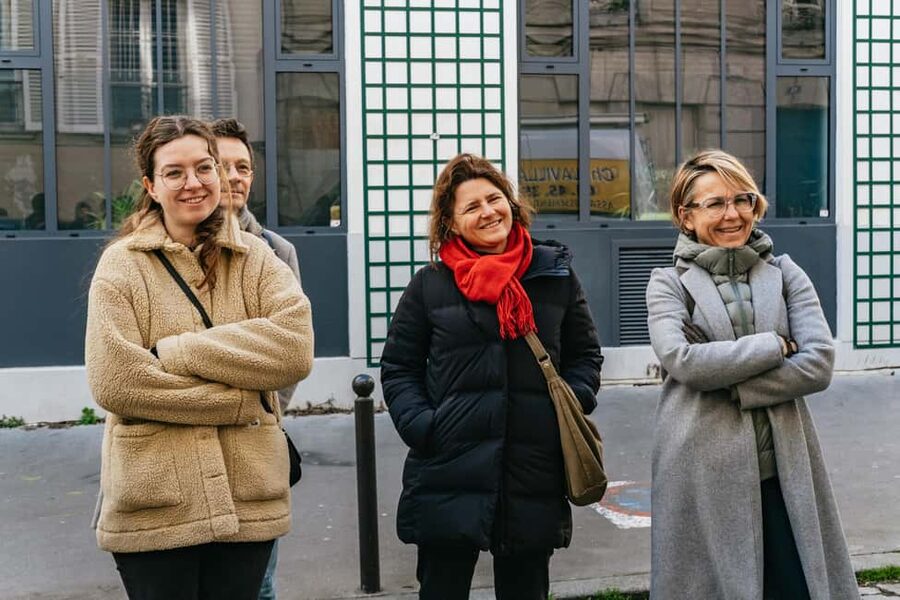
This is a walking tour with significant walking. If you choose Montmartre, expect hills.
Bring:
- Comfortable shoes (seriously)
- A jacket or layer if the weather shifts
- Water, especially in warmer months
Also, plan on a meeting point that can vary depending on the option you book. You’ll want to arrive a few minutes early so you can start with a calm head.
Who should book this tour
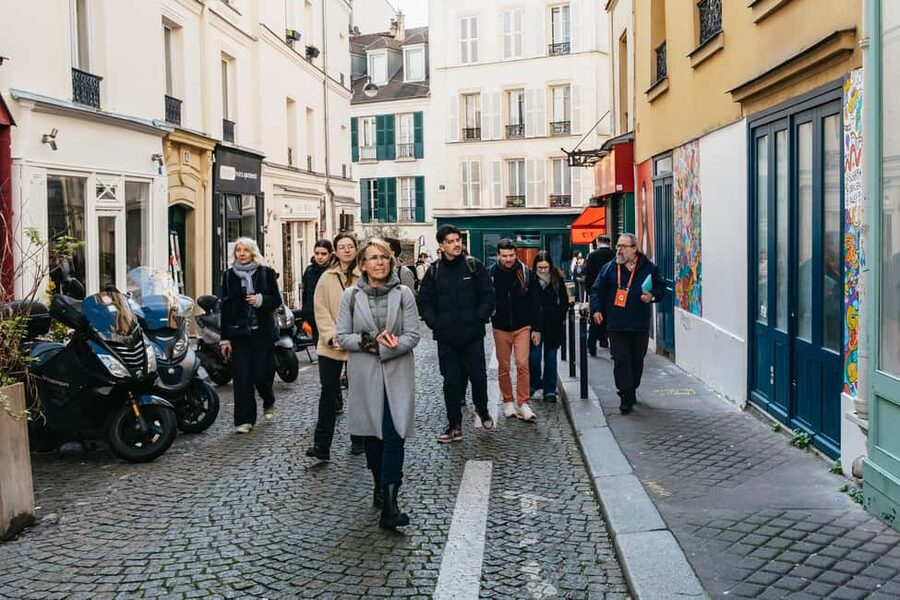
Book it if you want:
- Street art with technique and names attached
- A guide who can talk like an artist, not just a lecturer
- Either Montmartre history energy or La Butte aux Cailles small-neighborhood charm
- A tight timeframe that still feels like you learned something
Skip it or choose a different plan if you:
- Struggle with hills and steep walking routes (Montmartre)
- Prefer art viewed from the comfort of a short hop between locations
Should you book this Paris street art tour?
Yes, if street art is one of the ways you like to understand Paris. The guide’s street-artist background changes what you notice. The route focuses on specific works like Twotma, Gregos, Swed Oner, and Space Invader, and it connects that present-day wall culture back to the neighborhood’s older artistic pull.
If you’re torn between options, use this rule of thumb: want a classic, hill-and-legacy Montmartre day? Choose Montmartre. Want a slower, quieter street art hunt with tiny houses and stencil culture like le pochoir? Choose La Butte aux Cailles.
If you want street art to feel more than Instagram scenery, this tour does that job well.
FAQ
How long is the street art walking tour?
It lasts 90 minutes.
Which neighborhoods can I choose from?
You can choose Montmartre or La Butte aux Cailles.
What language is the guide?
The tour is guided in English.
Do I need comfortable shoes?
Yes. The tour involves significant walking, and Montmartre includes hills.
Is hotel pickup included?
No, hotel pickup and drop-off are not included.
Can I cancel if my plans change?
Yes. You can cancel up to 24 hours in advance for a full refund.