REVIEW · MADRID
Madrid: Street Art Bike Tour
Book on GetYourGuide →Operated by Cooltourspain · Bookable on GetYourGuide
Madrid’s walls have stories, and this ride teaches you to read them. You’ll join a local graffiti artist and glide through Malasaña and Lavapiés, where street art isn’t just decoration it’s part of daily culture. Along the way, you’ll track artists from Madrid to the international scene and learn how the art gets made on walls, shutters, and street-level surfaces.
I especially love how the guide ties the art to Madrid street art history. You’ll hear how tags and pieces evolved, including a preserved mark attributed to Muelle from 1989. I also like that you don’t just stare at murals you practice seeing techniques and meaning while biking to the neighborhoods where the scenes actually live.
One consideration: this is a bike tour through real traffic. The ride is medium level and includes one uphill, so if you’re not comfortable cycling in city conditions, you’ll want to lean on the guide for pacing and choose a time when you feel confident on the bike.
In This Review
- Key Highlights You’ll Care About
- Why Street Art Works Better on a Bike in Madrid
- Meeting Point, Bikes, and the One Uphill You Should Plan For
- Muelle and the 1989 Tag That Shows Graffiti’s Roots
- Alonso Martínez to See Boa Mistura Up Close
- Malasaña: Pinta Malasaña Walls and Plaza Dos de Mayo’s Traffic Art
- Lavapiés and Noviciado: Solar Antonio Grilo and Esto es una Plaza
- The Bigger Murals and How the Guide Helps You Read Placement
- Price and Value: Is $46 Worth a Street Art Bike Tour?
- Practical Tips That Make the Ride Feel Easy
- Who Should Book This Tour (and Who Might Skip It)
- FAQ
- How long is the Madrid street art bike tour?
- Where does the tour start?
- Is the tour in English or Spanish?
- What’s included in the price?
- Are beverages included?
- What neighborhoods will we ride through?
- What street art and artists will we see?
- Is there any uphill on the route?
- What should I bring?
- Do I need to book far in advance?
Key Highlights You’ll Care About
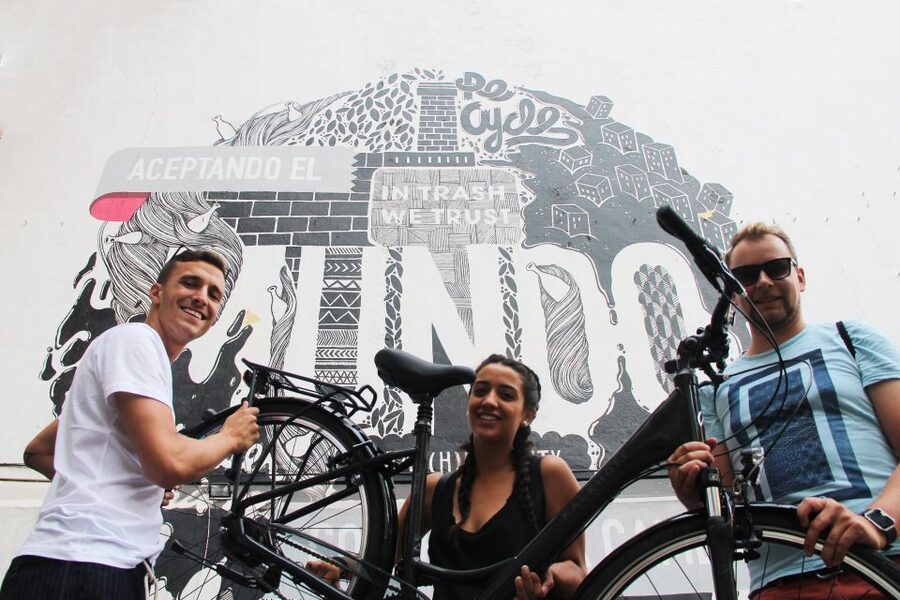
- Graffiti history on the move, including a preserved 1989 tag linked to Muelle
- Festival art in real neighborhoods, with stops tied to Pinta Malasaña
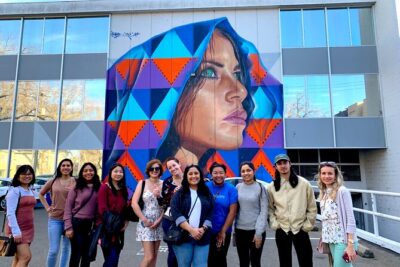
- International artists close up, including a Boa Mistura piece photographed on the route
- Community street-art spaces in Lavapiés, including Solar Antonio Grilo and Esto es una Plaza
- A truly large center-district mural, which anchors the tour’s biggest visual moment
Why Street Art Works Better on a Bike in Madrid
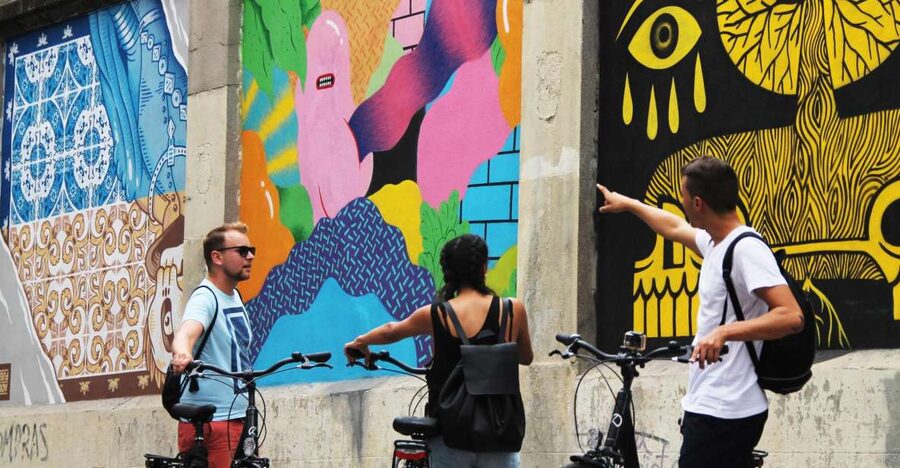
Madrid’s street art isn’t limited to one museum wall. It spreads across neighborhoods, shopfront shutters, corner buildings, and even the edges of parks. On foot, you can miss how a scene changes block by block. On a bike, the rhythm is different. You connect places fast, then the guide helps you slow down for what you’re seeing.
This tour is also built for understanding. You’ll learn about the history of graffiti in Madrid and the techniques artists use when they decorate the city. That turns what could be random color into something you can actually interpret: style, materials, placement, and why certain marks survive while others disappear.
And yes, you’re doing it with a helmet and lock included, which helps you focus on the art rather than logistics. The ride is about 2.5 hours, long enough to feel like a mini-journey, but short enough that you’re not dragging yourself home after the best parts.
You can also read our reviews of more tours and experiences in Madrid.
Meeting Point, Bikes, and the One Uphill You Should Plan For
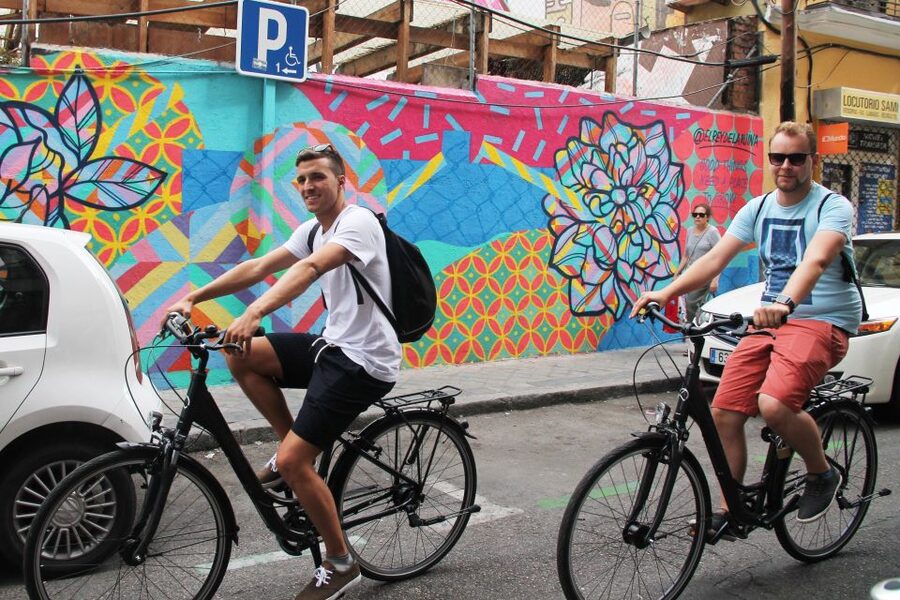
You’ll start at the entrance of a small Carrefour Express supermarket on C/Montera 32, near the Gran Vía and Sol metro area. The end of the tour brings you right back to the meeting point, so you don’t have to figure out a new location when your legs start negotiating with you.
Bike setup is part of the experience: you’ll get bike rental, helmet & lock, and a Madrid city map. There’s also a restroom break, which sounds basic until you’re halfway through a street-art crawl and realize you should’ve asked sooner.
Before you roll out, expect safety instructions. That matters because the route goes through parts of the city where you’ll bike alongside normal traffic. You’re not doing a car-free fantasy ride. You’re in Madrid.
One uphill is part of the “medium level” rating. It’s not described as a mountain, but it is enough that you should dress for it. Comfortable shoes are key, and if you’ve got any doubts about your cycling stamina, consider the start time that matches your energy level.
Muelle and the 1989 Tag That Shows Graffiti’s Roots
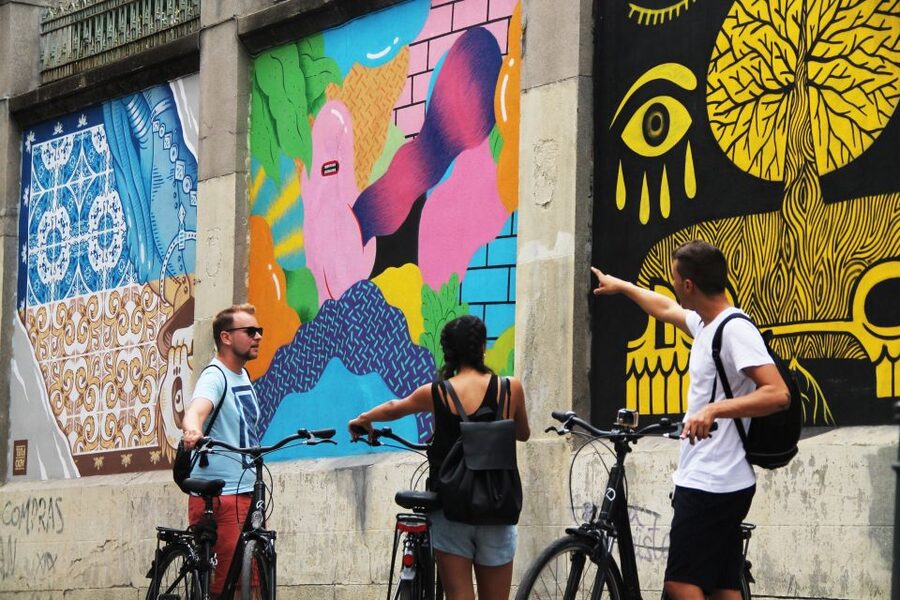
The tour’s early moment is the foundation. You’ll learn that graffiti in Madrid didn’t appear out of thin air. It has pioneers, timelines, and street-level proof.
One highlight is Muelle, described as a pioneer of the graffiti movement in Madrid. You’ll observe a tag associated with him that’s still preserved from 1989. This kind of surviving mark is powerful because it gives you a before-and-after reference point. You can see how far the scene has traveled since the early days, and you can also understand how permanence in street art is rare.
You’ll also talk about what graffiti artists actually do on the street: how tags and pieces adapt to the surfaces Madrid offers—walls, metal shutters, and other elements built into the urban fabric. That’s why your guide’s explanations matter. Without the context, you might see only style. With it, you start recognizing technique and intent.
This section also sets up the rest of the ride. Once you’ve seen a preserved older tag, newer festival work hits differently. You’re not just collecting photos. You’re tracking an evolution.
Alonso Martínez to See Boa Mistura Up Close
After the first part, you’ll get your safety briefing and then head toward Alonso Martínez. This is where you’ll stop for a piece connected to Boa Mistura.
Here’s what makes this stop valuable: Boa Mistura is described as an internationally active design agency, and the tour frames them as part of a broader Spanish and global street-art conversation. The point isn’t just to spot a recognizable crew name. It’s to understand how graffiti aesthetics and public art language spread across borders.
You’ll also hear that Boa Mistura was born and raised in the outskirts of Madrid and has participated in street art projects around the world. That matters because it grounds international-level visibility back into a Madrid origin story. It’s the same city, just different stages.
And when you photograph the piece on the route, you get a practical advantage. You’re not trying to guess where to stand later, on your own, with crowds and traffic moving around you.
Malasaña: Pinta Malasaña Walls and Plaza Dos de Mayo’s Traffic Art
Once you reach Malasaña, the vibe shifts from history lessons to festival energy. This neighborhood is trendy, and it’s famous for street life. But the tour doesn’t treat it like a backdrop. It treats it like a gallery with a pulse.
You’ll cross artwork by national artists who participated in the 2017 edition of Pinta Malasaña, a street art festival that colors the area during April. The tour points you toward Plaza Dos de Mayo, described as the center of that scene.
One stop that stands out here is a colorful traffic-related display titled Bolardo Voy, Bolardo vengo. It’s the kind of public-art concept that makes you look twice. Street art doesn’t always paint over blank walls. Sometimes it turns everyday street objects—like bollards—into the message.
Why this part is worth your time: Malasaña works best when you understand how festivals create temporary waves of artists, styles, and attention. You’re seeing the result of a specific moment in time, not just generic graffiti clutter.
If your group likes photo stops, Malasaña gives you plenty. If your group prefers to learn, the guide’s explanations keep you from turning the ride into a random picture scavenger hunt.

Lavapiés and Noviciado: Solar Antonio Grilo and Esto es una Plaza
After Malasaña, you’ll head toward Lavapiés and Noviciado, where the tour gets more community-focused. This is where street art becomes less about celebrity crews and more about local spaces created for and by the neighborhood.
You’ll have time to visit Solar Antonio Grilo and Esto es una Plaza (you’ll get there by bike as part of the route). These places are described as urban gardens full of street art, and the story behind them is part of the art’s meaning.
The tour explains that these spaces were once abandoned places and became examples of hybrid economy systems—local, community-minded models that other communities could study. Even if you’re not planning to start a neighborhood project of your own, this perspective changes how you view the murals.
You start asking better questions:
- Who made this and why?
- How does the space keep changing?
- What does the community gain from having color and creativity where nothing was before?
You’ll also see interventions by artists such as El Rey de la Ruina, Cassassola, Ze Carrión, Por Favor, and others. The names help, but the bigger value is learning how different kinds of street art coexist: small tags, larger pieces, and site-specific work that fits an actual place where people gather.
The Bigger Murals and How the Guide Helps You Read Placement
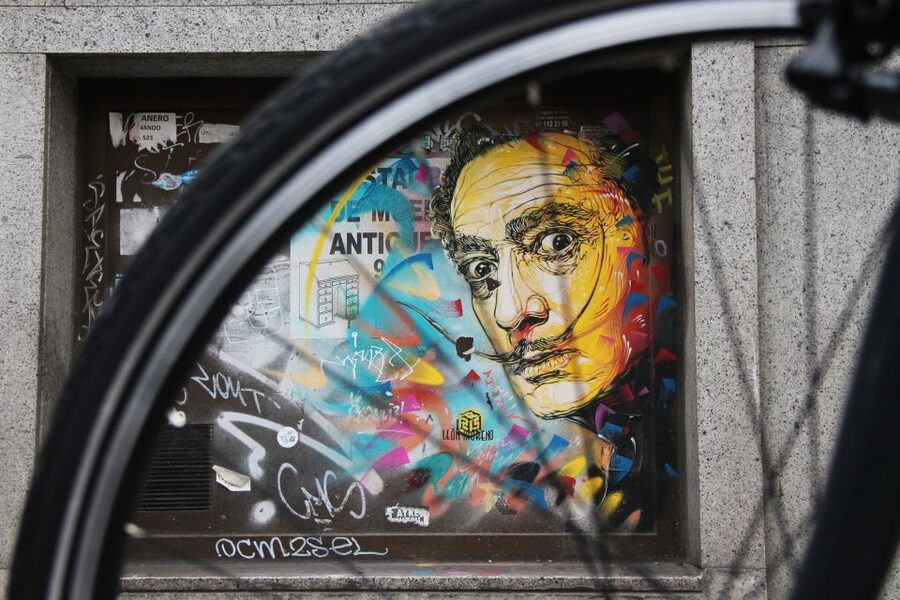
The tour includes a chance to see the biggest mural in Madrid’s Center District. That’s a headline moment, but the tour doesn’t leave you staring at it in silence.
Your guide’s role is to help you read the mural’s placement and meaning in context. Street art often depends on where it appears: near transit, next to everyday life, on surfaces people pass every day. When you learn the technique and the historical thread, your eyes start noticing details you would’ve missed.
This is also why biking helps. You get multiple viewing angles without burning an entire afternoon walking between scattered points. You can look closely, then roll to the next piece with the guide explaining what you’re about to see.
And if you like learning how graffiti artists work, the tour’s emphasis on techniques—how they decorate walls, metal shutters, and other city elements—gives you a mental toolkit. You’ll start distinguishing between styles and approaches based on what the guide points out.
Price and Value: Is $46 Worth a Street Art Bike Tour?
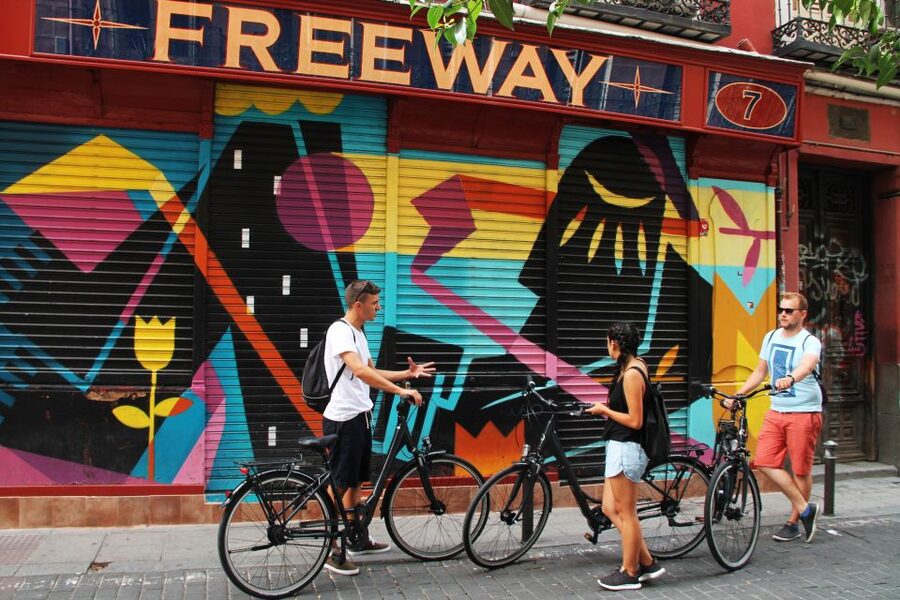
At $46 per person for about 2.5 hours, this tour can be great value if you want two things at once: art education and neighborhood access.
Here’s what you’re really paying for:
- A local graffiti-artist guide (English or Spanish)
- Bike rental plus helmet and lock
- A guided route through key street-art neighborhoods
- A map to help you keep exploring after
- A restroom break
Not included: beverages, so you’ll want to plan water for before or after the ride. That’s normal for tours like this, but it’s smart to remember if you’re coming straight from sightseeing.
Compared with paying for a street art walking tour, the bike format is often a better match for Madrid’s spread-out neighborhoods. You cover more ground, but you still get stops where you can pause. Compared with solo exploring, you get a story framework that makes each mural and tag feel connected instead of random.
If your budget is tight and you’re the type who enjoys reading murals quietly, you might not need a guide. But if you want the “why” behind street art—history, technique, and the neighborhood logic—this is priced like a practical city experience, not a luxury add-on.
Practical Tips That Make the Ride Feel Easy
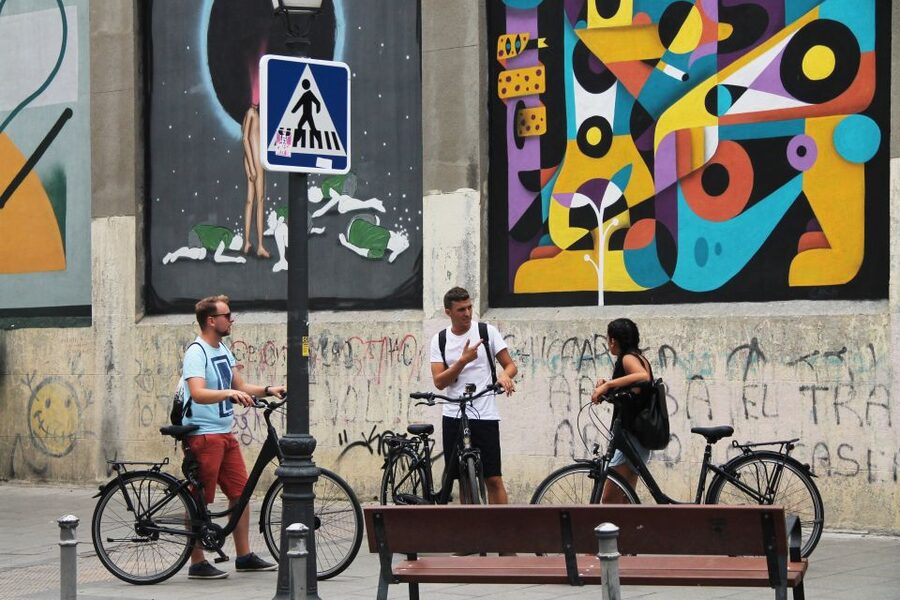
Here are the things that help most people get the most out of the tour.
Wear comfortable shoes. Even with only one uphill, you’ll be on and off the bike for photo moments and stops.
Plan for traffic comfort. The ride is described as medium level, with some uphill and city biking conditions. One helpful idea: if you’re bringing anyone who cycles less often, speak up early. The guide adjusts pacing when the group needs it.
Bring an ID or passport. It’s listed as required, so don’t assume you can show your phone.
If you’re riding with kids, pay attention to independence. One family ride described a 7-year-old cycling on their own bike as part of the experience. The takeaway for you: if your child can handle the bike well and follow instructions, the tour can work. If not, you’ll want a more child-friendly setup.
Also, keep your hydration in mind. Since beverages aren’t included, treat the tour like a focused ride with snacks and drinks handled before or after.
Who Should Book This Tour (and Who Might Skip It)
Book this tour if you want:
- Street art with context, not just photos
- A ride through Malasaña and Lavapiés where street art is part of daily life
- A chance to see a historic preserved tag from 1989 and major festival-related work
- A guide who can connect local pioneers like Muelle to major names and international projects like Boa Mistura
Consider skipping or choosing a different format if:
- You strongly dislike biking in city traffic, even with a helmet
- You know you’ll struggle with a single uphill segment
- You want a strictly car-free environment (this is a real city ride)
If you like guided street art tours that also feel like a real neighborhood experience, this one hits the sweet spot.
FAQ
How long is the Madrid street art bike tour?
It lasts about 2.5 hours.
Where does the tour start?
It starts at the entrance of the small Carrefour Express on C/Montera 32, near the Gran Via and Sol metro area.
Is the tour in English or Spanish?
Yes. The live guide offers English or Spanish.
What’s included in the price?
Bike rental, a helmet and lock, a Madrid city map, the live guide, and a restroom break.
Are beverages included?
No. Beverages are not included.
What neighborhoods will we ride through?
You’ll focus on Malasaña and Lavapiés.
What street art and artists will we see?
You’ll see artwork connected to Madrid’s festivals, including Pinta Malasaña, plus works associated with Boa Mistura and pieces by artists such as El Rey de la Ruina, Cassassola, Ze Carrión, and Por Favor.
Is there any uphill on the route?
Yes. The tour is described as medium level with just one uphill.
What should I bring?
Bring your passport or ID card and wear comfortable shoes.
Do I need to book far in advance?
You can check available starting times, and the tour notes free cancellation up to 24 hours in advance and a reserve now & pay later option.