REVIEW · MADRID
Street Art Guided Tour in Madrid
Book on Viator →Operated by Cooltourspain · Bookable on Viator
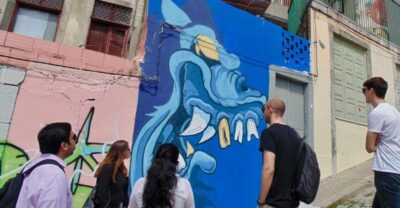
Madrid’s street art feels personal and political. This guided walk strings together La Neomudéjar and other major creative sites, with context for the artists and the messages behind the walls. You’ll see names like Himen, Ze Carrión, and Laguna626, and learn why some graffiti is treated like a crime while it’s really a form of public voice.
I also love the way the tour turns famous murals into real-world stories. At La Tabacalera, you get more than a quick look: you’ll visit the Muros area and even head down to the basement where stencils and street-art projects line the walls, plus a clear explanation of how art can protest Spain’s article 626 law.
One possible drawback: timing and access can vary. La Tabacalera has restrictive timing during week days, and the wall visit at Esta es Una Plaza is only guaranteed if the garden is open when you arrive.
In This Review
- Key things I’d mark on your mental map
- Entering Madrid’s Street-Art World: Power, Tobacco, and Protest
- Where You Meet and How the Walk Usually Feels
- La Neomudéjar: The Former Power Plant That Artists Claimed Back
- La Tabacalera and the Muros: Tobacco Roots and Stencil Basement Energy
- Esta es Una Plaza and Lavapiés: Where the Neighborhood Teaches You How to Look
- Campo de Cebada: The Reclaimed Place That Turns Art Into Daily Life
- Guide Energy, Technique Talk, and How to Get the Most From Two Hours
- Price and Value for a $30.38 Two-Hour Street-Art Walk
- Who Should Book This Tour (and Who Might Want Another Option)
- Should You Book This Street Art Tour of Madrid?
Key things I’d mark on your mental map

- La Neomudéjar power-plant murals a former train-station power site turned street-art destination
- Muros La Tabacalera plus the basement stencils for a more behind-the-scenes look
- Street-art politics in plain language especially the protest angle around article 626
- Campo de Cebada reclaimed public space a community spot that mixes art, movies, music, and gardens
- Small group size (max 13) so questions and side conversations are actually possible
- English guide + mobile ticket easy to use without extra paperwork
Entering Madrid’s Street-Art World: Power, Tobacco, and Protest
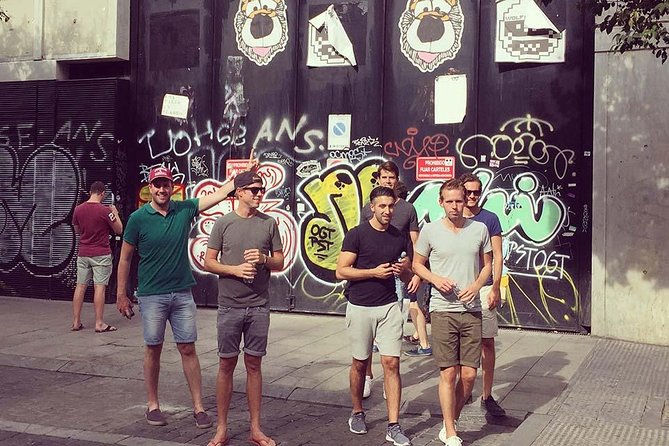
If you think street art is just decoration, this tour helps you see the point. Madrid’s walls aren’t neutral. They’re places where artists argue with the rules, test new styles, and build community.
The route is built around three strong “chapters” of the city’s street-art story. First you step into La Neomudéjar, a former industrial power plant now hosting works by artists from Spain and beyond. Then you move to La Tabacalera, a tobacco warehouse turned art and performance space, including a basement full of stencils. Finally, you end at Campo de Cebada, a reclaimed gathering place shaped by community action.
That structure is what makes the experience worth the time. You’re not just collecting photos of murals. You’re learning why these sites exist at all, and how the city’s creative energy fits into daily life.
You can also read our reviews of more tours and experiences in Madrid.

Where You Meet and How the Walk Usually Feels
You’ll start at Teatro Valle-Inclán (Pl. de Ana Diosdado, s/n, Centro) and finish at Plaza de Cascorro. The tour is listed as starting at 11:15 am, and it runs in the morning schedule (the broader description also mentions morning or afternoon options). The total time is about 2 hours.
This matters because you’re walking at a human pace through a couple of distinct pockets of Madrid. You’re not stuck in a long bus ride, and you’re not trying to sprint between stops either. With a maximum of 13 people, it also feels more like a focused walk with a guide who can answer questions without rushing.
You’ll use a mobile ticket, and the tour operates in all weather conditions, so bring shoes that handle wet sidewalks and a layer for wind or sun.
La Neomudéjar: The Former Power Plant That Artists Claimed Back
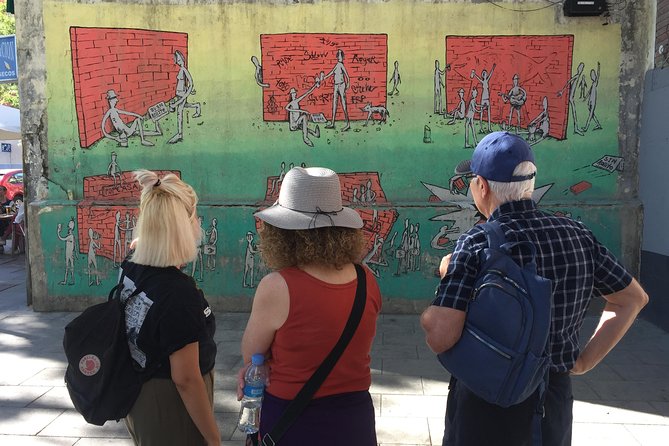
La Neomudéjar is the kind of place that instantly changes your expectations. It’s a one-time power plant associated with the 19th-century train world, and today it functions as a major canvas for street artists.
You’ll start nearby—about a 5-minute walk from your starting point—then you connect with the area by passing through the city’s art-and-transport zones. Along the way, you’ll see the big-headed babies monument in front of Atocha train station, plus an avant-garde art center located in the Mediodía metro area. It’s a good reminder that in Madrid, art doesn’t only happen in galleries. It shows up where people already move through the city.
Inside the La Neomudéjar space, look for more than the visual style. The key point is that the building is an “old function” turned “new function.” Artists reclaim industrial spaces the same way communities reclaim streets: by using the space until it becomes theirs.
You’ll see work by artists including Himen, Ze Carrión, and Laguna626. A central theme here is protest. Many works speak out against Spain’s article 626, a law that tries to penalize graffiti creators. Even if you’re not into politics, this is where street art starts to make emotional sense. It’s not random. It’s a response.
Practical tip: at this stop, slow down and read the wall messages. The tour’s value is in helping you notice technique and intent, not just the art style.
La Tabacalera and the Muros: Tobacco Roots and Stencil Basement Energy
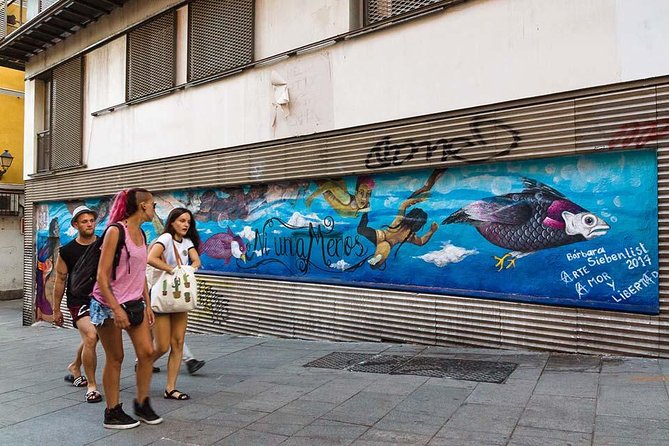
Next comes La Tabacalera, a 19th-century tobacco warehouse that once employed over 1,000 workers. That industrial origin is part of the story. The building is heavy with labor history, and the art uses that weight.
At La Tabacalera, you focus on the exterior graffiti walls and the craft behind them. You’ll be encouraged to pay attention to artist choice, message, and techniques—which is exactly what you want on a guided street-art walk. The guide helps you separate “looks cool” from “says something,” and you start seeing patterns: how artists build symbolism, how styles communicate urgency, and how certain designs repeat across walls like signatures.
One special draw is that you’ll also go into the basement area. Down there, hundreds of street-art projects and stencils line the walls. This is the behind-the-scenes part that many street tours skip. You don’t just see finished work. You get a sense of process: layering, planning, repeating shapes, and designing for walls instead of paper.
Two things to keep in mind. First, La Tabacalera has restrictive timing during week days. Second, if your goal is to see every possible room, plan on being flexible with the schedule once you’re there.
If you’re lucky with timing, you might catch artists working on new pieces for an urban street-art festival. One recent group was able to see artists painting for the annual CALLE Lavapies festival, which is celebrated once a year. Even if you don’t catch festival painting, the site still has that live, work-in-progress feel.
Esta es Una Plaza and Lavapiés: Where the Neighborhood Teaches You How to Look
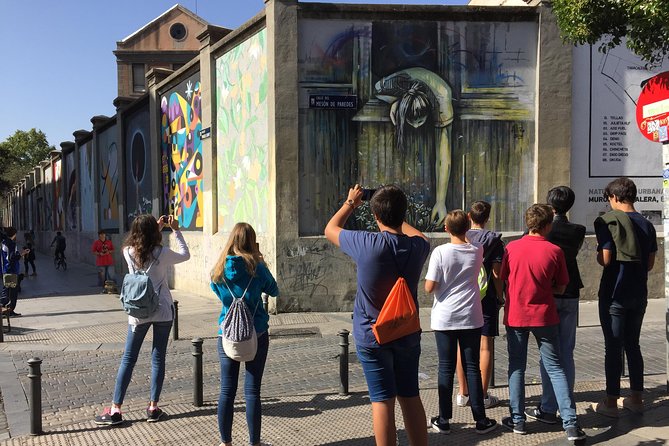
After La Tabacalera, the walk shifts into the streetscape and the “in-between” spaces that make Lavapiés feel like a living canvas.
One stop you may visit is Esta es Una Plaza, described as an urban garden. The big practical detail: the wall visit there is only guaranteed if the location is open. So if you arrive and the garden area is closed, don’t be surprised if the guide adjusts. This is also why wearing good walking shoes helps. A slight reroute is easy when you’re on foot.
Lavapiés itself is where you get the neighborhood story. You’ll walk around this multicultural district and learn how it fits into the street-art ecosystem. The guide talks about the area’s history and how the walls reflect the community.
Here’s how I’d use this part of the tour to get more out of it. Don’t just scan for murals. Look for layers:
- older paint-over marks that suggest walls change over time
- stencils and repeated shapes that hint at planning and collaboration
- small tags with big meaning for the local art scene
Street art isn’t always loud. Sometimes it’s a message tucked into the corner where you only notice if you’re willing to look slowly.
Also, if you’ve ever wondered why some street art seems “permitted” and others seems like it’s fighting permission, this area helps you spot both. The contrast is part of the point.


Campo de Cebada: The Reclaimed Place That Turns Art Into Daily Life
The tour finishes at Campo de Cebada, a community gathering area and art project. This is where street art stops being only “on walls” and becomes about shared space.
Campo de Cebada traces its origins to Spain’s 15-M Movement, when people recaptured public streets and squares for communal use. That spirit is still visible in how the space is used today.
You’ll learn that Campo de Cebada used to be home to a swimming pool. Local associations reorganized it into a community zone where people watch movies in summer, listen to music, and even plant vegetables in a collective garden.
This stop works well as a finish because it changes your mental model. After you spend time with protest walls and industrial art spaces, Campo de Cebada shows the softer side of street creativity: collaboration, care, and public art that functions for real people.
If you’re visiting in the season when outdoor activities happen, you might see the space used in ways that make the street-art ideas feel practical instead of theoretical.
Guide Energy, Technique Talk, and How to Get the Most From Two Hours
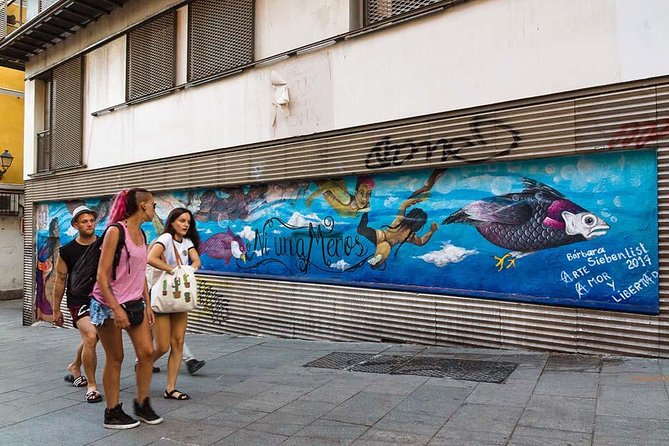
Most street-art tours fail when they treat walls like a museum. This one does better because the guide pushes you to notice what you’re looking at and why it matters.
A big reason people rate this so highly is the guide experience. Names like Santi and Santiago come up often, and people also mention Julia for being friendly and full of information. The common theme is enthusiasm that doesn’t feel scripted. It also helps that guides handle questions well and adapt to the group’s interests.
Here’s what you can do on your end to boost your results:
- Ask one question about technique at each major stop. For example, at La Tabacalera’s basement stencils, ask how stencil work changes what artists can do on walls.
- Listen for the article 626 explanation and then connect it to what you’re seeing. When you understand the legal and cultural pressure, the art reads differently.
- Spend 60 seconds longer than you planned on any wall that feels like it’s making a point, not just showing color.
One more bonus: on at least one occasion, people were able to try spray painting, at least in a limited way. That’s not guaranteed from the general description, but it’s worth knowing the tour may sometimes include hands-on moments depending on the day and guide approach.
Price and Value for a $30.38 Two-Hour Street-Art Walk
The price is $30.38 per person for about 2 hours, offered in English with a local guide and multilingual support (English/French/Spanish). For this price, you’re paying mostly for interpretation and access to the “artist logic” behind each site.
That value shows up in two places:
- You get curated time at specific cultural spaces like La Neomudéjar and La Tabacalera, including the basement stencils area.
- The guide explains the why: messages, legal pressure, and how neighborhood context shapes what artists produce.
Also, the group size cap at 13 people helps the experience feel focused rather than rushed. You’ll have enough space to keep up, and the guide can still answer questions.
One cost note: food and drinks aren’t included, so plan a snack or drink before or after.
Who Should Book This Tour (and Who Might Want Another Option)
This street-art walk is a strong fit if you want:
- a guided route through key Madrid street-art sites
- practical context for protest art and the role of graffiti
- a walk that ends in a real community space, not just another mural stop
It may be less ideal if you’re expecting a long, highly technical workshop-style class or if you need every venue to be open no matter what day it is. La Tabacalera has weekday timing limits, and Esta es Una Plaza’s wall visit depends on the garden being open.
If you’re short on time and want a coherent “story line” for Madrid street art in about two hours, this tour makes it easy.
Should You Book This Street Art Tour of Madrid?
Yes, I think you should book it if you like street art with context. The route connects three major kinds of creative space—industrial repurposing, warehouse art infrastructure, and community reclaiming—and that blend is what makes the experience feel more meaningful than a random mural hunt.
Book it particularly if you:
- want La Neomudéjar and La Tabacalera in one go
- care about why street art can be controversial (article 626)
- prefer small-group walking tours over big-bus city circuits
One last nudge: pick a comfortable time window and wear weather-ready gear. With street-art walking, small schedule changes happen, and being flexible makes the day better.