REVIEW · MADRID
Madrid Street Art Tour (Malasaña Chueca Gran Via & Lavapies)
Book on GetYourGuide →Operated by Wolves Tours · Bookable on GetYourGuide
Street art maps your way through Madrid. This tour strings together graffiti’s origins and real neighborhood walls in Malasaña, Chueca, and Lavapiés, with a guide who points out what most people miss. I also like the fact that it’s built for photos and quick understanding, not just a stroll with random comments.
I love the mix of big-city sights (like Puerta del Sol and Gran Vía) with very local streets, including artist marks such as the protected signature of MUELLE. One thing to plan for: it’s mostly on foot, so if you rarely walk, the route length may feel like a push.
In This Review
- Key Things You’ll Notice on This Madrid Street Art Tour
- Street Art in Madrid That Actually Helps You Understand It
- Where the Tour Starts (and How to Avoid the Typical First-Moment Chaos)
- The Warm-Up Lesson: Graffiti Origins and Why You’ll See More
- Puerta del Sol and Gran Vía: Big Madrid Sights as a Street Art Gateway
- Malasaña: MUELLE, Street Culture, and the Feel of a Real Neighborhood
- Chueca: Color, Style, and Contemporary Work Where It Feels Personal
- Gran Vía to Lavapiés: Two Worlds in One Walk
- What You’ll See (So You Know What to Look For)
- Price and Value: $1.77 vs What You Really Get
- Timing and Getting the Most Out of the 2 Hours
- Who This Tour Is Best For (and Who Should Consider Another Option)
- Finishing Point: Where You’ll End Up in Central Madrid
- Should You Book the Madrid Street Art Tour?
- FAQ
- How long is the Madrid Street Art Tour?
- Where does the tour start?
- What neighborhoods does the tour cover?
- Is the tour only murals, or are other art forms included?
- Does the tour include museum tickets or entry fees?
- What language is the tour guide?
- Is the tour wheelchair accessible?
- What should I bring?
- How does the pricing work?
- Where does the tour finish?
Key Things You’ll Notice on This Madrid Street Art Tour
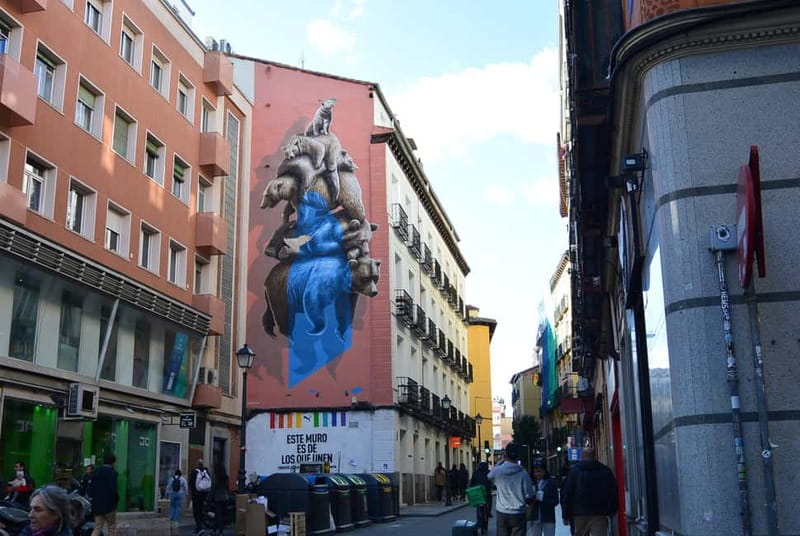
- A graffiti-history start so the murals and tags make more sense as you see them
- Two-hour pacing that uses short stops and photo moments instead of long lectures
- Neighborhood-to-neighborhood contrast from Sol and Gran Vía into Malasaña and Chueca
- Specific artists and styles named on the way: paste-ups, mosaics, urban sculpture
- Lavapiés as the cultural finish where contemporary street work feels most alive
Street Art in Madrid That Actually Helps You Understand It
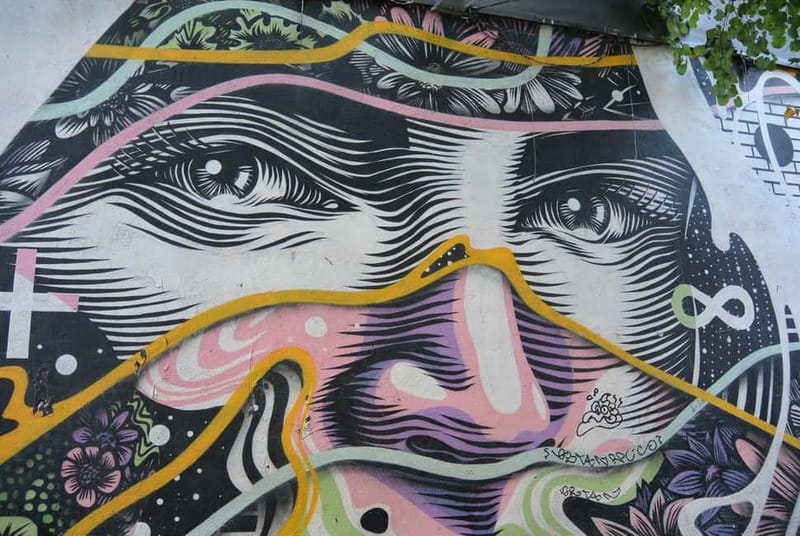
If Madrid is new to you, it can feel like you’re just passing walls. This tour changes that. It gives you context first, then sends you out to match the story to the street. You’re not hunting for meaning alone—your guide keeps pointing at the details that make street art more than decoration.
The best part for me is how it connects art to place. You start around major Madrid landmarks and end in neighborhoods where the street feels like part of everyday life. That gives you a useful “map in your head”: big sights, then local texture.
And since this is priced low in practice—listed at $1.77 per person and designed as a choose-what-it’s-worth style—this is a strong option if you want value without committing to a museum schedule. You’ll still spend money if you want drinks or snacks later, but the art portion is already covered.
You can also read our reviews of more tours and experiences in Madrid.
Where the Tour Starts (and How to Avoid the Typical First-Moment Chaos)
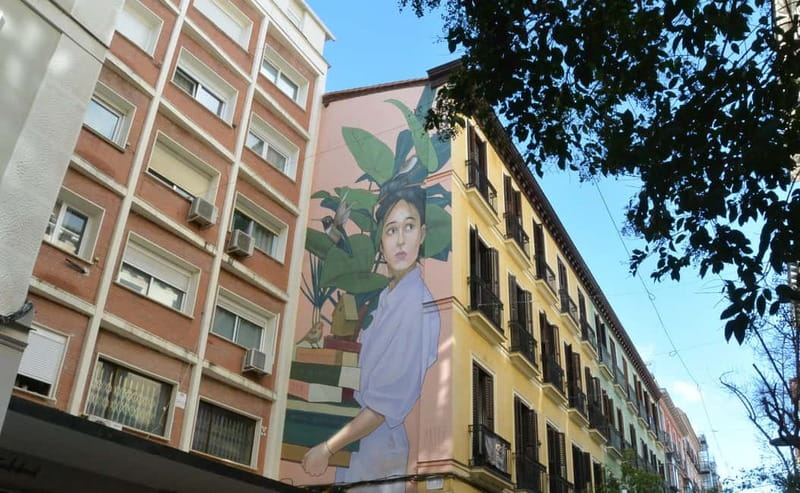
The tour meets at Way Hostel Madrid. The guide is at the door of the hostel with the group. The route runs on foot, and it’s designed around a short walking rhythm with frequent stops—so you’re not stuck sprinting to “catch up.”
Plan to arrive with time to settle in. This kind of free-style tour works best when everyone starts together. If you’re even a few minutes late, you can miss the first part where the guide sets the tone with the graffiti origin talk.
If you’re sensitive to walking distance, wear your most comfortable shoes. One review callout was that the walking can be tough if you don’t get out much on foot, with a bike being preferable for that person. That’s a good hint: the tour is friendly, but it’s still real walking.
The Warm-Up Lesson: Graffiti Origins and Why You’ll See More
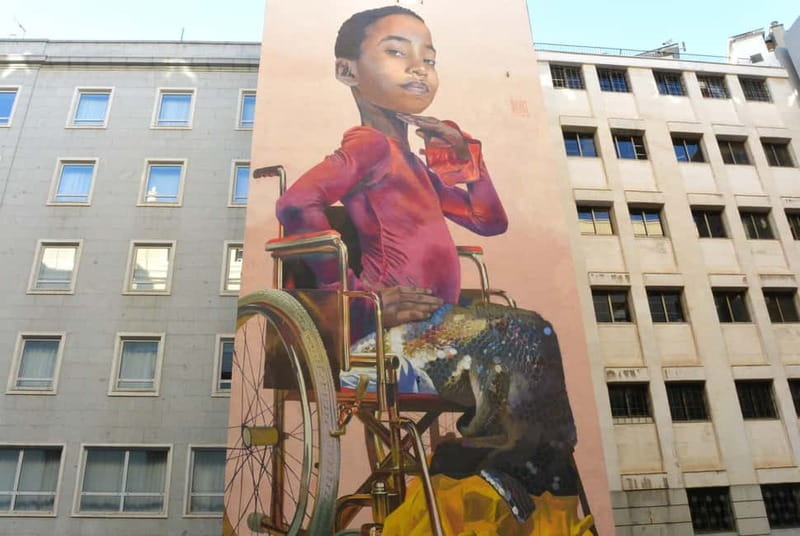
Before you jump into murals, you get a brief history of how graffiti started in the world. That matters because street art is often misunderstood when people only see letters. When you know the basic “why” behind the early tagging and the cultural roots, the modern pieces you see later make more sense.
This also changes how you photograph. Instead of shooting only the final image, you start noticing how styles evolve—lettering shapes, color choices, stencil rhythm, and the different ways artists build a message on a wall.
It’s not a classroom. Expect a guide-led story that sets up the walk, then puts you in front of the real thing.
Puerta del Sol and Gran Vía: Big Madrid Sights as a Street Art Gateway
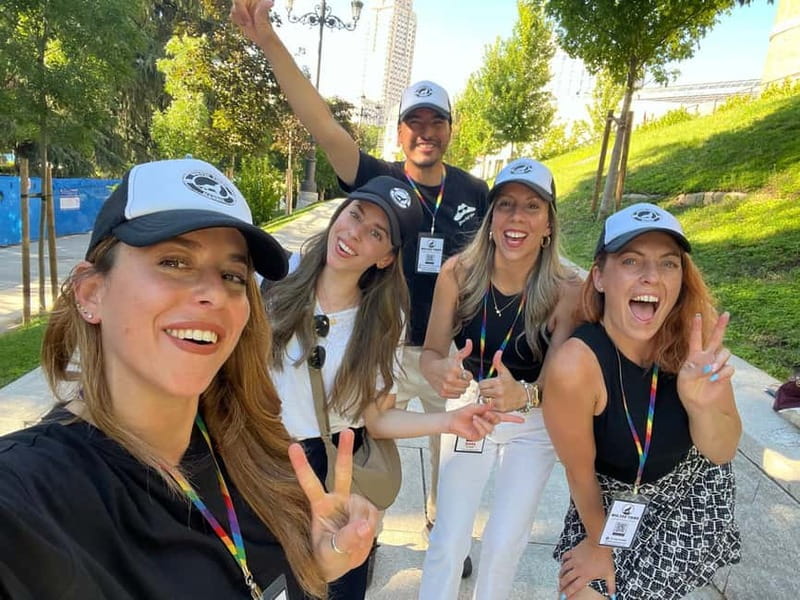
Early on, you’ll pass through Puerta del Sol and then head to Gran Vía, often described as the Spanish Broadway. This part isn’t just for sightseeing; it acts like a contrast panel.
Sol gives you an easy entry point to Madrid’s famous center. Gran Vía adds motion—wide streets, lots happening at once, and the kind of visual noise where street art becomes a counterpoint. You’ll get photo time and guided pointing-out at the spots along the way, including major views tied to central Madrid.
What I like here is the structure: you’re not thrown into the deep end. You get your bearings near landmark-heavy areas, then the tour transitions into more local neighborhoods where the walls feel connected to daily community life.
Malasaña: MUELLE, Street Culture, and the Feel of a Real Neighborhood
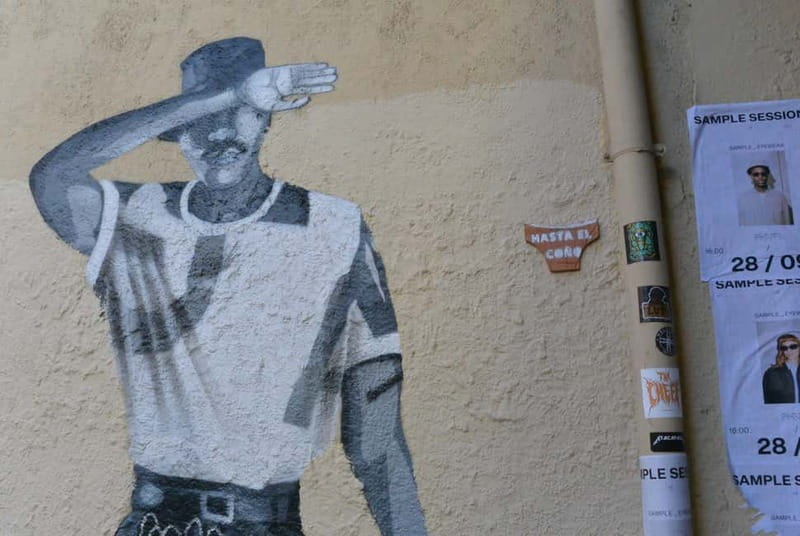
Malasaña is where the tour turns from “Madrid highlights” into “Madrid attitude.” You spend a good block of time here, and the guide helps you notice how street work fits the neighborhood’s style.
A standout mention is the protected signature of the Madrid artist MUELLE. Even if you don’t know him yet, the tour frames why a signature can matter—how it becomes identity, how it marks continuity, and how artists leave traces over time.
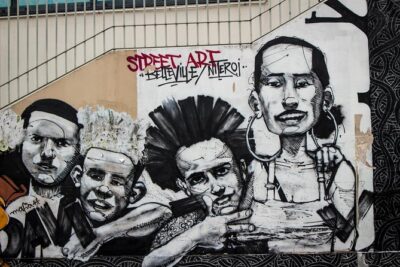
Malasaña also brings you into the streets around Calle Fuencarral. This area is a great place to spot different street art formats side by side: bigger murals, smaller pieces, and the everyday layers of the city. You might see paste-ups and street graphics that look like they belong to the neighborhood’s rhythm rather than a single event.
If you’re the type who likes to walk and look—at doorways, walls, signage, and the tiny “in-between” corners—Malasaña is where the tour starts rewarding your attention.

Chueca: Color, Style, and Contemporary Work Where It Feels Personal
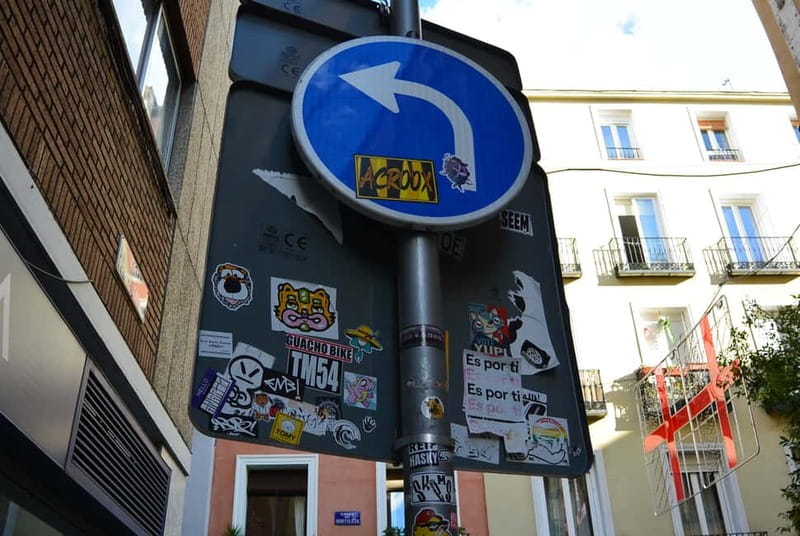
Next comes Chueca, with a real focus on color and visual energy. You’ll walk through streets that are known for their distinct look, and the tour uses that setting to highlight contemporary street styles.
The tour includes area stops around Calle Hortaleza. This matters because Chueca often reads like a design-forward neighborhood, so the street art here can feel like it’s talking to the street instead of sitting on it.
Expect more guide explanations tied to how works are made and how styles communicate—especially when different aesthetic codes show up in the same area. That’s the big value: you start seeing street art as a system of influences, not a random scatter of images.
And yes, this is also where you’ll want your camera ready. The guided stops are built around photo moments, and Chueca is one of the most rewarding sections visually.
Gran Vía to Lavapiés: Two Worlds in One Walk
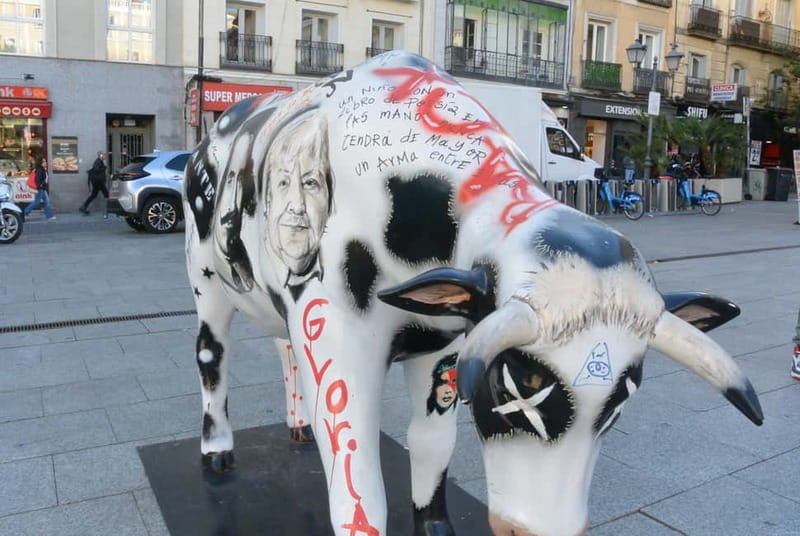
After you get your fill of Malasaña and Chueca, the tour shifts toward Lavapiés, often called the cultural heart of Madrid. This isn’t just a label. The feel changes: the art tone can go more contemporary and experimental, and the streets start to feel more like public conversation.
This is where the tour points out works linked to bigger art moments. You may catch murals tied to the Urvanity Art Fair, and you’ll also be directed to art connected to Calle the festival (as described in the tour). That’s useful if you want to understand street art in its real ecosystem—where street walls, artist communities, and public events overlap.
The guide also highlights names of artists and types of work you can look for while you’re standing there. The listed examples include Okudart, Basket of Nean, El Rey de la Ruina, and Done Street. You may also see mosaics, paste-ups, and urban sculpture.
Lavapiés is also the part where street art can feel less like an “attraction” and more like part of the neighborhood’s daily visual language. For a first visit to Madrid, that’s a strong ending note.
What You’ll See (So You Know What to Look For)
This tour isn’t just about “murals.” It’s about variety in how street art shows up in Madrid. You’re likely to spot:
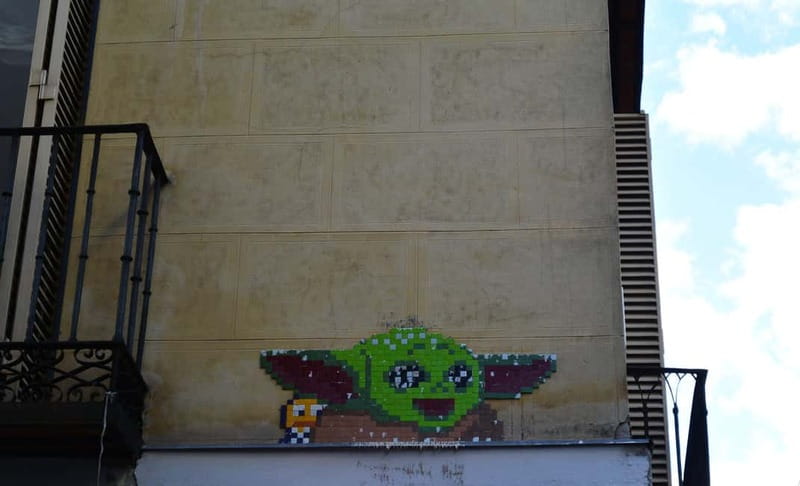
- Mosaics by local artists, often with strong color patterning
- Paste-ups that feel graphic and poster-like
- Urban sculpture elements that turn a corner into a mini-installation
- Street art tied to events like the ones connected to Urvanity and Calle the festival
- Signature-style work such as the protected MUELLE mark
If you go in with this mindset, you’ll come away with more than photos. You’ll understand how different formats communicate different messages—letters and tagging for identity, murals for storytelling, and paste-ups for immediacy.
Price and Value: $1.77 vs What You Really Get
The listing price is shown as $1.77 per person, but the tour is also framed as a reward-your-guide model. In practice, that means you’re paying a very small amount up front (or effectively reserving your spot), then you decide what it was worth afterward.
For value, the key is that you’re paying for three things at once:
1) guided walking across multiple neighborhoods
2) explanation of graffiti origins so the art has meaning
3) structured photo stops with a route that would be harder to piece together on your own
You’re not buying an entry ticket to a museum. You’re buying perspective. If you like street art, that’s exactly what you’re getting.
Timing and Getting the Most Out of the 2 Hours
This is a 2-hour tour. That’s short enough to fit into most days, but long enough that you won’t feel like you’re only skimming. The stops are organized so you get moments to listen, then immediately test what you learned by looking at the walls.
One practical note: the pace won’t be “sit every 5 minutes.” The tour includes multiple stops and enough walking that comfortable shoes are a real requirement. Bring a camera and don’t plan to spend the whole time looking down to find the perfect framing.
If you’re traveling with friends or family, it also helps that the tour runs in English with a live guide. You can keep the questions going instead of reading plaques on your own.
Who This Tour Is Best For (and Who Should Consider Another Option)
This tour fits you best if you want:
- a quick Madrid orientation beyond the main monuments
- a street-art education that doesn’t require museum time
- structured stops in Malasaña, Chueca, and Lavapiés
It may feel less ideal if you:
- struggle with long walks and need frequent rests
- prefer museum-style indoor pacing
The good news is that the tour is on foot, so you can always slow down a bit or take a breath at a stop. Just don’t expect a fully seated rhythm.
Finishing Point: Where You’ll End Up in Central Madrid
The tour ends at Calle de la Magdalena, 23, Centro, 28012 Madrid. Ending in central Madrid makes it easier to keep going—grab a bite, walk toward your next stop, or catch your transportation.
It’s a smart finish area because you’re not trapped at the far edge of a neighborhood. You can convert the art inspiration into a plan for the rest of your day.
Should You Book the Madrid Street Art Tour?
Yes—if you’re the type who likes your travel with context and visuals, this is an excellent way to spend two hours in Madrid. The combination of graffiti origins, neighborhood variety, and named street-art styles makes the walk feel purposeful. The pay-what-it’s-worth angle also makes it low-risk.
Book it with a simple expectation: this is a street route, not a museum. Wear comfortable shoes, bring your camera, and be ready to look closely. If you do that, you’ll leave with a clearer sense of Madrid’s street voice—especially in Malasaña, Chueca, and Lavapiés.
FAQ
How long is the Madrid Street Art Tour?
The tour lasts 2 hours.
Where does the tour start?
The meeting point is Way Hostel Madrid, and the guide will be at the door of the hostel with the group.
What neighborhoods does the tour cover?
You’ll visit Puerta del Sol, Gran Vía, Malasaña, Chueca, and Lavapiés, plus nearby streets such as Calle Fuencarral and Calle Hortaleza.
Is the tour only murals, or are other art forms included?
The tour includes more than murals. It mentions mosaics, paste-ups, urban sculpture, and street art linked to events like the Urvanity Art Fair and Calle the festival.
Does the tour include museum tickets or entry fees?
No. Entry to attractions or museums is not included.
What language is the tour guide?
The tour guide offers English.
Is the tour wheelchair accessible?
Yes, the tour is listed as wheelchair accessible.
What should I bring?
Bring comfortable shoes, a camera, and comfortable clothes.
How does the pricing work?
The tour is listed at $1.77 per person and is described as a value-based model where you can reward your guide with whatever amount you think it was worth.
Where does the tour finish?
The tour finishes at Calle de la Magdalena, 23, Centro, 28012 Madrid.