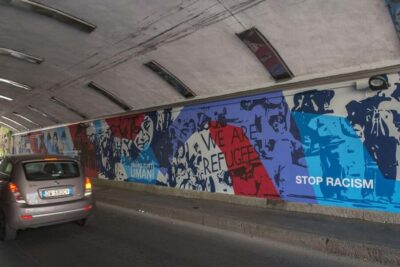
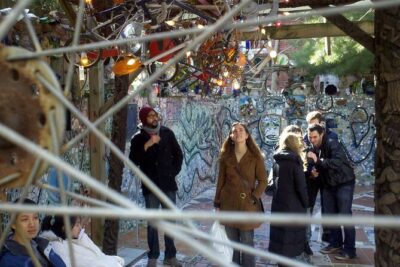
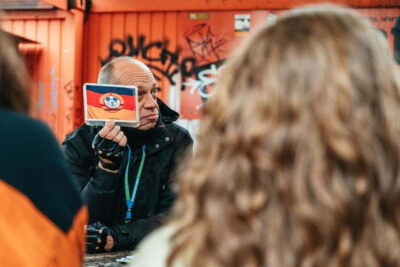
Street art has a memory in Lavapiés. In just 2 hours, you’ll spot big-name murals and tiny, hard-to-find details with an English-speaking guide.
What makes it stand out is the mix of world-famous wall work and small street-level clues that help you read the neighborhood like a local.
I especially like two things: the small group size (10 max) keeps the pace calm, and the guides bring an artist or art historian angle that ties each piece to symbolism and local context. It feels less like sightseeing and more like learning a new visual language.
One consideration: the gallery stop means you may want to buy something. Art you fall for there is not included, so be ready for that.
In This Review
- Key Points Worth Booking For
- Getting Oriented in Lavapiés (Where Street Art Feels Like Everyday Life)
- The Two-Hour Walk That Teaches You to Read Walls
- Calle de Argumosa: Small Moves, Big Atmosphere
- A Quick Glance Toward Reina Sofía (Then Back to the Streets)
- Mercado Antón Martín: Neighborhood Rhythm Between Murals
- Trampantojo Cerámico de Lola Gil: When “Street Trick” Becomes Art
- Calle de Embajadores: Where the Walk Builds Momentum
- The Local Gallery Stop: Turning Wall Art Into a Real Conversation
- Price and Value: Is $33 Worth Two Hours of Street Art?
- Pace, Comfort, and Who This Tour Fits Best
- What to Look For During the Tour (So You Don’t Leave With Only Photos)
- Should You Book This Hidden Street Art Tour?
- FAQ
- FAQ
- How long is the Madrid Hidden Street Art Tour?
- What does the tour cost?
- Where does the tour take place?
- How big is the group?
- Is the tour wheelchair accessible?
- What language is the guide?
- Where do I meet the tour?
- Is there free cancellation?
- Is the gallery stop included, and do I have to pay for artwork?
Key Points Worth Booking For
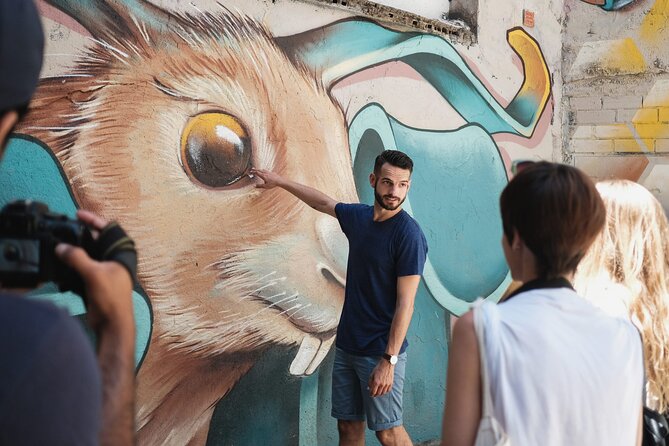
- Lavapiés street art, not the main-sight loop: you spend time in a working neighborhood with real local texture.
- Big murals plus micro-details: you’ll learn to notice both large façades and small corner messages.
- Artist-led explanations: guides share cultural references and what different street art styles are trying to say.
- Low-key small group pacing: short walks, regular stopping points, and time to ask questions.
- End at a local art gallery: a chance to meet local artists and see how street art connects to the art world.
- A learn-to-read approach: you’ll pick up practical skills for spotting tags, paste-ups, and other styles.
Getting Oriented in Lavapiés (Where Street Art Feels Like Everyday Life)
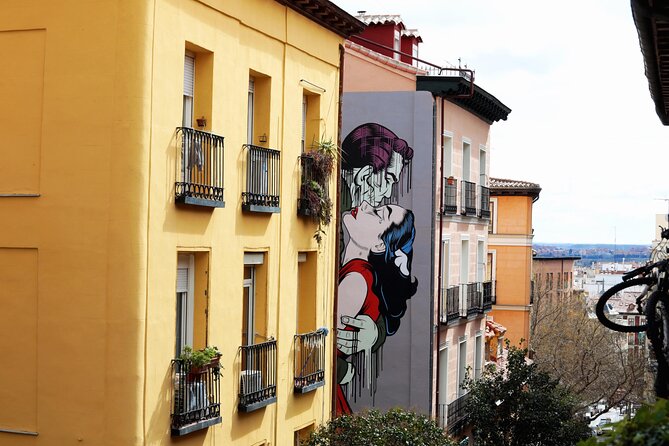
Start at the Portomarin restaurant area, so you’re not scrambling across town before you even begin. If you arrive a bit early, you can grab a coffee or a refreshment nearby and take a quick look at how the neighborhood looks and sounds before the walk officially starts. That small warm-up matters here, because street art isn’t staged like a museum piece. It’s living on the street, reacting to the city around it.
This tour stays focused on Lavapiés, a neighborhood known for its eclectic energy and constant visual change. The best street art experiences teach you what to look for. This one does that by keeping you walking and pointing out both the obvious masterpieces and the subtle work that’s easy to miss when you’re just passing by.
The group stays small, limited to 10 participants, which keeps the mood friendly and calm. It also helps you hear explanations clearly, without the guide talking over a crowd. On a hot afternoon, that pacing is a real win.
You can also read our reviews of more tours and experiences in Madrid.
The Two-Hour Walk That Teaches You to Read Walls
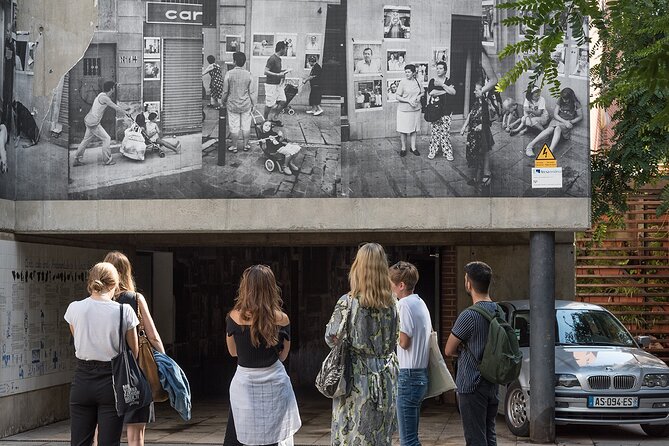
The tour is designed as a learning walk—2 hours long, English-speaking guide, and a route built around seeing street art in layers. You’ll cover stops that feel like a mix of iconic murals, everyday street surfaces, and a couple of cultural anchors in the neighborhood.
What you get out of a short tour like this depends on how well it helps you interpret what you’re seeing. Here, the guide’s role is key. They’re artists or art historians, and they connect pieces to what artists are referencing—social themes, visual symbolism, and the wider culture of Madrid street art.
You also learn practical recognition skills. That means you don’t just walk away with photos. You start noticing patterns: different graffiti styles, how tags work, what paste-ups tend to signal, and how urban sculpture fits into the broader mix. By the time you’re near the end, you’re not only seeing street art—you’re reading it.
And yes, part of the fun is that it stays low-key. One review described it like being shown the neighborhood by a friend. That vibe is exactly what you want on a walk like this.
Calle de Argumosa: Small Moves, Big Atmosphere
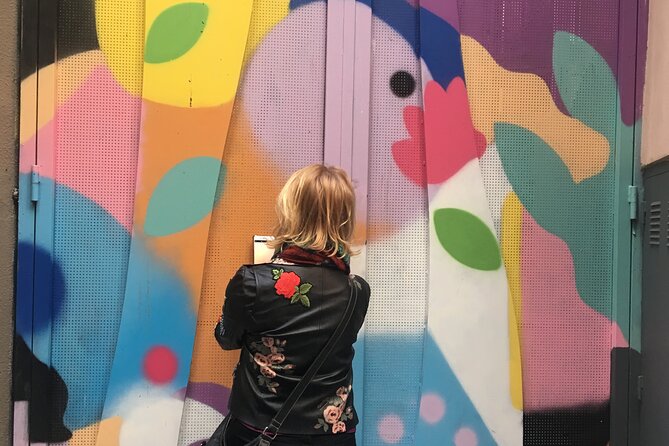
One of the early stops is Calle de Argumosa, a short walk that sets your eye in the right direction. Ten minutes sounds quick, but it’s long enough to teach you how street art is distributed across facades rather than floating randomly on walls.
This is where I’d pay attention to edges. New layers often sit next to older ones, and artists may work around existing marks instead of starting from a clean slate. Even if you’re not a street art expert, the guide’s commentary helps you catch the thinking behind placement—what an artist chooses to emphasize, and what they respond to nearby.
It’s also a good moment to ask questions. In a small group, you can usually get answers without feeling rushed.
A Quick Glance Toward Reina Sofía (Then Back to the Streets)
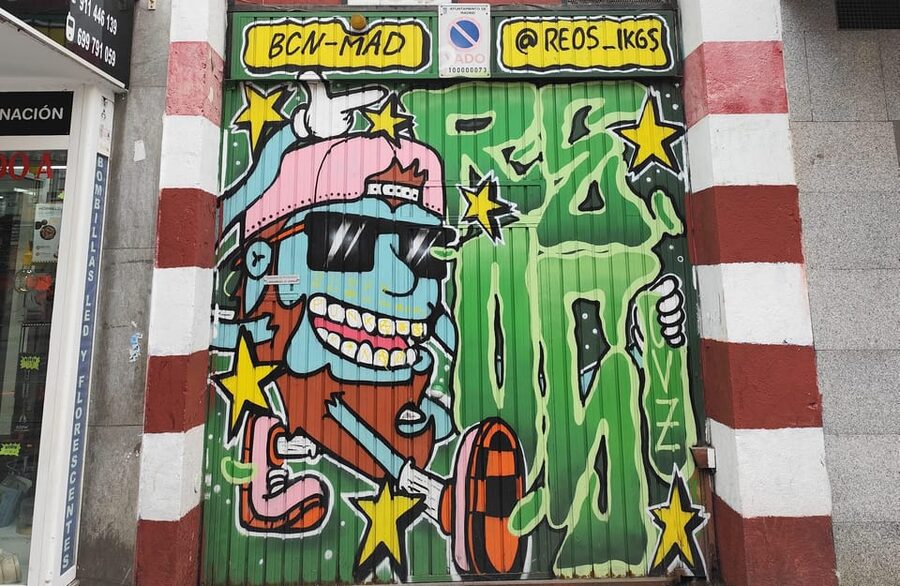
The walk passes by the Museo Nacional Centro de Arte Reina Sofía. You don’t linger here, and that’s the point. Instead of turning the tour into a museum detour, you get a brief sense of where formal art fits alongside street art in Madrid.
That contrast matters. Street art often carries messages tied to identity, politics, neighborhood life, and public space. When you’ve got the museum atmosphere in the background—even just as a quick reference point—you start to see how street art and gallery culture overlap more than they separate.
So use this stop as a mental hinge: street art isn’t the opposite of the art world. It’s part of it.
Mercado Antón Martín: Neighborhood Rhythm Between Murals
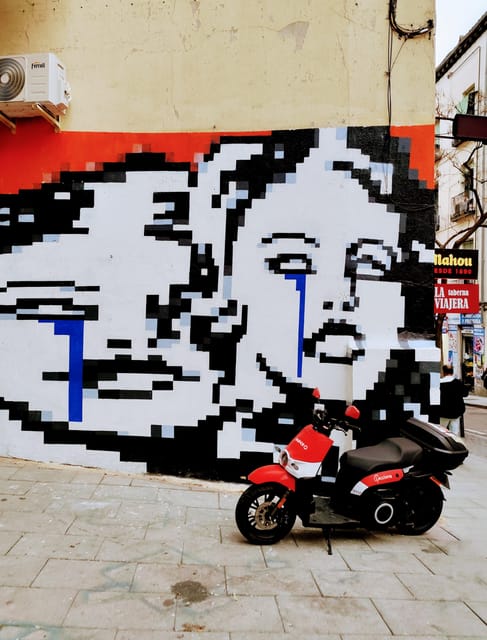
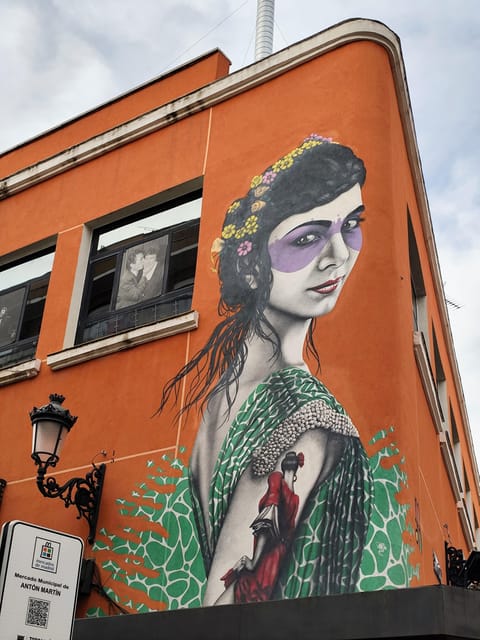
Next up is Mercado Antón Martín for a visit and sightseeing pause. Ten minutes gives you a chance to shift from wall-to-wall staring into street-level everyday life. Markets are where you feel a neighborhood’s tempo: movement, voices, and the practical reality behind all the art.
You don’t need to treat this stop like a food mission. Even if you just look around, it helps you understand context. Street art doesn’t happen in a vacuum. Artists respond to what people see daily, and markets concentrate that visibility.
If you’re photographing, this is also where you can reset your frame. Instead of zooming into one mural, capture the relationship between the artwork and how people actually move through the area.

Trampantojo Cerámico de Lola Gil: When “Street Trick” Becomes Art
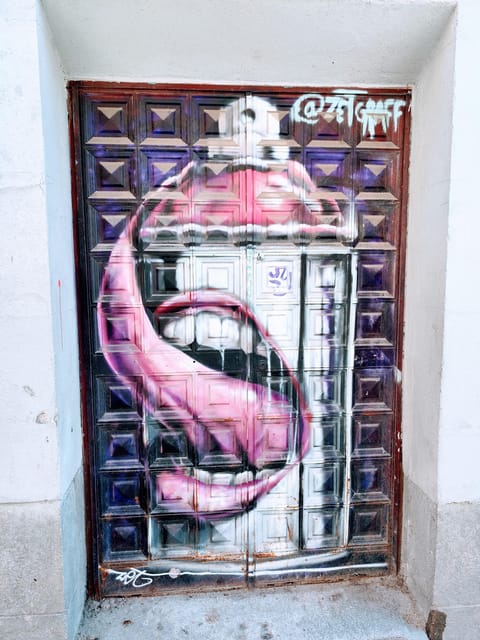
Then comes Trampantojo cerámico de Lola Gil. The word trampantojo points to a trick-of-the-eye effect—art that plays with what you think you’re seeing. Here, the guide turns it into more than a visual gag by explaining why a piece like this matters within the street art conversation.
A lot of visitors assume street art is only tags and spray paint. This stop nudges you into the broader definition: public art can be ceramic, optical, playful, and crafted—still connected to the neighborhood because it’s meant to be seen in place, not relocated.
If you tend to miss details because you’re scanning for large murals, this is a good antidote. The guide’s focus helps you notice texture, technique, and the way the work interacts with its setting.
Calle de Embajadores: Where the Walk Builds Momentum
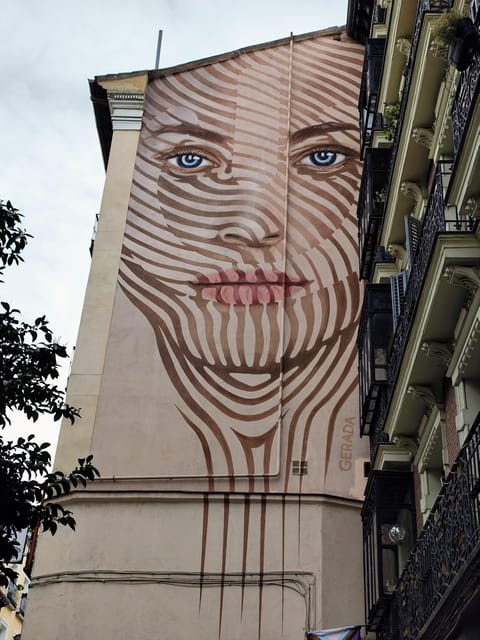
Calle de Embajadores is where the tour’s energy ramps up. You’ll spend about twenty minutes visiting, sightseeing, and walking along this stretch. It’s long enough to see multiple layers of street art styles and to notice how one piece can influence how you interpret another nearby.
This is a great section for your camera and your curiosity. Look for variety: pieces that feel more graphic and bold versus those that rely on smaller marks. Pay attention to whether a work looks freshly added or layered over time. The guide helps you decode this with style recognition, so you can stop guessing and start understanding.
It’s also where you start to connect cultural references to visual choices. One of the best parts of this tour is that it doesn’t just label the artwork. It explains what it’s pointing at and how that ties into Madrid’s broader street art scene.
The Local Gallery Stop: Turning Wall Art Into a Real Conversation
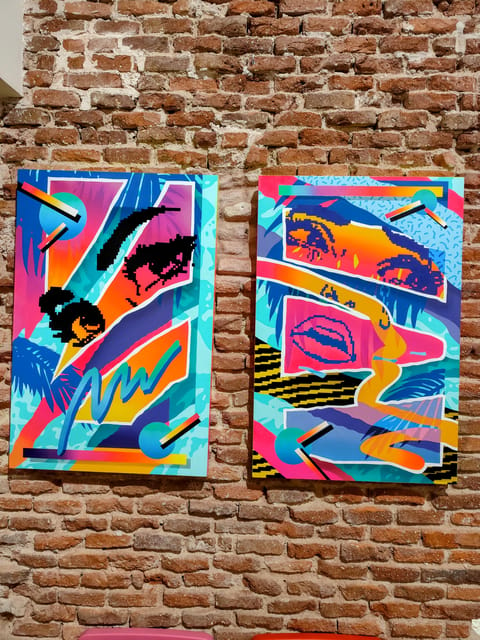
The tour rounds off with a local art gallery in the neighborhood. This is where the experience becomes more than a walk. You’ll have a chance to meet local artists, and you can see how street art culture connects to gallery spaces.
This gallery component is a big reason the tour works well for first-timers. If you’ve ever wondered what happens after street art gets painted—does it stay on the wall forever, or does it travel into other forms?—this stop gives you a grounded answer.
Keep your expectations realistic: the gallery visit includes the experience of seeing local work, but buying art isn’t included. If you fall in love with a piece, you’ll need to pay for it. Think of this as the one built-in moment where your budget might get tested.
Even if you don’t buy, it’s still worth going in. Seeing street art translated into gallery context changes how you look at the street pieces once you’re back outside.
Price and Value: Is $33 Worth Two Hours of Street Art?
At $33 per person for a 2-hour street art walk, you’re paying for access to a focused route and, most importantly, for interpretation. Street art is easy to photograph and hard to understand quickly. The value here comes from having someone guide you through what different styles mean and where the cultural references land.
You also get a small-group experience, limited to 10 participants. That’s not a luxury detail—it directly affects how much you hear and how much you can ask. A packed tour turns street art into background noise. This one stays interactive enough to be useful.
Finally, the gallery stop adds value without being a hard sell. You’re not just collecting mural photos. You’re seeing how the neighborhood art scene operates and getting a more human connection by meeting local artists.
So if you’re the type who likes walking and learning—not just snapping pictures—this price feels fair.
Pace, Comfort, and Who This Tour Fits Best
This is a walk through Lavapiés, so comfortable shoes matter. You’re moving between stops, and the tour’s timing is set up to keep things manageable. Reviews also highlight the pace being right for hot afternoons, which tells me the schedule is designed with real-world weather in mind rather than cramming everything into a sprint.
The tour is wheelchair accessible, which is a serious plus for travelers who need that option. If mobility is part of your planning, this is worth noting.
Who it suits best:
- First-time visitors who want street art context, not just locations
- Anyone who likes small neighborhood walks over big-bus routes
- Travelers who enjoy learning the “how to read it” part of art
- People interested in the connection between street art and local gallery culture
If you’re only here for super-famous landmarks, you may find this too focused on neighborhood texture. But if you want Madrid through its walls, this tour is built for that.
What to Look For During the Tour (So You Don’t Leave With Only Photos)
To get the most out of it, you’ll get more from your eyes than from your phone. Here are a few things to train on while you walk:
- Look for layers. Older marks and newer additions often sit together, and the contrast tells you about time in the neighborhood.
- Watch for style clues. Tags, paste-ups, and other formats communicate differently, and the guide helps you spot those differences.
- Notice how art interacts with everyday space—doorways, corners, and street-level movement.
- Ask the guide what a piece is referencing. You’ll start to see patterns in symbolism faster than you think.
One of the most praised parts of the experience is how friendly and knowledgeable the guides are, and how the explanations make the area feel personal. A guide like Roberto, for example, can turn a simple walk into a story of the neighborhood and its wall voices. That’s the real value: the tour changes how you look at the city after you finish.
Should You Book This Hidden Street Art Tour?
Book it if you want:
- A small-group street art walk in Lavapiés
- Clear explanations tied to local culture and artist intent
- Big murals plus smaller, easy-to-miss details
- A gallery ending with a chance to meet local artists
Skip it only if:
- You’re not interested in street art interpretation and just want classic sightseeing
- You dislike walks through residential neighborhoods
- You don’t want any chance your budget might expand at the gallery
If your goal is to understand Madrid’s street art scene in a short time—and walk away with more than photos—this is a strong pick.
FAQ
FAQ
How long is the Madrid Hidden Street Art Tour?
The tour lasts 2 hours.
What does the tour cost?
It costs $33 per person.
Where does the tour take place?
The walk is through Lavapiés, in the Community of Madrid, Spain.
How big is the group?
It’s a small group limited to 10 participants.
Is the tour wheelchair accessible?
Yes, the tour is wheelchair accessible.
What language is the guide?
The live tour guide speaks English.
Where do I meet the tour?
You meet in front of the Portomarin restaurant. If you arrive early, you can grab a coffee or refreshment nearby.
Is there free cancellation?
Yes, you can cancel up to 24 hours in advance for a full refund.
Is the gallery stop included, and do I have to pay for artwork?
The tour includes a visit to a local art gallery, but any art you choose to buy there is not included—you’ll have to pay for those pieces.