REVIEW · BISHKEK
Bishkek Street Murals , Mosaics Arts and Kyrgyz Nomadic History
Book on Viator →Operated by ALEX · Bookable on Viator
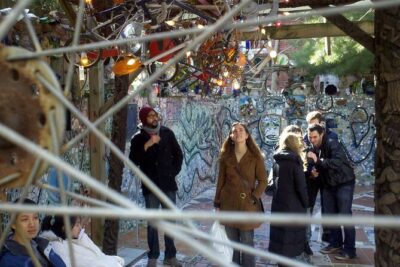
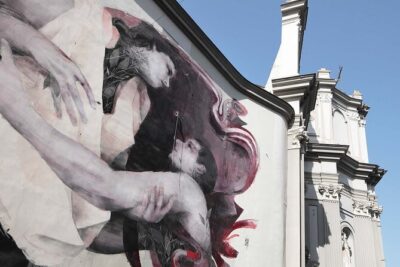
Bishkek’s walls tell stories fast. This walking tour connects Kyrgyz identity to Soviet-era public art and today’s street murals, with enough context to help the images make sense. I like that it starts in the city center with major landmarks, then shifts to the murals you’d normally just walk past.
Two things I really like: you get guided explanations that tie the artwork to Kyrgyz life and Soviet influence, and the route is practical—Ala-Too Square to theaters, malls, and fountains without getting stuck in one neighborhood. If you want street art with meaning (not just style), this format works.
One consideration: it’s a longish walk for about 2 hours 45 minutes, and a few spots are more of a viewing pass-by than a stop where you linger. Comfortable shoes help a lot.
In This Review
- Key highlights you should expect
- Entering Bishkek’s mural trail from Ala-Too Square
- Ala-Too Square: Manas, national symbols, and modern civic space
- Kurmanzhan Datka and Soviet mosaics aimed at peace
- Kyrgyz National Opera and Ballet Theatre: architecture as a clue
- GUM Chynar Mall and Slam dunk on trash: the city policing litter in art form
- Sunny Fish fountain: Olympic fame and Soviet-era public works
- Chinghiz Aitmatov graffiti and The Red Apple references
- Kyrgyz State Philharmonic Hall and DOXA group murals
- Why this tour feels like value at $45
- Who should book this Bishkek street murals walk
- Should you book Bishkek Street Murals, Mosaics Arts and Kyrgyz Nomadic History?
- FAQ
- How long is the Bishkek street murals tour?
- Where does the tour start and end?
- What is the price per person?
- How many people are in the group?
- What does the tour include?
- Is admission required at each stop?
- Do I need to bring a ticket?
- Who guides the tour?
- What is the cancellation policy?
- When will I receive confirmation after booking?
Key highlights you should expect
- Ala-Too Square first, so you build context before the murals
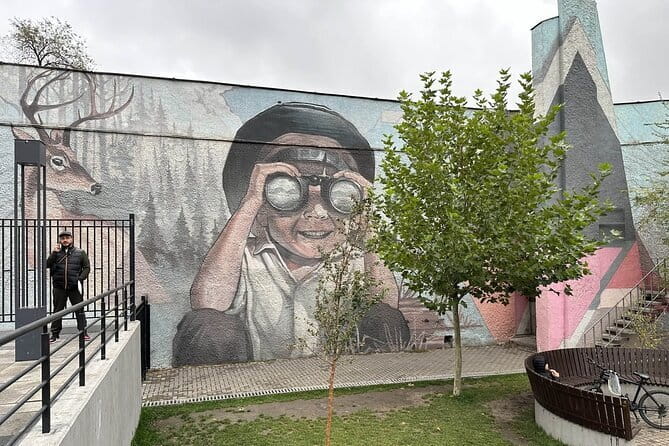
- A mix of monuments and street art, not just graffiti sightseeing
- Kurmanzhan Datka mosaics link to Soviet messaging, including a peace theme
- Modern mural stops like Slam dunk on trash and other city-center wall works
- Olympic sports and national figures showing up in everyday public spaces
- A small group (max 15) keeps the walk from feeling chaotic
Entering Bishkek’s mural trail from Ala-Too Square
Most mural tours start when the street art starts. This one starts with bearings. You meet at VJG3+MFG, Chuy Ave, Bishkek, right in the city’s flow, and you begin at Ala-Too Square, the kind of central place where you can see how a city wants to present itself.
I like this approach because it changes how you look at the walls later. When you know what the center celebrates—like the Kyrgyz hero Manas—the murals stop feeling random.
The tour lasts about 2 hours 45 minutes, and it stays focused on the main points of interest. You’ll be walking, but it’s paced with short stops, so you’re not racing nonstop across town.
You can also read our reviews of more tours and experiences in Bishkek.
Ala-Too Square: Manas, national symbols, and modern civic space
Your first stop is Ala-Too Square, where you learn about major historical features of the country and you get oriented with the monument to the Kyrgyz hero Manas. The value here is simple: you’re learning the symbols the city uses in public before you jump into street-level art.
Ala-Too Square also helps you understand the contrast between big official statements and the more casual visual storytelling you’ll see on building sides. Even if you’re not a monument person, it’s a good way to get your bearings fast.
Practical tip: take a minute here to notice the angles of streets radiating out. Later, when you’re moving between the theaters and commercial areas, you’ll feel how the center connects everything.
Kurmanzhan Datka and Soviet mosaics aimed at peace
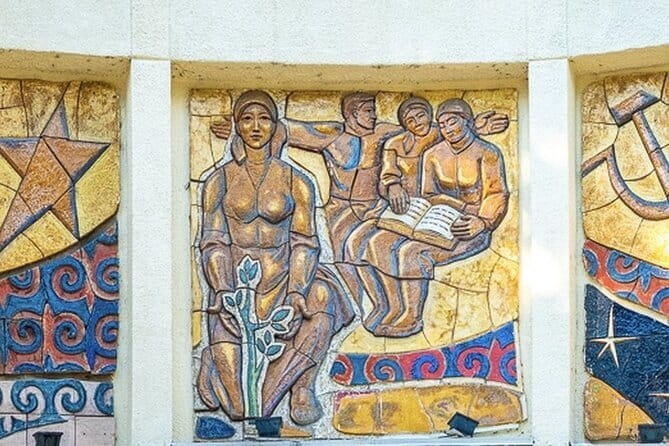
Next you reach the Ala-Too Theatre area, where you’ll connect the nearby Kurmanzhan Datka Statue with the kind of mosaics that appeared in the Soviet period. The stop centers on what’s described as one of the first meaningful mosaic works of the Soviet Union, made so the nation could understand a peace theme between two nations that had a long, tense history across roughly a century.
This is one of the most important parts of the tour if you care about interpretation. Street art can be fun, but it’s easy to miss the bigger question: who is speaking, and why? Here, you see how public art can be used as persuasion—how art can be a political tool, not just decoration.
Watch for how the storytelling connects beyond one building. The explanation you get turns the mosaics into a clue about how modern Bishkek thinks about memory.
Kyrgyz National Opera and Ballet Theatre: architecture as a clue
From there, you walk toward the Kyrgyz National Opera and Ballet Theatre, built in 1926. You’ll notice the unique architectural character of the building and also the statues on top of the structure.
This stop isn’t only about admiring the facade. It helps you read the city visually. When you’re later staring at murals and graffiti references, you’ll be seeing a broader pattern: how Bishkek’s walls and sculptures both carry identity messages.
A small downside: it’s marked as a shorter stop time, so you’ll get a look and learn a few key points rather than an in-depth architectural lecture. Still, it’s worth it because it keeps the tour moving at a good pace.
GUM Chynar Mall and Slam dunk on trash: the city policing litter in art form

You then pass through the GUM Chynar Mall area—an easy shift from “monument Bishkek” to “everyday Bishkek.” Here you’ll reach a mural called Slam dunk on trash, where the idea is blunt and playful: throwing litter away is better than slam-dunking it into the wrong place.
I love this kind of public messaging because it’s not subtle. It’s art doing a job—nudging behavior—while still staying visually entertaining. And since it’s located in a modern shopping environment, you can feel how today’s visuals respond to everyday problems.
One practical note: malls and busy streets can mean crowds and noise. If you prefer quieter photo spots, keep your expectations realistic. You’ll get your viewing moment, but it won’t be a slow museum experience.
Sunny Fish fountain: Olympic fame and Soviet-era public works
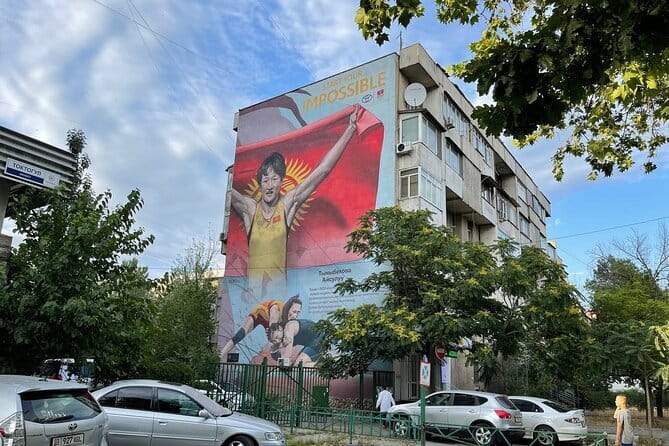
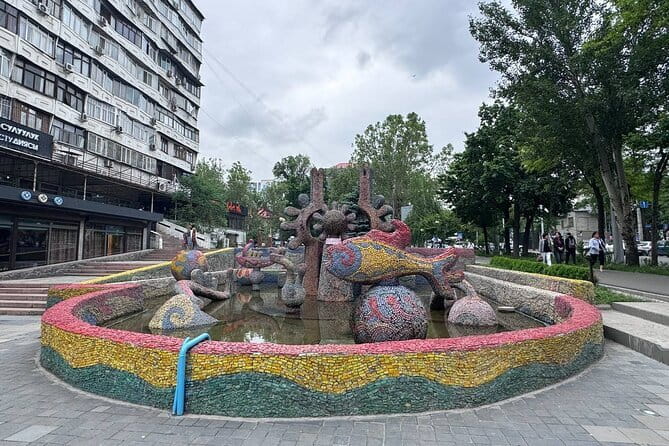
As you move toward the Sunny Fish fountain, you’ll see references connected to Aisuluu Tynybekova, described as a silver medal winner in wrestling at the 2022 Tokyo Olympics. The fountain itself is noted as being built in 1982 by Russia, which gives you a built-in “before and after” lens for how older civic projects connect to modern national pride.
This stop works well because it blends three themes: sports hero recognition, Soviet-era construction, and how the city repurposes meaning over time. The artwork-and-statue world can feel separate from real life, but here it’s all in one place.
If you like photography, watch for people using the fountain space. Even if you don’t photograph, the fountain gives you a calmer pause in the walk. It’s a good moment to sit or stand still for a minute if your feet are starting to complain.
Chinghiz Aitmatov graffiti and The Red Apple references
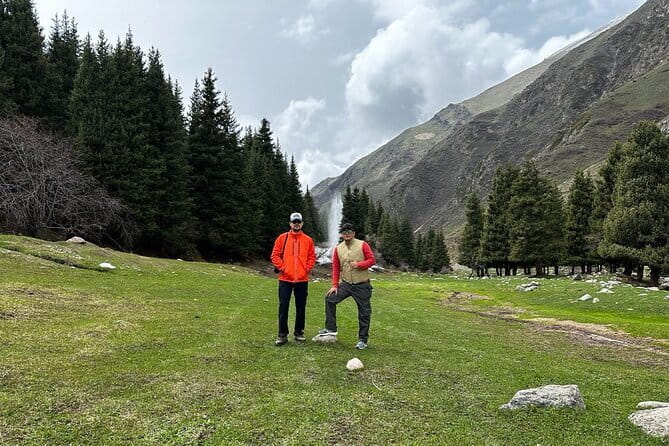
You’ll then head toward the avenue areas where you’ll see another major graffiti piece linked to Chinghiz Aitmatov. The tour description ties it to a short story and also to the film The Red Apple (noted as being part of a Moscow International event, but the full detail shown is cut off).
Even without needing every plot detail, this stop is valuable because it shows how Kyrgyz literature and cinema echo in street art. In other words, murals here aren’t just decoration or random style choices; they can be cultural bookmarks.
This is also the point where you’ll likely start noticing patterns in the city’s visual language—how symbols from books or films translate into murals you can read quickly while walking past.
Kyrgyz State Philharmonic Hall and DOXA group murals
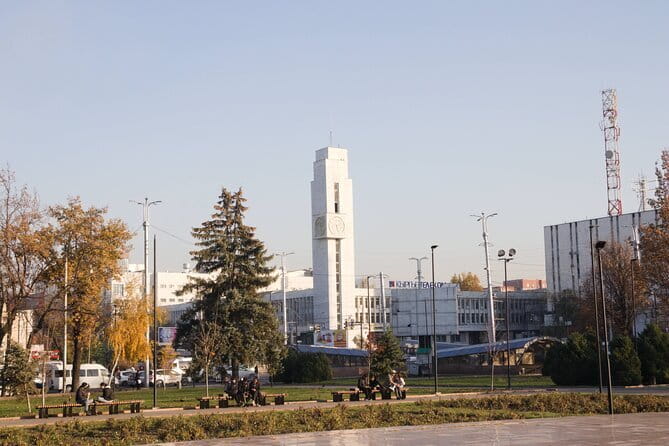
Your final stretch focuses on the Kyrgyz State Philharmonic Hall area. You’ll pass by three other murals by the Kyrgyz artist group DOXA, described as representing the country and the city in real vibes. After that pass-by, you’ll reach another center point where you’ll see yet another mural piece (the specific description is truncated, but the idea is that this is part of a set of standout works).
For me, the DOXA murals are the payoff vibe. You can feel the contrast between official monuments and modern wall expression. The tour doesn’t pretend these worlds are the same—it shows how they rub against each other.
A practical consideration: because this area includes multiple viewing spots, it’s easy to lose track if you’re trying to take photos nonstop. I’d suggest keeping your phone put away for one moment so you can listen to the explanation, then switch back for snapshots right after.
Why this tour feels like value at $45
At $45 per person for about 2 hours 45 minutes, the value comes from three things you actually feel during the walk: guided interpretation, a focused route, and included access at several stops.
The tour includes a guided tour plus all fees and taxes, and it also includes free recommendations in Bishkek or Kyrgyzstan. It’s not just “stand here and look.” You’re learning what connects the murals to Kyrgyz culture and Soviet-era influence, which is where the money turns into real enjoyment.
Group discounts are also mentioned, and the group size tops out at 15 travelers, which matters. With a small group, you can hear the guide and not constantly wait to see what’s on the wall.
Who should book this Bishkek street murals walk
This is a strong fit if you want street art with context. If you enjoy murals but hate the feeling of not understanding them, you’ll likely appreciate how the tour ties public art to national symbols, Soviet messaging, and modern references.
It’s also a good choice for first-time visitors who want an efficient “big picture” route: center landmarks, then murals, then civic spaces like fountains and theaters. You’ll cover a lot of what makes Bishkek feel visually layered without spending a whole day.
If you’re someone who prefers very long museum-style stops, this might feel a bit fast at individual sites. The tradeoff is you get the story arc, not just a checklist of walls.
Should you book Bishkek Street Murals, Mosaics Arts and Kyrgyz Nomadic History?
Yes—if you want to understand what you’re seeing. This tour’s strength is that it treats murals and mosaics as cultural communication, not background decoration, and the flow from Ala-Too Square to major mural stops makes the whole message click.
Book it especially if you like Kyrgyz identity in public space: Manas in the center, Kurmanzhan Datka linked to mosaic art shaped by Soviet-era peace messaging, and modern murals that comment on today. With a small group and a clear route, it’s a fun way to learn without feeling stuck in one place.
If you hate walking or want deep time at each site, you might prefer a slower format. Otherwise, with good shoes and a curious mindset, you’ll come away seeing Bishkek’s walls as more than street paint.
FAQ
How long is the Bishkek street murals tour?
It lasts about 2 hours 45 minutes (approx.).
Where does the tour start and end?
It starts at VJG3+MFG, Chuy Ave, Bishkek, Kyrgyzstan, and ends back at the same meeting point.
What is the price per person?
The price is $45.00 per person.
How many people are in the group?
The tour has a maximum of 15 travelers.
What does the tour include?
It includes a guided tour, all fees and taxes, and free recommendations in the city or country.
Is admission required at each stop?
Not at every stop. Some stops are free, and others include admission ticket access.
Do I need to bring a ticket?
A mobile ticket is used for this activity.
Who guides the tour?
The experience provider is listed as ALEX.
What is the cancellation policy?
Free cancellation is available up to 24 hours in advance for a full refund. If you cancel less than 24 hours before the start time, the amount paid is not refunded.
When will I receive confirmation after booking?
Confirmation will be received at the time of booking.