REVIEW · BUDAPEST
Budapest: Street Art and Underground Movements Walking Tour
Book on GetYourGuide →Operated by ET Alternative · Bookable on GetYourGuide
Street art turns Budapest into a puzzle. In this 2-hour walking tour, I like how E.T. uses street art and underground culture to show the city’s social and political undercurrents, not just pretty walls. You’ll start at Telep-Art Galéria, then hunt down artworks and messages you’d miss at regular sightseeing speed.
I especially like two things: the focus on small details like stickers and lettering, and the fact it’s an interactive walk where you can ask questions and get direct answers. It’s also limited to a small group of 8, so you’re not stuck blending into a crowd.
One consideration: this is a walking-focused experience and food or drinks are not included. If you’re the type who needs a long caffeine break, plan ahead so the 2 hours feel fun, not forced.
In This Review
- Key Highlights You’ll Care About
- Telep-Art Galéria: Where the Tour Teaches You How to Look
- The 2-Hour Street Art Hunt in Central Budapest’s Social Zones
- Underground Movements: How Stories Replace Guesswork
- Secret Stop Energy and the Value of Local Places
- Small Group, English Guide, and How the Pace Feels
- The Follow-Up You Get: Artist Names and a Way to Continue
- Price and Value: Is $28 Fair for a Niche Local Walk?
- Who Should Book This Tour, and Who Might Prefer Something Else
- Should You Book Budapest Street Art and Underground Movements?
- FAQ
- How long is the Budapest street art and underground movements tour?
- How much does the tour cost?
- Where do I meet the guide?
- Is the tour in English?
- Is food or drinks included?
- Is the group size small?
Key Highlights You’ll Care About
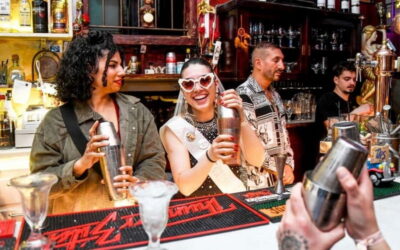
- Telep-Art Galéria start point: a bar/gallery vibe that’s already covered in street ephemera, so the tour begins in the right mood
- Sticker-first street art: you’ll learn to notice the stuff most people walk right past, including messages hidden in plain sight
- Underground culture context: you get stories about protest and social meaning, not just artist names
- Small group of up to 8: more questions, more back-and-forth, less crowd noise
- Follow-up after the walk: you receive a summary, and many people also report an email-style artist list and an interactive map for continued spotting
- Optional local stops: the guide may weave in community places like a bookshop or a ruin bar such as Szimpla Kert when timing allows
Telep-Art Galéria: Where the Tour Teaches You How to Look
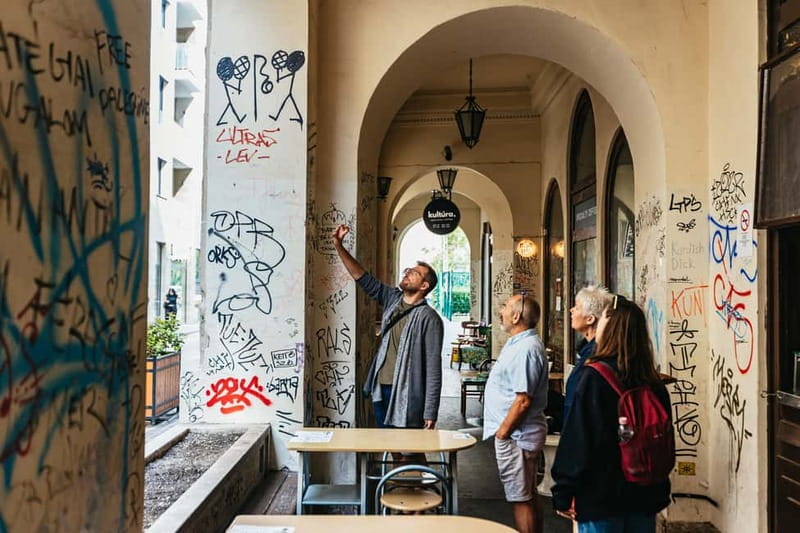
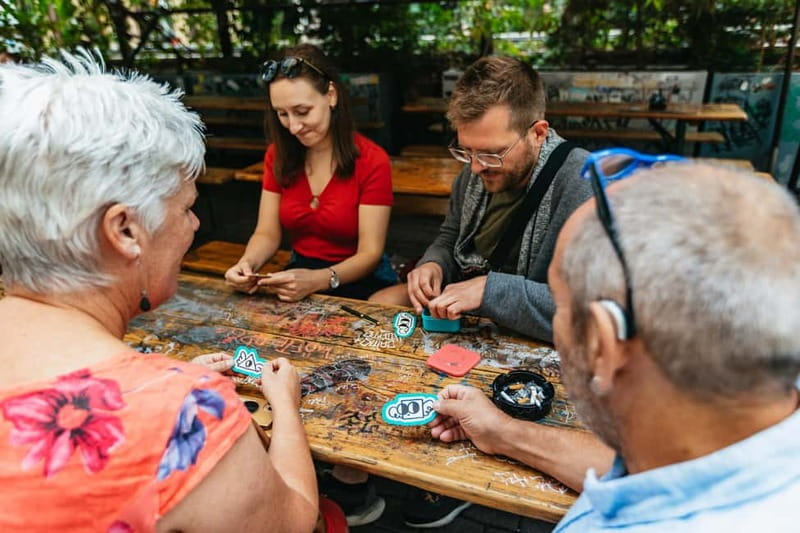
Good street art tours don’t start with a lecture. This one starts with a location that already feels like part of the story: Telep-Art Galéria, a cool bar/gallery with walls packed in stickers. That matters because it sets your eyes on “active mode.” You start noticing how layering works in street art—stickers on top of older marks, handwriting tags beside paste-ups, and the way messages adapt over time.
E.T. runs the walk in English, and the tone is casual but focused. You’ll get pointers on what to watch for as you go: symbols, recurring visual styles, and the difference between a commissioned mural and the pieces that feel more like communication. Even if you only know Budapest from the big sights, the opening stop nudges you toward a more street-level way of seeing the city.
There’s also a social upside. Because you begin in a community space, you’ll typically meet people naturally and get into the same “spotting” mindset quickly. The best part is that you’re not asked to be an art expert. You’re simply asked to pay attention—and that’s a skill you can use for the rest of your trip.
You can also read our reviews of more tours and experiences in Budapest.

The 2-Hour Street Art Hunt in Central Budapest’s Social Zones
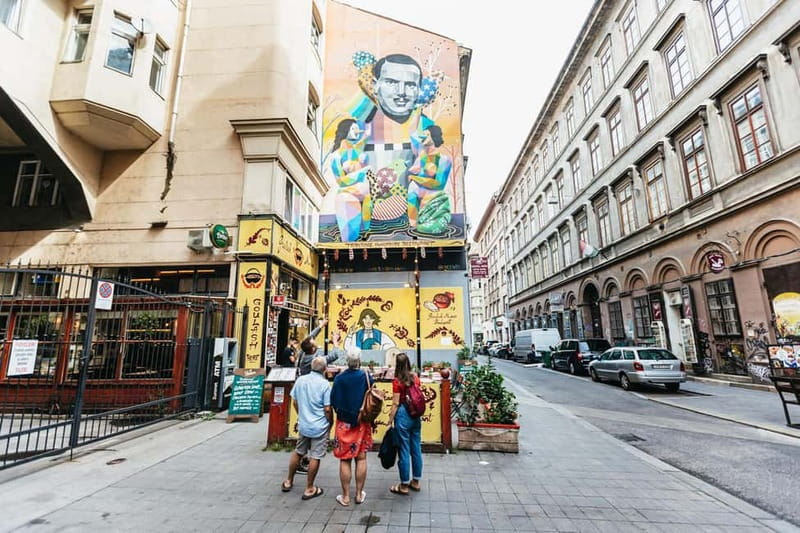
The walk is built around a slow search for art pieces across Budapest. The schedule is compact—2 hours total—so you’re not drifting all day. Instead, you’re moving from one meaningful cluster to the next, learning how different neighborhoods “speak” through street art.
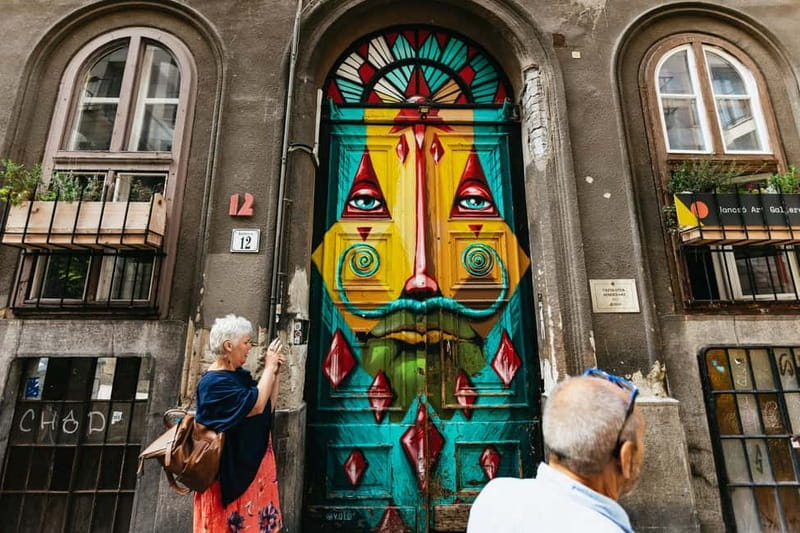
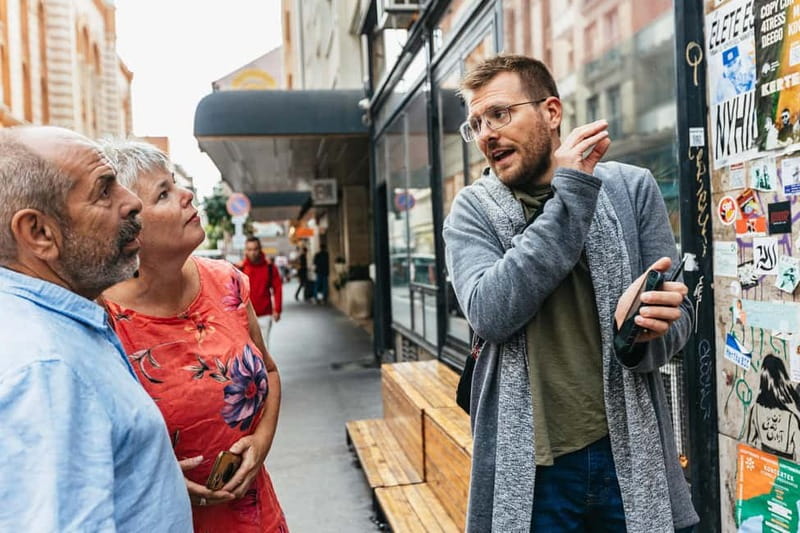
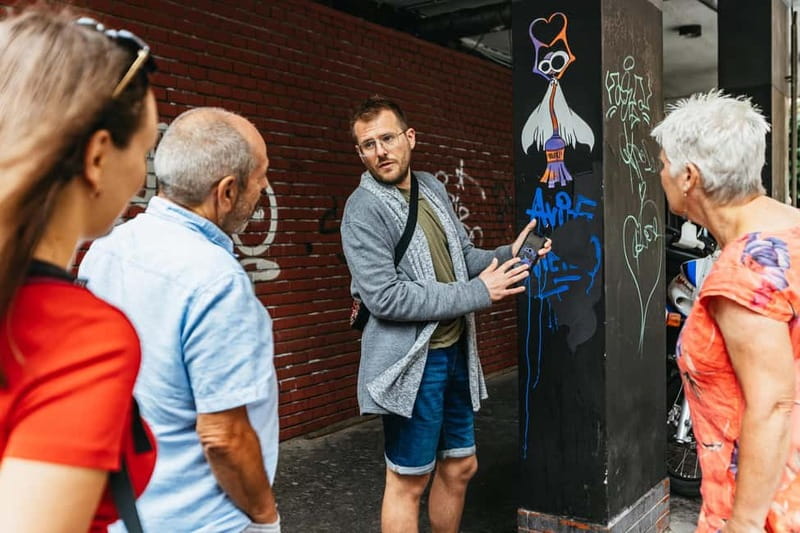
What makes this tour feel different is the breadth of what counts as street art. You’re not limited to murals. Expect focus on stickers, paste-ups, and lettering, plus larger works when the route brings you there. Multiple people highlight that the guide helps you spot tiny marks and repeat motifs. That’s valuable because it trains you to see how underground scenes communicate: short messages, quick visuals, and identity tags that act like public notes.
The tour also leans into the social and political meaning behind the work. In plain terms: you’ll learn that street art isn’t just decoration. It’s often a shortcut for telling a story that would be harder to share in other ways—especially in places where public life has tension or change. The guide connects these pieces to Budapest’s broader history and contemporary issues, so when you see a message on a wall, you’ll know what questions to ask next.
A likely part of the route is through Pest-side neighborhoods linked with the city’s layered identity, including areas referenced in the walk’s discussions such as Erzsébetváros and the old Jewish Quarter. You might also see artworks tied to the Elizabeth area of Pest. I can’t guarantee every piece appears in every run, but the theme is consistent: street art as a map of culture, protest, and belonging.
Underground Movements: How Stories Replace Guesswork
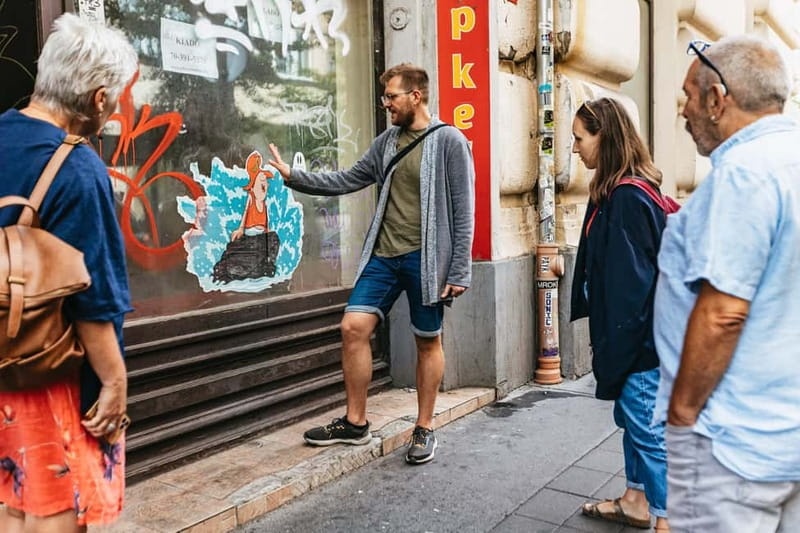
If you’ve ever tried to interpret street art on your own, you know the problem: you’re guessing. This tour reduces the guessing.
E.T. frames street art as a kind of public conversation. You’ll hear about techniques (not just styles) and how different scenes use placement, repetition, and symbol choice. Instead of you staring at a wall wondering what it means, you get context for why certain pieces appear where they do and what kind of message they carry.
Underground culture is also handled with care. The tour isn’t “edgy for the sake of it.” It’s more like a guided decoding session. Multiple highlights from the walk’s feedback point to moments that are thought-provoking, with the guide explaining the political and social messages that street art communicates.
This is where the small group format really helps. With a group capped at 8, you can ask questions without feeling like you’re interrupting. That’s especially useful if you want to understand the difference between satire, protest, fandom-style sticker culture, and personal tagging. The guide’s approach comes across as friendly and open—people mention the atmosphere being good for questions, even when the topic gets sensitive.
Also, the tour is described as family-friendly and interactive. So if you’re traveling with kids or teens, the focus on visual details and storytelling tends to work better than a standard “museum talk.” You’re not forced to absorb facts. You’re learning to read a city in real time.
Secret Stop Energy and the Value of Local Places
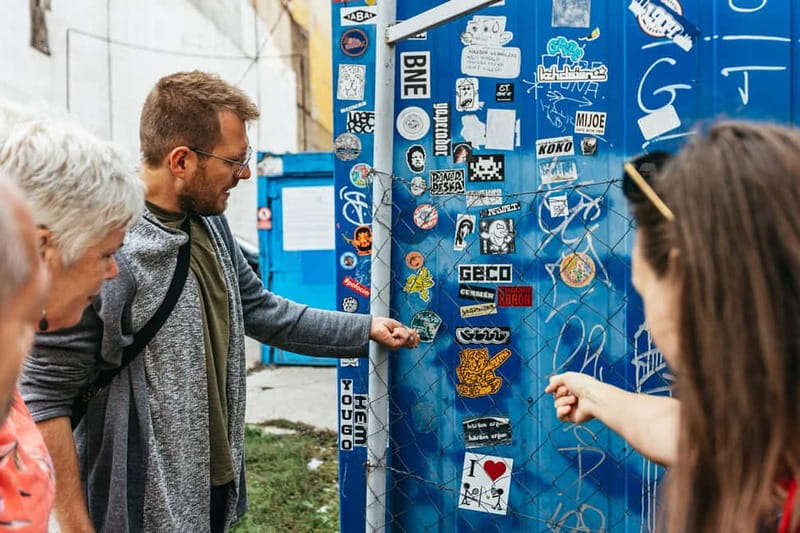
You’ll have at least one secret stop during the 2-hour walk. The point of a secret stop isn’t just surprise. It’s usually where the lesson gets sharper: a place where you can connect technique to meaning and then see how the surrounding area influenced the message.
A useful detail: the guide may add local places into the flow. People mention pauses like a cafe stop and also time spent in community spaces tied to Budapest’s nightlife culture, including the ruin bar Szimpla Kert. Some also mention a bookshop stop. I wouldn’t treat these as guaranteed on every run, but the pattern matters: the tour connects street art to the city’s living culture, not just its exterior walls.
If you’re curious about how underground art relates to everyday life, these local stops help. A sticker scene doesn’t exist in a vacuum. It connects to small shops, community spaces, and informal networks where people share ideas. When you see that connection, street art stops feeling random and starts feeling organized—even when it looks chaotic.
Another practical benefit of this kind of route: you leave knowing where to keep looking. Several people mention that after the tour, they received a follow-up list with artist names and an interactive way to continue spotting. That kind of “take it with you” tool turns your remaining days in Budapest into an ongoing scavenger hunt.
Small Group, English Guide, and How the Pace Feels
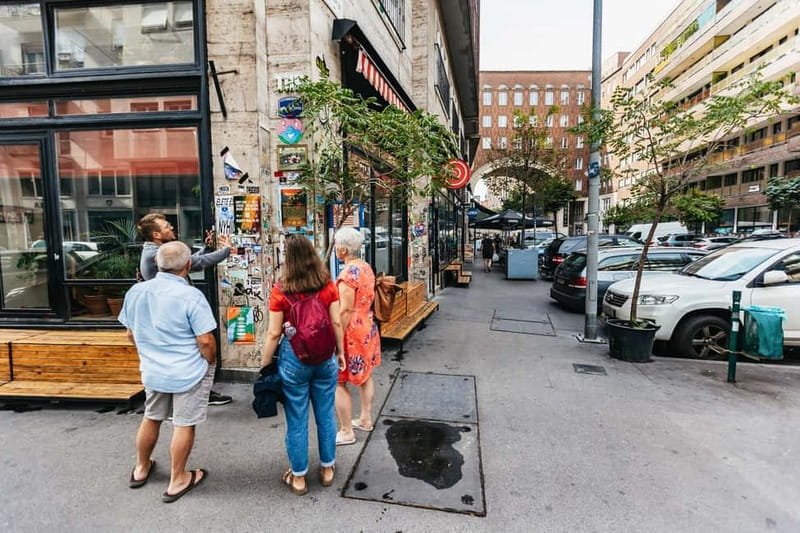
This tour runs in English with E.T. as the live guide. The small group limit of 8 participants is a big deal for an activity like this. When you’re hunting for small details—tiny stickers, small tags, lettering—your view matters. A larger group means people’s heads block each other, and the guide has to rush to cover ground.
Instead, this experience is described as intimate and engaging, with a pace that helps the 2 hours feel fast. People also note that ET encourages group interaction and answers questions. That’s not just a nice social touch. It changes how you learn. If someone in your group notices something you miss, you’ll often learn from their question. If you’re the curious type, you’ll get more out of the tour because the guide invites back-and-forth.
The tour is also wheelchair accessible. That’s worth mentioning if you’re planning around mobility needs. You’ll still be walking, but the tour is set up with accessibility in mind.
Weather matters here, because you’re outside for the full duration. On cold days, the pace and the focus on outdoor details can either be delightful or tiring. If you’re visiting in winter, dress like you expect to stand and look up often—layers help, and gloves can save your attention span.




The Follow-Up You Get: Artist Names and a Way to Continue
Included with the tour is a summary after the tour. And from what people report, the follow-up is more helpful than a generic “thanks for coming” note. Many mention an email-style list of artist names and an interactive map for tracking down related pieces, including references to Kolodko mini sculptures.
That matters because street art changes over time. One of the biggest frustrations after a street art tour is losing track of names. You remember the vibe, but not the artists. A follow-up summary prevents that. It also gives you a way to keep seeing Budapest through the same lens without needing another guided session.
I like this approach because it turns a short experience into a longer impact. You finish the walk with more than photos. You leave with leads. Even if you can’t find everything, you’ll still notice more on your own because you’ve trained your eye.
Also, some people mention the guide includes small surprises at the end of the tour. That’s not the reason to book, but it’s part of the personality people seem to appreciate.
Price and Value: Is $28 Fair for a Niche Local Walk?
At $28 per person for 2 hours, this tour sits in the “good deal” category for a very specific theme: Budapest street art plus underground culture context, led by a live English guide in a small group.
Here’s why it feels like value:
- You pay for interpretation, not just movement through the city. The tour’s main product is the meaning behind the artwork: stories, social messages, and technique explanations.
- Small group size keeps the guide usable. With only up to 8 participants, you’re more likely to see what the guide points out and ask questions.
- You get a follow-up summary, which extends the value beyond the walk itself.
- You’re learning a skill you’ll use later. After this, you’ll start spotting stickers, tags, and messages on your own, even outside the tour route.
Could it cost more than the basic walking tours? Yes, but it’s also not trying to be generic. You’re paying for a focused lens on Budapest that mainstream sightseeing often skips. For anyone who likes street art, urban culture, or political storytelling in public space, $28 for two hours tends to feel fair.
One thing to keep realistic: since food and drinks aren’t included, you’ll either eat before or plan for a post-walk stop.
Who Should Book This Tour, and Who Might Prefer Something Else
I think this tour is best for you if you:
- like street art as a form of communication, not just decoration
- enjoy walking but prefer a guided “what to look for” experience
- want context on underground movements and protest-style social messaging
- travel with family and want an activity that can handle different ages
It may be less ideal if you:
- want a purely mural-and-photogenic tour and don’t care about stickers, lettering, or small marks
- dislike political or social interpretation and would rather keep street art strictly aesthetic
- need food included in the plan
The good news is that the guide adjusts through interaction. People mention a friendly, question-friendly atmosphere, and that tends to help you tailor the experience even when you start with little background.
Also, if you’re a solo traveler, the small group still makes it social without turning it into a party. If you’re traveling as a couple or small group, you’ll likely appreciate having space to see details and talk.
Should You Book Budapest Street Art and Underground Movements?
Book it if you want Budapest with a second set of eyes. This is the kind of tour that changes how you walk through the city afterward—because you’re learning to read messages on walls, not just snap pictures.
I’d especially recommend it as an early-day activity in Budapest. When you do it early, you get more time afterward to spot what you learned and connect it with what you see on your own. And because it’s only 2 hours, it fits into almost any itinerary without swallowing your whole day.
If you’re on the fence, consider this: you’re paying $28 for an English guide, a small group, and interpretation focused on street art techniques and social meaning. That combination is hard to replicate on your own unless you already know the scene. The follow-up summary and the map-style tools make it even easier to keep going after the tour.
If you’re traveling with accessibility needs, it’s wheelchair accessible. And if you want a more private format, the experience can be booked as a private tour.
FAQ
How long is the Budapest street art and underground movements tour?
It lasts 2 hours.
How much does the tour cost?
The price is $28 per person.
Where do I meet the guide?
You meet at Telep-Art Galéria, a bar/gallery with lots of stickers on the walls.
Is the tour in English?
Yes, the live guide offers the tour in English.
Is food or drinks included?
No. Food and drinks are not included.
Is the group size small?
Yes. The group is limited to 8 participants.