REVIEW · BARCELONA
Barcelona | Street Art Bike tour
Book on GetYourGuide →Operated by Barcelona Ciclo Tour · Bookable on GetYourGuide
Barcelona street art feels different at bicycle speed. What I like most is how the guide stories turn murals into context, and how the electric bike assist helps you keep going through tight streets without feeling stressed. It’s a simple idea that works: you ride, you stop, you look closely, and you leave with the meaning behind what you just saw.
One possible drawback: the pace is a “see a lot, stop often” style. Most places are photo stops with quick guided moments, so if you want long museum time or to linger in one spot for ages, plan that separately.
In This Review
- Key highlights worth planning for
- First, the value: a private street art ride for up to 2
- Meeting point and bike rules that matter
- The route starts in the right place: from Carrer dels Tallers to street-level murals
- Photo stop style: quick, focused, and guided
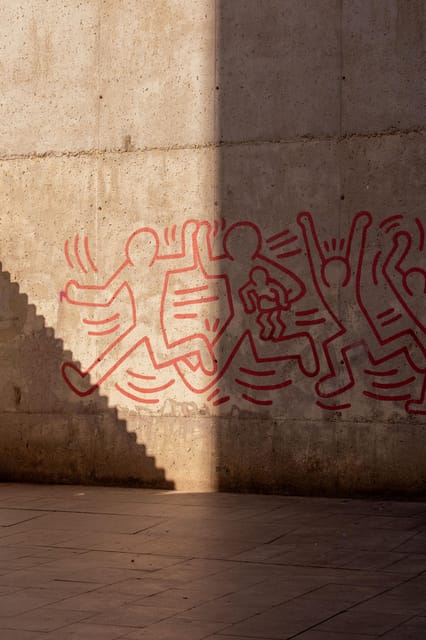
- MURAL DEL SIDA (Keith Haring): why this one sticks
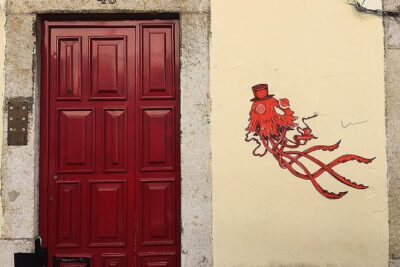
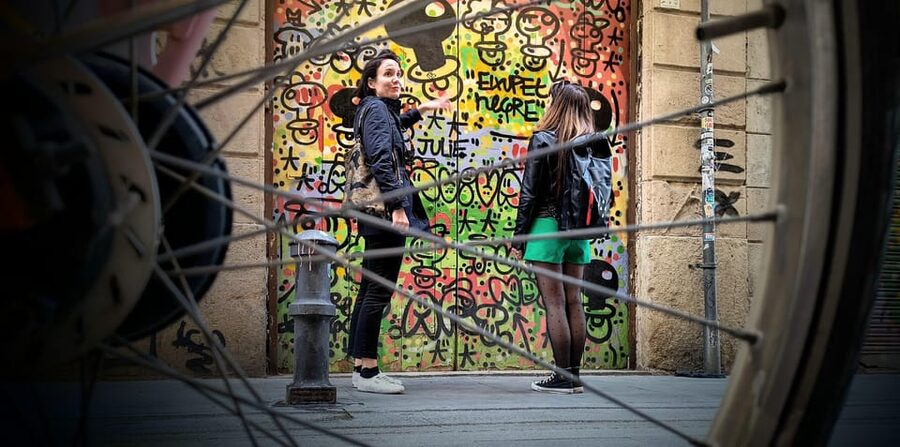
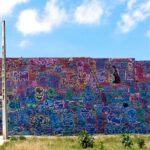
- El Xupet Negre (Negrelab): street art as cultural commentary
- Contemporary culture breaks: CCCB and MACBA exteriors
- Carrer de la Lluna and Carrer de la Riereta: where small streets do big work
- Àgora Juan Andrés Benítez and Port Vell: art history meets city energy
- El Cap de Barcelona and the Gothic Quarter: the medieval frame for modern voices
- Barcelona Cathedral: a photo stop with context, not a long detour
- Passeig de Gràcia, Casa Batlló, and Casa Mila: when street art meets big-city icons
- What the ride feels like in real life: stopping rhythm and electric assist
- Included gear you’ll actually use
- Small details that affect your experience
- What I’d use this tour for (and who should book it)
- A real-world note from a recent booking
- Should you book the Barcelona Street Art Bike tour?
- FAQ
- How long is the Barcelona street art bike tour?
- What is the price for this tour?
- Is the tour private?
- What’s included in the price?
- Does the tour run in the rain?
- Are there any restrictions on who can join?
- Do children need helmets?
- What should I bring?
- Are headphones or alcohol allowed?
- Which areas and stops does the tour include?
Key highlights worth planning for
- Mural stops you can name: MURAL DEL SIDA (Keith Haring) and El Xupet Negre (Negrelab)
- Old-neighborhood bike routes: you’ll roll through Barcelona’s older streets rather than sticking to main avenues
- Art plus culture breaks: you get photo stops at major contemporary culture stops like CCCB and MACBA
- Weather-proof setup: rain ponchos are available, and the tour goes in bad weather
- Private format: priced for a group up to 2, so the guide can move at your rhythm
First, the value: a private street art ride for up to 2
This is priced at $177 per group up to 2 for a 2.5-hour tour. That sounds straightforward, but the value comes from what’s included: your own bike per person, an English-speaking guide, water, helmets for kids (and adult helmets on request), ponchos if it rains, and third-party insurance.
Where it really pays off is the private format. With up to two riders, you can ask follow-up questions and actually hear the answers (no trying to squeeze in between a big crowd). If you’re the kind of person who likes to understand what you’re looking at, this is a solid way to do it without turning the day into a full-day museum schedule.
You can also read our reviews of more tours and experiences in Barcelona.
Meeting point and bike rules that matter
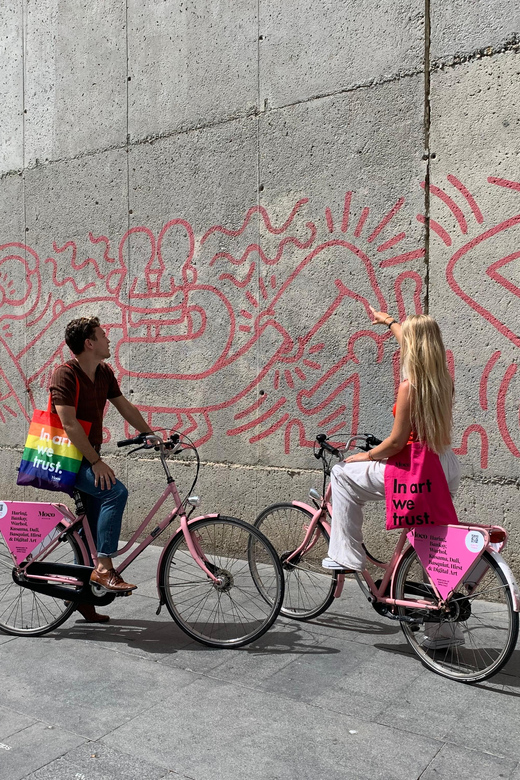
You’ll meet at Carrer dels Tallers 45 (Barcelona Ciclo Tour: The passage). I’d arrive about 10 minutes early so you can get fitted, pick up any needed gear, and get rolling before the first mural moment.
A few rules are worth knowing up front:
- You need to be a confident bike rider.
- Wheelchair access isn’t offered.
- For e-bikes, there’s a minimum height of 160 cm, and no children under 16 due to legal restrictions.
- Helmets are mandatory for children up to age 16. Kids get free helmets; adults can request one in advance.
- Keep it simple: no headphones, no alcohol or drugs, and no bare feet.
What to bring is practical: comfortable shoes, sunglasses, hat, sunscreen, a charged smartphone (for photos and directions), breathable clothing, and an ID/passport (a copy is accepted).
The route starts in the right place: from Carrer dels Tallers to street-level murals
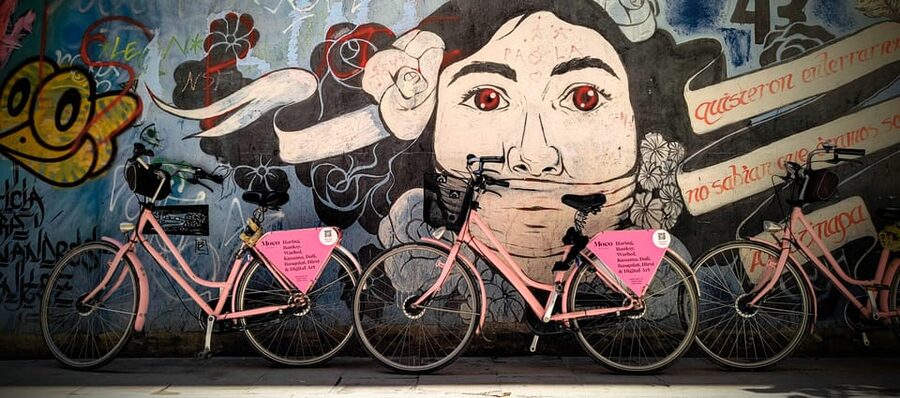
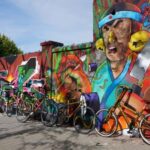
The tour kicks off near Carrer dels Tallers, then you move through parts of the city where street art feels like a language you’re suddenly able to read. Even if you’ve seen photos online, this route works because you’re seeing scale, placement, and texture while you’re actually moving through the streets.
You’ll get short stretches of electric assist, plus regular photo stops. Translation: you can focus on the walls instead of burning energy on long climbs or forcing yourself through areas where walking would be slow.
Photo stop style: quick, focused, and guided
Many stops are designed for looking closely in a short window. That’s good if you want momentum. It can be less ideal if you prefer to sit and study one mural for 30 minutes. If that’s your style, use the guided explanation as the seed, then come back later on foot.
MURAL DEL SIDA (Keith Haring): why this one sticks
One of the headline stops is MURAL DEL SIDA (KEITH HARING). Keith Haring murals are instantly recognizable for their bold figures and clear graphic style, but the point of the stop on this tour is not just recognition. It’s the story around what the artwork says and why it matters in the Barcelona context.
When you arrive, take a second before snapping photos. Look at how the design sits in its space—how the lines and figures relate to the building surface. Then listen to your guide’s breakdown of the artist and the message. This is exactly the kind of stop where the guide can turn a mural from “cool image” into “meaningful statement.”
El Xupet Negre (Negrelab): street art as cultural commentary
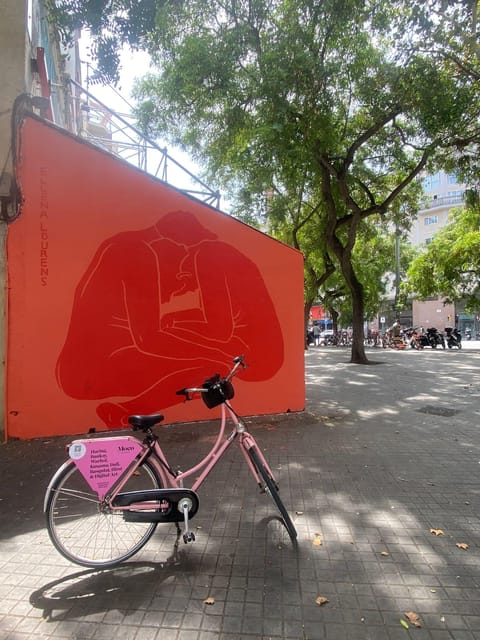
Next up is El Xupet Negre (Negrelab). This is the kind of mural that invites questions: what’s going on here, and who is it speaking to? Your guide’s job is to connect the imagery to the broader social and artistic energy of the city.
I like this stop because it isn’t just about style. It pushes you to think about tone. Street art often works like commentary—sometimes playful, sometimes pointed. Even in a short photo pause, you’ll get enough context to notice details you’d otherwise miss.
If you’re into art that has a “message first” feel, you’ll probably leave here wanting to spot more of that same style elsewhere.
Contemporary culture breaks: CCCB and MACBA exteriors
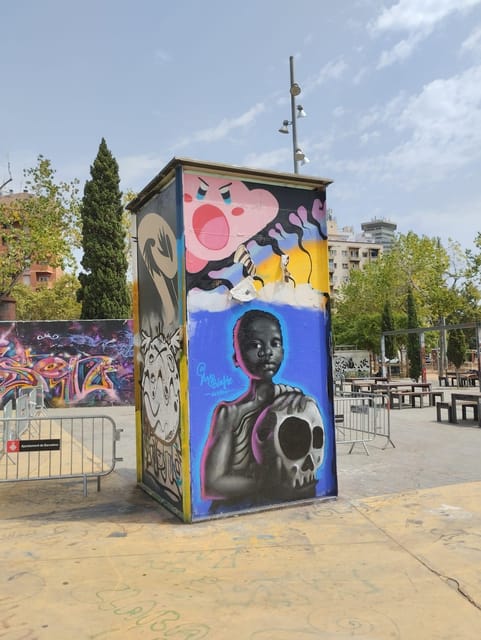
As the ride moves along, you hit major contemporary culture stops, mainly as photo and look-around moments:
- Centre de Cultura Contemporània de Barcelona
- Barcelona Museum of Contemporary Art
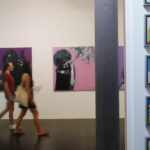
Important planning note: based on how the tour runs, you should expect mainly exterior viewing during the bike tour, not a full indoor museum visit. For some people, that’s perfect. For others, it means you’ll want to follow up later with tickets if a museum show catches your eye.
Even without entering, these stops add a useful layer. They help you connect the street art you just saw to a wider contemporary scene—same creative ecosystem, different venue.
Carrer de la Lluna and Carrer de la Riereta: where small streets do big work
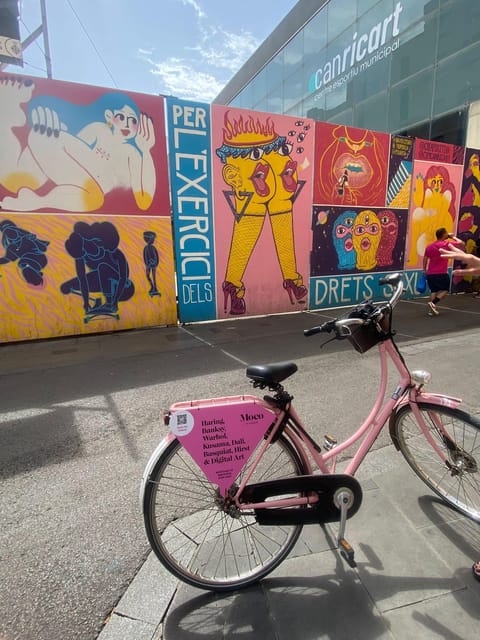
Two street-focused stops stand out later in the route:
- Carrer de la Lluna
- Carrer de la Riereta
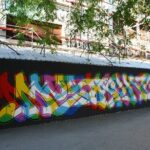
These streets are where the bike tour earns its keep. Street art in Barcelona often lives in the “in-between” spaces: near corners, along stretches that aren’t the main tourist drag, and in places where you might not look unless you’re specifically hunting murals.
This is also where you’ll feel why the tour emphasizes older neighborhoods. The city’s street layout makes it easy to get curious. You round a corner and suddenly there’s color where you expected blank concrete. A guide helps you interpret what you’re seeing instead of just reacting.
A minor drawback to note: because these are active streets, photo angles can be affected by pedestrians and parked bikes. Go with the flow, and focus on getting at least one clear photo plus the details your guide points out.
Àgora Juan Andrés Benítez and Port Vell: art history meets city energy
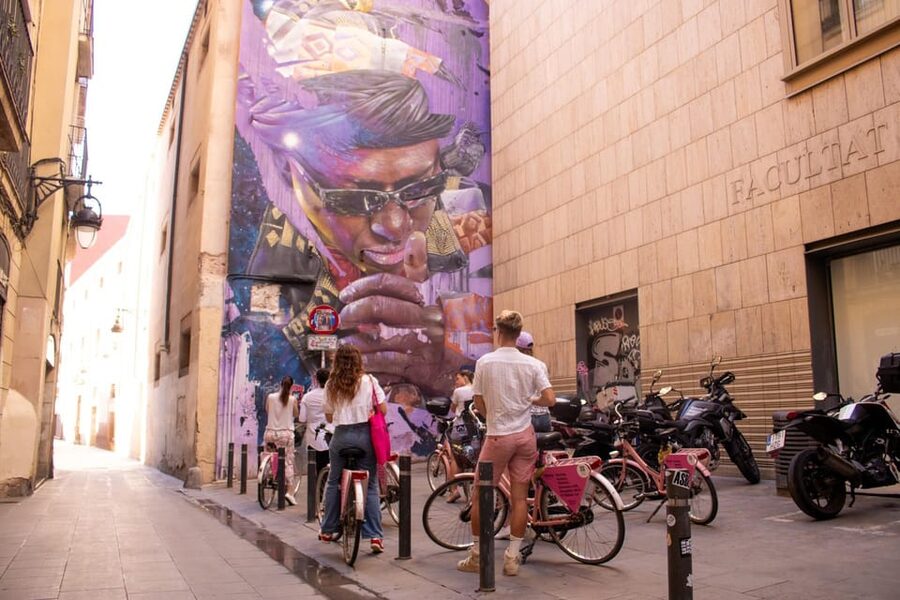
You’ll also pass Àgora Juan Andrés Benítez (with a scenic stretch and photo stop) and then reach Port Vell for a quick pass-by look.
Port Vell changes the mood. Street art can feel street-level and intimate; the waterfront shifts you toward a larger sense of place. Even in a short moment, it helps you see Barcelona as a whole system, not just a set of mural walls.
This section is useful if you’ve been concentrating on details. It resets your eyes so the next dramatic stop in the old city feels even stronger.
El Cap de Barcelona and the Gothic Quarter: the medieval frame for modern voices
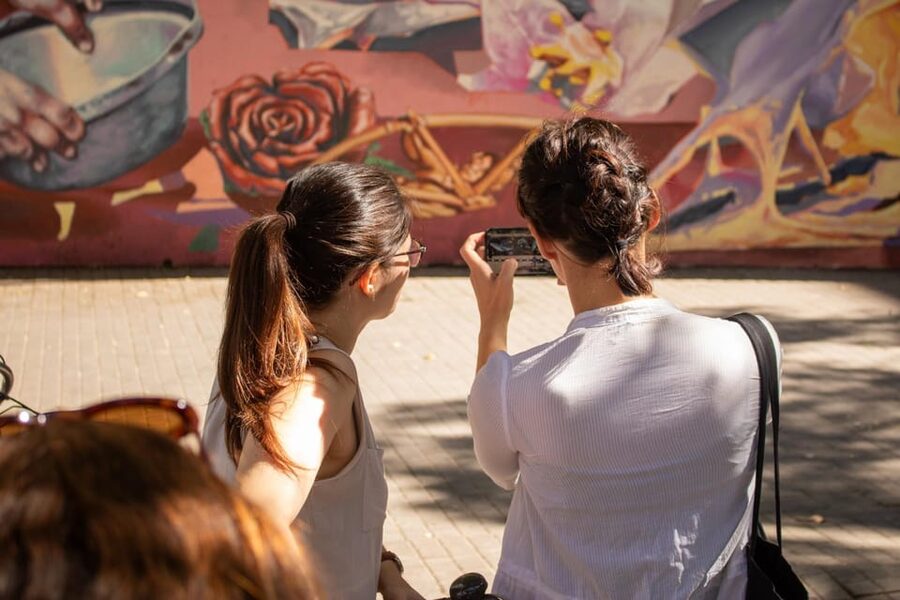
As you move toward the old center, you’ll stop at:
- El Cap de Barcelona
- Gothic Quarter Barcelona
This is a fun transition. The Gothic Quarter can be visually overwhelming on foot, but by bike (and with a guide’s sense of what’s worth your attention), you can connect street-level art to the older physical frame of the city.
It also changes your viewing habits. In a historic area, murals and graffiti feel different. They look like modern reactions placed into ancient streets. That contrast is part of the story.
Barcelona Cathedral: a photo stop with context, not a long detour
You’ll include Barcelona Cathedral as a photo stop. This isn’t a long sightseeing detour meant to turn the tour into a cathedral visit. The value here is timing: you get a quick sense of the setting before moving onward.
If your main goal is street art, you’ll appreciate the efficiency. If your main goal is architecture details, you might want extra time on a separate visit.
Passeig de Gràcia, Casa Batlló, and Casa Mila: when street art meets big-city icons
Near the end, the route heads to Passeig de Gràcia, then gives photo stops by famous facades:
- Casa Batlló
- Casa Mila
These stops feel like the “Barcelona you’ve heard of” portion of the ride. Even if the walls here aren’t your typical mural scene, they matter because they show the city’s broader creative identity: design, symbolism, and visual storytelling.
The practical downside is the same one you’ll have throughout: photo stops are quick. You shouldn’t plan on interior visits as part of this bike tour. If you want to go inside Batlló or Mila, treat those as follow-up plans after the ride.
What the ride feels like in real life: stopping rhythm and electric assist
Because the itinerary includes multiple photo stops and short electric assist stretches, the tour has a stop-and-go rhythm. That’s good for attention. You get repeated moments to look carefully, learn something, and then ride on.
The electric bike assist is especially helpful in a city with uneven terrain and lots of turning. It lets you keep the focus on art and streets instead of constantly checking your energy.
Still, keep your expectations realistic. If you come wanting a fully relaxed, slow stroll, this won’t match that. It’s a “smart pace with frequent checks” kind of ride.
Included gear you’ll actually use
I like that the essentials are handled. You get:
- A bottle of water
- Rain ponchos available
- Helmets and child seats on request for free
- 1 bike per person
- Third party insurance
- English-speaking guide
That’s the kind of inclusion that prevents small problems from becoming big inconveniences. In Barcelona, weather can flip fast, and having ponchos ready helps you keep the day moving.
Small details that affect your experience
A few rules and planning notes can shape how smooth your tour feels:
- You must know how to ride confidently.
- No headphones means you’ll hear the guide clearly, and you won’t get side-tracked.
- ID is required (passport or ID card; a copy is accepted).
- For kids, the helmet and e-bike limits matter. Children under 16 can’t be on the e-bike portion due to legal restrictions.
If you’re traveling with teens, ask ahead which bike setup applies so you’re not surprised on the day.
What I’d use this tour for (and who should book it)
This is ideal if:
- You want street art with context, not just pictures.
- You enjoy city neighborhoods on two wheels.
- You want a structured 2.5-hour plan that still feels personal.
- You’re a couple or solo traveler who wants a private guide experience.
It’s less ideal if:
- You can’t ride a bike confidently.
- You’re in a wheelchair (not suitable).
- You want long indoor visits at museums or house-museums during the ride.
A real-world note from a recent booking
The tour’s high score lines up with what I’d expect from this format: one person from Germany praised the tour as super and highlighted that the guide packed in a lot of information while staying enthusiastic. That combination is exactly what you’re paying for here—facts with momentum, not just a list of murals.
Should you book the Barcelona Street Art Bike tour?
If you’re excited by murals and you like the idea of learning the story behind them while you ride through real streets, I think this is a strong choice. The private up-to-two setup is especially good value because it keeps the experience interactive.
Book it if you want:
- recognizable mural stops like Keith Haring’s MURAL DEL SIDA
- guided interpretation at street level
- efficient sightseeing that still feels personal
Skip or plan differently if you want long museum time, slow wandering, or you’re not comfortable riding a bike.
FAQ
How long is the Barcelona street art bike tour?
The tour lasts 2.5 hours.
What is the price for this tour?
It’s listed at $177 per group up to 2.
Is the tour private?
Yes. It’s a private group experience.
What’s included in the price?
Included are an English-speaking guide, 1 bike per person, water, rain ponchos (if needed), helmets and child seats on request for free, and third party insurance.
Does the tour run in the rain?
Yes. If it rains or shines, the tour goes on, and free ponchos are provided.
Are there any restrictions on who can join?
The tour isn’t suitable for people who can’t ride a bike or for wheelchair users. For e-bikes, there’s a minimum height of 160 cm and no children below 16 due to legal restrictions.
Do children need helmets?
Helmets are mandatory for children up to age 16, and helmets are provided for free for kids.
What should I bring?
Bring comfortable shoes, sunglasses, a hat, camera, sunscreen, comfortable/breathable clothes, a charged smartphone, and an ID/passport (a copy is accepted).
Are headphones or alcohol allowed?
No. Headphones aren’t allowed, and alcohol and drugs are not allowed.
Which areas and stops does the tour include?
The route includes stops and photo moments around MURAL DEL SIDA (Keith Haring), El Xupet Negre (Negrelab), CCCB, Barcelona Museum of Contemporary Art, Port Vell, El Cap de Barcelona, the Gothic Quarter, Barcelona Cathedral, Passeig de Gràcia, Casa Batlló, and Casa Mila.