REVIEW · BARCELONA
Street Art, Sculptures & Crime Stories Walking Tour – Barcelona
Book on Viator →Bookable on Viator
Street art plus crime stories makes Barcelona click. This walk connects murals, mosaics, and modern installations to the city’s real grit and dramatic turning points. I like the way it mixes street art with history you can actually picture on the street, not in a museum.
Two more things I really like: you get a small group (up to 15), and the route is paced so you can stop for details in doorways and alleys, not just snap photos while walking fast. You also finish in El Born, a great area for an easy next step—coffee or dinner—without a long commute.
One drawback to consider: you do a lot of walking over older streets, and snacks are not included, so plan a water break and maybe a light bite before you start.
In This Review
- Key things to know before you go
- Street art with a story, not a slideshow
- How the 2.5-hour walk actually plays in real life
- El Raval: murals, mosaics, and the neighborhood’s dark pivot
- La Rambla: the mosaic you step on without noticing
- Gothic Quarter: Roman stone and early Picasso energy
- El Born / La Ribera: optical tricks and a building that watches
- Price and value: what you pay for, and what you get
- The guide factor: what I think makes it feel personal
- What to do before you arrive (so you don’t miss the art)
- Who this tour is best for
- Should you book this street art + story walk?
- FAQ
- How long is the Street Art, Sculptures & Crime Stories Walking Tour?
- How much does the tour cost?
- Where does the tour start and end?
- What language is the tour offered in?
- How large is the group?
- Does the tour include admission tickets?
- Are snacks included?
- Can the tour be customized?
- Are service animals allowed?
- Can I cancel for a full refund?
Key things to know before you go
- Small group size (max 15): more time to ask questions and point at details.
- Crime-story context: historical incidents are tied directly to the art in El Raval.
- World-famous markers in plain sight: Joan Miró’s mosaic appears in a spot most people step over daily.
- A route with variety: Raval, La Rambla, the Gothic Quarter, then El Born.
- Admission handling varies by stop: some sites include tickets while others are free.
- Tour finishes near Ciutadella: El Born is a smart landing zone.
Street art with a story, not a slideshow
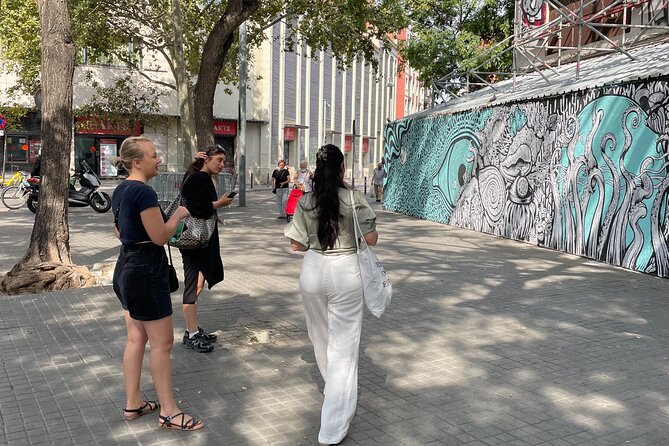
This tour is built on one idea: Barcelona’s wall art is not just decoration. It reacts to politics, identity, neighborhood change, and old events that left a mark on local memory. You get to see how art can explain a place faster than a textbook ever will.
I especially like that the stories are grounded in what you’re standing next to. El Raval sets the tone with social and political street art tied to the area’s tough past—then the tour keeps widening your view toward the city’s famous landmarks and better-known artists.
You can also read our reviews of more tours and experiences in Barcelona.

How the 2.5-hour walk actually plays in real life
The whole experience runs about 2 hours 30 minutes. That’s long enough to feel like a real walk through multiple districts, but not so long you’re stuck staring at your feet for hours.
You’ll start in Ciutat Vella at Carrer Nou de la Rambla 105. The tour ends at Carrer Antic de Sant Joan 7 in Ciutat Vella, finishing in Born near Ciutadella. That ending matters: El Born is a good place to keep wandering after the tour, with plenty of places to eat and drink nearby.
The tour is in English, and it uses a mobile ticket. It’s also offered daily during the listed window, with opening hours running from 7:00 AM to 8:00 PM.
El Raval: murals, mosaics, and the neighborhood’s dark pivot
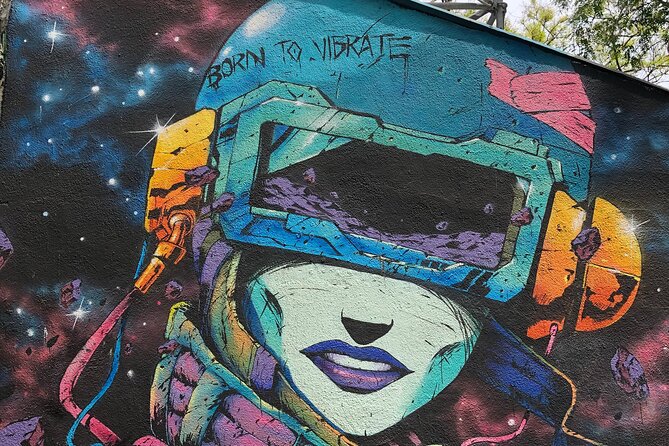
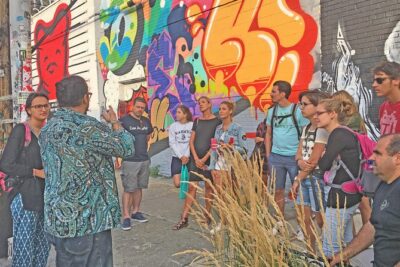
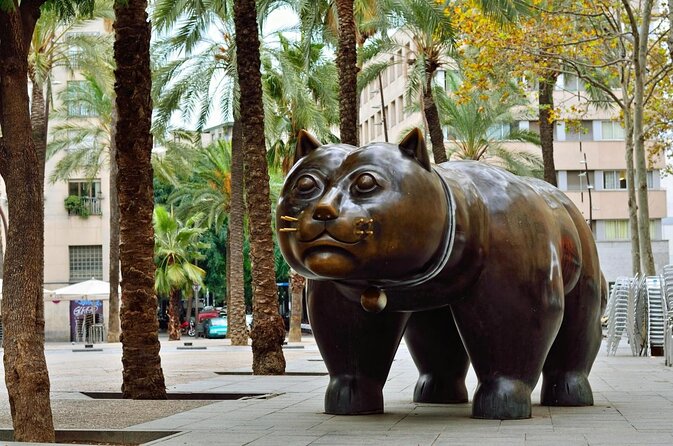
El Raval is the part of the tour that feels most real, and most emotional. You’re in the area often described as Barcelona’s rebellious heart, where walls carry social struggles and local legends.
What you look for here is very specific:
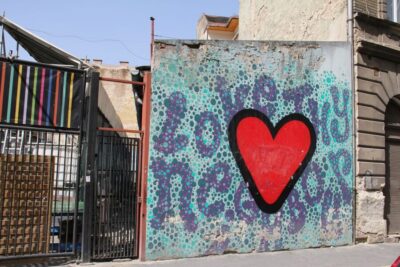
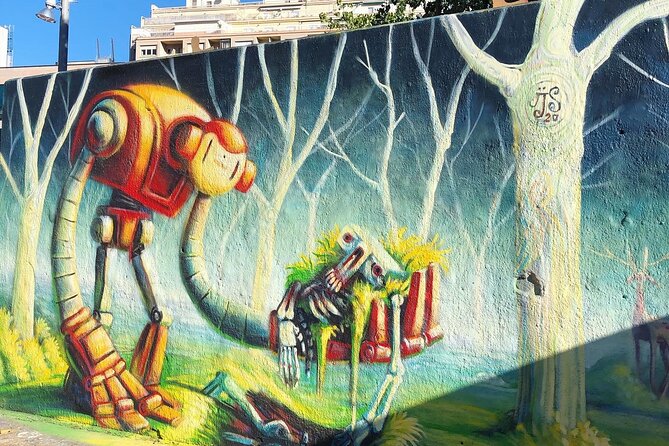
- Large-scale murals that point to social struggles and neighborhood lore
- Small pieces tucked in alleys and doorways, easy to miss if you walk without a plan
- Places tied to a dramatic historical killing that helped inspire neighborhood art
- Iconic mosaics that symbolize the area’s stubborn spirit
- And lots of smaller clues about the shift from danger-zone reputation to cultural hotspot
The crime-story element is not heavy-handed. It works as context. The point is to understand why some images look the way they do—why certain themes appear again and again. When you connect the art to the neighborhood’s past, you start noticing details you would otherwise gloss over.
If you like urban art that has an edge, this is where you’ll feel most satisfied. If you don’t enjoy gritty backstories, you can still appreciate the craftsmanship—but your experience will likely depend on how much you enjoy history mixed into street corners.
La Rambla: the mosaic you step on without noticing
Then the tour shifts toward La Rambla, Barcelona’s signature boulevard. Here, the streets are busier and more tourist-facing, which changes the way you watch the art.
This stop has a standout moment: Joan Miró’s mosaic artwork embedded in the pavement. You’ll see a colorful tribute by the Catalan master that millions walk past daily without truly registering it. That is the whole trick of street art: it turns the ordinary act of walking into a small discovery mission.
The tour also points out philosophical street art by contemporary local artists. Expect themes around identity, freedom, and city life. It’s a good break from the darker mood of El Raval, because the tone becomes more reflective instead of confrontational.
Practical note: since La Rambla is active, you may want to keep your eye up and your phone away when the group is gathering. The point is to spot the art in the flow of the street, not get stuck filming over heads.
Gothic Quarter: Roman stone and early Picasso energy
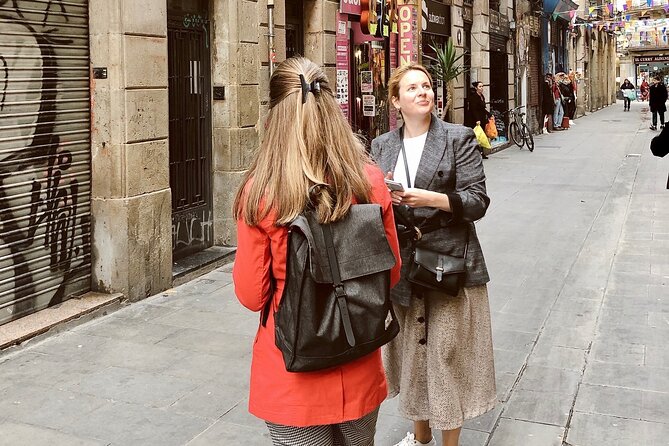
In the Gothic Quarter, you get a contrast that feels almost unfair—thousand-year-old stone on one side, modern spray paint on the other. The area is ancient Barcelona’s core, with a mix of Roman and Gothic remnants that make every turn feel like walking through layers of time.
This is also where the art story broadens beyond just murals. You’ll look for:
- Modern murals that fit the Gothic arches and Roman ruins around them
- Contemporary pieces tucked into older alleys and courtyard spaces
- Iconic artworks associated with Picasso from his early Barcelona years
- Urban installations that reinterpret medieval legends
What makes this stop work is how the setting changes your reading of the art. In a bright open plaza, street art can feel like a separate object. In a narrow Gothic street, it becomes part of the architecture—like the building and the wall are arguing about the present.
You’ll also get a lot of “wait, look at that” moments because the contrast is so strong. Old stone acts like a frame, and the modern color acts like a punchline.


El Born / La Ribera: optical tricks and a building that watches
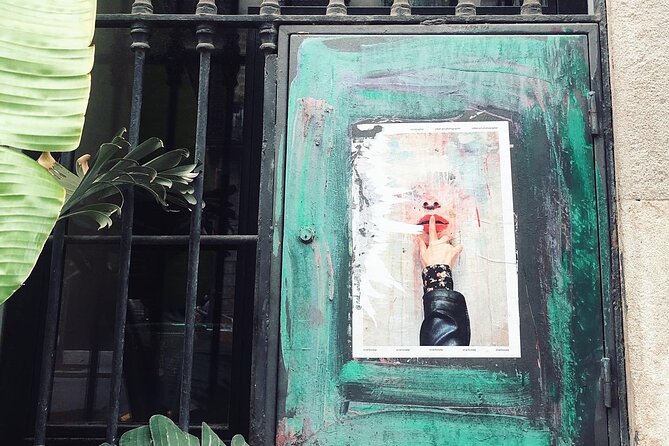
El Born is the tour’s fun finish. It’s known for creative street art, and it also sits near the famous Santa Caterina Market, which gives you an easy landmark to connect the visuals to the neighborhood.
Here the art shifts again:
- Optical illusion street art that messes with your eyes and changes how the street looks
- The famous staring building facade, where windows and details seem to follow you as you pass
- Vibrant murals around Santa Caterina Market
- The market roof, described as wavy and inspired by Gaudí
This stop feels more playful after the heavier story framing earlier in the route. It’s still street art with personality, but you get more “how did they do that?” moments.
Timing matters here: you’re near the end of the tour, so you can actually convert what you see into what you want next. If you love the vibe, keep walking after the guide finishes. You’re already in the right zone.
Price and value: what you pay for, and what you get
At $108.37 per person, this is not a throwaway walking tour. But for a 2.5-hour guided route through multiple districts with a small group cap, it can make sense—especially if you care about context.
Here’s why the value can be real:
- You’re paying for interpretation, not just movement. The stories tied to specific places help you “read” the art.
- The group limit (up to 15) reduces the problem of being stuck behind tall people while your guide talks.
- The route covers different types of work: pavement mosaics, alley micro-art, large murals, and installations.
- Admission is handled differently at different stops, with some places included and others free, so you don’t have to figure out everything on your own mid-walk.
Also, this tour is often booked about 34 days in advance on average. That tells me it has a steady draw, which usually lines up with good guides and a route that works.
The one cost-factor to watch is your own food planning. Since snacks are not included, you’ll likely want water and either a pre-tour bite or money to grab something at the end.
The guide factor: what I think makes it feel personal
The tour credits go to the guide’s ability to connect art to place. In the strongest examples, guides named Liliia (and also Leila on some departures) are praised for being friendly, taking time with explanations, and offering solid food and coffee recommendations afterward.
That “take your time” part is huge on street art tours. If a guide rushes, you miss the small details that make street art worth seeing. On this route, the best moments are often the subtle ones—hidden work in doorways, a pavement detail, or an artwork that only makes sense when viewed from a specific angle.
What to do before you arrive (so you don’t miss the art)
You don’t need fancy equipment. But you do need a street-art mindset.
A few practical moves:
- Wear shoes you’re happy to walk in for 2.5 hours. Older streets can feel uneven.
- Bring a charged phone or camera, but also look with your eyes first. Some of the most interesting pieces are easy to overlook if you’re only filming.
- Consider bringing water, since snacks are not provided.
- If you want to ask questions about specific artists or themes, come ready with one or two topics.
If you’re picky about pacing, remember this is a walking tour with set stops. You’ll get the most out of it by staying with the group when it pauses for details.
Who this tour is best for
I’d point you toward this tour if you:
- Like art that lives outside galleries and museums
- Want city neighborhoods explained through the visuals on their walls
- Enjoy history mixed with storytelling, especially around notable past events
- Prefer a small group to keep conversations real
It’s also a good fit if you’re in Barcelona for a short time and want to get beyond the usual checklist. Since the route ends in Born, it’s easy to keep going in the same direction without changing gears.
If your idea of street art is only the colorful murals and you don’t care about the deeper themes, you might find part of the route more intense than you expected. But the art quality and variety are the kind you’ll still notice even if you skim the stories.
Should you book this street art + story walk?
Book it if you want Barcelona to feel like more than a backdrop. This tour gives you context for why the art shows up where it does, and it sends you through four distinct districts with clear artistic themes.
Skip it or choose another option if you’re not up for walking a lot or you want a purely casual photo walk. The experience is guided and story-driven, not just a highlight reel.
One more thing: if you can align your schedule, book ahead. With steady demand and a small group cap, planning early avoids last-minute scrambling.
FAQ
How long is the Street Art, Sculptures & Crime Stories Walking Tour?
The tour lasts about 2 hours 30 minutes.
How much does the tour cost?
The price is $108.37 per person.
Where does the tour start and end?
It starts at Carrer Nou de la Rambla, 105, Ciutat Vella, 08001 Barcelona, Spain and ends at Carrer Antic de Sant Joan, 7, Ciutat Vella, 08003 Barcelona, Spain, with the finish in Born near Ciutadella.
What language is the tour offered in?
The tour is offered in English.
How large is the group?
The tour has a maximum of 15 travelers.
Does the tour include admission tickets?
Admission ticket rules vary by stop. Admission is included at El Raval and the Gothic Quarter, and it is free at La Rambla and El Born / La Ribera.
Are snacks included?
No, snacks are not included.
Can the tour be customized?
Yes, the tour might be customized for your group.
Are service animals allowed?
Yes, service animals are allowed.
Can I cancel for a full refund?
Yes. You can cancel up to 24 hours in advance for a full refund. If you cancel less than 24 hours before the start time, the amount paid will not be refunded.