REVIEW · BARCELONA
Barcelona: Raval Street Art and Graffiti Walking Tour
Book on GetYourGuide →Operated by Street Art Barcelona · Bookable on GetYourGuide
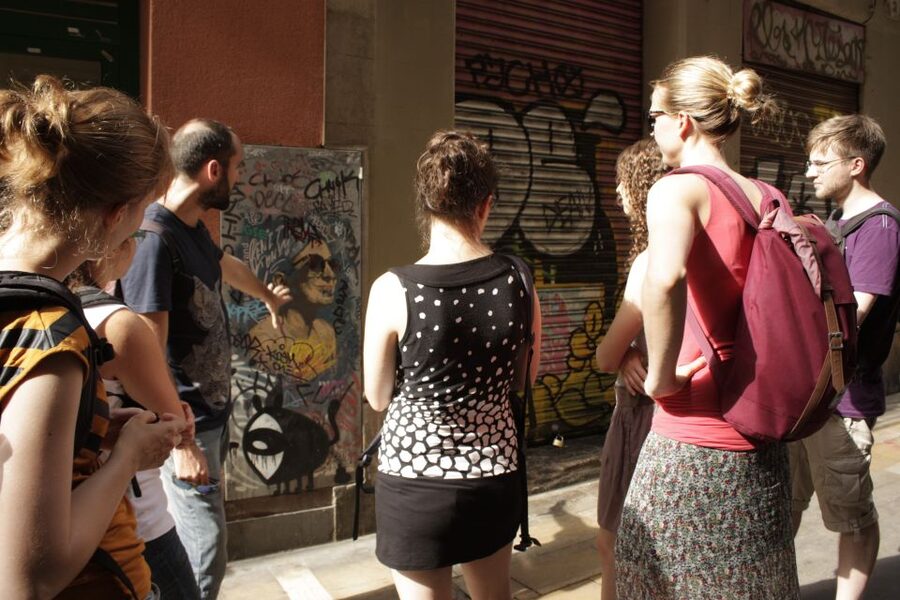
Raval street art tells stories fast. In Barcelona’s Raval neighborhood, you’ll walk past walls full of murals and graffiti and see how the street becomes a public gallery, guided by people like Juan who share real context as you go. It’s a smart way to understand why this area is called barrio Xino and how street art fits into everyday city life.
What I like most is how the tour teaches you how to read the art instead of just photographing it. You’ll get a local perspective on graffiti styles and origin, then you’ll see the planning behind it at spots like Arnau Gallery and the legendary skate spot Tres Chimeneas. One thing to consider: the tour ends near MACBA, and the museum itself is on your own, since admission isn’t included and you won’t get a guided museum walkthrough.
In This Review
- Key Points You’ll Actually Care About
- Meeting in Jardins Talia and Getting Your Bearings in Raval
- A Real Local Perspective: How the Guide Changes What You See
- Arnau Gallery: When Street Art Meets a Physical Space
- Tres Chimeneas: Skate Culture as Part of the Street Art Story
- Murals, Graffiti, and the International Touch (Including Keith Haring)
- Finishing by MACBA: The Exterior Is Worth It, and the Museum Is Optional
- Price and Value: Why $33 Makes Sense for What You Get
- Who This Tour Fits Best (and Who Might Feel Restless)
- Practical Tips So You Don’t Miss the Best Parts
- Should You Book This Barcelona Raval Street Art and Graffiti Tour?
Key Points You’ll Actually Care About
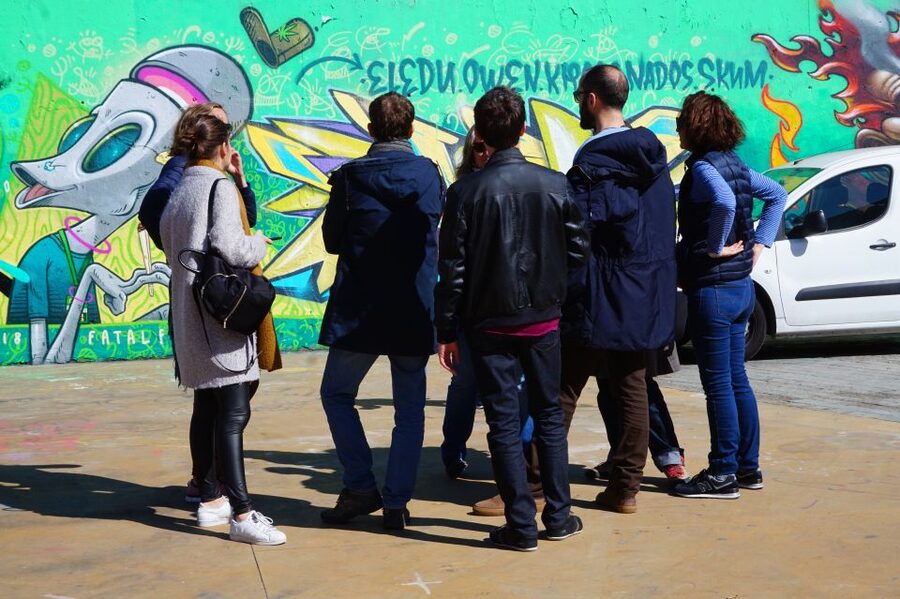
- Raval’s street art as a real neighborhood map, not a curated mural circuit
- Two hours of guided street reading, including graffiti styles and local projects
- Arnau Gallery stop, with examples tied to residents and local efforts
- Tres Chimeneas skate spot, where urban art and skate culture meet
- MACBA exterior finish, then you can choose whether to enter on your own
- High praise for guides who answer questions, including political angles
Meeting in Jardins Talia and Getting Your Bearings in Raval
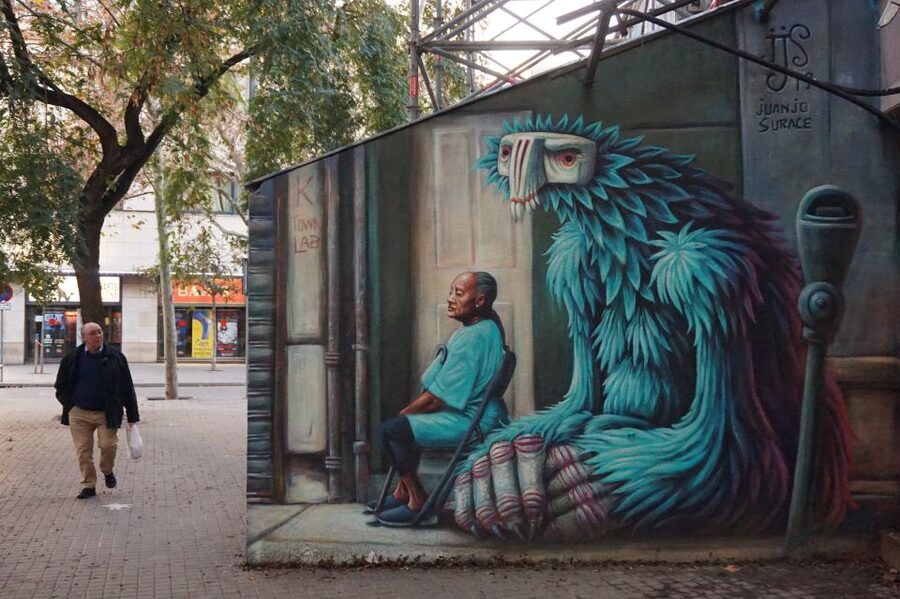
This tour starts at a park, Jardins Talia, on Avenida Paral·lel 100 (08015 Barcelona). That matters more than you might think. Meeting outside in the open keeps the group together and helps you start noticing details right away: wall surfaces, layers of paint, and the way different pieces sit in real urban space.
Raval has a reputation that can make people nervous or curious, and the best part of a guided walk is that you don’t have to guess what you’re seeing. As you move along, your guide frames the neighborhood like a living canvas—why certain spots get attention, what locals value, and how graffiti has its own visual language.
You also get to experience this side of Barcelona in a controlled, comfortable way. Several participants highlight that the group stays small, which usually means more chances to ask questions and less time waiting while people catch up.
You can also read our reviews of more tours and experiences in Barcelona.

A Real Local Perspective: How the Guide Changes What You See
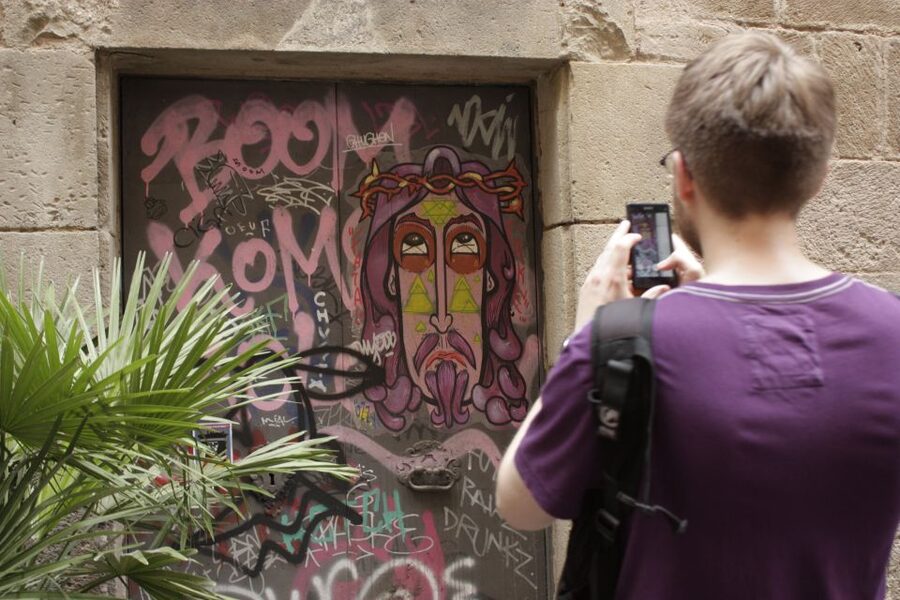
Street art is easy to enjoy and easy to misread. The tour’s strength is that you’re not just shown images—you’re taught a way to look.
One set of comments centers on how guides explain the broader background of graffiti: where it comes from, the difference between styles, and how local artists think about messages and technique. Tim’s description of learning origins and styles, plus being able to ask even political questions, is exactly the vibe you want if you like art that has opinions.
I also like when guides point out small “that’s what I would have missed” details. Jeanne is singled out for making little things noticeable—tiny cans and subtle marks on walls—so you leave with better street eyesight. After a tour like this, you tend to see more when you walk on your own, because you know what to look for: tags, color choices, layering, and how a piece relates to its surroundings.
And yes, the guides are friendly and easy to talk to. Juan, Anais, Jeanne, and Sylvia all come up in recent feedback for being warm, chatty, and good at English (with French and Spanish also available).
Arnau Gallery: When Street Art Meets a Physical Space
You’ll spend time with Arnau Gallery, which is a big part of why this tour feels more grounded than a wall-hopping photo spree. A gallery stop does two useful things.
First, it gives you a reference point. On the street, art can feel random. In a gallery, the same ideas show up in a clearer context—materials, intent, and the way artists present work when they’re not limited to a wall’s shape or texture.
Second, it connects the neighborhood’s art to people and projects tied to residents. The tour specifically calls out seeing examples of local residents’ work here. That’s the difference between visiting graffiti as an outsider’s spectacle and understanding it as community communication.
If you’re the type who loves art but also wants meaning, this stop helps you slow down. You start thinking in themes: identity, voice, and how visual art travels from sidewalk to institution and back again.
Tres Chimeneas: Skate Culture as Part of the Street Art Story
Then comes the stop people talk about for a reason: Tres Chimeneas. This is described as a legendary skate spot, and it fits the theme of the entire walk—urban art isn’t separate from street culture. It lives in the same ecosystem: walls, movement, music, and a shared sense of style.
Michelle’s notes about insight into hip hop culture match what this kind of stop usually teaches. Even if you’re not a skater, you’ll likely pick up how graffiti, sound, and style all function as identity. For many visitors, this is where the tour becomes more than just art appreciation—it starts to feel like you’re learning how the city’s creative subcultures communicate.
There’s also practical value here. Skate spots and similar spaces are landmarks. Once you’ve seen where the street energy gathers, you can later navigate the area with more confidence. You’ll feel less like you’re passing through and more like you understand the neighborhood’s rhythm.
Murals, Graffiti, and the International Touch (Including Keith Haring)
Raval’s street art isn’t all local, and the tour makes sure you don’t miss the global threads. One highlight is seeing major works by international artists, including Keith Haring.
Why this matters: when you see an international name in the middle of a local neighborhood, you start asking better questions. Who is the audience? Why that style here? How does a piece survive once the neighborhood moves around it?
This is also where the guide’s explanations do their best work. If you only look at the surface, art can feel like it’s there for decoration. With context, it becomes commentary—about identity, politics, youth culture, or simply about who gets to speak in public.
And the art you’ll encounter isn’t just one kind of mural. People highlight that there’s a lot of variety: different approaches, different styles, different levels of complexity. That variety is part of Raval’s charm. The walls don’t tell a single story; they stack stories.


Finishing by MACBA: The Exterior Is Worth It, and the Museum Is Optional
The tour ends near Barcelona Museum of Contemporary Art (MACBA), and you’ll admire its exterior. That’s a good payoff: you get a clean visual marker for modern art culture right after spending time reading street art.
Then you have a choice. You can visit the museum independently after the walk, since museum admission isn’t included. The museum is described as showing works from three distinct periods of modern art, which is useful if you like structure in what you’re seeing.
This set-up is a mixed bag in a very normal way:
- It gives you freedom to spend as much time as you want inside.
- It also means you won’t get a guided walkthrough through the museum collections.
So if you want a strictly guided museum experience, you may feel a bit on your own at the end. If you like flexibility and you’re comfortable building your own plan, finishing at MACBA is a great way to turn the street-art lesson into a museum day.
Price and Value: Why $33 Makes Sense for What You Get
At $33 per person for a 2-hour walking tour, this isn’t priced like a big “private tour with a lot of extras.” What you’re paying for is the guide and the ability to see Raval in a focused way.
Here’s why that’s good value:
- You’re guided through a neighborhood you might not naturally explore on your own.
- You get interpretation of graffiti and murals—origin, styles, and local projects—so the time isn’t wasted on just stopping for pictures.
- You hit key stops like Arnau Gallery and Tres Chimeneas, plus you finish by MACBA.
The only financial catch is that MACBA admission isn’t included. If you plan to enter the museum, you’ll want to budget extra. But even with that added cost, you’re basically paying for one guided lesson that connects street art to contemporary art culture—and then you can choose how far you want to go inside the museum.
Who This Tour Fits Best (and Who Might Feel Restless)
This is a strong fit if you:
- love street art and want more than a casual photo walk
- enjoy learning the meaning behind graffiti styles and local projects
- like small-group energy so you can ask questions
- want a contrast between Raval street art and the modern art world at MACBA
It might feel less ideal if you:
- only want famous, museum-style artwork and prefer a full guided museum visit
- want the tour to include the museum ticket and a longer inside session
The walk is designed around street-level discovery. If you’re expecting a museum guided tour as the main event, adjust your expectations.
Practical Tips So You Don’t Miss the Best Parts
Keep your phone charged. You’ll want to capture layers—fresh paint next to older work—because that’s part of what makes Raval interesting.
Wear comfortable shoes. It’s a walking tour that lasts about two hours, and you’ll likely spend extra moments looking closer once the guide points out details.
Bring curiosity for the explanations. Several guides are praised for being open to questions, including political topics. If you like thoughtful conversation, you’ll probably enjoy the stop-and-talk rhythm.
Also, plan how you’ll handle MACBA afterward. Since you finish at the museum area but enter on your own, decide in advance whether you’ll go inside or just enjoy the exterior and keep moving. Either way, you’ll have a clear finish point.
Should You Book This Barcelona Raval Street Art and Graffiti Tour?
Yes—if you want your Barcelona day to include more than postcard sights. This tour is a focused way to learn how street art works in real life, with stops like Arnau Gallery and Tres Chimeneas that add culture, not just paint. The consistently high feedback points to a guided experience where you’re allowed to ask questions and get real explanations, not just a walk with facts recited.
Book it if you value context and want to see parts of Barcelona you’d likely skip on your own. Skip it only if you mainly want a guided museum experience that includes admission, because the museum portion is independent.
If you’re torn, here’s the simple test: if you enjoy standing close to walls and asking why something looks the way it does, this is your kind of tour.