History walks the UNAM campus. This guided circuit strings together three UNAM stops—Biblioteca Central, the UNAM murals, and Estadio Olímpico—so you see how art, architecture, and politics lived side by side in Mexico. It’s also built for comfort: you get a bilingual guide and a focused plan that lasts about 2 hours.
I especially like the way the tour ties the murals to real events, not just names on a wall. One guide, Fernando, is known for storytelling with lots of knowledge about the university and the background to the famous 1968 events. A possible drawback: this is a short walking loop, so if you love slow photo time or long museum-style reading, you’ll feel a bit time-pressed.
In This Review
- Key highlights in 60 seconds
- A UNAM walking tour where murals have a reason
- Stop 1: Biblioteca Central de la UNAM and Juan O’Gorman’s architecture
- Stop 2: UNAM murals with Siqueiros, Chávez, Eppens, and more
- Stop 3: Estadio Olímpico Universitario and the 1968 Olympic connection
- Price and value: what $53.46 gets you
- Logistics that actually matter on this UNAM loop
- What to bring (and how to keep it fun)
- Should you book this UNAM murals and revolution tour?
- FAQ
- FAQ
- How long is the UNAM murals walking tour?
- What does the tour cost?
- Is admission included for the stops?
- What language is the tour offered in?
- How many people are in the group?
- Where does the tour start and end?
- Do I need a printed ticket?
- Is free cancellation available?
Key highlights in 60 seconds
- Juan O’Gorman’s Biblioteca Central in about 20 minutes of pure architectural wow
- Murals by Siqueiros, Chávez, Eppens and more with guide-led context
- Estadio Olímpico Universitario and how it connects to the 1968 Olympic Games
- Small group size (max 15) for easier questions and a calmer pace
- Admission is free for the stops listed on the tour
- Mobile ticket + English option for smooth check-in
A UNAM walking tour where murals have a reason
If you want more than a photo stop, this tour is a smart way to spend a couple hours on UNAM’s campus in Mexico City. The big idea is simple: you move through three places that help explain why UNAM became one of the most influential stages for modern Mexican art.
At UNAM, you don’t just look at artwork. You learn where it sits, what it’s responding to, and why it matters to the university and the country. That’s why this format works so well. You get a beginning (the Biblioteca Central), a long middle (the murals), and an end that links art to a specific historical moment (the 1968 Olympics at the Estadio).
Also, you don’t need to plan museum math. The tour is about 2 hours total, the group stays small (up to 15 people), and the listed admissions are free for the stops on the route. At $53.46 per person, that combination is what makes it feel like value rather than a high-priced sightseeing bundle.
You can also read our reviews of more tours and experiences in Mexico City.

Stop 1: Biblioteca Central de la UNAM and Juan O’Gorman’s architecture
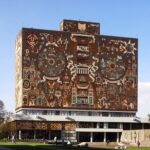
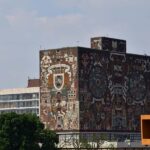
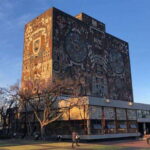
Your first stop is UNAM’s central library, a major architectural work by Juan O’Gorman. You’ll have about 20 minutes here, which is enough time to get your bearings and understand what you’re seeing without turning it into a half-day architecture seminar.
What makes this start clever is that it sets the tone for the rest of the tour. Before you look at murals, you’re looking at structure—how UNAM built a campus that’s meant to be more than background. The Biblioteca Central is also a fast way to see how architecture can carry ideas, not just function as a building.
In a short 20 minutes, you should aim to do two things:
- Find the angles your guide points out (library architecture is easier to read with guidance).
- Take a couple clear photos, but don’t let the camera steal all your attention. You’ll get more “look at this” moments at the murals.
Practical tip: wear comfortable shoes. Even with only three stops, UNAM’s campus is still campus-sized, and you’ll likely be walking between them.
Stop 2: UNAM murals with Siqueiros, Chávez, Eppens, and more
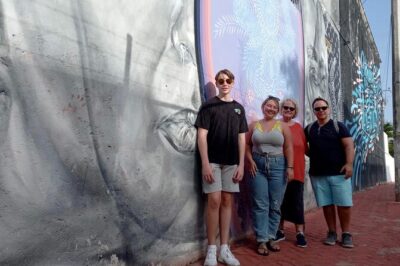
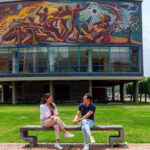
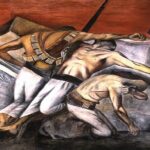
The heart of this experience is the mural section. You’ll spend about 1 hour looking at murals tied to major Mexican artists such as Siqueiros, Chávez, Eppens, and others.
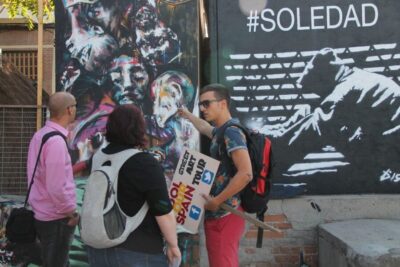
This is where the tour earns its name. The murals aren’t presented as decorative wall art. Instead, they’re explained in a way that helps you connect the visuals to larger themes—identity, politics, and social change. You also get the benefit of a guide’s pacing: murals can feel overwhelming if you’re staring at everything at once, but they make more sense when someone helps you read them.
One especially praised quality from the tour is the guiding style. Fernando, for example, is described as an excellent history teller with deep knowledge about the university, the way major developments unfolded, and how the famous 1968 events fit into the broader picture. Even if your guide isn’t named Fernando on your day, the format is the same: expect narrative context, not just a list of artist names.
How to get more out of the mural hour
Murals can be big. They can also be busy. So use your guide time like this:
- Pick one mural to study first, then let everything else “orbit” that one.
- Ask one question when the guide pauses. Small groups make this easier with a max of 15 people.
- Take notes mentally about what themes repeat across different works. That pattern is usually what makes the tour click.
Also, remember this is a walking tour. You’ll be moving as you look, which is great for staying engaged. It just means you may not have the same freedom to linger for 20 minutes in one exact spot like you would on your own.
Stop 3: Estadio Olímpico Universitario and the 1968 Olympic connection
The final stop is Estadio Olímpico Universitario, with about 30 minutes on site. This is where the tour ties the campus art story to a specific historical moment: the 1968 Olympic Games.
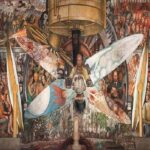
You’ll also hear about Diego Rivera’s mural as part of the explanation here. Even if you already know the big names, this kind of connection is useful because it shows how public events and public art can reinforce the same national ideas. The stadium adds scale to the story. Murals tend to live at eye level; the stadium forces you to think bigger—crowds, attention, politics, and the world looking at Mexico during a key era.
During the stadium portion, I suggest you keep your expectations realistic. Thirty minutes is short. So treat it as a focused “why it matters” stop, not a full on-site history lecture. If you want to go further afterward, that’s normal. A good short tour leaves you wanting more, and that’s exactly how you should feel here.
Price and value: what $53.46 gets you
Let’s talk value, because this is where many tours either make sense or don’t.
Here’s what you get for $53.46 per person:
- A bilingual guide
- About 2 hours total
- Mobile ticket convenience
- A maximum group size of 15
- Listed stops with free admission
For a city like Mexico City, where you can spend a lot and still feel like you paid for nothing, this combination is the real reason the tour works. You’re not just buying access. You’re buying context and direction across three high-impact UNAM locations in a short time window.
Is it cheap? No. But it’s not trying to compete with free self-guided strolling. Instead, it’s aimed at people who want a guided narrative, especially around the murals and the 1968 story, without having to build their own itinerary from scratch.
Who gets the most from this tour?
This fits best if you:
- Want an easy way to understand UNAM art and its historical themes
- Like guided storytelling more than reading alone
- Prefer small groups and a manageable time commitment
- Are comfortable participating with a general walking route (the tour says most travelers can participate)
If you’re the type who hates guided tours and only wants “wander mode,” you might feel boxed in. But if you like learning and moving at a steady pace, you’ll likely enjoy it.


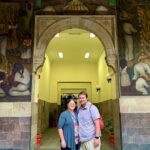
Logistics that actually matter on this UNAM loop
A great tour can fail if it’s annoying to find. This one is designed to be straightforward.
Meeting point: Rectoría de la UNAMEscolar, C.U., Coyoacán, 04510 Ciudad de México, CDMX, Mexico. The good news is it’s listed as near public transportation. That matters in Mexico City, where timing and route choices can make or break your day.
End point: the activity returns to the meeting point, so you’re not stuck figuring out how to get across campus afterward. That’s a small detail, but it saves energy.
A couple more practical points:
- You’ll receive confirmation at booking.
- The tour is offered in English, and the guide is bilingual.
- Tips aren’t included, so you’ll want to keep that in mind for budgeting. (In many places, tipping is discretionary, but you should still plan something.)
One last thing: booking tends to happen earlier. On average, this is booked about 20 days in advance, so if you’re traveling during a busier season or on a tight schedule, don’t wait until the last minute.
What to bring (and how to keep it fun)
You’ll get the most out of this tour if you come prepared for a short but meaningful campus walk.
Bring:
- Comfortable walking shoes (you’ll be on your feet between stops)
- A phone with enough battery for photos (you’ll want a few at the Biblioteca and murals)
- Light layers, since campus weather can shift as you move between covered and open areas
Keep expectations aligned with the schedule:
- You get 20 minutes at Biblioteca Central
- 1 hour at the murals
- 30 minutes at Estadio Olímpico Universitario
That means the murals are your longest stop—plan your attention there. If you try to “do everything equally,” you might miss what makes the murals special.
Should you book this UNAM murals and revolution tour?
I’d book it if you want a guided way to understand UNAM’s artwork without building a complex plan. The best reason is the combination of three stops with a clear story arc: architecture first, murals next, stadium and the 1968 connection at the end. It’s also priced in a way that feels fair because the tour includes a bilingual guide and the listed admissions are free.
Skip it if you prefer slow, independent museum-style time. This is a tight loop, and you won’t have hours to wander one location deeply. It’s built for getting oriented and understanding the big themes fast.
If your schedule allows only a short UNAM visit, this is one of the most efficient ways to make it count.
FAQ
FAQ
How long is the UNAM murals walking tour?
The tour lasts about 2 hours (approx.).
What does the tour cost?
It costs $53.46 per person.
Is admission included for the stops?
Yes. The stops listed (Biblioteca central, the murals at UNAM, and Estadio Olímpico Universitario) show admission ticket free.
What language is the tour offered in?
The tour is offered in English, and it includes a bilingual guide.
How many people are in the group?
The tour has a maximum of 15 travelers.
Where does the tour start and end?
It starts at Rectoría de la UNAMEscolar, C.U., Coyoacán, 04510 Ciudad de México, CDMX, Mexico, and ends back at the meeting point.
Do I need a printed ticket?
No. You’ll get a mobile ticket.
Is free cancellation available?
Yes. You can cancel up to 24 hours in advance for a full refund.