REVIEW · BARCELONA
Barcelona Street Art and Graffitti Bicycle Tour
Book on Viator →Operated by Barcelona Street Style Tour · Bookable on Viator
A wall of paint can tell a city’s real story. This Barcelona street art and graffiti bike tour takes you off the usual sights and into Poble Nou, where street walls turn into lessons you can actually see. I love the speedy bike format that stretches your time across neighborhoods, and I love the photo-friendly stops that make it easy to study the art without worrying about parking. One drawback to keep in mind: if you end up with a more scripted guide, the tour can feel less conversational than you’d hope.
I also like that the route starts by rolling along the shoreline toward a post-industrial area. That mix of sea air, dedicated bike paths, and then graffiti streets makes the whole thing feel like a clever half-day plan rather than a checklist.
Finally, the group is capped at a small size, so it stays manageable. The trade-off is simple: you’ll want to be comfortable riding for roughly 2 to 3 hours, because this is a bike tour first, not a sit-down museum.
In This Review
- Key Highlights You Should Care About
- Entering Poble Nou: Why This Bike Tour Feels Like Barcelona’s Real Pulse
- Meeting at Carrer dels Escudellers and Getting Rolling
- The Beach-to-Neighborhood Ride: Fast Views Without Parking Headaches
- Poble Nou’s Post-Industrial Streets: Where Graffiti Gets Its Context
- Street Art Stops and Photo Moments That Don’t Feel Rushed
- Bike Pace, Safety Feel, and What the Ride Actually Requires
- Guide Quality: Why Mike’s Style Works, and When It Might Not
- Price and Value: What $41.13 Buys You in Real Time
- Best Fit: Who Should Book This Street Art Bicycle Tour
- Should You Book It?
- FAQ
- Where does the tour start?
- How long is the Barcelona Street Art and Graffiti Bicycle Tour?
- What’s included in the price?
- Is the tour offered in English?
- How big is the group?
- Does the tour end where it starts?
- What is the cancellation policy?
Key Highlights You Should Care About
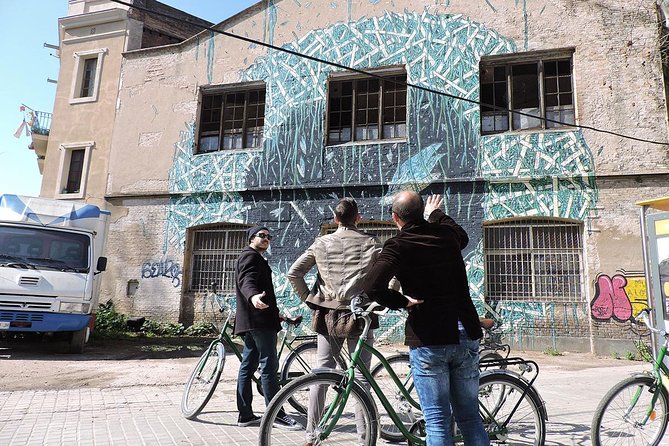
Poble Nou street art, not tourist-copycat walls
You get out of the center and into Barcelona’s post-industrial zone where graffiti is part of daily life.
Bike speed means more art per hour
A bicycle lets you cover ground fast, so you can see several stops without the usual transit drag.
Photo stops are built into the flow
You can pause and shoot pictures without playing parking roulette.
Helmets and bikes are included
You don’t need to hunt rentals or sort gear before you meet up.
Local guides can make the walls make sense
Guides like Mike are praised for explaining graffiti terminology, history, and how artists progress over time.
Small group cap helps the ride stay smooth
With a maximum of 15 people, you’re not stuck riding in a huge herd.
Entering Poble Nou: Why This Bike Tour Feels Like Barcelona’s Real Pulse
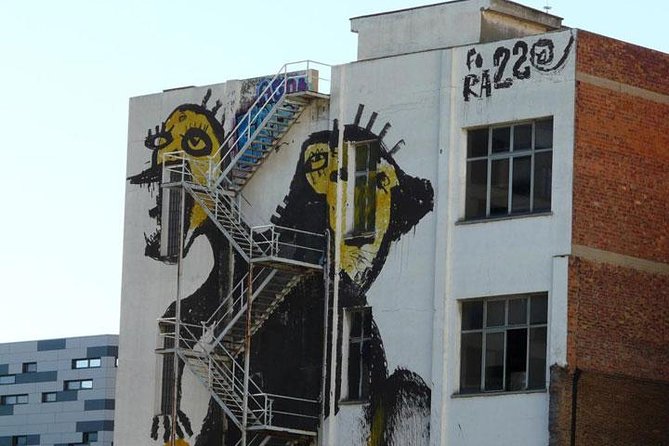
If you’ve already done the classic Barcelona hits, this is the kind of tour that gives your trip a second spine. The big idea is simple: you don’t just look at street art from one spot. You ride there, in the right direction, and you watch it evolve street by street.
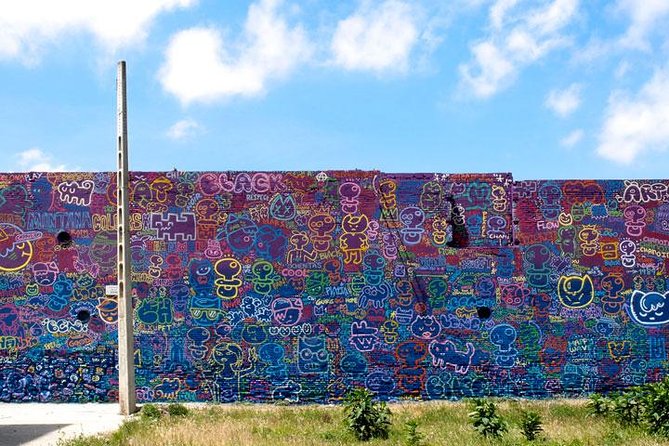
Poble Nou is where the story changes. The area’s industrial past still shows up in the texture of the streets and the way the walls carry messages. Instead of seeing street art as random decoration, you start seeing it as a living language: tags, murals, layers, and the occasional piece that feels like it belongs to a specific political moment.
The best part for me is the pacing. You’re moving, but not sprinting. That makes it easier to compare styles across neighborhoods in one outing, instead of treating street art like something you only notice on one memorable alley.
And yes, it’s called a street art and graffiti tour, but it’s also a city-watching tour. As you pedal from the city toward the coast and then into Poble Nou, you’re basically doing a mini “how Barcelona changes by geography” lesson—minus the awkward lecture voice.
You can also read our reviews of more tours and experiences in Barcelona.
Meeting at Carrer dels Escudellers and Getting Rolling
The tour starts at Carrer dels Escudellers, 48, in Ciutat Vella (08002 Barcelona). The meet-up point is in the old-city area, which is useful because you can typically connect with public transport without needing to organize a private taxi plan.
Here’s what you should expect right from the start: the guide gives you what you need to ride confidently with the group. You’ll be using the provided bicycle and wearing a helmet. That matters because this isn’t a casual stroll. It’s a guided bike route.
The tour then runs for about 2 to 3 hours. It ends back at the same meeting point. That simple loop is one of the quiet benefits of this format. You don’t need to figure out how to get home from somewhere far away after the ride.
Scheduling-wise, the activity runs daily during the listed window from 10:00 AM to 3:00 PM. If you want maximum daylight for photos, aim earlier in that range.
The Beach-to-Neighborhood Ride: Fast Views Without Parking Headaches
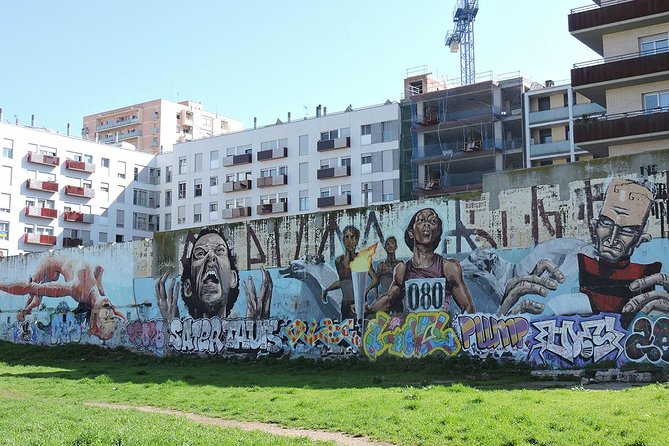
One reason I like this tour design is that it gets you moving immediately. You ride from the city center along the beach, heading toward Poble Nou. That means the first stretch isn’t about finding your way through a maze of one-way streets. It’s about getting your bearings fast and building momentum.
Along the shoreline, you’ll get a different view of Barcelona than the one most people see from a single landmark stop. The sea promenade feels like a natural warm-up. It’s also where you’ll notice how the bike-friendly sections help the ride feel easier than you might expect.
People mention that the cycling can be an easy ride, and they also note it’s not an e-bike setup. One common detail: bikes are described as 3-speed non-e-bikes, which works for most visitors as long as you’re not completely new to riding.
If you’re worried about traffic, don’t overthink it—but do keep a realistic mindset. There may be busy road moments, yet the ride is described as feeling safe while you’re with the group.
Poble Nou’s Post-Industrial Streets: Where Graffiti Gets Its Context
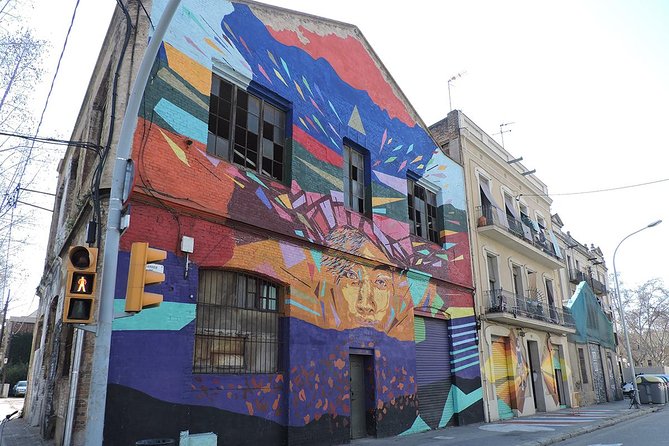
Once you cut into Poble Nou, the tour shifts from scenery to meaning. This is the part where street art stops being a random visual trend and starts acting like a neighborhood timeline.
Post-industrial areas tend to produce different kinds of walls than the polished tourist zones. You’re more likely to see art that responds to the space itself: long stretches, layered surfaces, and places where artists can work without it immediately turning into a corporate photo backdrop.
This matters because graffiti is rarely just about style. It’s also about who’s speaking, how they’re speaking, and what’s happening around them. A strong guide will connect those dots for you—turning the art into a set of clues about Barcelona right now.
That’s exactly the kind of thing people praise most: the sense that you learn facts and insight from the guide, not just where to point your camera.
Street Art Stops and Photo Moments That Don’t Feel Rushed
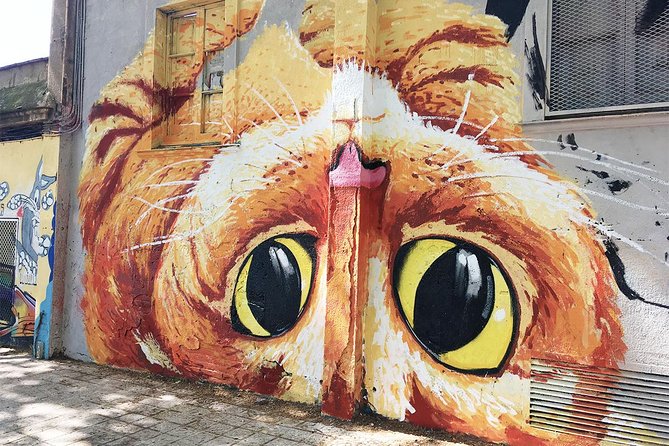
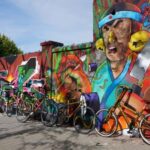
The tour includes multiple stops along the street art and graffiti route. Even though the exact wall-by-wall list isn’t spelled out here, the rhythm is clear: ride in, pause, look closely, and then ride on.
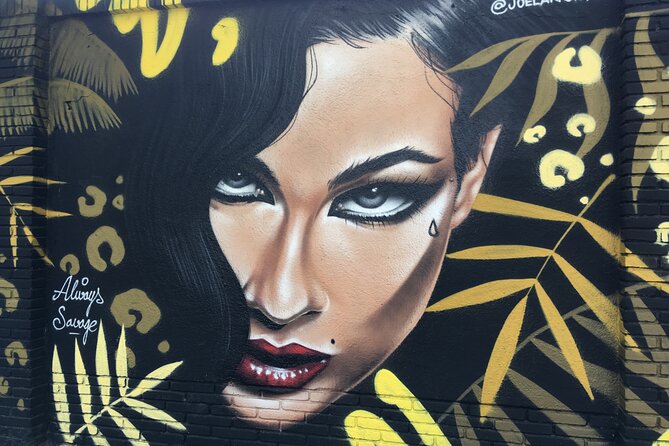
This is where the guided part really earns its keep. If you’ve ever stood in front of a wall and felt like you were only seeing colors, you’ll probably enjoy how the guide explains what you’re looking at. People specifically mention background on graffiti and street art history, plus terminology that helps you read styles more accurately.
Guides like Mike are called out for enthusiasm and for teaching concepts in a way that sticks. Some visitors also mention that he’s patient with inquisitive kids, which says something about how the tour handles real questions, not just rehearsed lines.
The photo element is also practical. Because you’re on bikes, the stops can be short and efficient. You’re not spending half the time figuring out where to park or walking back and forth with a heavy bag. You pause when it matters, then keep moving.

Bike Pace, Safety Feel, and What the Ride Actually Requires
You should plan for an active 2 to 3 hour experience. Most travelers can participate, and many describe the riding as easy. But it’s still a bike tour, so you’ll want basic comfort with:
- staying seated and alert while rolling through city streets
- taking short stops for photos
- riding with a group at an agreed pace
Bike type is commonly described as a 3-speed setup rather than an e-bike. If you’re expecting motor assistance, you’ll want to adjust your expectations before you go.
Helmets are included, which is a smart, non-optional detail. It signals the tour’s basic safety approach and helps you feel more relaxed on the road.
One more practical note: the maximum group size is 15. That keeps the ride from turning into chaos, and it helps the guide manage turns and stops without everyone falling behind.
Guide Quality: Why Mike’s Style Works, and When It Might Not
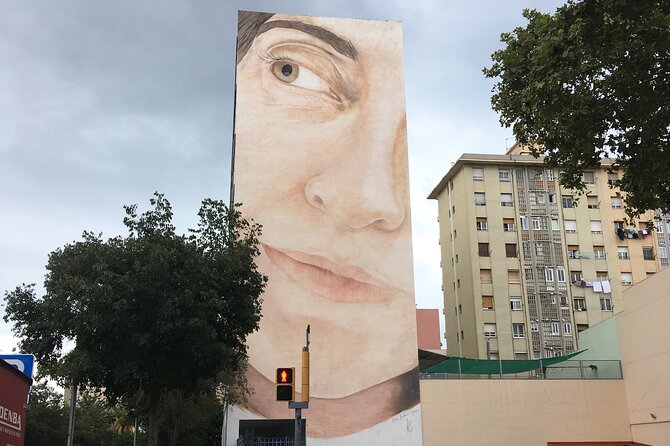
Most of the energy people give this tour is about the guide experience. Enthusiastic, knowledgeable, and personable is the pattern you’ll see. Mike, in particular, is repeatedly mentioned as a standout host, with visitors highlighting his ability to explain how an artist progresses over time and his passion for the street art scene.
That said, not every guide interaction will match your preferred style. One lower rating notes a guide who seemed uncommunicative and delivered points in a more rote way. So here’s the practical takeaway: if you’re the type who wants a lot of back-and-forth questions, go in ready to ask, and don’t assume every guide will be equally chatty.
The good news is that the tour is built around listening. If you ask for clarification about terminology or the stories behind specific styles, the best guides will reward that.
Barcelona speaks two visual languages, and the older one is worth equal saddle time: TheBarcelonaTraveller ranks the Gaudí and Modernisme tours by review score, trencadís instead of throw-ups, same city walls.
Price and Value: What $41.13 Buys You in Real Time
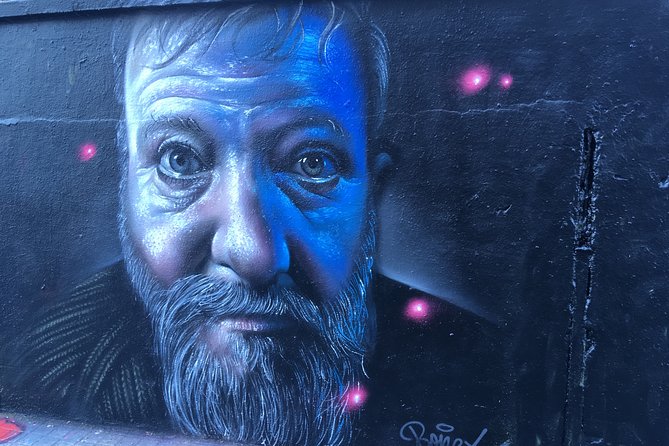
At $41.13 per person for about 2 to 3 hours, this is a value play. You’re paying for:
- a bicycle
- a helmet
- a professional local guide
You’re also paying for access to the “how to see” part: route choice, stop timing, and explanations that help you interpret what you’re seeing.
Compared with doing street art self-guided, the trade is clear. Self-guided can be cheaper, but it usually turns into wandering. This tour gives you a structure: ride from the center toward the coast, then into Poble Nou, with purposeful stops along the way.
It also reduces friction. No parking hunt. No rental chaos. Just show up, gear up, and ride.
What’s not included is also worth noting: food and drinks aren’t included. Alcoholic drinks aren’t included either, though you can buy drinks along the way if you want. So think of the tour as the art and riding portion of your day, then plan a meal afterward.
Best Fit: Who Should Book This Street Art Bicycle Tour
This is a strong pick if you want:
- street art that feels tied to neighborhood context, not random murals
- a half-day activity that covers multiple areas fast
- a guide who can explain graffiti terminology and history in plain language
It’s also a good option if you’ve visited Barcelona before and want a different angle. The beach ride and Poble Nou shift the scenery enough to feel like a fresh trip.
I’d be more cautious if:
- you strongly dislike biking or you’re not comfortable riding for a couple hours
- you expect a quiet, museum-style experience with minimal movement
- you want a slow crawl where every stop is long and detailed (this is designed to cover ground)
Overall, it sounds made for travelers who want to combine exercise, street photography, and real interpretation in one go.
Should You Book It?
Book it if you want a practical, photo-friendly way to see Barcelona street art with actual context, and you’re comfortable riding a standard 3-speed style bike for 2 to 3 hours. The included bicycle and helmet, plus the local guide, make the price feel fair.
Skip (or choose something else) if biking is a deal-breaker for you, or if you prefer long, sedentary stops and deep museum-style pacing. And if guide personality is a big deal for you, be aware that guide styles can vary.
If you’re planning a Barcelona trip and you want one activity that genuinely changes how you see the city’s walls, this is a smart bet.
FAQ
Where does the tour start?
It starts at Carrer dels Escudellers, 48, Ciutat Vella, 08002 Barcelona, Spain.
How long is the Barcelona Street Art and Graffiti Bicycle Tour?
The duration is about 2 to 3 hours.
What’s included in the price?
The tour includes use of a bicycle, use of a helmet, and a professional local guide.
Is the tour offered in English?
Yes, it is offered in English.
How big is the group?
The maximum is 15 travelers, and a minimum of 2 people is required per booking.
Does the tour end where it starts?
Yes, the activity ends back at the meeting point.
What is the cancellation policy?
You can cancel for a full refund up to 24 hours in advance. If you cancel less than 24 hours before the experience start time, the amount paid will not be refunded.