REVIEW · BELFAST
Award Winning Private 2 Hour Belfast Political Black Taxi Tour
Book on Viator →Bookable on Viator
Five murals in two hours, and Belfast makes sense. I love the murals and the peace walls because they turn politics into something you can actually see and walk alongside, not just read about. I also really liked the storytelling from guides with real ties to the area, like Sean Mc, who brings first-hand perspective and keeps the mood from getting too heavy.
You’ll get a tight route with short stops where you can look, listen, and ask questions without feeling rushed. I like that it is private transportation for your group, so you can move at tour pace instead of playing dodge-the-crowds. One thing to consider: even though it is branded as a Black Taxi tour, you should confirm the vehicle and audio setup ahead of time, since at least one experience has been described as happening in a mini van with audio issues.
In This Review
- Quick Hits (Before You Go)
- Political Belfast in Two Hours: What You Actually See
- Price and Logistics: Is It Good Value?
- The Route From Falls Road to Shankill Road (and Why It Works)
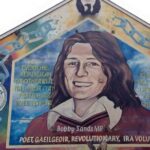
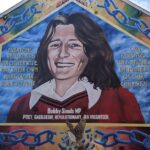
- Stop 1: Bobby Sands Mural and the Falls Road Background
- Stop 2: Peace Walls and Writing Your Own Peace Message
- Stop 3: Divis Street International Mural Wall and Global Solidarity
- Stop 4: Clonard Monastery, WWII Shelter, and Adams–Hume Talks
- Stop 5: Shankill Road Murals and Loyalist History on Gable Walls
- Guide Quality Makes or Breaks This Tour
- Pickup and Getting There: City Hall Is Your Friend
- How to Prepare: What to Bring and What to Expect
- Who This Tour Suits Best (and When It Might Not)
- Should You Book This Political Black Taxi Tour?
- FAQ
- How long is the Belfast Political Black Taxi Tour?
- Is this tour private?
- What is the price per person?
- Where does pickup happen?
- Do they pick up from cruise ships?
- What stops are included on the tour?
- Are admission tickets included?
- What language is the tour offered in?
- Is the tour suitable for children or service animals?
- Is there a cancellation option if I change plans?
Quick Hits (Before You Go)
- Sean Mc-style first-hand stories that make the street history feel personal, not textbook.
- Peace walls on display, with a prompt to write your own message tied to peace quotes.
- International mural wall stop with support themes for groups like Palestinians, Cubans, and Kurds.
- Clonard Monastery context: a WWII air-raid shelter plus the setting for secret peace talks between Gerry Adams and John Hume.
- Two-sided city view: you finish with Shankill Road loyalist murals right after the Falls Road area stops.
Political Belfast in Two Hours: What You Actually See
This tour is built for people who want meaning fast. In about two hours, you get a guided walk-and-ride through some of Belfast’s most politically loaded street art and sites linked to the decades of conflict and the push toward peace.
The big value here is translation. Those murals and wall lines can look like just paint and brick until someone explains why that specific corner matters. Then the city shifts from background scenery to a map of memory.
And because it is private, the guide can pace the route based on your questions and attention span. If your group wants more detail at one stop and less at another, the flexibility is usually there.
You can also read our reviews of more tours and experiences in Belfast.

Price and Logistics: Is It Good Value?
At $137.78 per person for roughly 2 hours, you are paying for two things: a guide who can connect the dots, and a private ride so you do not waste time figuring out where to stand. That price can feel steep if you only want photos. It feels more fair if you want context and conversation.
You also get a real service signal: the tour is booked about 48 days in advance on average, and it holds a strong 4.8 rating with 96% recommended. That does not guarantee perfection, but it suggests the format usually lands well.
Logistics matter here. You get a free pickup within 1 km of Belfast City Hall, and pickup from airports or trains comes with a cash-only surcharge paid on the day (cruise situations are handled differently—more on that below). If you are starting near City Hall, your life gets easier.
The Route From Falls Road to Shankill Road (and Why It Works)
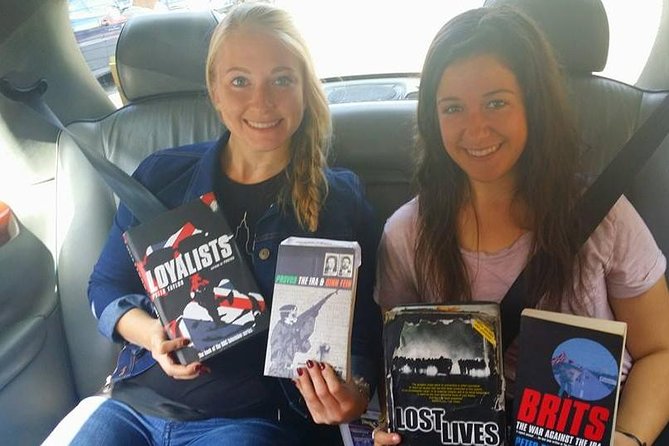
This is not a random mural tour. It is a deliberate arc across Belfast’s political geography, with a mix of nationalist, loyalist, and international themes.
It typically starts at the Bobby Sands Mural area on the Falls Road side, then moves through peace wall space, an international mural wall with global solidarity themes, and then toward major sites tied to peace efforts. It ends on Shankill Road, the loyalist heart of the city, where murals on gable walls carry stories of the UDA and UVF.
Why that arc matters: you can see how “peace” is not one idea in Belfast. It is negotiated, argued, painted, and remembered in different languages depending on the street you stand on.
Stop 1: Bobby Sands Mural and the Falls Road Background
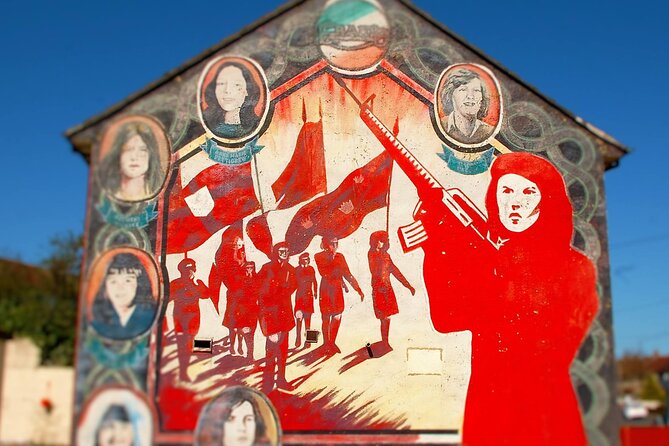
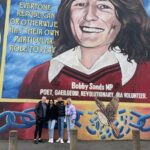
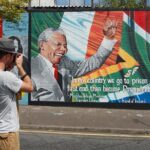
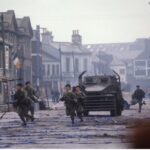
The first stop is the Bobby Sands Mural, with a guide-led explanation tied to the Falls Road area. You will hear about it as a birthplace-linked reference point for the Provisional IRA, and also about the events of 15 August 1969, including the burning of Bombay Street.
This stop is where I’d tell you to slow down. Murals like this are often photographed fast, but the meaning is in what the guide connects around them: symbols, timing, and why certain locations became rally points.
What to watch for: you are not just looking at one image. You are looking at a signal saying that this wall is part of a long argument about identity and struggle.
A drawback to consider: this stop is emotionally heavy by nature. If your group wants lighter humor all the way through, you might still get warmth from the guide, but the topic will not get “light” just because you want it to.
Stop 2: Peace Walls and Writing Your Own Peace Message
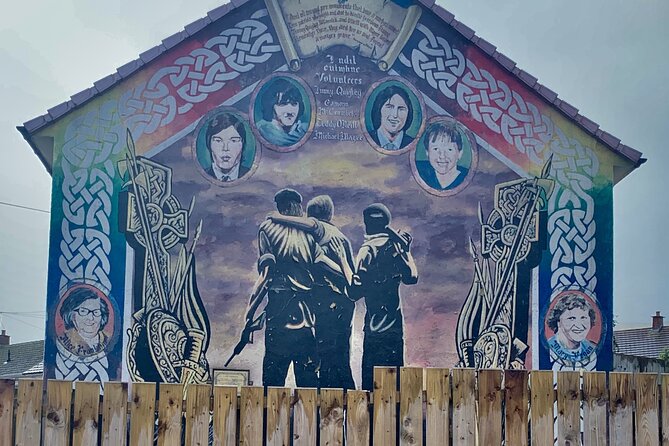
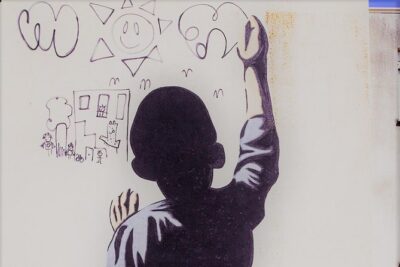
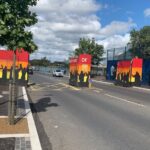
Next up is a peace wall stop, with a short look at how these walls cross the city “like a chess board.” This is one of the most visual moments of the tour because you can actually grasp the scale in person.
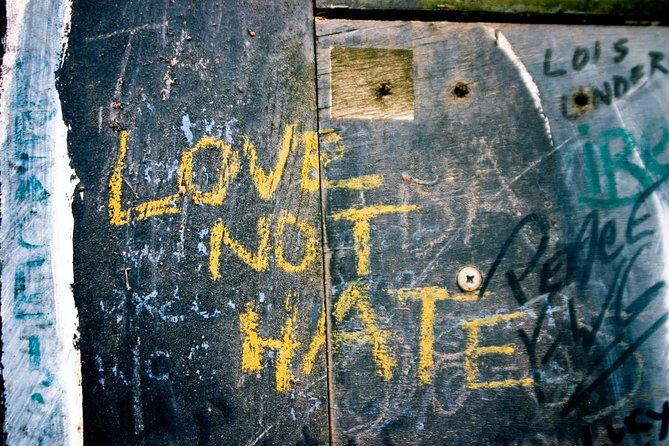
You will also be invited to write a quote on the walls, using peace-themed words connected to a list of stars and presidents who have been quoted on peace. That small activity does two useful things:
- It turns passive watching into an active moment.
- It makes the wall feel less like a barrier and more like a statement people keep trying to rewrite.
Time here is short (about 15 minutes), so plan to arrive ready to focus. If you spend that time chatting with your group about lunch, you may miss the explanation that gives the wall its power.
Stop 3: Divis Street International Mural Wall and Global Solidarity
The tour then shifts to the International Mural Wall on Divis Street, where the theme is nationalist support for causes around the world. You will see support imagery for places and communities including Palestines, Cubians, and Kurds, with over 30 murals.
This stop is valuable because it shows how local politics in Belfast often connect to global politics elsewhere. You are not just learning Belfast. You are seeing how movements borrow each other’s language of solidarity and justice.
Practical tip: take a quick scan first, then let the guide point out the murals they want you to notice. With over 30, you could end up staring at the wrong ones unless you get a short road map.
The watch-out: this is another emotionally loaded area, just framed through international support themes instead of local sectarian symbols.
Stop 4: Clonard Monastery, WWII Shelter, and Adams–Hume Talks
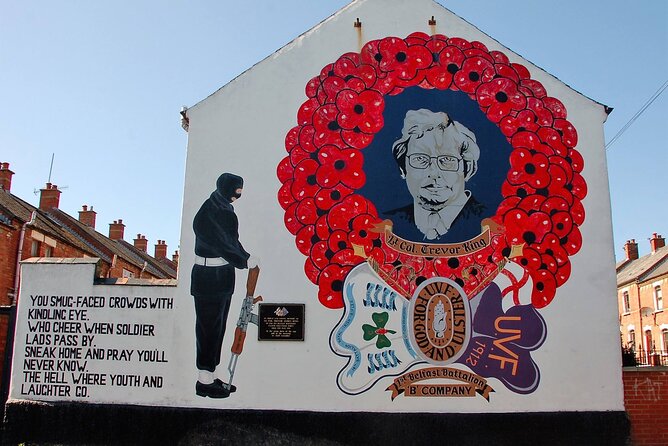
Clonard Monastery is one of the most interesting stops because it combines architecture, wartime survival, and political negotiation.
The building is over 100 years old, and during the Second World War it was used as an air raid shelter. Then it becomes part of peace history through the secret peace talks associated with Gerry Adams and John Hume.
Even if you do not know Belfast politics yet, this stop gives you a key to understand why certain buildings became meeting points. In conflict zones, the neutral spaces are often the places that later become bargaining rooms.
Expect this to be a reflective pause (about 15 minutes). If your group wants to talk afterward, save questions until the guide finishes, because the explanation here is usually dense and worth hearing in one go.
Stop 5: Shankill Road Murals and Loyalist History on Gable Walls
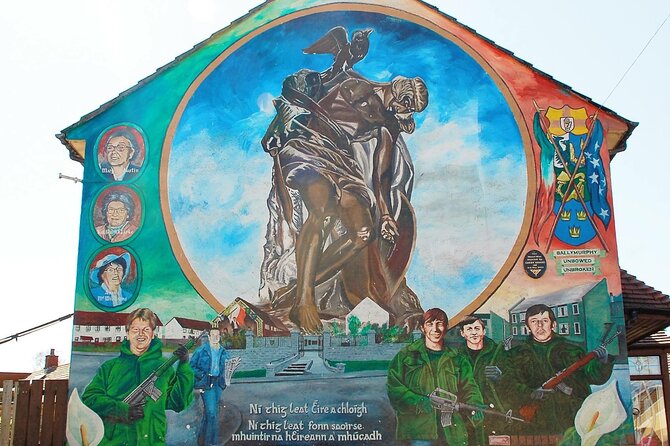
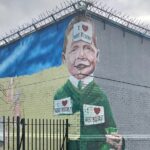
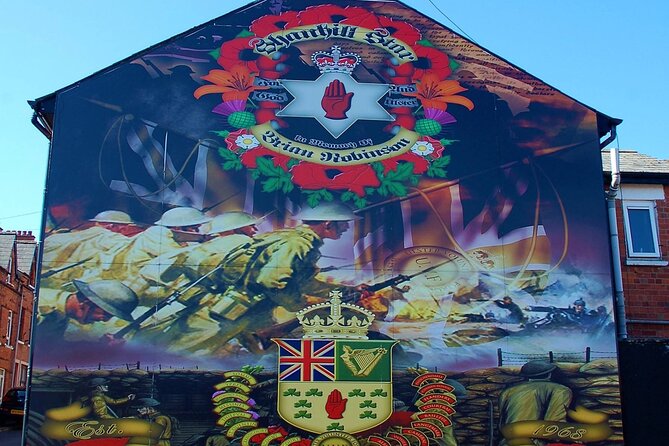
The final stop is Shankill Road, described as the heart of loyalism and linked to the birthplaces of the UDA and UVF. Here the guide focuses on stories and history behind the murals painted on the gable walls.
This part is important for balance. You are finishing on the loyalist side after spending time on the Falls Road context and peace wall viewpoints. It is a reminder that Belfast’s narrative is not one direction; it is contested from multiple streets.
What you’ll likely do in the time here (about 30 minutes) is look at how the murals use symbolism, names, and remembered events to form identity. The guide’s job is to help you read those images without turning everything into a blur.
A consideration: because this area connects to militant groups by name, the atmosphere can feel intense. If you prefer a softer introduction to the topic, you might want a longer tour, but for this format, the route is clearly designed to keep it understandable.
Guide Quality Makes or Breaks This Tour
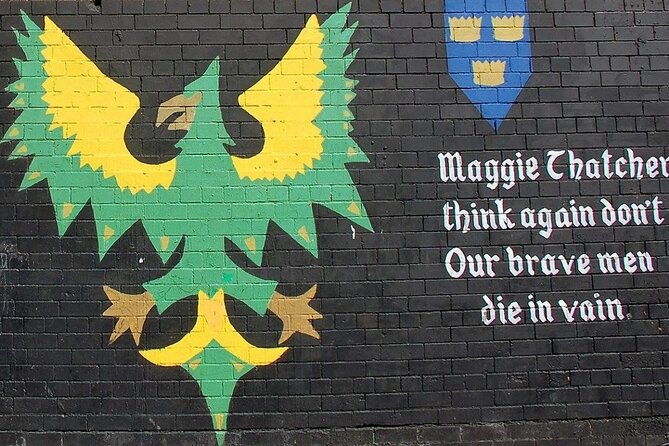
The best experiences here center on the guide. The strongest praise points to two things: friendly delivery and first-hand perspective.
Sean Mc is specifically mentioned as outstanding, with the kind of approach that makes you feel like you’re hearing the story from someone who lived through the upheaval rather than someone reciting it from a book. I like that style for politically heavy tours because it is grounded, but still human.
Also note the tone. One description highlights that the tour is heavy and emotional, but the guide tries to lighten the mood at times. That matters because Belfast politics can make people tense. A guide who balances facts with pacing can prevent the tour from feeling like a lecture you survive.
One more practical note: confirm the vehicle and audio expectations. Despite the tour name, at least one experience has been described as happening in a mini van with a PA system that did not work. You might still get a great guide and great content, but if you need clear audio, ask before you go.
Pickup and Getting There: City Hall Is Your Friend
Meeting logistics are simple if you plan around Belfast City Hall.
- You get free pickup within 1 km of Belfast City Hall.
- The operator can collect you at the front gates of Belfast City Hall.
- Cruise ships do not get direct pickup because the ship is several miles outside Belfast city centre. The cruise shuttle bus drops you near Visit Belfast, which is across the street from City Hall, and then you can connect from there.
For airports and trains, pickup is not automatic for every location. The information you have says pickup from airports, stations, and cruise ship ports is not included, but surcharges may apply on the day in cash for train/airport/cruise pickup arrangements. In plain terms: if you want the easiest start, aim to get to the City Hall area.
If you are using public transport, that’s also a plus. The tour is described as near public transportation, so you can often build a simple route without needing a taxi before you even start.
How to Prepare: What to Bring and What to Expect
This is a political tour, so you should expect topics to be intense and emotional. You will be looking at symbols that can mean different things depending on the person standing beside you.
What I’d suggest you bring:
- A jacket or layers. Two hours includes time outside at multiple stops.
- A willingness to listen even when you disagree. The point is understanding, not winning.
- Comfortable shoes. The stops are short, but you still move around.
What to expect:
- Short stops that add up (about 30 + 15 + 15 + 15 + 30 minutes).
- Lots of guided explanation tied to each location.
- A shift from local history to peace themes to international murals, then back to loyalist storytelling.
Who This Tour Suits Best (and When It Might Not)
This tour is a good fit if you want:
- A guided, politically informed walk/ride in a tight time window
- Mural and peace wall viewing with interpretation
- A guide who can connect events and symbols, like Sean Mc’s first-hand style
It may not be ideal if:
- Your group wants a classic vehicle experience from a “Black Taxi” name with no questions asked
- You need very light subject matter. This is heavy at times, even when the guide adds humor to balance it
If you are in Belfast for a short visit and you want one structured political perspective, this is the kind of tour that gives you bearings fast.
Should You Book This Political Black Taxi Tour?
I think this is worth booking if you care about context and you want to understand why Belfast looks the way it does at street level. The strong rating, the emphasis on explanation, and the route that covers both community narratives add up to real value—especially if your time is limited.
Before you pay, do two quick checks:
- Ask what vehicle you will ride in and whether the audio setup will work clearly.
- Plan your pickup around Belfast City Hall so you avoid surprises, especially if you are coming from cruise schedules.
If you do those two things, you should end the tour knowing Belfast is not just buildings and murals—it is a living argument written in paint, brick, and memory.
FAQ
How long is the Belfast Political Black Taxi Tour?
It runs for about 2 hours.
Is this tour private?
Yes. It is a private tour/activity with only your group participating.
What is the price per person?
The price is $137.78 per person.
Where does pickup happen?
There is a free pickup within 1 km of Belfast City Hall. The operator can collect you outside the front gates of Belfast City Hall. Pickup from airports and train stations is not included, and any related surcharges are paid on the day in cash only.
Do they pick up from cruise ships?
No. The operator notes that cruise ships are several miles outside Belfast city centre. Instead, the cruise shuttle bus leaves you outside Visit Belfast, across from City Hall, and you can connect from there.
What stops are included on the tour?
The tour includes stops at Bobby Sands Mural, a Peace Wall area, the International Mural Wall on Divis Street, Clonard Monastery, and Shankill Road.
Are admission tickets included?
No. The stops list says admission ticket not included.
What language is the tour offered in?
The tour is offered in English.
Is the tour suitable for children or service animals?
Children must be accompanied by an adult. Service animals are allowed.
Is there a cancellation option if I change plans?
Yes. You can cancel for free up to 24 hours in advance for a full refund.