REVIEW · BOGOTA
Graffiti Tour: a fascinating walk through a street art City
Book on GetYourGuide →Operated by Capital Graffiti Tours · Bookable on GetYourGuide
Street art in Bogotá tells the truth. This 150-minute Graffiti Tour by Capital Graffiti Tours takes you through the city’s street-level storytelling, including the tallest illegal graffiti in the country and a section heavy with political posters tied to current social issues.
I love how the art isn’t treated like decoration. It’s presented with context—city history, the present peace process, and what people hope for next. The community side also sticks: you see resilience in the face of false positives, not just paint on walls.
One thing to consider: this walk leans political and social. If you want purely aesthetic street art with zero edge, you might feel the tone is sharper than expected.
In This Review
- Key things you’ll notice on this Bogotá graffiti walk
- Starting on Carrera 6 by the Gold Museum
- The tallest illegal graffiti stop: why it hits so hard
- Political posters on social issues: reading the street like a newspaper
- Peace-process stories and the hope angle you might miss
- False positives and community resilience: the human part of graffiti
- How the guides teach you to see techniques and sources
- Value and pricing: why $15 can be fair, not just cheap
- Shared option vs private or small groups: choose your comfort level
- Practical tips that make the 150 minutes easier
- Who this graffiti tour is best for
- Should you book Capital Graffiti Tours?
- FAQ
- Where does the tour meet?
- How long is the Graffiti Tour?
- What does the tour cost?
- What can I expect to see?
- Are the guides available in English?
- What languages are offered?
- Is the tour wheelchair accessible?
- Can I book a shared tour?
- Is there a requirement about valuables?
- What’s the cancellation policy?
Key things you’ll notice on this Bogotá graffiti walk
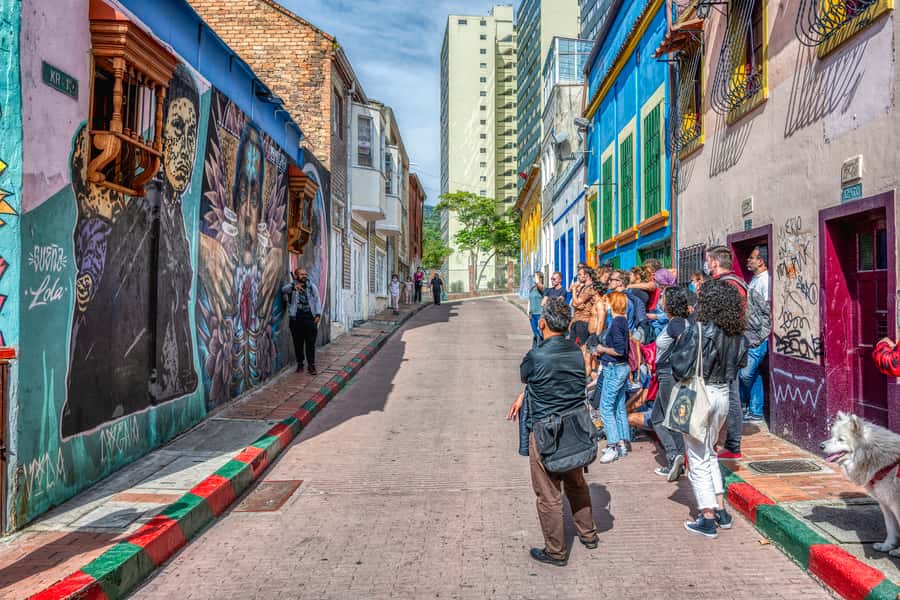
- Tallest illegal graffiti in Colombia: a real-world example of street art’s risk and reach
- Political posters on current social issues: art used as public messaging
- Stories behind the art: history and the present peace process explained in plain terms
- Community resilience vs false positives: how people respond when attention turns the wrong way
- Local artists and community leaders involved: the tour connects art viewing with art making
- Purple-hoodie meeting point near the Gold Museum: easy start, clear guide ID
Starting on Carrera 6 by the Gold Museum
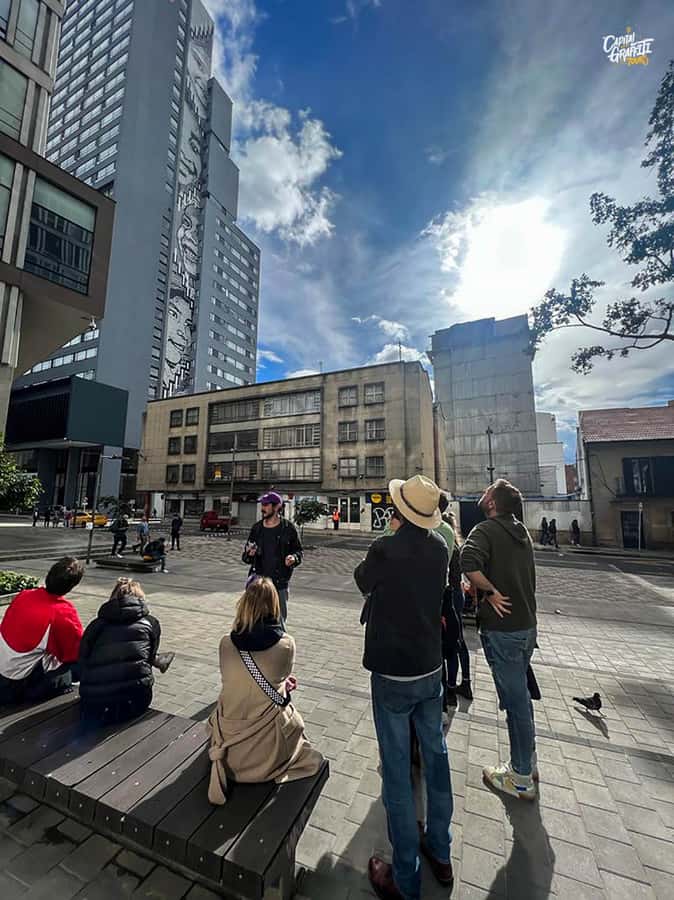
Your tour begins in a spot that’s easy to find and easy to orient around: next to the Gold Museum at Carrera 6 # 15-88. Look for your guide with the Purple Hoodie, Cap, or Umbrella. That detail matters in Bogotá—street scenes can be lively, and you want the meetup to be quick.
Once you’re matched with your guide, you’re off on foot. This is a 150-minute walking experience, so think of it as an “open-air gallery” you move through. The pacing is built for learning, not just photos: you’ll stop, look closely, and hear the story behind what you’re seeing.
I like that the guides are framed as working artists and promoters, not just people who point and name. They’re there to connect the walls to culture, politics, and geography—so you’re not left guessing why certain murals look the way they do.
You can also read our reviews of more tours and experiences in Bogota.
The tallest illegal graffiti stop: why it hits so hard
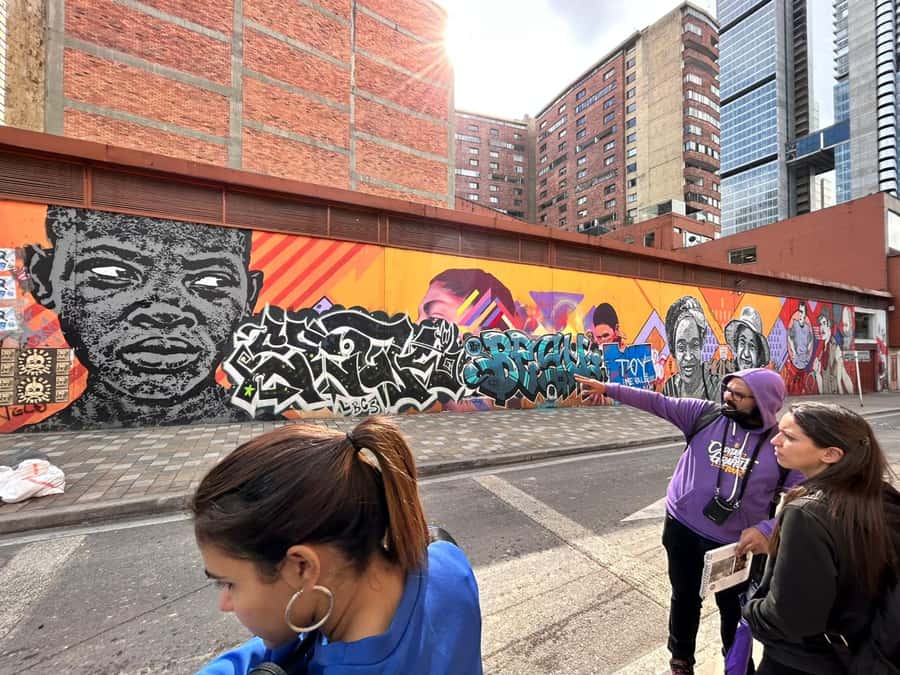
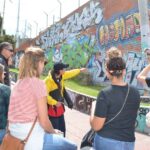
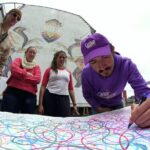
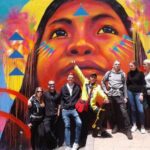
One of the headline moments is also the most dramatic: you’ll witness the tallest illegal graffiti in the country. Even if you’re not a hardcore graffiti fan, this kind of site tends to grab your attention fast. It’s big enough to become a landmark, but it exists precisely because it wasn’t officially approved.
What makes this stop valuable is the balance. You’re not only looking at scale; you’re learning how street art works as a form of pressure, memory, and identity. Illegal doesn’t mean random here. Your guide should help you understand the intention behind the work and what it means for the neighborhood and the people who live around it.
Possible drawback: because the tour explicitly centers on illegal street art, the conversation may feel uncomfortable if you dislike conflict themes. If you’re okay with that, you’ll probably find this stop the most memorable.
Political posters on social issues: reading the street like a newspaper
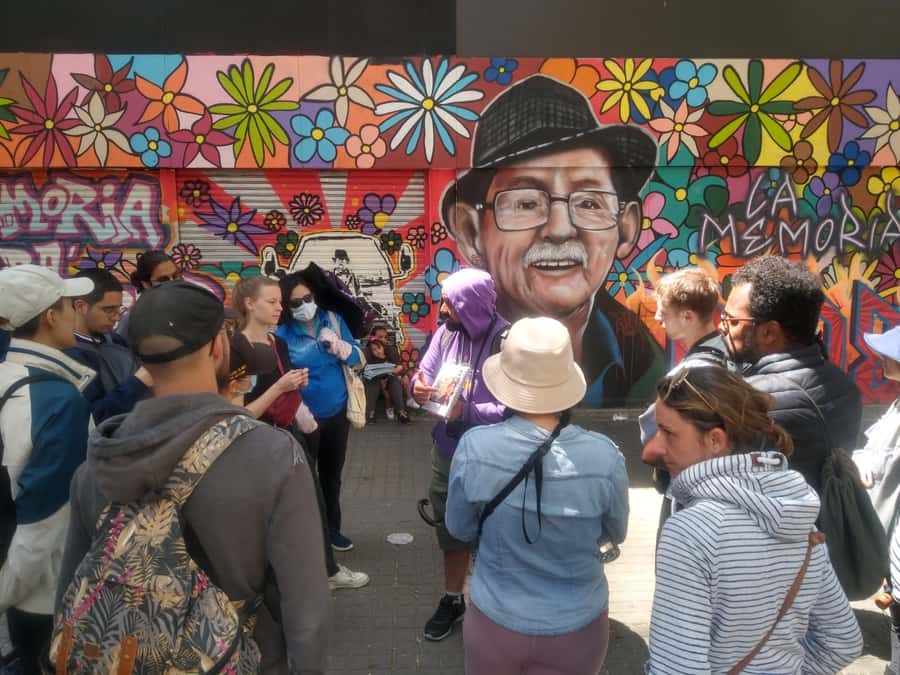
Another major focus is an area with political posters addressing current social issues. This is the part where street art stops being only visual and starts acting like public commentary.
Here’s what you’ll likely get out of it: you’ll learn how to “read” the city. Political poster walls can change the way you think about a neighborhood. They show what people care about right now, what conversations are happening in public, and how messages travel in a place without waiting for official channels.
Your guide should also explain the broader context—the city’s complex past and the ongoing peace process. The goal isn’t to turn you into a political expert. It’s to help you see why people use walls as a megaphone in the first place.
If you’re the type who likes to connect art to real life, this section is where the tour delivers. You leave with a clearer sense of what Bogotá communicates on its streets.
Peace-process stories and the hope angle you might miss
The tour description doesn’t treat Bogotá’s street art as fixed or purely historical. It links what you’re seeing to the present peace process and the city’s aspirations for a better future.
That matters because many visitors expect political graffiti to be only angry or only mournful. This tour nudges you to look for something more layered: art as a record of change and a tool for pushing forward.
Practically, what this means in the walk is that your guide keeps returning to the story behind the imagery. They’ll connect symbols and themes to what’s going on now. You’ll also hear how murals and posters can reflect both grief and hope without needing to spell it out.
If you only skim murals with your phone, you’ll miss part of the point. Give the guide a chance to slow you down. This is one of those tours where you’ll get more by listening than by snapping.
False positives and community resilience: the human part of graffiti
A highlight you shouldn’t gloss over: you’ll watch the resilience of the community in the face of false positives.
That phrase points to a reality of street art that many first-time visitors don’t think about. Sometimes attention gets misdirected. Sometimes interventions happen for the wrong reasons. Sometimes a wall becomes a target when the narrative is simplified.
The tour uses this moment to show what resilience looks like in daily life. It’s not only about artists painting. It’s also about neighbors, community leaders, and local networks responding when things go sideways.
This is where you’ll likely find the emotional payoff. The tour shifts from art-as-object to art-as-social relationship. You come away understanding that walls aren’t just surfaces; they’re where people negotiate identity, memory, and survival.
How the guides teach you to see techniques and sources
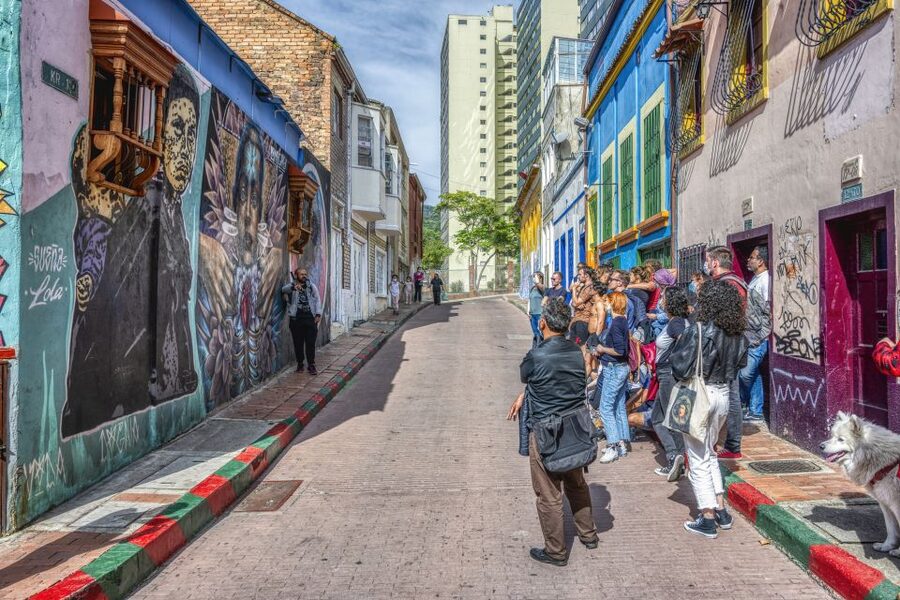
A big reason this tour works is the guide approach. You’ll get experienced English-speaking guides, and the tour is available in multiple languages. The listed languages are English, Spanish, Italian, French, and German, so you should be able to choose the experience that fits your comfort level.
Because guides are described as artists themselves, the talk isn’t limited to politics. They’re also expected to introduce you to different artists and techniques, plus the sources of inspiration behind what you see.
For you, that means two useful things:
1) You learn how to spot technique choices, not just subjects.
2) You understand why context changes the meaning of the work.
A simple example: a piece that reads one way to you at a distance might read differently when the guide explains the historical or cultural reference. That’s the kind of skill that makes your next mural stop more enjoyable, even outside this tour.
Value and pricing: why $15 can be fair, not just cheap
The price is $15 per person, and for a 150-minute guided experience, that’s reasonable. The best value part is how the tour frames the money. In the shared option, what you pay per person is described as covering the suggested tip for the guides and their work, minus the commission.
There’s also an important detail: at the end of the tour, you don’t have to pay anything extra, even if other travelers tip. That removes the awkward end-of-tour pressure that can sometimes pop up on paid walks.
So how do you judge value beyond the dollar amount? Ask yourself what you’re paying for:
- A guided interpretation of murals and posters, not just a walk past them
- Access to local connections and social-impact storytelling
- A tour length long enough to make the learning stick (150 minutes is not a quick drive-by)
For most people, $15 feels like a solid deal if you’re the kind of traveler who enjoys meaning, not only visuals.
Shared option vs private or small groups: choose your comfort level
You can book this as a Shared option, and the tour provider also offers private or small groups.
Shared is often best if you want a lively atmosphere and don’t mind hearing how other people react to the political themes. Private or small groups can be a better fit if you want more time for questions or if you prefer a lower-noise setting.
Either way, the tour includes experienced guiding and multiple street art and graffiti locations. The difference is how much personal attention you’ll likely get.
Practical tips that make the 150 minutes easier
This is a street walk, and the listing includes a clear constraint: valuables are not allowed. That’s a strong hint to travel light. Leave anything you’d hate to lose at home or in your lodging safe.
A few practical moves I recommend:
- Carry only what you need for photos and brief note-taking.
- Wear comfortable shoes. You’ll be moving for 150 minutes.
- Bring a water plan. The tour length can add up under Bogotá’s everyday street conditions.
- If you’re using a phone for translation or reading, keep it secure and minimal.
Also, the guide colors matter. The Purple Hoodie/Cap/Umbrella system is there so you can find each other fast. Take advantage of that and don’t be late—the city waits for no one.
Who this graffiti tour is best for
This tour suits you if:
- You want Bogotá street art with political and social context
- You like learning how murals connect to history and the peace process
- You enjoy art that reflects real community life, not just style trends
- You’re comfortable discussing tough themes like misinformation or misdirected attention, hinted at by false positives
You might pass if:
- You want street art treated as only aesthetic and upbeat
- You prefer museums over walking, because this is very much a city-on-the-move experience
Should you book Capital Graffiti Tours?
If you like street art as communication, not just decoration, I’d book it. The mix of the tallest illegal graffiti, political posters on current social issues, and the human lesson about community resilience makes this more than a photo stop tour.
The main reason to hesitate is the tone: it leans political. If that’s a plus for you, this is a strong value at $15 for 150 minutes. If politics makes you tune out, you may want something more purely visual.
My practical recommendation: book it when you have enough energy to walk and listen. This tour pays off when you let the guide slow your eyes down and help you read what the city is saying.
FAQ
Where does the tour meet?
You’ll meet next to the Gold Museum at Carrera 6 # 15-88. Look for your guide wearing a Purple Hoodie, Cap, or Umbrella.
How long is the Graffiti Tour?
The duration is 150 minutes.
What does the tour cost?
The price is $15 per person.
What can I expect to see?
You’ll explore multiple street art and graffiti locations and see highlights such as the tallest illegal graffiti in the country, an area with political posters on current social issues, and a focus on community resilience in the face of false positives.
Are the guides available in English?
Yes. The tour includes experienced English-speaking guides, and it also lists additional languages.
What languages are offered?
The tour is available in English, Spanish, Italian, French, and German.
Is the tour wheelchair accessible?
Yes. The experience is listed as wheelchair accessible.
Can I book a shared tour?
Yes. You can choose the Shared option, and your per-person payment is described as covering the suggested tip and the guides’ work (minus commission).
Is there a requirement about valuables?
Yes. Valuables are not allowed.
What’s the cancellation policy?
There is free cancellation up to 24 hours in advance for a full refund.