REVIEW · NAPLES
Rione Sanità Tour among Baroque, Revival, Street Art & Food
Book on Viator →Operated by Napoli Official Tour · Bookable on Viator
A neighborhood tour that feels like a story you can walk into. This one threads baroque palaces and street art through the Rione Sanità, then adds real food stops and a catacomb visit so the place doesn’t stay abstract. I especially like the mix of architecture and community themes, and the guide’s English and personable street-level explanations; one small thing to plan for is the exact catacomb/cemetery option can shift depending on what’s open.
For about 2 hours, you get a focused route with multiple “how did this city become this?” moments: Porta San Gennaro as the symbolic entry, two standout Neapolitan baroque buildings, and big hope-and-rebirth landmarks in the churches. It’s also good value at $48.06 because tastings are included and the max group size is small enough to keep it personal.
In This Review
- Key points to know before you go
- Rione Sanità: why this Naples walk is worth your time
- Porta San Gennaro: the symbolic start and the catacomb angle
- Entering the alleys: murals, churches, and real Neapolitan contradictions
- Palazzo San Felice and Palazzo dello Spagnolo: reading Neapolitan baroque at street level
- Piazza Sanità and the church-and-street rebirth story
- Fried pizza tasting in Piazza Sanità: what’s included and why it’s smart
- Santa Maria della Sanità: regeneration, street culture, and the Veiled Son
- Poppella for fiocco di neve and espresso: a sweet finish that fits the route
- Price and logistics: what $48.06 buys you
- The guide factor: what makes the experience feel personal
- Who should book this tour (and who might skip it)
- Should you book this Rione Sanità tour?
- FAQ
- How long is the Rione Sanità tour?
- What does the tour cost?
- What language is the tour offered in?
- Where do I meet and when does it start?
- Is the ticket mobile?
- What tastings are included?
- Do catacombs definitely happen on the tour?
- How big is the group?
- Can I cancel for free?
Key points to know before you go
- Rione Sanità beyond the postcard route, with murals, churches, and everyday details in the same walk
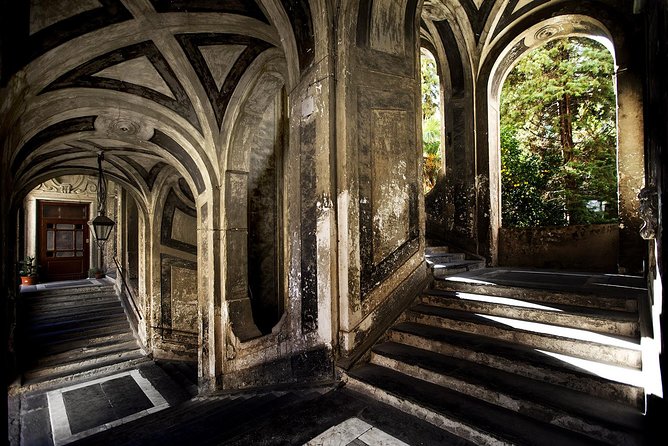
- Two baroque palaces: Palazzo San Felice and Palazzo dello Spagnolo, linked to the district’s decay and rebirth
- Catacombs or Fontanelle Cemetery when open, with a practical substitute if the usual option is closed
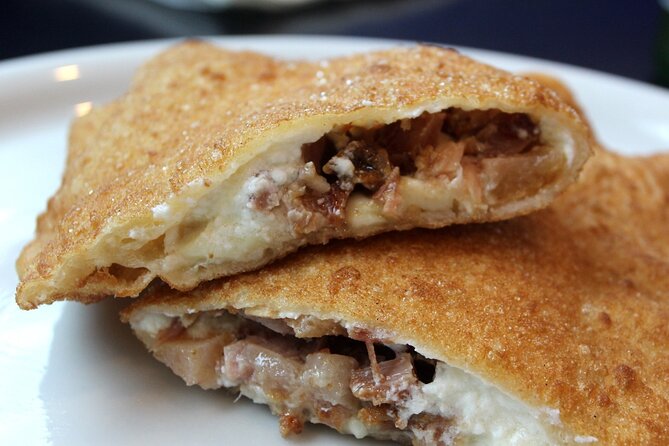
- Fried pizza tasting in Piazza Sanità with cicoli and ricotta cheese plus black pepper and fior di latte
- Santa Maria della Sanità stop focused on neighborhood regeneration, plus major hope-themed religious art
- Finish at Poppella for fiocco di neve pastry tasting and an espresso
Rione Sanità: why this Naples walk is worth your time
Naples is easy to over-consume as “views, views, views.” This tour flips that. You’ll spend your time in one neighborhood—Rione Sanità—where the walls, churches, and street stories talk to each other. The route is built around contrast: baroque artistry next to revival touches, murals beside sacred spaces, and a neighborhood history that leans hard into recovery and reinvention.
What makes it feel practical (not just artsy) is the pacing. You’re not doing a marathon sweep. You get short stops—often 15 to 20 minutes—so you can actually look, ask questions, and connect the dots as you go. And because the tour includes food and a couple of architectural highlights, the time doesn’t drag.
You can also read our reviews of more tours and experiences in Naples.


Porta San Gennaro: the symbolic start and the catacomb angle
You begin at Via Porta S. Gennaro, 35 (start point), right at Porta San Gennaro. This matters because it frames the neighborhood as a place with an identity, not a random maze of lanes. The stop is brief—about 15 minutes—and the goal is to help you start with the right mental map.
From there, the experience is set up to lead you toward the underground story. The tour is designed to include ancient catacombs, with Fontanelle Cemetery offered when it’s open. In real life, opening hours can change, and the tour adjusts. If Fontanelle isn’t available, you may be guided to the San Genero catacombs instead, so you still get the “below street level” component rather than losing the key theme of the tour.
Entering the alleys: murals, churches, and real Neapolitan contradictions
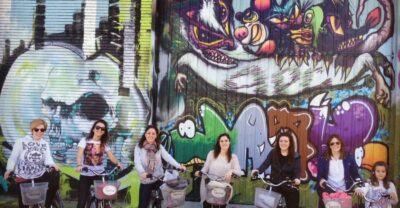
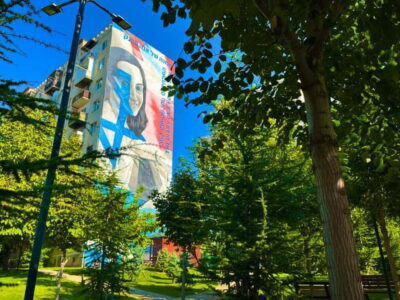
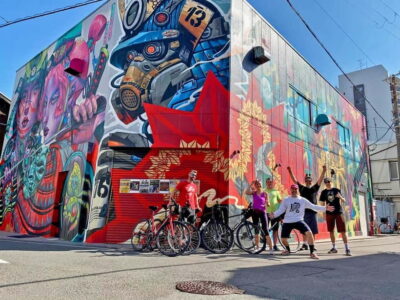
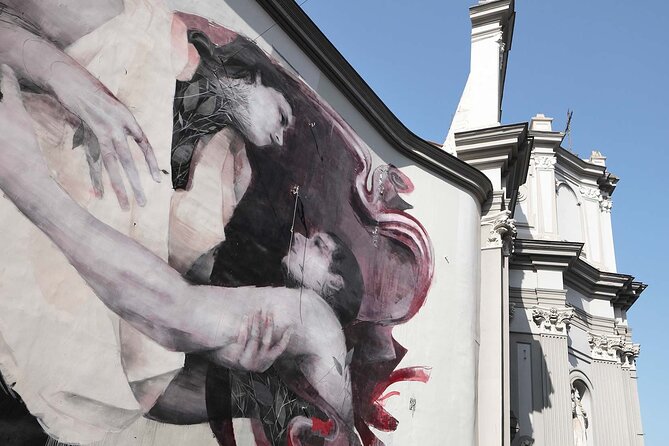
Next you move into the Rione Sanità lanes. This is the part people tend to remember because the visuals feel like a dialogue: murals honoring Totò and Maradona, plus street art alongside baroque church scenes and the “square-to-church” rhythm of neighborhood life.
The tour keeps the stop time around 20 minutes here, which is just long enough to notice details without turning it into a lecture marathon. And the best way to enjoy this section is to slow your gaze. Don’t just look for famous names. Look for how the art and architecture sit next to laundry lines, building colors, and the daily textures of a neighborhood that’s not trying to look museum-clean.
A possible drawback: if you’re expecting everything to be polished and tourist-friendly, this is less that and more authentic neighborhood atmosphere. That’s the point, but it does change the feel.
Palazzo San Felice and Palazzo dello Spagnolo: reading Neapolitan baroque at street level
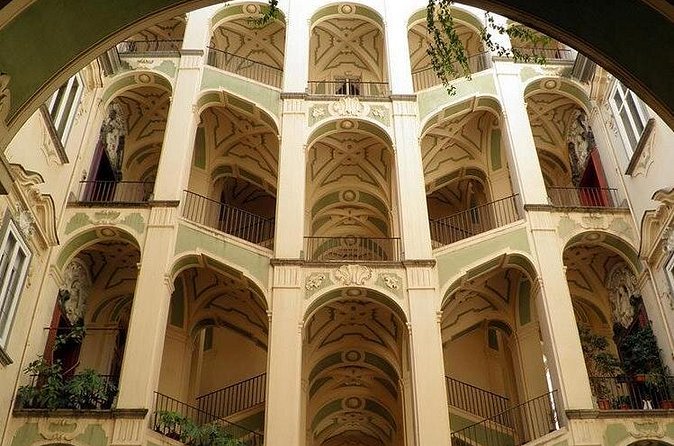
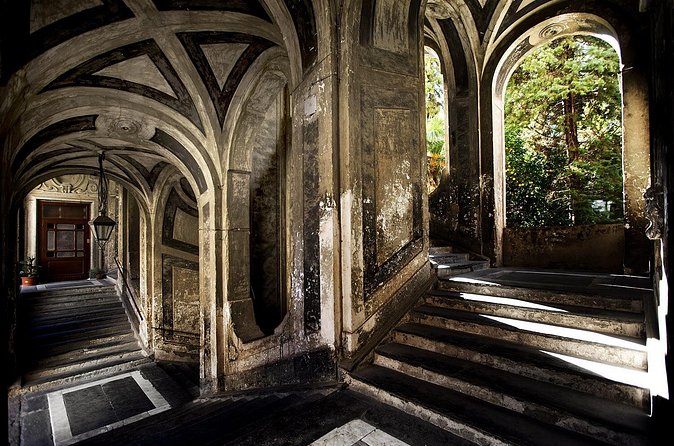
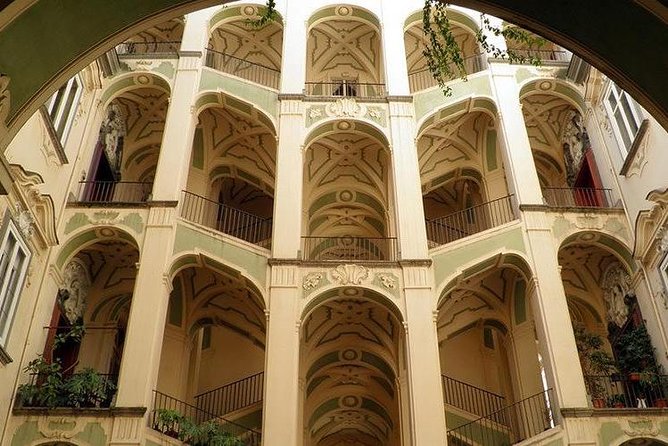
At Palazzo Dello Spagnolo (with time for the buildings), you get the architectural backbone of the area: Palazzo San Felice and Palazzo dello Spagnolo. The tour frames them as “twin architectures,” and the story you’re guided through connects them to the district’s cycle of decay and rebirth.
Why this is valuable is simple: you stop treating baroque as a style you just “admire from outside.” You learn how these palaces function as symbols for the neighborhood’s turning points—what was built, what fell into neglect, and what the community aims to rebuild.
You’ll get about 15 minutes at this stop, so you won’t leave an expert in architectural terms—but you will walk away with a clear sense of what you’re looking at and why it matters here.
Piazza Sanità and the church-and-street rebirth story
After the palaces, the tour returns to the Rione Sanità area for another 20-minute stop that’s less about monuments and more about meaning. This is where you’ll hear the tour expert’s interpretation of a community symbol, then transition into the visual cues around you: churches, laundry hung out to dry, and the color language of the district.
The tone is not doom and not cheerleading. It’s the practical idea that renewal is visible in the small things—art, repairs, and shared spaces. If you like guided storytelling, this is one of the best moments because it turns “what you see” into “why it exists,” without getting so academic that you lose the street context.



Fried pizza tasting in Piazza Sanità: what’s included and why it’s smart
Before you move deeper into the religious-art stops, you’ll take a pause in Piazza Sanità, 11 for tasting. This is one of the most “you can’t fake this” Naples touches.
You’ll try fried pizza, made with a mix of cicoli and ricotta cheese, black pepper, and fior di latte. You get this as a built-in tasting stop, not a suggestion you have to track down yourself. That’s a big part of the value here: you’re not spending time hunting for a place, and you’re getting the taste framed in a neighborhood context.
Timing is about 15 minutes. It’s enough to eat without turning your hunger into a distraction for the next stop.
Santa Maria della Sanità: regeneration, street culture, and the Veiled Son
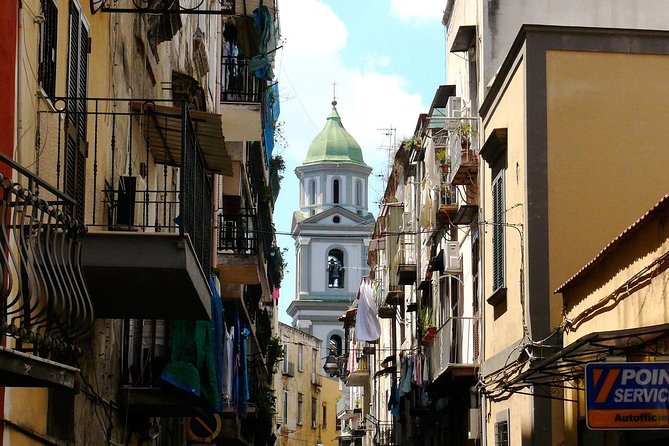
The tour then heads to Santa Maria della Sanità for a stop designed around regeneration. The guide explains the struggle of a social cooperative involved in rebuilding the neighborhood, and you’ll see that theme repeated in the surrounding cultural signals.
Expect a lot of “hope markers,” including street art and books for everybody in an alley of culture. Then the tour adds a religious-art landmark: the sculpture called the Veiled Son in the basilica of San Severo outside the walls. The guide also points you to the Nativity scene in the basilica of Santa Maria alla Sanità, presented as a symbol of hope and universal integration.
This is the section where the tour feels most different from a standard highlights walk. You’re not just looking at buildings. You’re learning how art, community work, and spiritual imagery reinforce each other in the same neighborhood.
Poppella for fiocco di neve and espresso: a sweet finish that fits the route
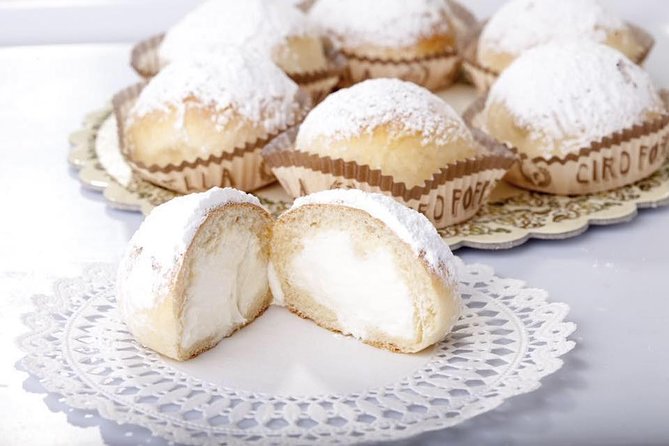
The final stop is Annarè – il Gelato di Poppella, with about 5 minutes set aside for a sweet tasting of fiocco di neve (also called fiocco di neve in the tour description) at the pastry shop, plus real Neapolitan espresso.
Short tasting stops can feel rushed on some tours, but this one works because it’s last. You finish the story of the neighborhood with the kind of everyday pleasure Naples is famous for, and you don’t have to worry about ending somewhere far away. The tour ends back at the meeting point, so it’s easy to continue on your own after.
Price and logistics: what $48.06 buys you
At $48.06 per person for about 2 hours, this tour is priced like a half-day experience with tangible add-ons. The big value piece is not just the guide—it’s the included tastings: fried pizza and the fiocco di neve sweet plus espresso. That lowers the “extra spending” risk compared with tours where the food part is optional.
It’s also a small-group format. The tour lists a maximum of 20 travelers and operates in English, using a mobile ticket. Small group matters here because the tour is partly about listening—street stories, community themes, and the guide’s explanations need a bit of air time. If you want lots of Q&A and real interaction, this format supports that.
One logistics note: there’s no transportation included. This is a walking tour, so you’ll want comfy shoes and a water plan. If you’re hoping for a vehicle-based tour, this one isn’t built for that.
The guide factor: what makes the experience feel personal
The strongest thing about this experience is the way the guide connects visuals to everyday life. The tone is friendly and conversational, with solid English, and you’ll have chances to talk about how people experience Naples beyond the main tourist magnets.
In practice, that means the neighborhood doesn’t feel like a set of “things to see.” It feels like a place with routines. Even the architecture stops land better because you’re getting context, not just descriptions.
Who should book this tour (and who might skip it)
This is a great fit if you:
- want Naples off the busiest routes without giving up structure
- enjoy a blend of street art, baroque architecture, and neighborhood history themes
- like your tours to include food in a way that feels local (fried pizza plus fiocco di neve)
- prefer a guide-led walk where questions make sense
You might consider a different tour if:
- you strongly want only major “big-ticket” attractions and don’t care about community-level storytelling
- you dislike walking through crowded alleys, since the route is designed around neighborhood lanes and squares
- you’re counting on a specific underground site being open every day (the tour aims for catacombs or Fontanelle when open, with a substitute when needed)
Should you book this Rione Sanità tour?
If you’re spending time in Naples and you want something more grounded than the usual postcard sprint, I’d book it. The combination of baroque palaces, street art, and a church-and-cooperative rebirth message creates a tour that feels meaningful without getting heavy or preachy. And the included tastings are the kind of small win that makes the price feel fair.
Just go in with the right mindset: this is a neighborhood walk. The payoff is seeing how the city’s art and identity show up in daily life, not just in monuments. If that’s your style, this one is an easy yes.
FAQ
How long is the Rione Sanità tour?
It runs for about 2 hours.
What does the tour cost?
The price is $48.06 per person.
What language is the tour offered in?
The tour is offered in English.
Where do I meet and when does it start?
You meet at Via Porta S. Gennaro, 35, 80138 Napoli NA, Italy. Start time is 1:00 pm, and it ends back at the meeting point.
Is the ticket mobile?
Yes, the tour uses a mobile ticket.
What tastings are included?
You get a fried pizza tasting and a sweet tasting of fiocco di neve, plus real Neapolitan espresso with the sweet stop.
Do catacombs definitely happen on the tour?
The tour includes ancient catacombs, or Fontanelle Cemetery when it’s open. If Fontanelle is closed, the tour can use an alternate catacomb option.
How big is the group?
The tour has a maximum of 20 travelers and operates as a small-group experience.
Can I cancel for free?
Yes. You can cancel up to 24 hours in advance for a full refund. If you cancel less than 24 hours before the start time, the amount paid is not refunded.