REVIEW · NAPLES
Naples: Street Art & History Tour in the Spanish Quarters
Book on GetYourGuide →Operated by Naples bay tour · Bookable on GetYourGuide
Walls in Naples tell you the city’s secrets. This street art and history walk through the Spanish Quarters brings you into the tight lanes where murals, daily life, and neighborhood memory all sit side by side, including the famous Maradona murals.
I really like how the guide turns what looks like random graffiti into street-level storytelling—from local legends to World War II scars and the way the area changed over time. My other favorite part is the pacing: you get a structured guided walk, plus a chance to stop and look closely at the Maradona wall before you head out again. The main consideration is simple: it is a walking tour in narrow alleys, so bring comfortable shoes and plan to stay on your feet for the full stretch.
In This Review
- Key takeaways before you go
- Entering Piazzetta Matilde Serao: where the maze starts
- The 100-minute guided walk in Quartieri Spagnoli
- What your guide should help you notice
- A practical pacing note
- The Maradona mural stop: why Diego is everywhere
- Hidden corners, tucked-away churches, and workshop-style streets
- How World War II history shows up on the route
- What about the guides: why the storytelling sticks
- Price and value: is $24 for 2 hours worth it?
- Practical details that make the tour easier
- Who this Spanish Quarters tour is best for
- Should you book this tour?
Key takeaways before you go
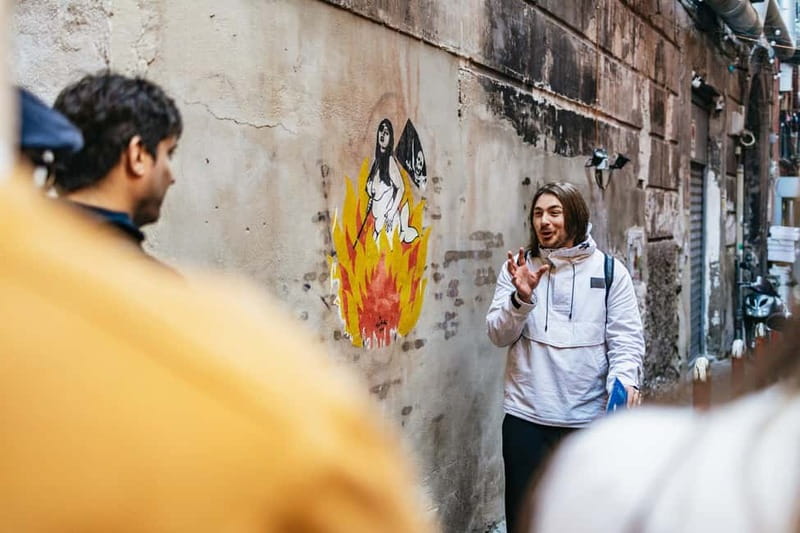
- Spanish Quarters street art as history in plain sight: murals are tied to neighborhood life, not just aesthetics
- Maradona murals and local pride: you’ll get the cultural reasons behind the Diego imagery
- A licensed local guide with real stories: guides are repeatedly praised for energy and answering questions without rushing
- Hidden corners beyond the postcard route: you’ll hear about spots like lesser-known churches and artisan/workshop-style areas
- World War II context in the middle of the walk: resilience and neighborhood evolution show up as you move through the streets
Entering Piazzetta Matilde Serao: where the maze starts

Your tour begins at Piazzetta Matilde Serao, 2, and that matters more than it sounds. Spanish Quarters navigation is part of the experience; you’re not lining up at a big monument and staring at a brochure. Instead, you start in a real pocket of neighborhood space, then step into the maze where Naples feels lived-in.
This is the kind of start that helps you relax fast. Once you’re with a licensed local guide, you stop thinking about directions and start noticing things: the placement of murals on particular walls, the way alley corners frame faces, and how everyday routines unfold around street art. It’s also a good choice on a first or second day in Naples because it gives you a reference point for later wandering.
You can also read our reviews of more tours and experiences in Naples.


The 100-minute guided walk in Quartieri Spagnoli
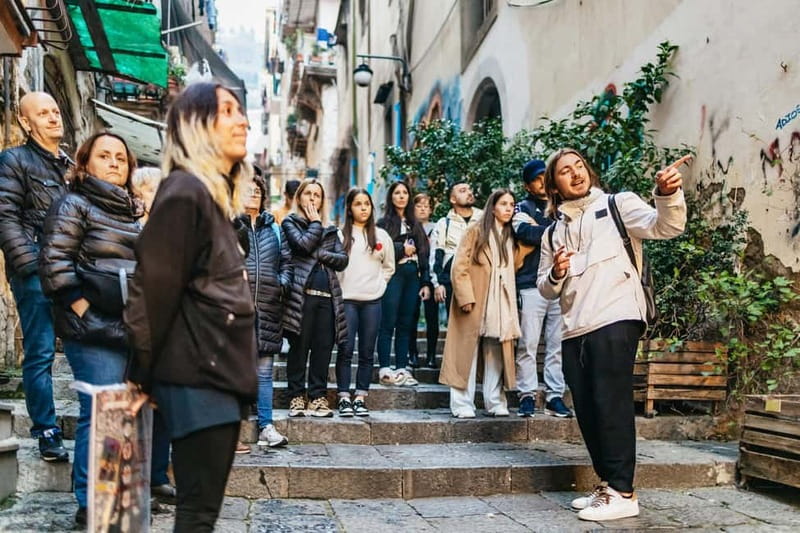
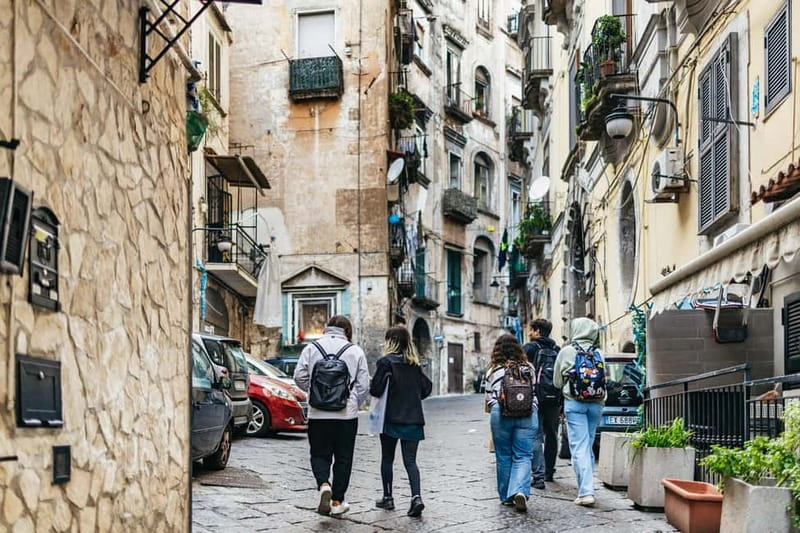
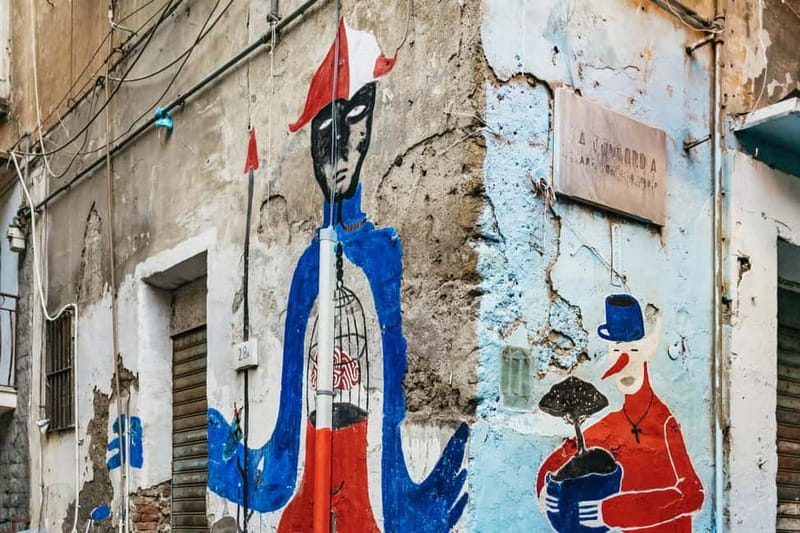
The heart of the tour is the guided portion in the Quartieri Spagnoli area, lasting about 100 minutes. You’ll walk through narrow streets and alleyways where you can spot everything from colorful mural styles to sharper, message-driven pieces. The guide connects those images to neighborhood stories, so you’re not just collecting visuals—you’re learning why certain themes keep reappearing.
What I like here is how the tour blends art history with human history. Naples isn’t treated like a museum city. Instead, you hear how the Spanish Quarters developed and what life was like through tough times, including the area’s World War II struggles and resilience. Even if you already know the basics of the war, getting that context while looking at walls changes how you read the streets.
What your guide should help you notice
A strong guide makes you look at details you would miss alone. On this walk, that often means:
- Understanding how locals interpret symbols, not just what the paint shows
- Hearing legends tied to the neighborhood’s identity
- Learning how older layers of the area’s past show up in modern streets
Some guides are praised for being energetic and funny, like Angelica, Manuela, Pasquale, and Stefano, while others stand out for calm question-answering and careful pacing, like Simone. Different personalities, same goal: help you connect murals to the place that produced them.
A practical pacing note
Because it’s a small group walking tour, you’re close enough to the guide to ask questions, but still moving at a neighborhood speed. You might find the walk more comfortable if you treat it like a stroll with stops, not a power-hike. Still, you’ll want those comfortable shoes—the Spanish Quarters are compact, and you’ll be on your feet the whole time.
The Maradona mural stop: why Diego is everywhere
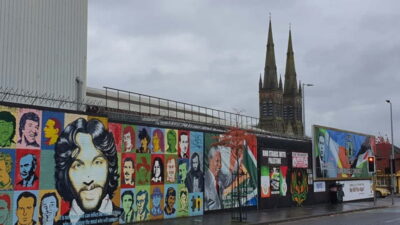
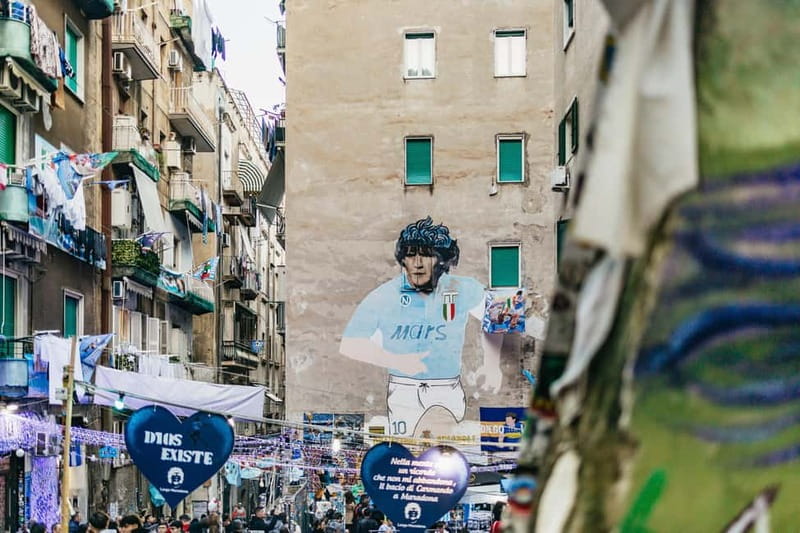
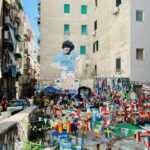
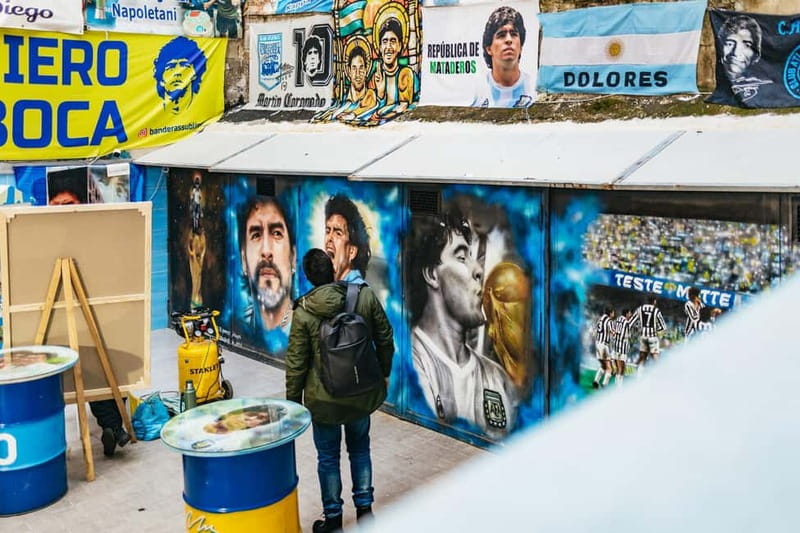
After the guided portion, you’ll reach the Murales Maradona area, with about 20 minutes of free time there. This is the moment the tour is built around. The Diego Maradona murals aren’t just celebrity art; you’ll learn how he functions as a Neapolitan symbol—a shorthand for pride, identity, and local belonging.
In my view, this stop is where the walking tour pays off most. In a regular street art walk, you might see a famous face and move on. Here, you’ll have context first, so your attention turns more thoughtful: the style choices, the placement, and the emotion people attach to the image.
If you like museums, you’ll appreciate the structure. If you like street photography, you’ll appreciate the timing. Either way, that 20 minutes is enough to slow down, look, and take in the wall before you’re pulled along again.



Hidden corners, tucked-away churches, and workshop-style streets
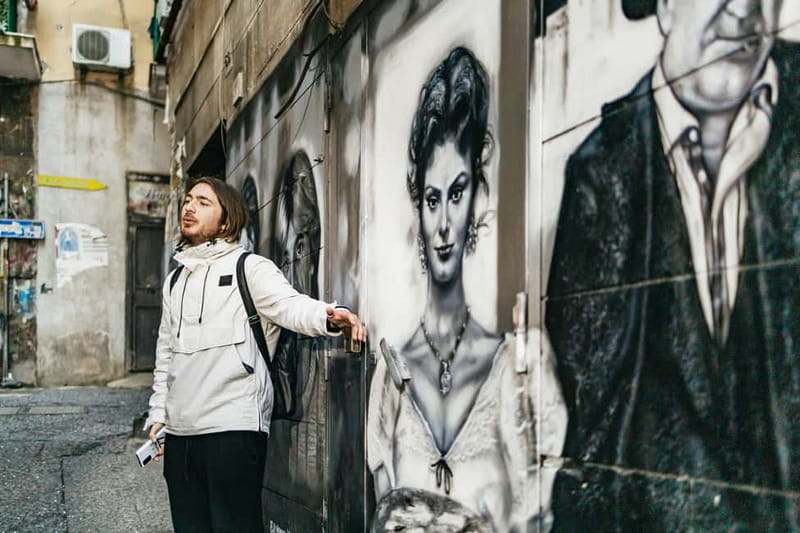
One of the best arguments for doing this with a guide is that Spanish Quarters exploration can get chaotic fast. The tour leans into that reality by pointing out hard-to-find corners and stories you’re unlikely to stumble upon on your own.
You’ll hear about smaller, tucked-away places—things like lesser-known churches—and you may also get references to artisan and workshop-style areas. The value isn’t that you’re ticking off locations. It’s that you’re learning how Naples connects religion, craft, and everyday street culture in the same small radius.
How World War II history shows up on the route
The tour includes context about Naples during World War II, specifically the struggles and resilience of the city and how the Spanish Quarters evolved. What’s useful is the way it’s tied to what you see while walking. Instead of hearing war as a separate chapter, you hear it as a layer in the neighborhood’s identity.
That matters because Naples street art often carries more than decoration. Murals can hold memory, political feeling, and community pride all at once. When your guide explains that link while you’re standing in front of the wall, the history becomes personal.
What about the guides: why the storytelling sticks
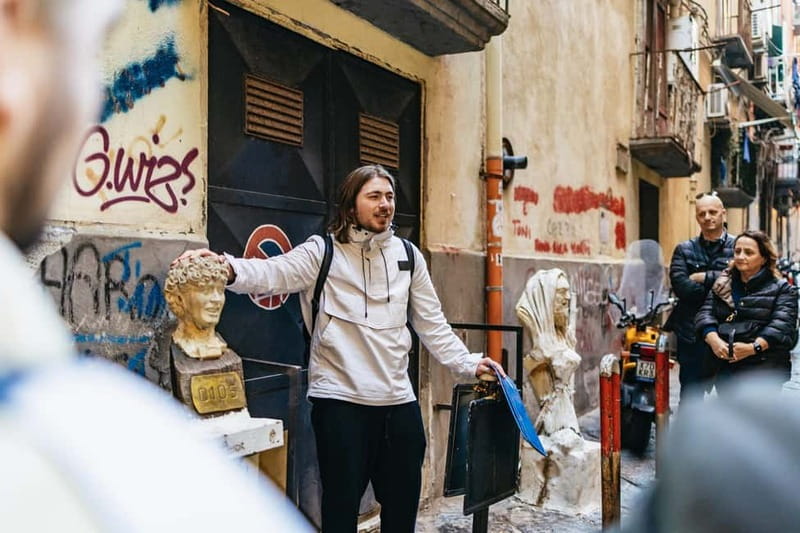
Live guiding is the difference between noticing street art and understanding it. The tour’s high ratings make it clear that guides bring personality and clarity, not just facts.
Here are a few patterns you can expect from the guides who earn praise:
- Simone is noted for answering questions and not rushing
- Barbara blends facts with local-insider humor and ends with food and drink ideas
- Manuela is repeatedly described as warm, funny, and energetic, with helpful neighborhood recommendations
- Valentina stands out as a storyteller who helps you understand the city and the quarter’s development
- Stefano earns points for practical suggestions beyond the murals, like places for lunch and even local authors and poets to look out for
Even if your guide’s style is different, this tour tends to keep the same promise: you get a narrative. You walk away with the sense that the Spanish Quarters aren’t random walls—they’re a lived-in archive.
Price and value: is $24 for 2 hours worth it?
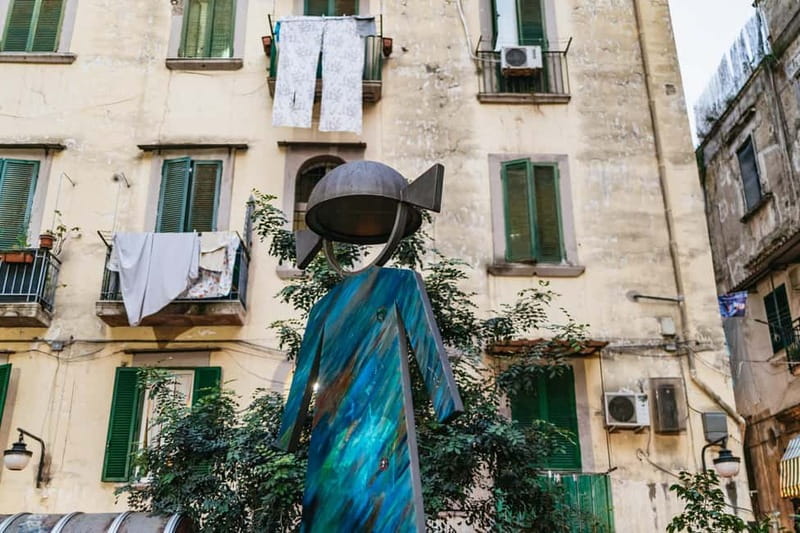
At $24 per person for about 2 hours, this is the kind of activity that works as a “start smart” move. You’re paying for three things that are hard to replicate solo: a licensed local guide, the art-to-history connections, and the help spotting the story behind the walls.
If you’re the type who likes reading street art panels and tracking symbolism, you’ll feel the value quickly. If you mostly want to see pretty pictures with minimal context, you might consider whether you want the guided portion. But the structure here is designed for balance: guided walking first, then free time at the Maradona mural so you can actually absorb what the neighborhood is saying.
Practical details that make the tour easier
A few basics help your experience feel smooth:
- Wear comfortable shoes. You’ll be moving through tight, walkable streets for the full duration.
- Bring sunglasses. Naples light can be intense, and you’ll want to see details clearly as you stop for murals.
- Expect a live guide with options in Italian, English, Spanish, and French.
- The tour is wheelchair accessible, and it’s run as a small group experience.
Printed materials are included too, which can be useful if you like to remember names, symbols, and themes after you leave the street level.
Who this Spanish Quarters tour is best for
This works especially well if you want Naples to feel personal, not staged. I think it’s a smart pick for:
- First-time visitors who want context fast
- People who like street art but want the story behind it
- Travelers who enjoy walking tours that connect place, people, and history
- Anyone interested in why Maradona is woven into Neapolitan identity
If you’re short on time, it’s still manageable at two hours. If you’re not into walking, you might find it too active, since it’s built around moving through the neighborhood lanes.
Should you book this tour?
Yes, if your idea of Naples includes more than sightseeing. Book it when you want to understand why the walls matter in the Spanish Quarters, and you like the idea of learning the meaning behind Maradona murals while also picking up local history, including the area’s World War II context.
Don’t book it if you only want a quick photos stop and don’t care about interpretation. Otherwise, this is a strong, good-value way to get oriented and see street art as a conversation between art and neighborhood life.