REVIEW · NAPLES
Rione Sanità tour among baroque, revival, street art & food
Book on GetYourGuide →Operated by Napoli Official Tour · Bookable on GetYourGuide
Rione Sanità is Naples with its sleeves rolled up. This 2-hour walk takes you through the district’s shift from neglect to street-level pride, mixing Neapolitan Baroque landmarks with revival murals, culture alleys, and real neighborhood stories. I like that the tour reads like a living place, not a museum label, and the art feels personal, right down the alleyways.
One of my favorite parts is how you get to see the neighborhood’s character in the same breath as its masterpieces. Another is the stop for local comfort food that actually tastes like Naples, not a generic tourist snack.
You’ll also get two major Baroque palazzi in a short time, plus the contrast of the area’s decay and rebirth shown in architecture and everyday details like laundry lines. A possible drawback: the streets are old and tight. If you’re sensitive to uneven pavement and lots of looking up, plan for slow, steady walking and keep your expectations flexible.
In This Review
- Key things that make this tour worth your time
- Porta San Gennaro to the alleyway reveal
- The Baroque squares and churches: looking up without rushing
- Palazzo San Felice and Palazzo dello Spagnolo: twins with different scars
- The neighborhood symbol and the human scale of revival
- The Veiled Son and Santa Maria alla Sanità: hope in stone
- Street art meets books for everybody
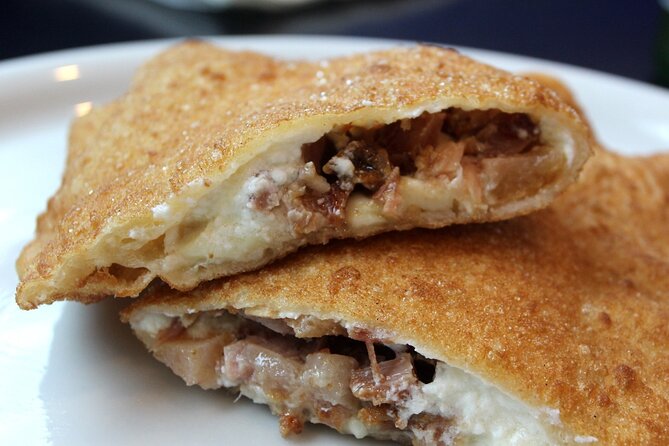
- The food stop: fried pizza and a Fiocco di neve
- Tour vibe, group size, and languages
- Price and value: what you’re really paying for at $47
- Who should book this Rione Sanità walk
- Should you book it?
- FAQ
- Where does the tour start?
- How long is the tour?
- How much does it cost?
- Is transportation included?
- What food is included?
- What languages is the tour offered in?
- What major sights are included?
- What’s the group size like?
- What’s the cancellation policy?
Key things that make this tour worth your time
- Porta San Gennaro start: a symbolic gateway into one of Naples’s oldest districts
- Murals with pop icons: Totò and Maradona show up on the walls in a very Naples way
- Neapolitan Baroque palazzi: Palazzo San Felice and Palazzo dello Spagnolo as architectural bookends
- Stories of cooperative-led revival: the neighborhood’s change has names and motivations
- Culture alleys: street art plus an area where books are for everybody
- Fried pizza and Fiocco di neve: two classic tastes, plus real Neapolitan coffee
Porta San Gennaro to the alleyway reveal
The tour begins at Porta San Gennaro, at Via Porta S. Gennaro, 35. This matters more than it sounds: that gate isn’t just a landmark, it’s the idea of entry. You’re not arriving at a random street corner; you’re stepping into a district with long pride and complicated chapters.
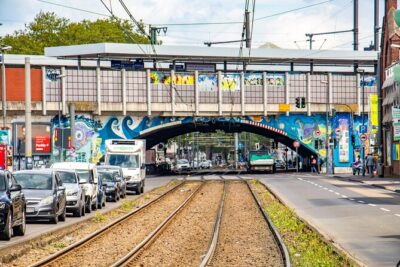
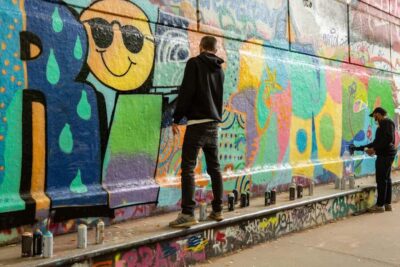
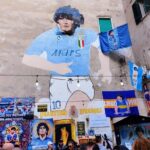
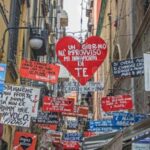
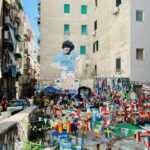
From there, you’ll move into the popular alleys. Expect a fast rhythm of “stop and look” moments—murals, colors, church facades, and little signs of daily life. The standout examples include street art dedicated to Totò and Maradona. They’re not there as a gimmick; they fit Naples because they reflect identity, local humor, and the way pop culture and sacred spaces can sit side-by-side.
If you’re used to Naples that focuses only on grand viewpoints or museum tickets, this shift is the point. You’ll be doing more looking than walking, and it helps you understand how the city’s soul shows up at street level.
You can also read our reviews of more tours and experiences in Naples.

The Baroque squares and churches: looking up without rushing
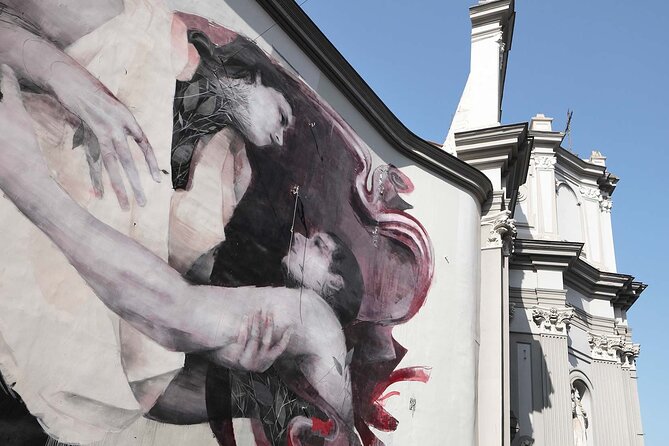
After the initial alley chaos (in the best way), the tour steers you toward the Baroque side of the neighborhood. This is where Naples can feel contradictory—beautiful and worn at the same time—and you’ll see that tension with your own eyes.
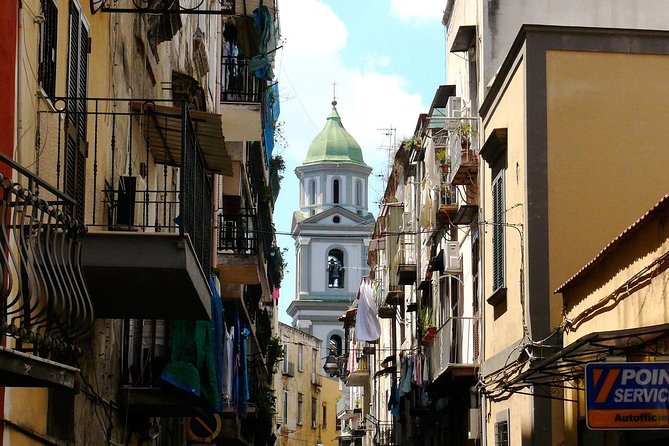
You’ll admire Baroque art in squares and churches, and you’ll also notice the everyday details that tourists often miss: buildings painted in bold colors and laundry hung out to dry. Those everyday touches don’t distract from the art. They add to it. In a district like this, the visual story includes ordinary life, not just grand architecture.
One practical note: the streets and church surroundings can be visually busy. Keep your phone away unless you’re sure you want the shot. Otherwise, you’ll spend the whole tour framing instead of absorbing.
Palazzo San Felice and Palazzo dello Spagnolo: twins with different scars
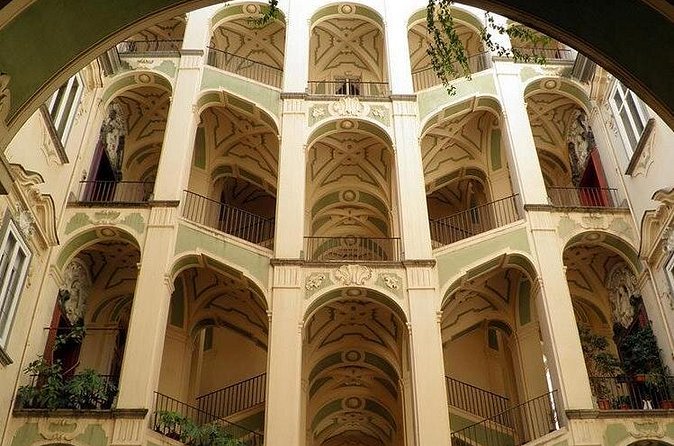
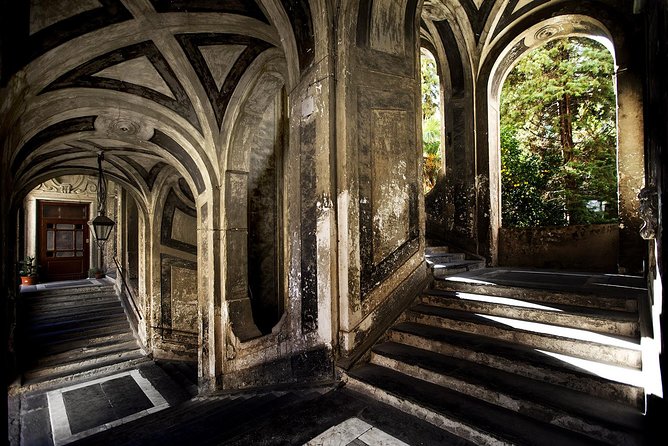
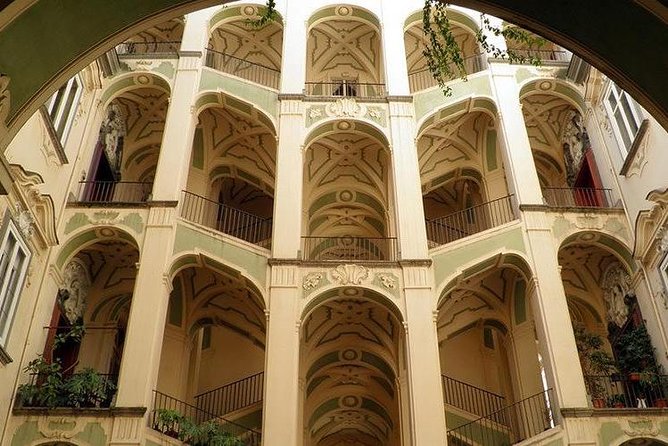
Midway through the walk, you’ll visit two main masterpieces of Neapolitan Baroque: Palazzo San Felice and Palazzo dello Spagnolo. They’re described as “twin architectures,” which is a helpful way to approach them. Don’t just admire the ornament—compare how they stand, how they look, and what the contrast suggests about time, change, and rebuilding.
These palazzi work like visual anchors. In a short tour, they do something important: they prove that this neighborhood isn’t only about hardship or street art. It also held noble power and fine craftsmanship. Then, by keeping the palazzi in your line of sight while the guide explains the district’s decay and rebirth, you get the emotional logic of it: beauty doesn’t erase struggle; it lives beside it.
The neighborhood symbol and the human scale of revival
A key part of the tour isn’t just what you see. It’s what you understand.
Your expert guide will point out a symbol of the community and explain the broader push for regeneration. In plain terms, there’s been a struggle—led by a social cooperative—to regenerate the neighborhood, and you’ll see the desire for rebirth all over the place. That theme isn’t sprinkled in lightly. It becomes the thread that connects murals, public art, churches, and even the way the alleys feel now compared to the past.
I like tours that respect complexity. This one does. It doesn’t romanticize problems, but it also doesn’t treat the neighborhood like a sad backdrop. The story is about people trying to change the streets they live on, and that makes the art land differently.
The Veiled Son and Santa Maria alla Sanità: hope in stone
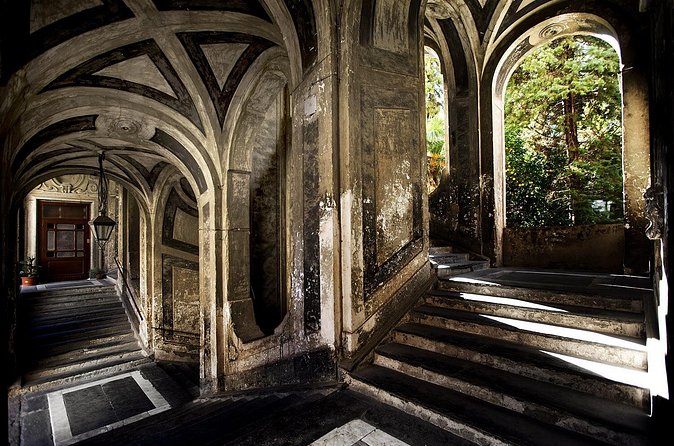
Two religious stops add an emotional punch, because they’re not just “look at the church” moments.
You’ll visit the basilica of San Severo outside the walls, where you can see the sculpture of the Veiled Son. The guide will connect what you’re seeing to the neighborhood’s message of hope and universal integration—so you’re not just staring at a famous work without context.
Then you’ll head to the basilica of Santa Maria alla Sanità to see the fabulous Nativity scene. In this neighborhood, a Nativity scene isn’t only seasonal decoration; it’s a statement. During the walk, the tour’s rebirth theme makes sense here: the message is endurance, inclusion, and a kind of stubborn light.
If you like religion as art and symbol—rather than only as doctrine—this section will stick with you.


Street art meets books for everybody
Naples has its share of street art, but Rione Sanità’s version feels tied to daily dignity. Along the way, you’ll see a mix of murals and a culture-focused corner where books are for everybody. That detail matters because it shows revival isn’t only painting walls—it’s creating access to ideas.
This is one reason the tour feels more grounded than a typical “graffiti and go” walk. The art isn’t floating in space. It’s part of a neighborhood project, and the guide helps you read it that way.
Also, don’t skip the small stuff. The colors of buildings and the layered visual texture of the streets are part of the experience. You’re learning how Naples communicates without needing permission.
The food stop: fried pizza and a Fiocco di neve
Now for the part your stomach will remember.
There’s a tasting of typical fried pizza, handled in take-away style. This is one of those Naples foods that’s simple on paper and perfect in practice: warm, savory, and designed for eating on the move. Since the tasting is included, you don’t have to hunt down a snack place or worry about whether it’s touristy.
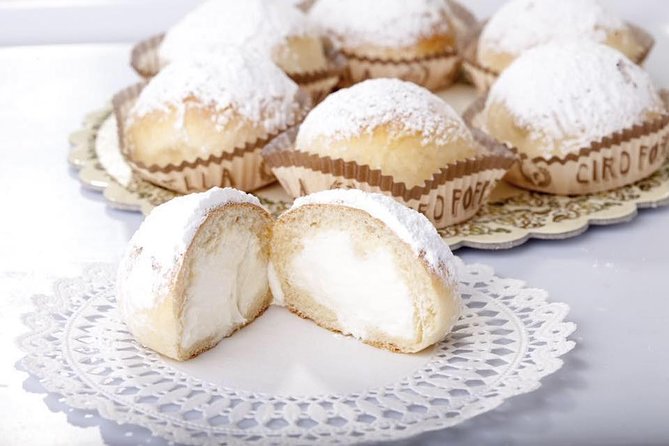
Then you’ll stop for a sweet tasting: the Fiocco di neve from Poppella, plus a real Neapolitan coffee. The Fiocco di neve has a local reputation, and what makes this stop feel valuable is the pacing. You’re not ending the tour with a random dessert. You’re ending it with a local pairing that feels like Naples—espresso culture included.
If you have allergies or dietary limits, check with your guide or the operator before you go. The data here confirms what’s included, but it doesn’t spell out substitutions.
Tour vibe, group size, and languages
This is a 2-hour live guided walk. It’s described as starting from about 6 participants (small group scale), which usually means you can ask questions and the guide can slow down when something catches your eye.
English, Italian, and Spanish are available, and the guide experience matters here because you’re walking through layers of meaning. In past departures, guides like Rosa, Giovanni, Gianluca, and Giorgia have been highlighted as prepared, passionate, and good at making the story human—especially the change-and-rebirth angle.
One more practical thing: you’re in a dense old district. That means you should wear comfortable shoes and be ready to look up, not just straight ahead.
Price and value: what you’re really paying for at $47
At $47 per person for about 2 hours, this isn’t the cheapest way to see Naples. But it’s also not paying only for walking time. You’re paying for:
- A guided thread connecting decay, Baroque grandeur, street art, and cooperative-led revival
- Access to key stops like Palazzo San Felice, Palazzo dello Spagnolo, and major church art
- Included tastings: fried pizza and Fiocco di neve with coffee
If you were to do this on your own, you’d likely spend time figuring out where to go and why each site matters. Here, the “why” is built in. You also save the hassle of coordinating snacks in a neighborhood where the best choices aren’t always the most obvious from the street.
For me, the price makes sense if you want context—not just photos—and if you’re hungry enough to count the food stops as part of the plan.
Who should book this Rione Sanità walk
This tour fits best if you:
- Want a Naples that isn’t just postcard views
- Like street art and Baroque art side-by-side
- Enjoy guided storytelling that focuses on how communities change
- Prefer a short, focused route instead of a long day of commuting
It might not be ideal if you:
- Struggle with uneven, narrow streets
- Want a strict “major sights only” itinerary with minimal walking and standing
Should you book it?
I’d book this if you’re the kind of traveler who notices details: colors, laundry lines, a mural’s message, and how architecture holds onto time. The pairing of major Neapolitan Baroque with neighborhood revival stories makes the walk feel intentional, not random.
If you’re hungry for real food—fried pizza and a Fiocco di neve with coffee—and you want your Naples to have depth, not just highlights, this is a strong use of two hours. Just go in with comfortable shoes and an open mind about contradiction. In Rione Sanità, that’s the whole point.
FAQ
Where does the tour start?
The meeting point is next to Porta San Gennaro in Via Porta S. Gennaro, 35. The guide will wait holding a sign with your customer name.
How long is the tour?
The tour lasts 2 hours.
How much does it cost?
The price is $47 per person.
Is transportation included?
No. Transportation is not included.
What food is included?
You’ll have a savory tasting of fried pizza (take-away service) and a sweet tasting of Fiocco di neve from Poppella with Neapolitan coffee.
What languages is the tour offered in?
The live guide is available in English, Italian, and Spanish.
What major sights are included?
The tour includes Neapolitan Baroque palazzi like Palazzo San Felice and Palazzo dello Spagnolo, plus visits related to San Severo outside the walls (Veiled Son) and Santa Maria alla Sanità (Nativity scene).
What’s the group size like?
It’s listed as small-group style, starting from 6 participants and on.
What’s the cancellation policy?
You can cancel up to 24 hours in advance for a full refund.