REVIEW · BUDAPEST
Budapest: Alternative Street Art & Jewish Tour
Book on GetYourGuide →Operated by Original Europe Tours - Vienna · Bookable on GetYourGuide
You can read Budapest in two very different languages. One is sprayed on walls. The other is carved into buildings and streets in the Jewish Quarter. This Budapest street art and Jewish Quarter tour turns both into a single walk with a live English guide, mixing murals (including Színes Város) and the human history behind the neighborhood.
Two things I really like: you get street art you can actually understand, not just admire from far away, and then you shift to the Jewish Quarter where survival emblems and old monuments give the city a deeper context. Guides like Burak and Zsanett also bring personal energy that makes the tour feel more like a small-group conversation than a lecture.
One drawback to consider: it’s a walking tour with no food or entrance tickets included, so you’ll want a plan for a snack and drinks before or after, especially if you’re taking it mid-day.
In This Review
- Key highlights you’ll feel right away
- Street art plus Jewish Quarter history: the perfect combo for Budapest
- Where you meet: St. Stephen’s Basilica and the Blue umbrella
- The 3-hour rhythm: what fits into a walk and what doesn’t
- Street art in Budapest: seeing Színes Város up close
- Switching gears: the Jewish Quarter and emblems of survival
- How the guide keeps the walk lively (Burak, Zsanett, and the small-group feel)
- What you’ll learn to notice after the tour
- Price and value: is $23 worth 3 hours?
- Getting the most out of it: shoes, weather, and your next meal
- Who should book this tour (and who might skip it)
- Should you book Budapest: Alternative Street Art & Jewish Tour?
- FAQ
- Where does the tour start?
- How long is the tour?
- Is the tour in English?
- What’s included in the price?
- What’s not included?
- Can I cancel for a refund?
Key highlights you’ll feel right away
- Színes Város mural focus: you’ll see works by prominent local artists, including the revolutionary Színes Város
- Jewish Quarter history on foot: remnants of the old community and monuments connected to survival
- A local guide who tells the stories: the murals and the neighborhood come alive through the guide’s pacing and explanations
- A modern-meets-old vibe: contrast between today’s bars and shops and older, crumbling structures
- Real-world recommendations: tips for live music, which clubs to visit, and where to eat
Street art plus Jewish Quarter history: the perfect combo for Budapest

Budapest is famous for grand views and thermal baths. That’s all true. But the city also has a very human side, and this tour leans hard into it.
You start with the creative stuff: graffiti, street art, and the kind of wall work that’s political, personal, and very local. Then you walk straight into the Jewish Quarter, where the past is visible in monuments, remnants, and symbols of endurance. The best part is that these two pieces do not feel like separate tours stitched together. They connect through the idea that cities remember. Sometimes they remember in stone. Sometimes they remember in paint.
I like that the experience is built around a guided walk, not a grab-bag of stops. You’re not just checking boxes. You’re getting explanations that help you look at the same street you’d otherwise rush through.
And it’s not only history. You come away with practical ideas for the rest of your trip. One of the most repeated strengths is the guide giving recommendations after the tour—where to catch live music, what clubs to try, and where to eat.
You can also read our reviews of more tours and experiences in Budapest.

Where you meet: St. Stephen’s Basilica and the Blue umbrella
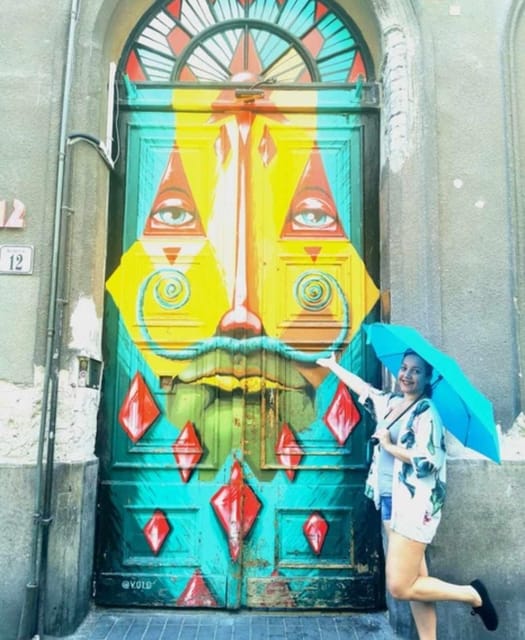
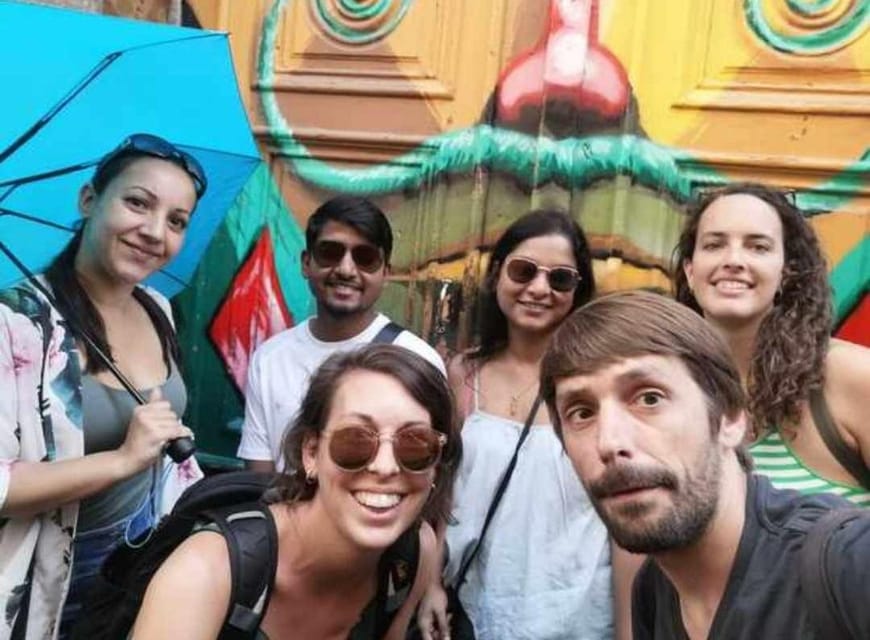
Your meeting point is easy to find if you’re already oriented in central Budapest. The guide will be holding a Blue umbrella by the entrance of St. Stephen’s Basilica (Szent István tér 1, 1051 Hungary).
That matters more than you might think. In a city with lots of people and lots of side streets, a clear landmark reduces stress. Also, St. Stephen’s Basilica is a natural starting point because it helps you get your bearings before you head into the quieter streets and the different rhythms of the Jewish Quarter.
The tour ends back at the meeting point, so you don’t get stuck with an awkward end-of-walk transport scramble. You can keep moving right away—either back toward your hotel or onward to dinner plans.
The 3-hour rhythm: what fits into a walk and what doesn’t
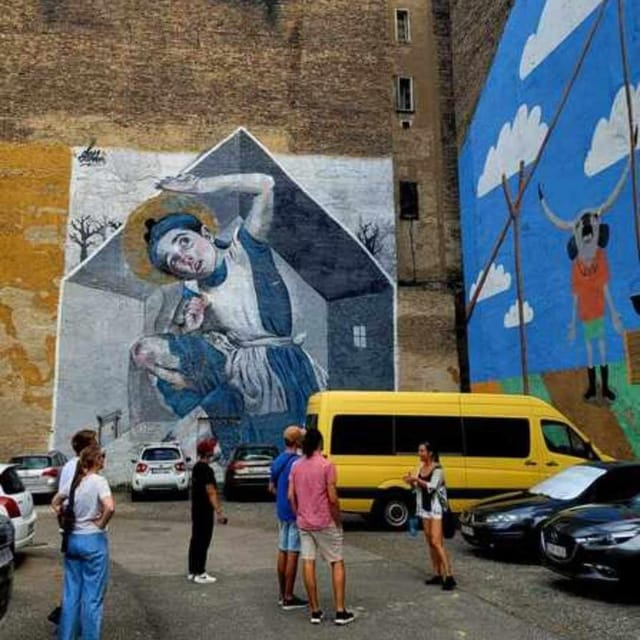
This tour runs for about 3 hours. That length is smart. Street art can take time to interpret, especially when your guide pauses to explain what you’re looking at. At the same time, the Jewish Quarter history deserves more than a quick glance.
A 3-hour pacing usually works best if you want:
- a solid introduction to Budapest’s alternative culture
- enough Jewish Quarter context to make the neighborhood feel real
- time to keep exploring afterward without feeling stuck in one long day
If you’re the type who gets tired from long walks, wear your patience on your sleeve. It’s still a walking tour, and you’ll want comfortable shoes. The good news is the walk is designed to be doable and not overly stretched.
Street art in Budapest: seeing Színes Város up close

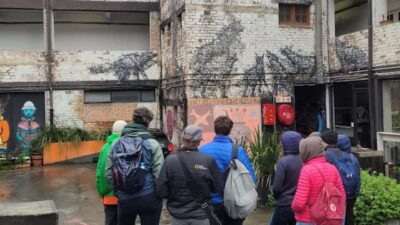
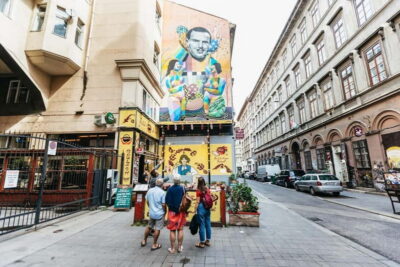
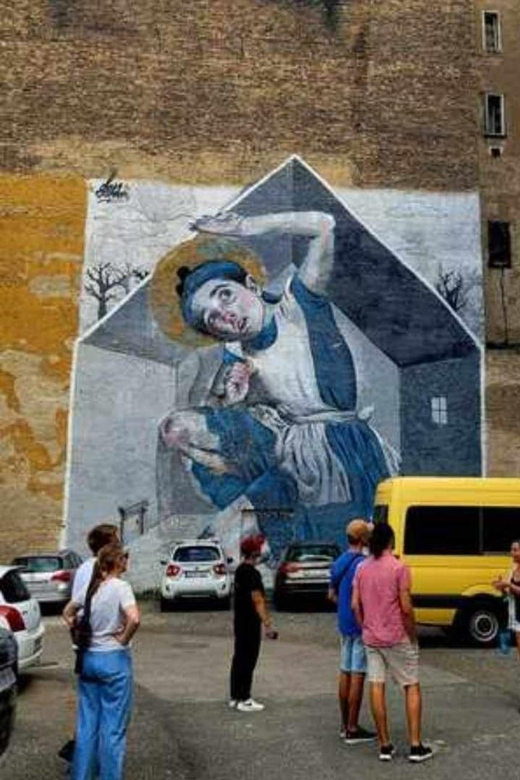
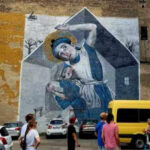
The street art portion is where the tour earns its name. You’ll see works by some of Budapest’s prominent local artists, including the revolutionary Színes Város.
Here’s why this part is worth doing with a guide: street art can look chaotic if you don’t know what to watch for. A good guide points out things like:
- the mood and message the artist is working with
- how the artwork relates to the neighborhood around it
- what makes a piece feel local instead of imported style
The feeling you’re aiming for is not just admiration. It’s recognition—suddenly you see the city as a conversation, not a backdrop.
I also like that the guide doesn’t treat murals like museum pieces. They’re on walls for a reason. They respond to the street. They react to politics, culture, and public life. When your guide links that context to what you’re seeing, the street art stops being random and starts being readable.
Switching gears: the Jewish Quarter and emblems of survival
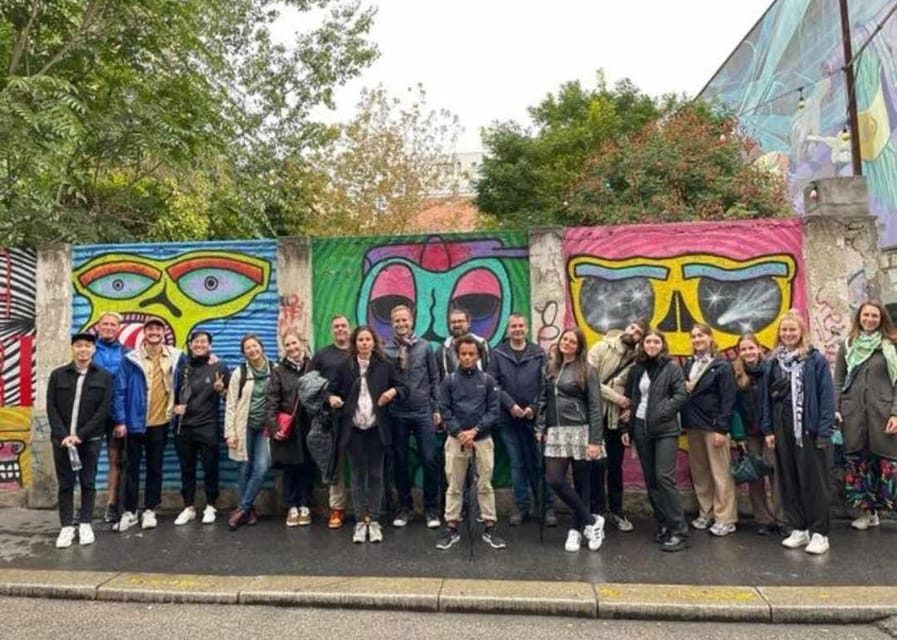
Then you shift into the Jewish Quarter, and the tone changes in the best way. Instead of focusing on artistic style, you focus on what the community built, lost, and carried forward.
You’ll learn how the Jewish community played a crucial role in shaping Pest, Buda, and Óbuda (Old Buda). That’s an important context piece. Budapest didn’t only become Budapest through monarchy and kings. It also formed through communities that lived, worked, worshiped, and created culture in specific places.
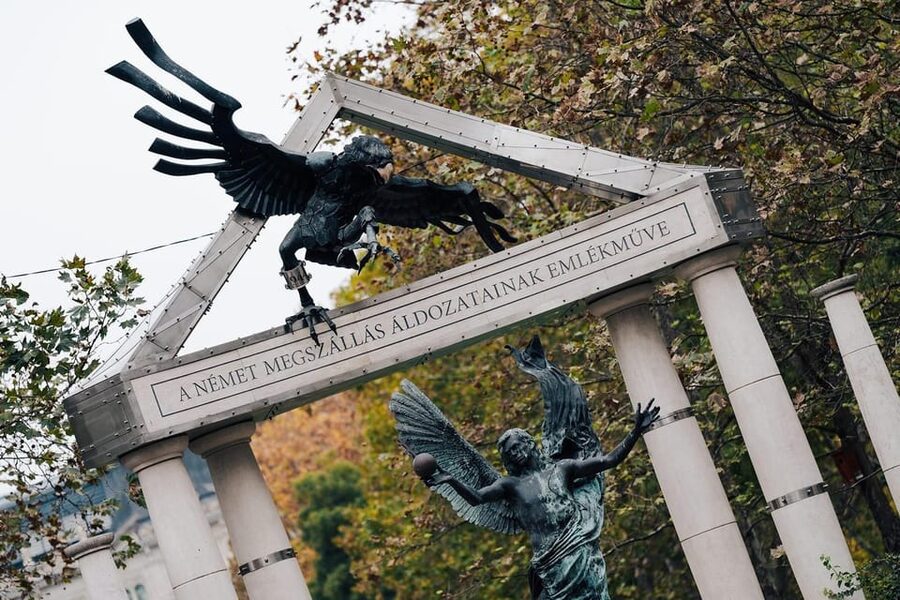
This part includes remnants of the old Jewish community still standing, plus emblems of survival and monuments of the past. Those phrases aren’t just dramatic. On a street-level walk, you can actually sense the difference between a neighborhood that’s still functioning today and a neighborhood that carries heavy memory.
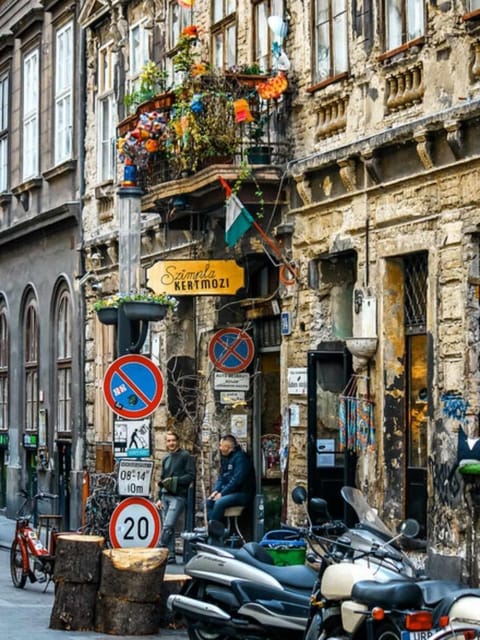
One of the tour’s strongest elements is the contrast you experience while walking: modern-day shops and bars sit near older, crumbling structures and unique monuments. That juxtaposition can feel uncomfortable at first. But that’s exactly why a guide helps. You don’t just see ruins and you don’t just see night-life. You understand the continuity and the rupture.





How the guide keeps the walk lively (Burak, Zsanett, and the small-group feel)

A lot of walking tours can drift into the same pattern: hurry, stop, facts, move on. This one tends to work better because the guide style is personal and story-driven.
From the experience descriptions, I’d expect a few repeat strengths:
- the guide uses a friendly, approachable tone (people have specifically praised guides like Burak and Zsanett)
- the group may feel small enough to get care and attention, which makes it feel closer to a small-group tour rather than a big-bus script
- each mural and area gets explained in a way that makes you want to look at the wall again after you move on
That last point is key. The goal is not only to learn facts. It’s to change how you look at Budapest’s streets once you’re off the tour route.
And guides often give what I call the post-walk “permission slip”: not just where to go, but how to enjoy it—music venues, club suggestions, and where to eat so you don’t spend your first night wandering hungry.
What you’ll learn to notice after the tour
A street art tour can teach you how to look at walls. A Jewish Quarter tour can teach you how to look at streets. Put together, you start noticing details that most visitors miss.
For street art, you’re learning to look for message, place, and intent. The guide helps you see that the art is part of local culture, not decoration.
For the Jewish Quarter, you’re learning to connect physical remnants with what they represent. The tour’s focus on monuments, survival emblems, and remaining traces of the community gives you a framework.
Then, because it ends right where you started, you can keep your new lens for the rest of your day. You’ll likely find yourself slowing down in spots you used to rush past.
Price and value: is $23 worth 3 hours?
At $23 per person for a roughly 3-hour guided walking tour, the value is strong if you care about more than just ticking attractions off a list.
Here’s the practical angle: you’re paying for a guide plus a walking route designed to mix two themes—street art and Jewish Quarter history—without dumping extra costs on you. The tour includes:
- a guide
- the walking tour
Not included are food and drinks and any entrance fees. That’s normal for this type of experience, but it affects value in a good way. You’re not paying extra just to access the tour content.
If your travel style is short on time and you want a guided introduction that changes how you see the city, this price-to-time ratio makes sense. You’re buying context, pacing, and recommendations.
If you’re only interested in one theme (say, you only want art and history feels heavy), then the mix might feel uneven. But the design here is specifically meant to make the two parts speak to each other.
Getting the most out of it: shoes, weather, and your next meal
The tour operates in all weather conditions, so pack for rain or cool temps as needed. The straightforward advice is:
- wear comfortable shoes
- dress for the weather
Because food and drinks are not included, I recommend you treat this like a shift in your day. Eat before you go or plan a meal immediately after. Street walks can be deceptively draining, and hunger makes every story harder to take in.
A nice bonus is that you’ll get top tips on live music, clubs, and where to eat at the end. That’s useful because Budapest nightlife and dining can be scattered. A good guide helps you pick a direction instead of guessing.
Who should book this tour (and who might skip it)
I think this tour fits best if you’re:
- curious about Budapest beyond the standard postcard route
- interested in street art with context, not just photos
- willing to handle history respectfully while still enjoying modern neighborhood life
- the type who likes a guide’s recommendations so you can move faster afterward
You might skip it if you:
- want only famous landmarks and zero walking
- dislike mixing lighter street culture with heavier historical themes
- need a completely seated experience
But if you’re open to a walk that connects art, identity, and survival, this is a very good use of 3 hours.
Should you book Budapest: Alternative Street Art & Jewish Tour?
Yes, I’d book it if you want a smart, local-feeling introduction to Budapest that goes beyond the obvious. The strongest reasons are the combination: street art (including Színes Város) plus Jewish Quarter history tied to emblems of survival and monuments of the past. Add in guides who bring energy—people specifically mention Burak and Zsanett—and you get a tour that tends to feel engaging, not rushed.
The only real caution is practical: plan for walking and plan for food on your own. If you handle that, the $23 price looks like a solid deal for a guided experience that gives you both meaning and momentum.
FAQ
Where does the tour start?
The meeting point is by the entrance of St. Stephen’s Basilica, Budapest (Szent István tér 1, 1051 Hungary). Your guide will be holding a Blue umbrella.
How long is the tour?
It lasts about 3 hours.
Is the tour in English?
Yes, the tour guide speaks English.
What’s included in the price?
The price includes the guide and the walking tour.
What’s not included?
Food and drinks are not included, and there are no entrance fees to attractions included.
Can I cancel for a refund?
You can cancel up to 24 hours in advance for a full refund.