REVIEW · LISBON
Lisbon Street Art Tour
Book on GetYourGuide →Operated by Lisbon Lives Walking Tours · Bookable on GetYourGuide
Street art in Lisbon feels like a live conversation. This tour is a smart, 2-hour way to see major names like Shepard Fairey and then connect the dots with top Portuguese artists such as Vhils and Bordalo II. I like that the guide doesn’t just point at walls. You get context on what each piece is saying, including technique and (when available) the artist’s own words.
My second big win: you’ll spend time in Graça and Mouraria, where the art feels woven into everyday streets. You also get a clear through-line about social issues, including how women are entering a field that’s been traditionally male-dominated. One thing to consider: the tour is in French and it’s not suitable for people with mobility impairments, so you’ll want to plan for a walking-focused experience with comfortable shoes.
In This Review
- Key Points to Know Before You Go
- Street Art in Real Neighborhoods: Graça and Mouraria
- Meet Peter in Front of the Church and Start Walking
- What You’ll See: Shepard Fairey, Vhils, Bordalo II, and Friends
- How the Guide Turns Walls Into Meaningful Talk
- Graça: Big Walls, Street-Level Craft, and the City’s Art Language
- What could slow you down here?
- Mouraria: Where You Learn to Read the Small Stuff
- Public Art Beyond Murals: Tiles and Sculpture Moments
- The Included Tasting: Pastel de Nata or Ginginha
- The Value of $41 for 2 Hours of Guided Street Art
- Language, Pace, and What to Bring
- Who This Tour Fits Best (and Who Might Skip It)
- Should You Book This Lisbon Street Art Tour?
- FAQ
- How long is the Lisbon Street Art Tour?
- What does the tour cost?
- Where do we meet for the tour?
- Which neighborhoods does the tour focus on?
- What languages are available?
- How big is the group?
- What’s included in the price?
- Are drinks included besides the Lisbon speciality?
- Is the tour suitable for people with mobility impairments?
- What should I bring?
Key Points to Know Before You Go
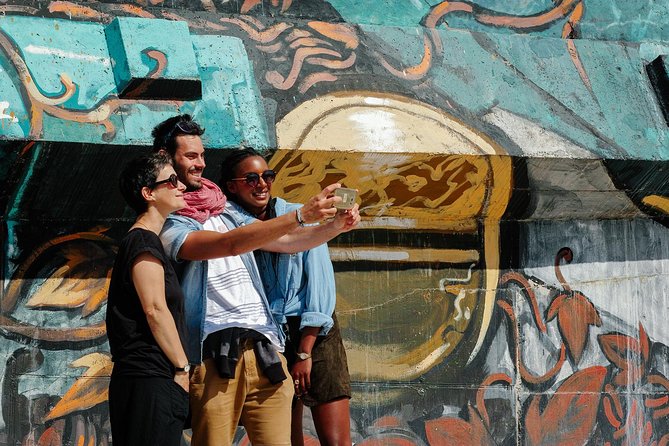
- Small group size (up to 8) keeps the commentary personal and discussion-friendly
- Two neighborhoods, Graça and Mouraria focus your time on especially strong clusters of street art
- Big-name and local artists together: Shepard Fairey alongside Vhils, Bordalo II, and others
- Art becomes debate through social and political themes, plus how art works as an idea
- Included Lisbon tasting (pastel de nata or ginginha) adds a tasty break from the walking
Street Art in Real Neighborhoods: Graça and Mouraria

If you’ve ever walked past a mural and felt you missed the point, this tour fixes that. You’re not doing a generic highlight loop. You’re walking through real Lisbon streets where public art shows up on big walls, side alleys, and corners you might otherwise gloss over.
Graça and Mouraria are a great pairing because the art styles and the neighborhood feel can shift quickly. That change keeps your eyes alert. One minute you’re looking at a major international name, and the next you’re learning how local artists see the same public space differently.
And yes, it’s not only walls. You also take in other public art like sculptures and the famous Lisbon tiles. That matters, because it helps you notice how the city treats art as part of daily life, not just something behind a ticketed door.
You can also read our reviews of more tours and experiences in Lisbon.



Meet Peter in Front of the Church and Start Walking
The meeting point is straightforward: meet in front of the church. It sounds generic, but that kind of landmark-based start is exactly what you want in Lisbon’s older streets.
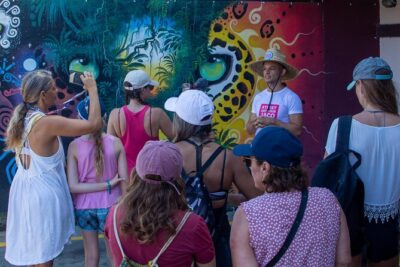
The tour runs for about 2 hours with a small group capped at 8 people. That small size is practical. You’re more likely to ask questions and get back-and-forth discussion instead of a guide talking at the group for the entire time.
Guides are French-speaking, and the experience you’re buying is the explanation. If you’re not comfortable with French, you may find it harder to catch the details behind the works and the discussions.
What You’ll See: Shepard Fairey, Vhils, Bordalo II, and Friends
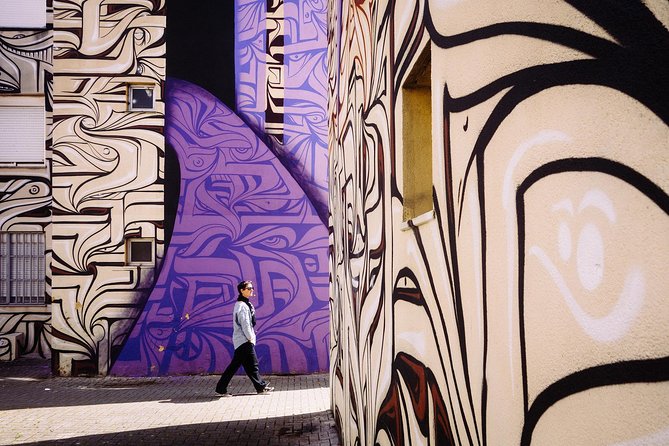
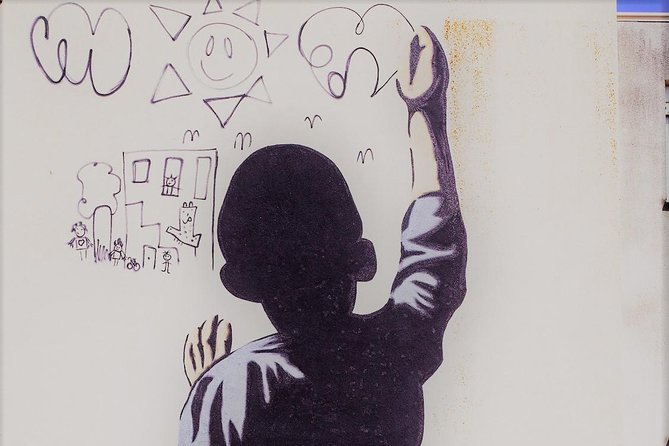
This tour is built around a satisfying mix: international street art meets Portuguese artists (plus a handful of up-and-coming local voices). You don’t just get names. You get commentary on specific works and what makes them work.
Among the artists you’ll learn about are Shepard Fairey, Vhils, Bordalo II, and TV Boy. You’ll also hear about Portuguese and other artists including Joana Vasconcelos, Andrea Tarli, Urban Solid, and Utopia. That variety keeps it from feeling like a single style of street art parade.
A key detail I like: each work is commented on, including the techniques used and the ideas the piece raises. When artist statements are available, the guide uses the artists’ own words. Even if you’re new to street art, that approach helps you look longer than a casual glance.
How the Guide Turns Walls Into Meaningful Talk

Street art can look chaotic from a distance. Here, the guide gives you a way to slow down and read what’s in front of you. You’ll hear discussions about where art belongs in society, plus social and political issues tied to what the artists choose to show.
You’ll also talk about something that’s easy to miss when you’re just sightseeing: the nature of art itself. In other words, the tour isn’t only about who made a mural. It’s about why a wall can be a platform, and what that platform can challenge.
One theme you’ll likely notice as you move through the streets: women are getting more visibility in a traditionally male-dominated preserve. That isn’t just a side note. It changes how you look at who gets heard in public space, and why that matters.
Graça: Big Walls, Street-Level Craft, and the City’s Art Language
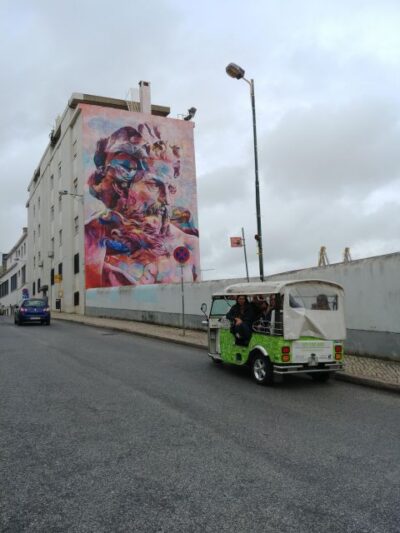
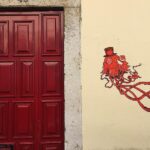
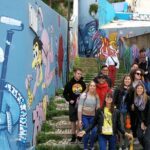
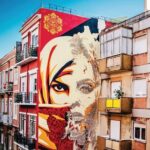
Graça is where the tour feels like it’s getting your attention on scale. The streets here can deliver large murals and bold compositions. When the guide points out what to look for, the art stops being just color and starts being a set of messages.
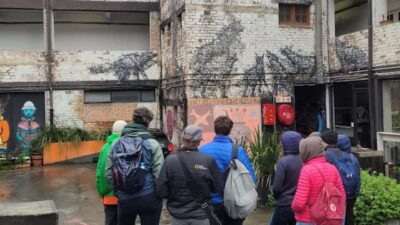
This is also a neighborhood where the art can feel close to life. You’re walking among buildings, stairways, and everyday street scenes, so the art doesn’t feel staged. It feels like it belongs to the neighborhood’s rhythm.
A practical benefit: even if you’re only spending two hours total, focusing on Graça helps you see major pieces without spending the whole day crisscrossing Lisbon. The tour is designed so the walking time matches the payoff.


What could slow you down here?
Graça involves walking and some uneven street surfaces. Nothing extreme is promised, but you should plan for steady steps and bring water. Also, if you’re not comfortable with French, you may spend extra time relying on visual clues rather than the full commentary.
Mouraria: Where You Learn to Read the Small Stuff

Mouraria adds another layer. The vibe can feel more intimate and a little more complicated, which is exactly where smaller works deserve your attention. A mural at a distance can be impressive; a smaller piece becomes interesting when the guide tells you what it’s doing and why.
This is the neighborhood where discussions can feel especially connected to the streets. The tour keeps linking art to social and political ideas, so you start noticing patterns: what’s being criticized, what’s being celebrated, and how the artist chooses the public audience.
And the tour doesn’t forget variety. You’ll see different types of pieces and different scales, from large murals to smaller works that could easily go unnoticed if you weren’t looking on purpose.
Public Art Beyond Murals: Tiles and Sculpture Moments

Lisbon has a reputation for tiles, and this tour includes that side of the city’s public-art culture. When you notice tiles alongside street art, it becomes easier to understand Lisbon’s visual language: art here isn’t only modern street culture.
You’ll also take in sculptures as part of the walk. That helps balance your expectations. Some people come for murals only, then realize public art in Lisbon means more than spray paint and stencil work.
The takeaway for you: the tour trains your eyes. Afterward, you’ll probably notice public art on your own without needing a guide for every single wall.
The Included Tasting: Pastel de Nata or Ginginha
A guided walk can get long even when it’s only two hours. That’s why I like that the tour includes a Lisbon speciality break.
You’ll have pastel de nata, the cream tart, or ginginha, wild cherry liqueur. Both are classic Lisbon choices. The best part is that you get the tasting without having to plan it as an extra stop, which saves time and avoids decision fatigue.
One practical note: coffee or other hot or cold drinks are not included. So if you want a longer sit-down break, you’ll need to buy it separately.
The Value of $41 for 2 Hours of Guided Street Art
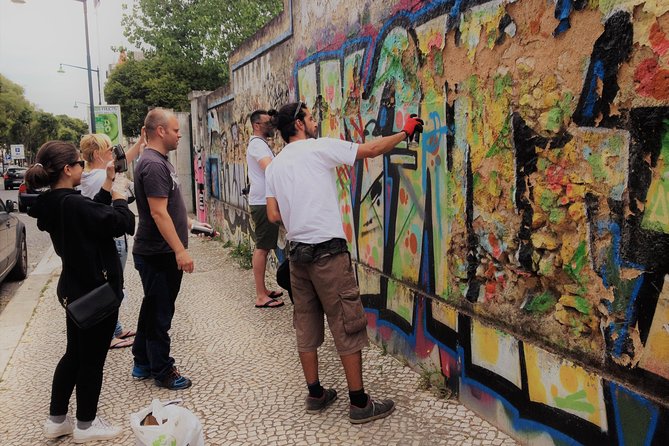
$41 per person sounds like a lot until you look at what you’re paying for. You’re paying for two things that street-art wandering often lacks: focused access to the art and guided interpretation.
First, you get a small group experience. With up to 8 participants, the guide can pace the group and address questions instead of rushing. Second, you get commentary on multiple works across two neighborhoods, with techniques discussed and artist words used when available.
Finally, you get that included tasting. Even though the tour is short, adding pastel de nata or ginginha turns it into something more than a walking lecture.
Is it the best deal if you’re the type who loves to wander with zero structure? Maybe not. But if you want street art you can actually understand in a couple hours, the value here is strong.
Language, Pace, and What to Bring
This is a French-guided tour, and that affects everything from how you follow the artist explanations to how much discussion you can join. If you speak French well enough to catch details, you’ll likely get more from it. If not, you may still enjoy the visuals, but you’ll miss part of the point.
Bring comfortable shoes and water. Street art tours are often about walking distance more than time. Even if the tour is only 2 hours, Lisbon’s streets can be slow because of steps, cobblestones, and turns.
Also, it’s not suitable for people with mobility impairments. That’s not just a “might be rough” warning. It’s a clear mismatch, so plan on another format if that applies to you.
Who This Tour Fits Best (and Who Might Skip It)
I’d recommend this tour if you fall into one of these groups:
- You want street art context, not just photos.
- You’re curious about Portuguese street artists and how they fit into bigger conversations.
- You enjoy thoughtful discussions about art and society.
- You like short tours that show real neighborhoods rather than only major landmarks.
You might skip it if you strongly prefer self-guided exploring, or if French isn’t workable for you. And if accessibility is a concern, don’t force it—choose a tour that’s designed for your needs.
Should You Book This Lisbon Street Art Tour?
Book it if you want your street art viewing to feel intentional and smarter after the first mural. The combination of major artists (Shepard Fairey), key Portuguese voices (Vhils, Bordalo II), and themes like social politics and women’s visibility gives the tour a clear purpose.
I’d also say yes if you like the idea of a small group walk through Graça and Mouraria, plus a simple tasting that keeps the energy up. Even better, the guide’s explanations—technique, ideas, and sometimes the artists’ own words—turn the city into a living gallery you can actually read.
If you’re mainly looking for a quick picture tour in English with zero commentary, then this probably won’t feel like your thing.
FAQ
How long is the Lisbon Street Art Tour?
The tour lasts 2 hours.
What does the tour cost?
It costs $41 per person.
Where do we meet for the tour?
Meet in front of the church.
Which neighborhoods does the tour focus on?
The tour focuses on two neighborhoods: Graça and Mouraria.
What languages are available?
The live tour guide speaks French.
How big is the group?
It’s a small group, limited to 8 participants.
What’s included in the price?
The tour includes Lisbon specialities: pastel de nata (cream tart) or ginginha (wild cherry liqueur).
Are drinks included besides the Lisbon speciality?
Coffee or other hot or cold drinks are not included.
Is the tour suitable for people with mobility impairments?
No, it is not suitable for people with mobility impairments.
What should I bring?
Bring comfortable shoes and water.