REVIEW · LISBON
Discover Lisbon’s Best Street Art
Book on Viator →Operated by Street Buddha · Bookable on Viator
Some walls in Lisbon feel like open-air galleries. This small-group street-art hunt strings together famous names and lesser-known streets, from Alfama alleys to Quinta do Mocho’s mural universe. I love how the tour makes you look differently, and I love the way the guide connects pieces to neighborhoods, not just to artists. One thing to consider: the long outdoor section at Quinta do Mocho can be hot and sun-heavy.
The route also pays off because it’s not just the usual postcard stops. You’ll spend real time with major mural artists like Eduardo Kobra and Vhils, plus fun Portuguese talent such as Pichiavo and Bordallo II. If you’re sensitive to sun or you’re traveling with kids, plan for breaks, water, and proper shoes.
In This Review
- Key things to know before you go
- Why Lisbon’s street art needs a guide
- Meeting point at Hard Rock Cafe: how the day flows
- Alfama, Castelo, and Mouraria: murals in the old streets
- Santa Apolónia: a shorter stop with strong mural names
- Lisbon mural hotspot: Eduardo Kobra’s huge-scale impact
- Quinta do Mocho: the outdoor gallery with about 110 murals
- Chão do Loureiro, Amoreiras, and Caracol da Graça: the kind of extras you remember
- Meeting artists by name: how this day builds real street-art instincts
- Price and value: what you get for $134.13
- Timing, weather, and practical tips for an 8-hour wall hunt
- Should you book this Lisbon street art tour?
- FAQ
- How long is the Lisbon street art tour?
- What is the meeting point and start time?
- Where does the tour end?
- What’s the group size?
- Is the ticket mobile?
- What are the main stops during the day?
- Which parts include admissions?
- Is public transportation nearby?
- What if the weather is bad?
- Is it good for most people?
Key things to know before you go

- Small group (max 4) means more time to ask questions and follow the right streets.
- A full-city route covers old quarters and modern mural hotspots instead of one neighborhood loop.
- Big names on real walls include Eduardo Kobra, Vhils, Pichiavo, Bordallo II, Obey Giant, and more.
- Quinta do Mocho is the mural marathon with about 110 outdoor works and a long walk.
- Included admissions at key stops help you spend the day on art, not ticket hunting.
- Guides like Igor and Catia bring local connections and street-art passion.
Why Lisbon’s street art needs a guide

Lisbon’s murals aren’t stuck behind museum glass. They live on buildings, in stairwells, along routes people actually walk every day. That matters, because street art here has context: neighborhoods, history, and current life all show up around the walls.
What I like most about this kind of tour is that you stop treating murals like random wall decoration. You start reading them like visual messages—who’s speaking, what the space feels like, and why that corner in Lisbon works for that artwork. With a guide, you get that “art literacy” without turning the day into a lecture.
The other big win is access. Lisbon has secret-feeling corridors and smaller mural scenes that you might miss if you’re only following famous names. This tour builds a route that mixes well-known artists with walls you likely wouldn’t find on your own.
You can also read our reviews of more tours and experiences in Lisbon.



Meeting point at Hard Rock Cafe: how the day flows
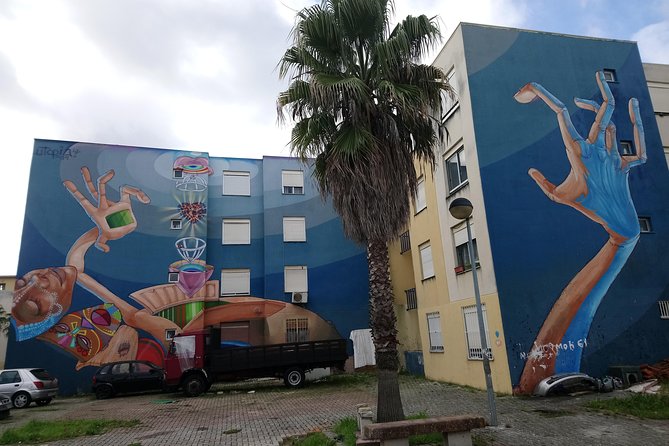
The tour starts at Hard Rock Cafe Lisboa on Av. da Liberdade (around 9:30am). That’s a convenient launch point if you’re using public transportation, and it keeps the morning easy rather than stressful.
You’ll have a mobile ticket, and the group size tops out at four people. In practice, that means you’re not stuck with a crowd pulling you from stop to stop. It’s the kind of day where you can ask a question and still keep moving.
The tour runs for about 8 hours and ends near Casa dos Bicos / José Saramago Foundation. Planning-wise, I’d treat the full day like a walking day: comfortable shoes, sun protection, and a water plan. You’re covering multiple neighborhoods and big outdoor spaces.
Alfama, Castelo, and Mouraria: murals in the old streets
Your day kicks off in Castelo, Alfama, and Mouraria, starting with a close look at Mouraria’s street art. Mouraria is the type of neighborhood where the streets feel like they twist with purpose, and that’s exactly why it works for street art. A mural here lands differently than it would in a wide boulevard. The walls feel close. The art feels part of the neighborhood rhythm.
This segment also includes time to revisit the area for more works and more major names. You’ll see pieces linked to artists such as Obey Giant and Vhils, among others. The point isn’t just to tick off names—it’s to see how the same artistic energy changes with each street texture, each angle, and each building façade.
The main practical consideration is pacing. The old quarters can mean small climbs and uneven footing. So keep your head up, take breaks when needed, and wear shoes that don’t mind a bit of cobblestone.
Santa Apolónia: a shorter stop with strong mural names
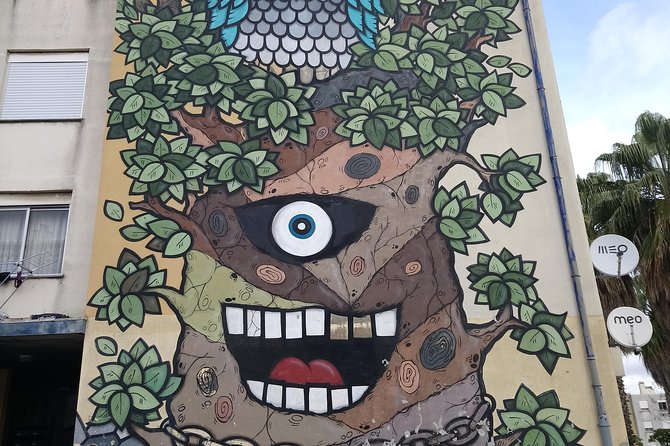
Next is Santa Apolónia, where you get a tighter, focused look. This stop is about 30 minutes, which makes it a good reset in the middle of a longer day.
Even with the shorter time, the mural names on your radar here include Pichiavo and Bordallo II. If you like variety, this quick stop can feel like a palate cleanser: you get different vibes without losing momentum.
Because Santa Apolónia is shorter, I’d treat it like this: move with intention. Don’t spend the entire time photographing from one spot. Instead, walk a few steps, check different viewing angles, and let the space guide what you notice.
Lisbon mural hotspot: Eduardo Kobra’s huge-scale impact

Then you head to a Lisbon mural hotspot, where you’ll spend around an hour. This is where scale starts to matter in a new way. You’ll be looking at a major Eduardo Kobra work, recognized as the Guinness book winner for the biggest mural in the world.
This hour is valuable because it gives you time to take in the mural from multiple distances. Big works can feel overwhelming at first, but once you step back and then re-approach, the message reads better. I also like that this stop shifts your thinking from street-art-as-urban-flavor to street-art-as-city-identity.
If you care about photos, plan for it: choose one spot for a wide shot and one spot for details. Otherwise you end up bouncing around too fast and missing the artwork’s real rhythm.





Quinta do Mocho: the outdoor gallery with about 110 murals
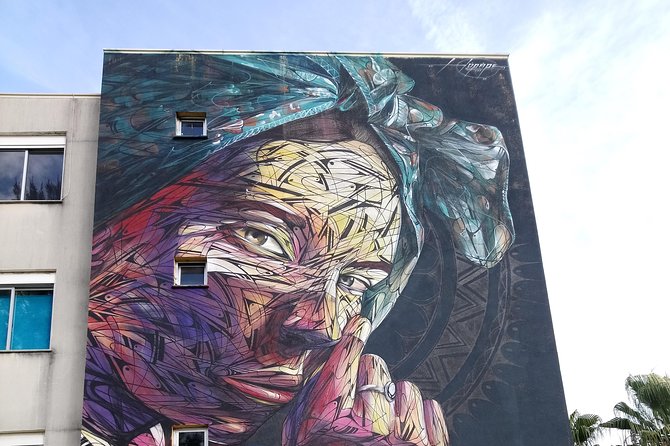
The longest segment is Quinta do Mocho, and it’s the reason many people sign up. You’ll spend about 3 hours here, and admissions are included.
The headline is simple: it’s an enormous outdoor street-art setting with around 110 murals. That’s not just impressive—it changes how you experience the art. Instead of hunting for the next piece, you’re surrounded by them. You start noticing patterns: themes, repetition, and how different artists treat the same kind of large space.
This is also where the one possible drawback turns real. The long outdoor time can be tough in hot sun, and one guide-led highlight doesn’t fix sweat. So bring water, use sun protection, and take mini breaks. If you’re traveling with kids, think about pacing carefully because three hours outdoors can feel long.
If you want to get more from the visit, keep a simple goal: pick a few murals that grab you early, then compare how your reaction changes as you continue walking. You’ll come away with a stronger sense of what you like—and why.
Chão do Loureiro, Amoreiras, and Caracol da Graça: the kind of extras you remember
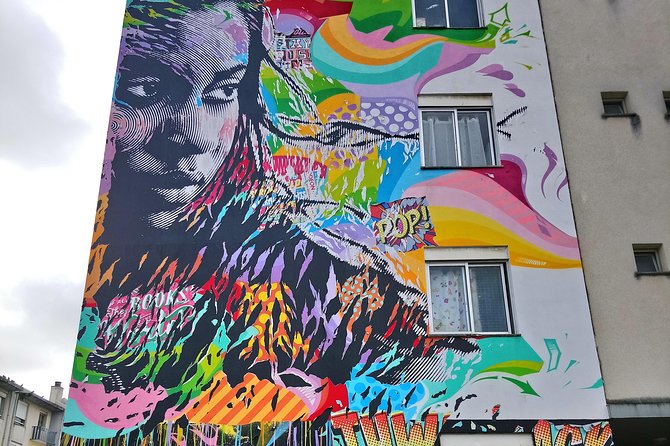
Lisbon street art isn’t only about big murals. It’s also about smaller scenes, back-street energy, and places where the community culture shows up. This tour includes stops and areas tied to that wider street-art world, including Chão do Loureiro (described as secret galleries), plus mural activity connected to Amoreiras and Caracol da Graça.
Even if you’re mainly here for the famous names, these extras can be the most memorable parts of the day because they feel like you’re getting an insider’s map. You’re not only seeing finished murals. You’re seeing how the city is actively using walls as communication.
The practical tip here is to stay present. In these “in-between” moments, you’ll catch details you’d miss if your plan was only to get the perfect shot. Look for how the artwork sits next to doors, windows, balconies, and everyday street life.
Meeting artists by name: how this day builds real street-art instincts
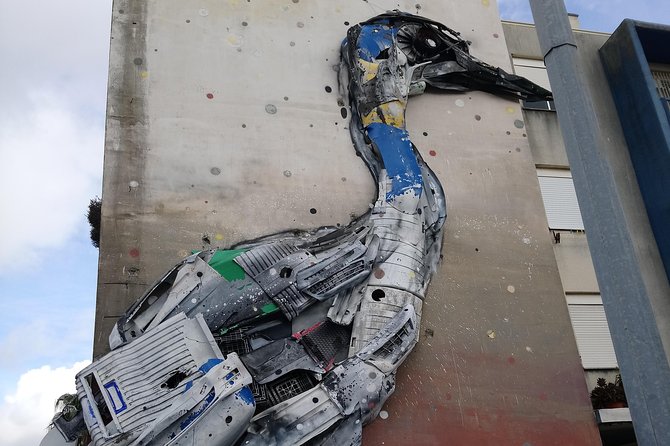
One of the best parts of this experience is the lineup. You’re not just seeing random murals. You’re encountering Eduardo Kobra, Vhils, Bordallo II, Pichiavo, Obey Giant, plus other names referenced like Mar and Utopia.
What you learn isn’t only who made the work—it’s how to think like a street-art viewer. You start noticing that murals often feel like they belong to a place, not like they were pasted on afterward. And you get better at spotting visual signatures and themes across different neighborhoods.
This is also where the guide matters. In particular, Igor and Catia stand out from the experience style described: local passion, real connections, and a thorough, friendly approach. You can ask why a wall works here, and you can ask how to approach the art without feeling like you need a museum-style background.
Price and value: what you get for $134.13
At $134.13 per person, you’re paying for more than access to murals. You’re paying for:
- a route that covers major mural zones across the city,
- included entry at specific stops (Santa Apolónia and Quinta do Mocho),
- and a guide who helps you interpret what you see.
That can be great value if you know you’ll walk a lot anyway and you want the day to feel intentional. If you’re the type who usually explores with zero plan, this kind of structured route can save hours of wandering and guesswork.
It’s less of a deal if you only want one or two neighborhoods or you’re already a confident street-art self-guided walker. Lisbon’s major mural clusters are not impossible to find. But the tour’s main strength is that you get a curated walk-through of the city’s most relevant street-art spaces, plus the added context from a guide.
Timing, weather, and practical tips for an 8-hour wall hunt
This experience depends on good weather. That’s not just fine print; it affects comfort and visibility. Street art looks better when you’re not fighting rain, glare, or wind.
Plan your day around walking. Wear shoes that handle uneven surfaces and bring a small day bag with essentials. Sun protection is a smart move because Quinta do Mocho can be a long outdoor stretch.
If you want to get the most from each stop, don’t treat every mural like a photo assignment. Spend a minute just looking first. Then take one good photo. It makes the artwork sink in faster—and it prevents your camera roll from turning into a blur.
Should you book this Lisbon street art tour?
Book it if you love street art and you want a day that feels like a guided education, not just sightseeing. This one works especially well for first-timers because it hits major names like Eduardo Kobra and Vhils while also showing you mural spaces outside the obvious route. It’s also a strong pick if you like authenticity and local insight, since guides like Igor and Catia bring clear passion and practical knowledge.
I wouldn’t treat this as a “light stroll” tour. Between the old-city walking and the long outdoor time at Quinta do Mocho, you should expect a proper day outdoors. If you go in well-prepared—water, sun protection, and comfortable shoes—you’ll come away feeling like you understand Lisbon murals in a way you won’t get from a quick stop and a photo.
FAQ
How long is the Lisbon street art tour?
The tour is approximately 8 hours.
What is the meeting point and start time?
It starts at Hard Rock Cafe Lisboa on Av. da Liberdade 2, 1250-144 Lisboa, Portugal, at 9:30am.
Where does the tour end?
The tour ends at Casa dos Bicos / José Saramago Foundation, R. dos Bacalhoeiros 10, 1100-135 Lisboa, Portugal.
What’s the group size?
The tour has a maximum of 4 travelers.
Is the ticket mobile?
Yes, it’s a mobile ticket.
What are the main stops during the day?
The tour includes Castelo, Alfama & Mouraria, Santa Apolónia, a Lisbon mural hotspot, and Quinta do Mocho.
Which parts include admissions?
Admissions are listed as included for Santa Apolónia and Quinta do Mocho. Other stops in the schedule are listed as free.
Is public transportation nearby?
Yes, it’s near public transportation.
What if the weather is bad?
The experience requires good weather. If it’s canceled due to poor weather, you’ll be offered a different date or a full refund.
Is it good for most people?
The information says most travelers can participate.
If you want, tell me your travel month and who you’re going with (adults, teens, kids). I can suggest how to pace Quinta do Mocho and what time of day to prioritize photos.