REVIEW · LISBON
Lisbon Street Art – Private Guided Tour in a Electric Tuk Tuk
Book on Viator →Operated by The Portuguese Buddy - Tuk Tuk & Van Tours Lisbon · Bookable on Viator
Lisbon street art looks different from a tuk-tuk. This is a private street-art tour where you glide between murals and viewpoints, while a guide explains what you’re looking at and why it matters.
I love the mix of big-name international artists and very Lisbon stories. You’ll see artists like Vhils and Bordalo II, plus major walls tied to Portuguese culture, not just random street tags.
One thing to consider: the stops are short, so you’ll want to be ready to move, shoot photos fast, and listen while the tuk-tuk keeps the pace. If the weather’s bad, bring a light layer—Lisbon can switch moods quickly on cobblestones.
In This Review
- Key reasons this electric tuk-tuk tour is worth your time
- Why an electric tuk-tuk is the smart way to see street art
- Starting in Chiado: pickup that saves time and stress
- Miradouro da Graça: Daniel Eime’s Sophia portrait in a viewpoint neighborhood
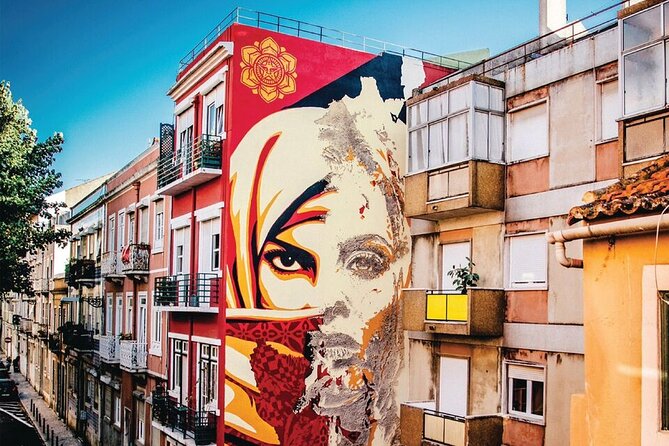
- Peace Guard by Shepard Fairey x Vhils: the mural you turn around for
- Graça and São Vicente blocks: Oze Arv and Andre Saraiva in neighborhood detail
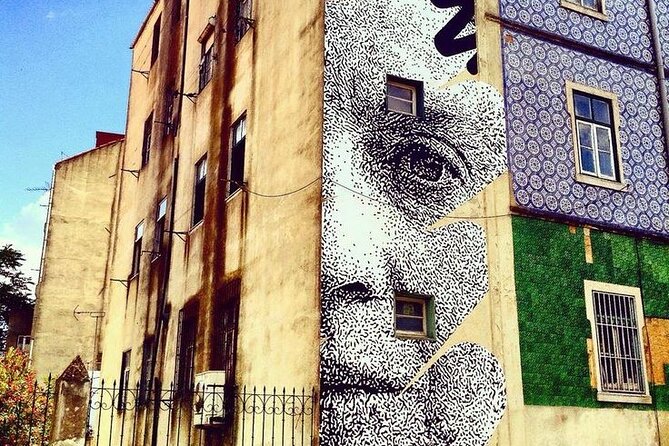
- R. São Tomé 76: Bordalo II’s panda and Vhils’s Amália on the ground
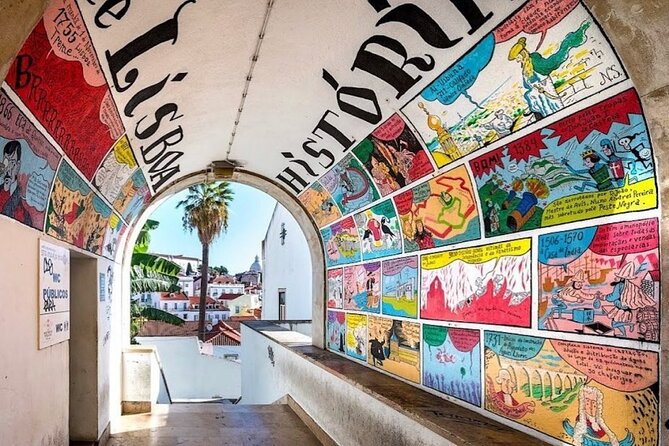
- Portas do Sol: the archway history moment under the viewpoint
- Price and what $101.97 gets you in real value
- Customizing your route: how to get the tour you actually want
- Practical tips so you enjoy every stop (not just the best photos)
- Should you book this Lisbon street art electric tuk-tuk tour?
- FAQ
- How long is the Lisbon Street Art private guided tour in an electric tuk-tuk?
- What does the tour cost?
- Is this a private tour?
- Is hotel pickup available?
- Where do we meet, and where does the tour end?
- What language is the tour offered in?
- Are admission tickets required for the stops?
- Is the tour suitable for children?
- What are the tour operating hours?
- Can I cancel for a full refund?
Key reasons this electric tuk-tuk tour is worth your time
- Fast access to steep areas of Graça without burning your legs on cobblestones
- Icon-level murals like Peace Guard that feel more like landmarks than graffiti
- Stop-by-stop artist context so the walls make sense, not just look cool
- Photo-friendly moments where you’re told exactly where to stand and look
- A route you can tailor to your interests instead of a one-size walk
- Private guide attention for questions, pacing, and how long you linger
Why an electric tuk-tuk is the smart way to see street art
Lisbon is hilly. The sidewalks can be narrow. The streets can be a jigsaw of uneven pavement. That’s where an electric tuk-tuk really earns its keep.
Instead of doing a long uphill slog to hunt for murals, you get lifted quickly between neighborhoods. The vibe stays playful, too. You’re not stuck in a bus grid. You can look out, point things out, and get to the next wall before the day feels like one long climb.
And since this is guided, you’re not left guessing what you’re seeing. You’ll hear the connections between the artists, the images, and the cultural mood behind them. Street art is often a snapshot of politics, identity, and everyday life. With a good guide, it stops being random and starts feeling like a language.
You can also read our reviews of more tours and experiences in Lisbon.



Starting in Chiado: pickup that saves time and stress
The tour starts in Chiado, with the meeting point at Rua Garrett area (Chiado address: 1200-445 Lisboa). It ends back at the meeting point, so you don’t have to worry about a complicated return.
Pickup is available at your hotel, which matters in Lisbon. Getting across the city on your own can mean extra walking and extra time. If you want a smoother start, ask for pickup and keep your morning simple.
It’s also offered in English, and it runs daily during the listed hours (9:30 AM–7:00 PM). This is the kind of tour that can fit a half-day nicely—especially if you want street art but don’t want to spend your vacation doing nothing but stairs.
Miradouro da Graça: Daniel Eime’s Sophia portrait in a viewpoint neighborhood
Your first major stop is Miradouro da Graça in the Graça area, at a mural titled for poet Sophia de Mello Breyner Andresen. The artwork here is by Portuguese street artist Daniel Eime, and it’s a portrait that connects directly to this neighborhood.
Why this works so well at the start: it’s not just street art on a wall. It’s street art tied to place. Sophia had a strong connection to Graça, and even now there’s a viewpoint named after her. So you’re not only looking at a portrait—you’re grounding yourself in the neighborhood’s identity fast.
The stop is brief, around 10 minutes, so I’d treat it like a quick orientation stop. Look at the details first, then step back and take in the viewpoint energy. Graça is where Lisbon starts to feel like it’s built on stories.
Peace Guard by Shepard Fairey x Vhils: the mural you turn around for
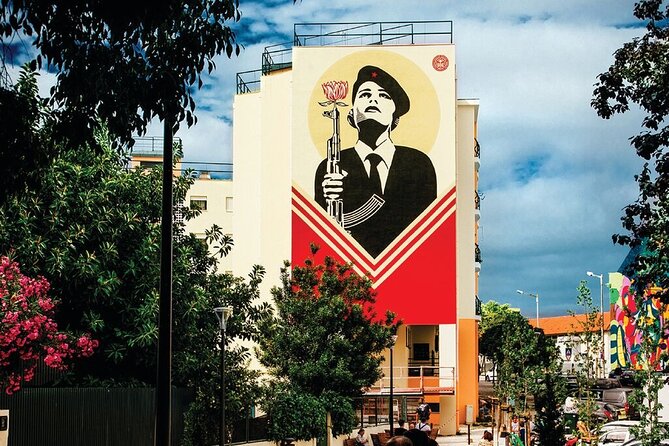
Stop two is where the tour earns its title as a street-art highlight. You’ll get to a major work by American artist Shepard Fairey (also known as Obey Giant), with Vhils connected through their collaborations. The mural includes elements tied to the Carnation Revolution and text layers that reference ideas like fuel-adaptation and human identity.
But here’s the practical tip that makes this stop memorable: you’ll be instructed to turn around and position yourself for a strong view of Peace Guard. That little moment of guidance can make the difference between a quick glance and a photo you actually like.
This wall is described as feeling close to an icon—more like a landmark than typical street art. I agree with that logic. When street art hits that level, it stops being background. It becomes the point.
If you’re a street-art fan, this stop sets expectations: Lisbon’s walls are not just decorative. They’re messages, shaped by history and by who’s watching.
Graça and São Vicente blocks: Oze Arv and Andre Saraiva in neighborhood detail
Next you move through the Graça and São Vicente areas, where the art gets more layered and more local-sounding.
You’ll see:
- Oze Arv — alegria de um caos constante
- Andre Saraiva — Mural azuleijo
This is one of those parts where the tuk-tuk ride helps you understand the streetscape faster. You’re not wandering blindly. You’re being guided through areas that connect artist to neighborhood tone.
The names here matter. Portuguese street art has a style that often blends humor, grit, and tradition. The mention of azuleijo—the ceramic tile tradition—signals that you’re not just looking at spray paint. You’re looking at visual culture that’s rooted in Lisbon’s long relationship with ornament and storytelling.
Expect the stop to be around 10 minutes. Use it the way you would in a gallery: look, then read the explanation your guide gives. If you only take photos and skip context, you’ll miss the point.





R. São Tomé 76: Bordalo II’s panda and Vhils’s Amália on the ground
One of the coolest parts of this tour is how it breaks out of the obvious “main mural wall” pattern and goes into residential-feeling streets.
At R. São Tomé 76, you’ll find:
- The panda by Bordalo II, created in the context of an exhibition called Evilution
- Vhils — Amalia, a tribute to fado diva Amália Rodrigues
Bordalo II’s panda is described as tied to environmental commitment and sustainability, using the neologism Evilution (basically a word built to express ongoing environmental focus). That tells you something important: in Lisbon, street art isn’t always about being shocking. Sometimes it’s about being persuasive—using cute, strange forms to argue for real change.
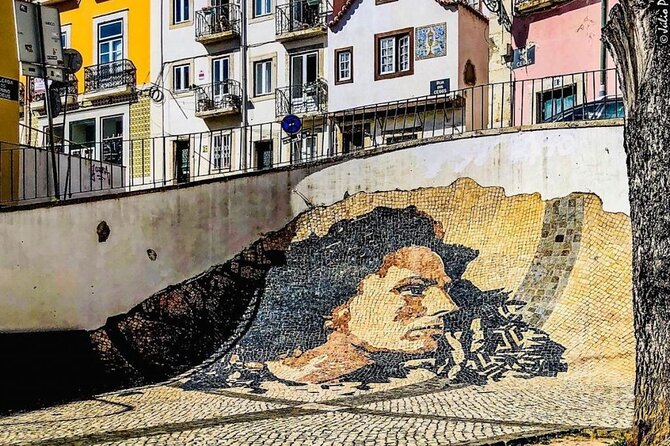
Then there’s Vhils’s Amália piece, made in Portuguese traditional-style pavement. That’s a big deal. Street art doesn’t just hang on walls here—it can sit in plain sight at foot level, where you usually don’t expect it.
There’s also a practical layer to this stop: because the subject is on and around the ground and street, you’ll want to watch where you’re stepping. Take your photos carefully. Move slowly near the artwork. You’ll get better shots without blocking anyone.
This stop runs about 15 minutes, which is enough time to look closely, take photos, and still be ready for the viewpoint finish.
Portas do Sol: the archway history moment under the viewpoint
To wrap things up, you head to Miradouro das Portas do Sol. If you’ve ever tried to chase photos at viewpoints in Lisbon, you know it can be chaotic. This tour keeps it calm by pairing the view with a specific “look right under here” detail.
Beneath the viewpoint you’ll find a small archway with the history of Lisboa painted on it. It’s the kind of detail that many people miss because they’re busy staring at the obvious horizon.
The stop is about 10 minutes, so treat it as a closing scene: get your last photos, look out over the city, and enjoy the feeling of having “read” the neighborhood through art first.
Price and what $101.97 gets you in real value
At $101.97 per person for about 2 hours, this isn’t a bargain-bin tour. It’s more like paying for convenience plus expert guidance plus transportation.
Here’s how it can still be good value:
- You’re paying for an electric tuk-tuk ride that saves time and effort on Lisbon’s steep streets
- The stops include famous names and specific walls tied to Portuguese culture and identity
- Several stops note admission is free (so you’re not dealing with extra ticket fees for the key art moments)
- It’s private, so the pacing can fit how you like to travel
- You get pickup options, which can reduce your need to crisscross the city on your own
Also, this type of tour tends to fill up. The experience is booked about 35 days in advance on average, so if you’re traveling in peak weeks, don’t wait until the last day.
The main thing to weigh is your own style. If you love wandering slowly and discovering street art on your own, you might not need a guide. But if you want street art plus context plus efficient routing, this price starts to make sense fast.
Customizing your route: how to get the tour you actually want
This is a private tour/activity, so your guide can tailor the itinerary to your interests. That’s a big reason to book this instead of doing street art as a self-guided scavenger hunt.
Here’s how you can use customization well:
- If you’re into political or protest imagery, focus on the sections tied to revolution-era themes and the artists connected to civic ideas
- If you love Portuguese culture, lean into the stops featuring Amália Rodrigues and Lisbon-specific references
- If your priority is photography, ask your guide for the best angles at the stops with clear “stand here” instructions
In the wild, the guides can bring different flavors. I’ve seen this tour run with guides such as David, Andre, Susana, and Tiago, and at least one guide is Rumi Miguel, who’s also an artist. That matters because you’ll often get more than facts—you’ll get the mindset behind the work.
One extra bonus: Lisbon’s street art can be affected by weather and light. Still, the tuk-tuk format helps if it rains. You keep moving, and you don’t lose the whole morning to a single storm.
Practical tips so you enjoy every stop (not just the best photos)
Street art tours go wrong when you move too slow. They also go wrong when you move too fast. Here’s the sweet spot for this one.
- Wear shoes you can handle on cobblestones and uneven pavement. Your legs will thank you.
- Bring a compact rain layer. It’s Lisbon; weather can be moody.
- For the Peace Guard stop, be ready to follow your guide’s directions on where to stand.
- At the ground-level pieces (like the Amália pavement work), angle your phone lower and step back a bit for a clean frame.
- Don’t treat each stop as a “check it off.” Use each one to learn one idea: theme, artist style, or historical reference.
And don’t forget: this is about seeing a different side of Lisbon. You’re pairing neighborhoods, viewpoints, and art into one story. If you stay mentally present, the whole thing feels more satisfying than a photo dump.
Should you book this Lisbon street art electric tuk-tuk tour?
Book it if you want:
- Street art with context, not just pictures
- Efficient access to steep neighborhoods like Graça and São Vicente
- A fun way to see iconic works, including Peace Guard
- Pickup and private pacing, so your day stays easy
Skip it if:
- You prefer a long DIY walk where you control every minute
- You’re only interested in one or two styles of street art and don’t care about artist background
For most first-timers, and for anyone returning who wants a fresh angle, this is an excellent choice. You’ll finish with the satisfaction of having seen Lisbon’s street art as part of the city, not as an add-on.
FAQ
How long is the Lisbon Street Art private guided tour in an electric tuk-tuk?
It runs for about 2 hours.
What does the tour cost?
The price is $101.97 per person.
Is this a private tour?
Yes. It’s private, so only your group participates.
Is hotel pickup available?
Yes. Pickup is offered, and you can be picked up at your hotel.
Where do we meet, and where does the tour end?
The meeting point is in Chiado (1200-445 Lisboa). The activity ends back at the meeting point.
What language is the tour offered in?
The tour is offered in English.
Are admission tickets required for the stops?
The listed stops include admission tickets that are free.
Is the tour suitable for children?
Children must be accompanied by an adult.
What are the tour operating hours?
It runs Monday through Sunday from 9:30 AM to 7:00 PM, during the period 06/02/2025 to 06/01/2026.
Can I cancel for a full refund?
Yes, free cancellation is available if you cancel up to 24 hours in advance for a full refund.