REVIEW · LISBON
Tuk Tuk Lisbon: Street Art 2-Hour
Book on GetYourGuide →Operated by TukGuide Portugal · Bookable on GetYourGuide
Street art in Lisbon, and you actually learn it. On this electric tuk-tuk ride, I love how the stops mix big-name pieces with quieter alley art, and I love that the guide ties each mural to what Lisbon is thinking and feeling. The big win is the story-first guidance—you’re not just pointing at walls.
My one watch-out is time: it’s only 2 hours, so if you want slow, lingering museum-style viewing, this won’t feel enough. Still, it’s a smart way to get bearings fast and leave with a real street-art map in your head.
In This Review
- Key highlights at a glance
- A Street-Art Safari by Electric Tuk-Tuk
- Price and value: $70 for 2 hours of murals and stories
- Meeting up in Restelo or 1200, then rolling into the art
- Stop-by-stop: Vhils & Shepard Fairey, then the Portas do Sol viewpoint
- Mário Belém’s Saudade and the ADD / FUEL wall text
- Tamara Alves’s Escape into Life and the walkable Graça Historic District
- Santa Justa Lift: a street-art stop with city-scale context
- The guide makes the difference (Nuno, Paulo, and Diogo)
- Rain, cold, and the comfort factor that quietly matters
- What’s included (and what’s on you)
- Who this tour suits best
- Should you book Tuk Tuk Lisbon: Street Art 2-Hour?
- FAQ
- How long is the Tuk Tuk Lisbon Street Art tour?
- Where are the pickup locations?
- What’s included in the price?
- Do I need to buy monument tickets?
- What languages are offered?
- What should I bring?
- Is it suitable for kids and everyone?
Key highlights at a glance
- Local guide energy: Guides like Nuno, Paulo, and Diogo come across as funny and passionate, and that matters on a short tour.
- Photo-stop pacing: Each mural stop is brief, so you get many sights without feeling rushed to move.
- Icon + under-the-radar mix: You’ll hit recognizable artists and Lisbon’s lesser-known corners.
- View-friendly tuk-tuk design: Transparent, waterproof covers help you keep sightlines in bad weather.
- Small, personal group feel: It’s set up as a private group, so you’re not swallowed by a crowd.
- Ginjinha included: A taste of Lisbon’s cherry liquor adds a very local touch.
A Street-Art Safari by Electric Tuk-Tuk
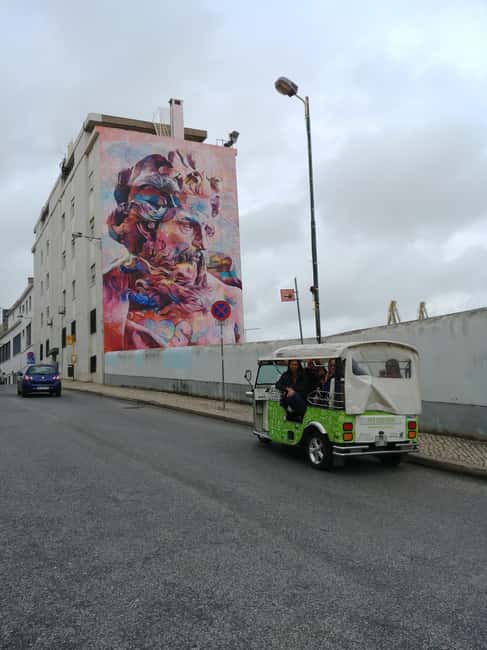
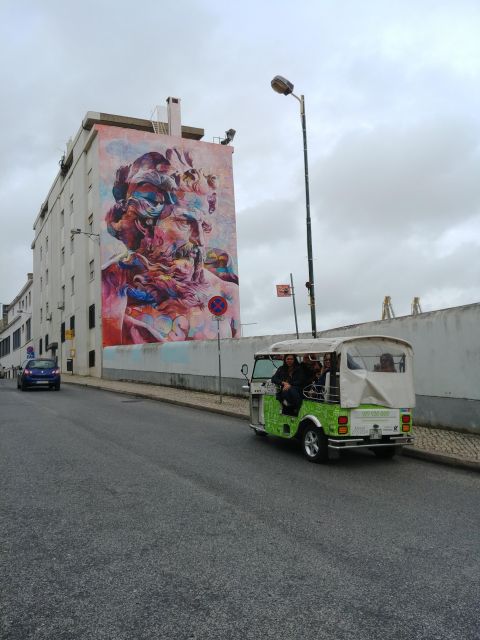
Lisbon’s street art isn’t just decoration. It’s commentary. It’s humor. It’s politics. It’s sometimes personal grief turned into paint. What I like about this tour is that it treats murals like a language, not a photo backdrop.
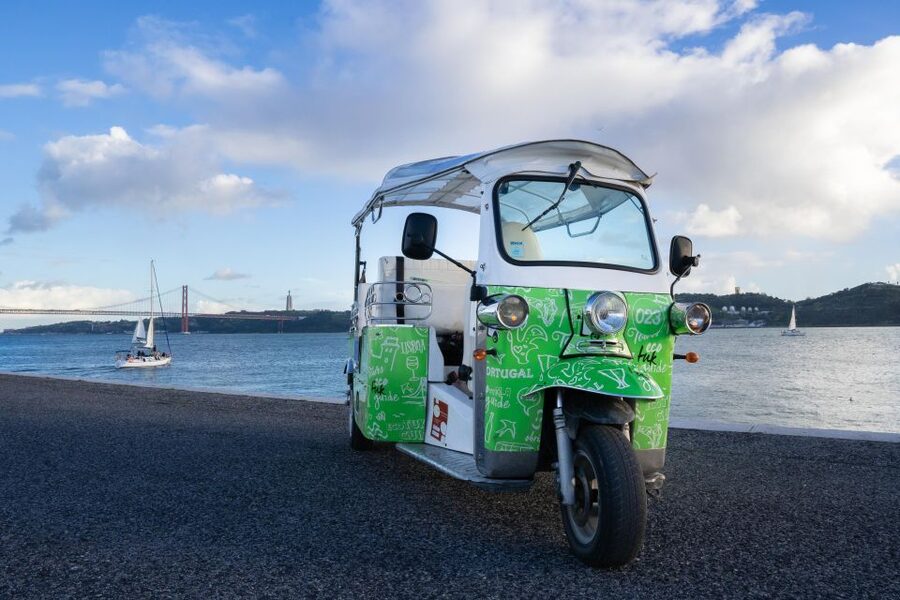
The ride itself helps you see more in less time. The tuk-tuk is electric and built for comfort on Lisbon’s hills, with transparent and waterproof covers. Those covers are a quiet hero. If rain or wind shows up, you’re still able to look outward and keep taking photos—without playing hide-and-seek with umbrellas.
You’ll also get a speaker system, which sounds like a small detail until you’re sitting behind noise and traffic. Clear audio means you don’t miss the explanations for why a work exists, what the artist was reacting to, and how the piece fits into Lisbon’s street-art culture.
You can also read our reviews of more tours and experiences in Lisbon.



Price and value: $70 for 2 hours of murals and stories
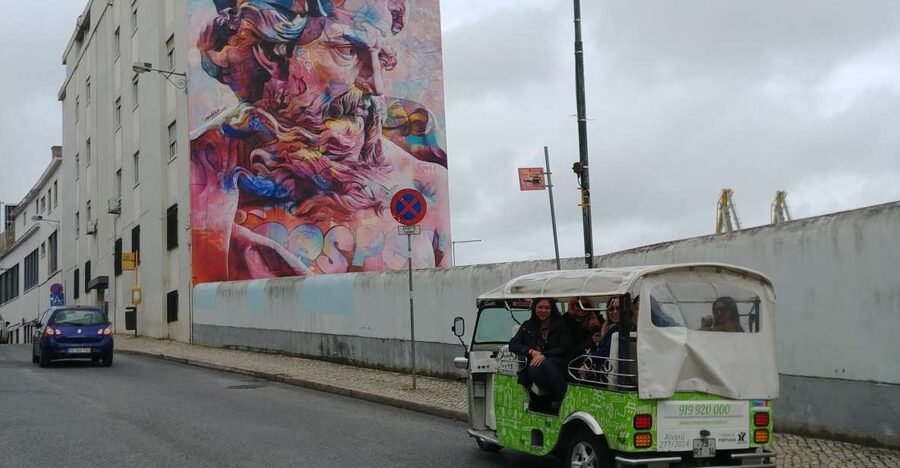
At $70 per person, this isn’t the cheapest thing on a Lisbon list. But for 2 hours, you’re paying for three things that add up quickly:
- Transportation + hotel pickup/drop-off, which saves time and hassle.
- A guide who explains the works instead of letting you guess.
- The included ginjinha taste, plus comfort items like blankets on colder days.
If you’re doing a tight itinerary, the value can be excellent. Two hours is short enough to slot into a day packed with sights, yet long enough for a real mini-course in Lisbon street art. On the flip side, if you’re the type who loves standing still, reading everything, and revisiting the same wall for 30 minutes, you may wish the time were longer.
Meeting up in Restelo or 1200, then rolling into the art
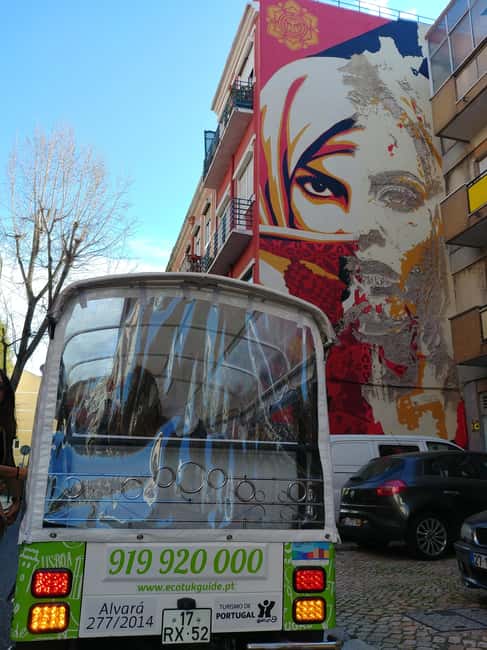
Pickup options are 1200 and Restelo. From there, the tour moves through neighborhoods where street art is part of everyday life—where you see murals near viewpoints, on slopes you can’t reach by car easily, and around areas that feel made for walking.
You’ll also want to plan for photo stops. Many are listed as quick stops (often around 5 minutes), and one stop is longer (10 minutes). That timing shapes the whole tour feel. It’s optimized for seeing multiple works, not for slow strolling.
Also, bring your passport or ID card. That’s required.
Stop-by-stop: Vhils & Shepard Fairey, then the Portas do Sol viewpoint
The tour starts with a couple of fast, high-impact stops. First up is Vhils & Shepard Fairey. Expect a photo stop with guided context. This is a good opener because it sets a tone: Lisbon street art isn’t random. It includes artists with major international recognition, and you’ll often see how their styles land in local settings.
Then you move to Portas do Sol Terrace. This stop is short, but it’s a smart pairing. You get art, then you get a viewpoint. Lisbon’s street art makes more sense when you can place it in the city’s geography—hills, angles, and sightlines are part of why murals look the way they do.
A quick note for your camera planning: for terrace-type stops, you’ll usually want your phone/camera ready before the vehicle stops. The time window is tight.
Mário Belém’s Saudade and the ADD / FUEL wall text
Next comes Saudade, a mural by Mário Belém. Saudade is one of those Portuguese words that’s hard to translate cleanly. It can mean longing, melancholy, or a sweet ache. That emotion is a big reason Lisbon has such a strong visual voice in its street art.
A guided moment at this kind of mural helps you read beyond the surface. You’re not just looking at a figure or a style. You’re learning what message is being carried—and how the artist uses Lisbon’s visual culture to speak directly to people.
After that, you’ll see ADD / FUEL. This one is listed as a photo stop with guided commentary, and it points to another side of street art: the graphic language of tags, names, and visual signatures. Even if your street-art knowledge is zero, this part helps you connect the dots between different styles—large murals on one side, street-level markings on the other.
One small curiosity: Saudade appears twice in the route list. The practical takeaway isn’t that you’re repeating yourself—it’s that the tour likely comes back to a spot because it’s important for viewpoint, layout, or photo angles. Either way, you’ll get at least one more chance to see how the mural sits in its surroundings.




Tamara Alves’s Escape into Life and the walkable Graça Historic District
You then shift to “Escape into Life” by murales Tamara Alves. The title alone signals a theme. In street art, titles are often part of the message, not just branding. A guided explanation here helps you understand the story thread the mural is trying to pull—what feeling it wants to leave you with, and how the artist’s approach fits into the broader Lisbon scene.
Next is Graça Historic District, where you get a longer 10-minute stop. This is where the tour starts to feel less like rapid sightseeing and more like a small neighborhood experience. Graça is the type of place where the streets themselves carry texture: slopes, corners, and walls close to foot traffic. Even if your stop is brief, you’ll likely get the sense of why murals work so well here.
Also, this is a good moment to stand where the guide wants you to stand for photos. In hillside neighborhoods, a mural can change dramatically depending on your angle.
Santa Justa Lift: a street-art stop with city-scale context
The tour ends with Santa Justa Lift. This is more than a pretty landmark in this context. It acts like a bridge between street art and Lisbon’s larger urban story—where modern city movement meets historic city layers.
The stop is short (5 minutes), so focus on what you’re doing:
- snap the photo you came for
- and listen to the last round of context from the guide
If you’re planning to do other areas later, this is a helpful finale. It gives you one last anchor point so you can connect what you saw on the walls to what you’ll notice later on streets, in alleys, and near viewpoints.
The guide makes the difference (Nuno, Paulo, and Diogo)
On a short, stop-heavy tour, the guide has to do two jobs: teach fast and keep it fun. That’s exactly what stands out with guides named Nuno, Paulo, and Diogo—people highlight their humor and their knowledge, and say the guide was the difference-maker.
For you, that means you’re less likely to end the tour with a folder full of photos and no clue what you’re looking at. Instead, you’ll leave with language for street art: style types, why the message matters, and how Lisbon’s neighborhoods have become a public canvas.
A speaker system helps too. Clear audio means you can actually catch the story details while you’re moving between stops.
Rain, cold, and the comfort factor that quietly matters
Lisbon weather can change fast. This tour accounts for it in a practical way: blankets for the coldest days and transparent, waterproof covers on the tuk-tuk. The covers are the big deal. They let you keep your sightlines during rain, so you don’t feel forced to abandon the art just because the sky opened.
You’ll still want to dress for wind and occasional drizzle. But at least you’re not getting soaked while trying to look out for the next mural.
What’s included (and what’s on you)
Included:
- Hotel pickup and drop-off
- Speaker so you can hear the guide clearly
- Blankets for colder days
- Electric tuk-tuk with transparent and waterproof covers
- Taste of ginjinha (local cherry drink)
Not included:
- Monument entry tickets
- Food and drinks
Translation for your planning brain: treat this tour as the street-art segment of your day. If you want lunch, you’ll need to handle that separately.
Who this tour suits best
This is a great fit if you:
- want a 2-hour introduction to Lisbon street art without planning a self-guided route
- like learning the stories behind artworks
- want a photo-friendly pace that still includes explanations
- prefer a private group feel, not a bus tour vibe
A couple of boundaries are clearly listed. The tour is not suitable for children under 7 and it’s also not suitable for pregnant women. The vehicle can accommodate up to 6 people, with a maximum weight limit of 400kg, so the group size stays tight.
Should you book Tuk Tuk Lisbon: Street Art 2-Hour?
Book it if you want a fast, guided way to connect Lisbon’s street art to place and meaning. The combination of hotel pickup, a speaker, comfort features for weather, and quick guided photo stops is exactly what you want when your schedule is tight.
Skip it if you need long, slow time at each wall, or if you prefer independent browsing with zero structure. This is built for efficient viewing plus storytelling, not extended wandering.
If you’re planning a first Lisbon trip, this can be a high-impact choice. You’ll leave with a clearer sense of who’s painting, what they’re saying, and where in Lisbon that conversation shows up.
FAQ
How long is the Tuk Tuk Lisbon Street Art tour?
It runs for 2 hours.
Where are the pickup locations?
Pickup is available at 1200 and Restelo, with drop-off at the same two locations.
What’s included in the price?
You get hotel pickup and drop-off, a speaker to hear the guide clearly, blankets for colder days, an electric tuk-tuk with transparent and waterproof covers, and a taste of ginjinha.
Do I need to buy monument tickets?
No. Monument entry tickets are not included.
What languages are offered?
Live tour guides are available in English, French, Italian, Portuguese, Spanish, and Japanese is also listed as an offered language.
What should I bring?
Bring a passport or ID card.
Is it suitable for kids and everyone?
It is not suitable for children under 7 and it is not suitable for pregnant women.