REVIEW · LISBON
Lisbon: Street Art TukTuk Tour
Book on GetYourGuide →Operated by Live Portugal - Tours & Tales · Bookable on GetYourGuide
Street art, delivered in an electric tuk tuk. This tour is a smart way to see Lisbon’s ever-growing mural scene while you roll through historic neighborhoods and get real context from a local guide on an electric tuk tuk.
I love the artist context you get along the way—names like Vhils, Obey Giant, Pichiavo, and Bordalo II come with clear explanations of how street art evolved and why it hits so hard. I also like the private group feel, with hotel pickup and drop-off so you spend your time looking up, not figuring out logistics. One consideration: you need some mobility to climb into the vehicle, and you should expect bumpy cobblestone streets in older areas.
In This Review
- Key highlights you’ll feel fast
- How an electric tuk tuk changes Lisbon street art viewing
- What you’ll learn: street art history with real artist names
- Baixa de Lisboa: the easy start and the tour rhythm
- Alfama photo stop: where the past frames the murals
- Graça Historic District: views, stories, and better photo angles
- Xabregas: where the street-art energy feels closer
- Back through Baixa: wrap-up, monuments, and one last look
- Price and what $94 buys you in 2 hours
- Comfort, pace, and who should book (and who should skip)
- Booking thoughts: who this Lisbon street art tuk tuk tour is perfect for
- FAQ
- How long is the Lisbon Street Art TukTuk Tour?
- Is this a private tour or a shared group?
- What neighborhoods will we visit during the tour?
- Do we get time for photos?
- What’s included in the price?
- Are monument entrance fees included?
- What languages are available for the live guide?
- Is luggage allowed?
- Is the tour suitable for young children or limited mobility?
- Can I cancel or change my plans?
Key highlights you’ll feel fast

- Electric tuk tuk transport that keeps the pace comfortable for a short 2-hour outing
- Artist and movement stories tied to works you’re actively seeing in the neighborhoods
- Photo stops built into the route, not tacked on as an afterthought
- Historic districts plus modern murals, so you get contrast in every direction
- Eco-friendly, private sightseeing with a small max group size for better attention
How an electric tuk tuk changes Lisbon street art viewing
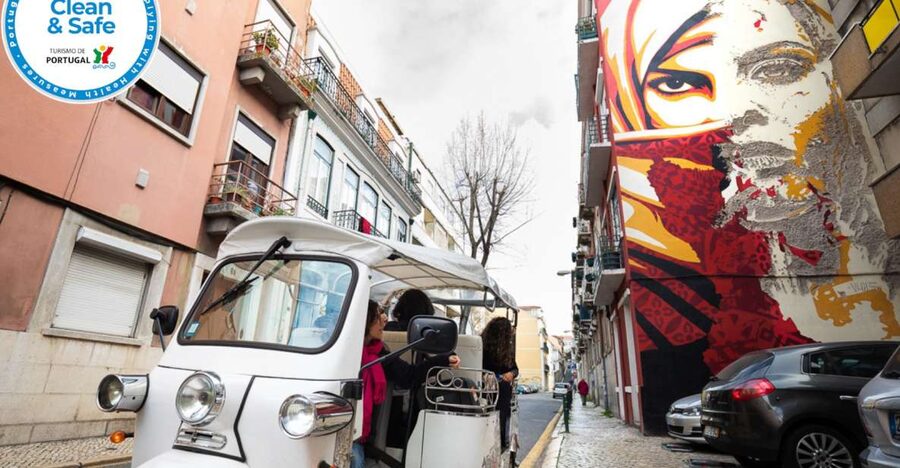
Lisbon is one of those cities where you can look at the street and find a story in it. The trick is that the best walls are often in the parts of town that are steep, tight, and paved with cobblestones. That’s why this tour works: you get short drives that position you for photos, then you get guided stops long enough to actually see the art details.
The electric tuk tuk is also a practical choice for a 2-hour plan. You’re not forced into a long walking tour when you might want breaks, views, and quick photo chances. You can focus on what’s on the walls—textures, stencils, paste-ups, paint layers—without burning your legs before you reach the good stuff.
And because your route threads through places known for both history and street art, the experience doesn’t feel like a single-theme viewing session. It feels like Lisbon, seen in two timelines: old stones down low, new expressions up high.
You can also read our reviews of more tours and experiences in Lisbon.



What you’ll learn: street art history with real artist names
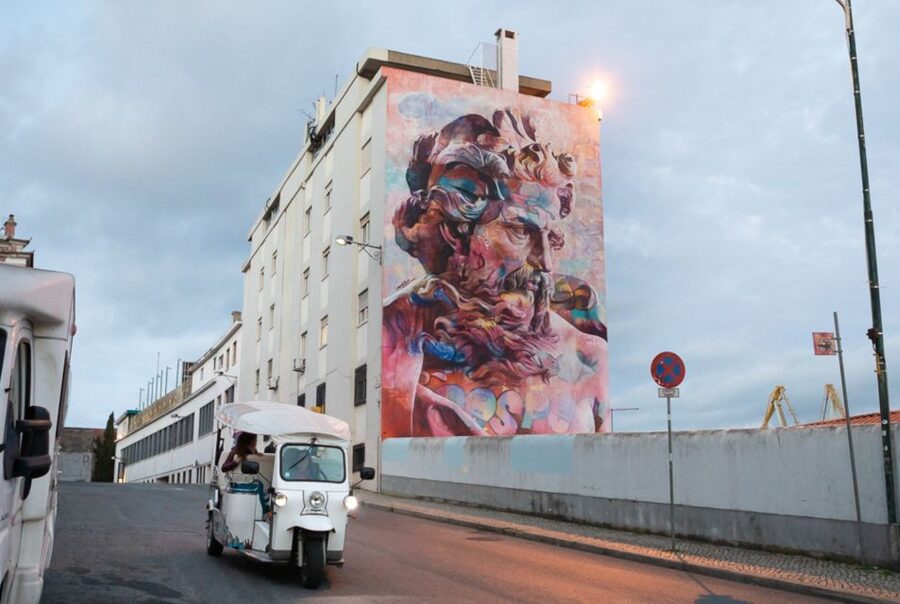
This isn’t just a drive-by photo run. Your guide brings a live storytelling thread that connects what you’re seeing to the bigger street-art story—globally and specifically in Portugal. That matters, because street art can look chaotic at first glance, but it’s usually packed with decisions: message, style, technique, and timing.
You’ll also hear how major international artists fit into the movement, with examples like Vhils, Obey Giant, Pichiavo, and Bordalo II. Seeing those names while you’re standing near the work helps you read the art faster. You start noticing things like how artists use placement (where a mural lands in the street) and materials (how surfaces shape the final look).
I like that the guide’s explanations are meant to give you context for each piece, not just a general talk. It turns a wall into a conversation.
Baixa de Lisboa: the easy start and the tour rhythm
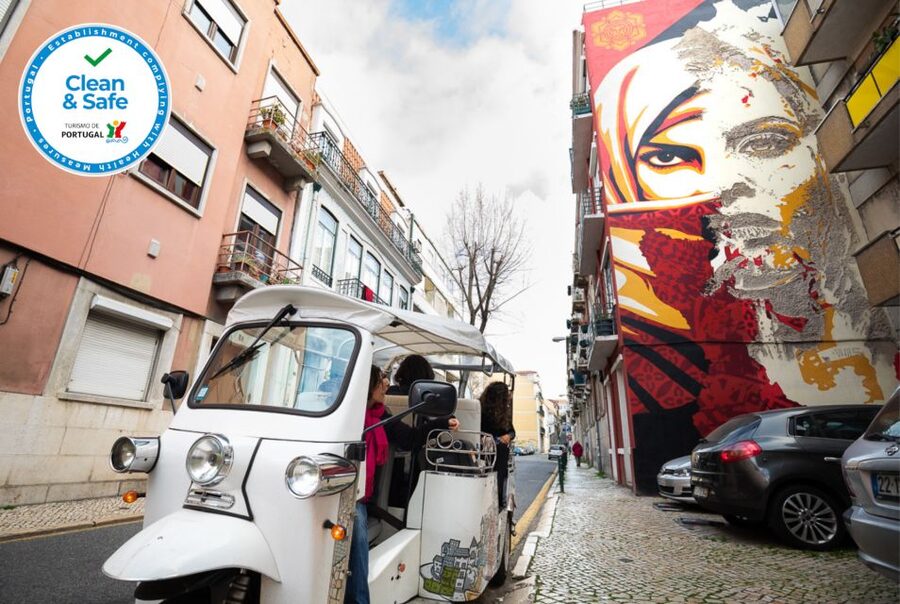
You begin in Lisbon with hotel pickup, then head toward Baixa de Lisboa for a short guided introduction and a scenic drive. This first stretch is useful because it sets the pace. In only a few minutes, you get a sense of where the tour is headed and how street art shows up in different parts of the city.
Even if you’re only in Baixa briefly, it’s a good warm-up. You’re not dropped into the steepest area first. Instead, you build momentum: looking, listening, then shooting photos when the guide tells you to.
What to watch for here: the way the city’s design and street-level activity shapes how street art is noticed. In busy historic zones, murals often land where people naturally pause—doorways, corners, and stretches you pass more than once.
Alfama photo stop: where the past frames the murals
Next comes Alfama, one of Lisbon’s most recognizable historic neighborhoods. You’ll get a photo stop plus guided time, along with scenic views on the way. The big win here is contrast: old streets and modern expression side by side.
Alfama is perfect for street art because it’s full of tight geometry. Walls don’t just sit there; they catch light differently, and perspective changes as you step a few feet. That makes murals feel bigger and more intentional than you might expect from a quick glance.
Practical note: this is also where cobblestones can slow you down if you try to walk too fast or twist for photos. I’d treat the stops like photo sessions with a plan: pause, look up first, then frame from the spot the guide suggests. You’ll get more keepers with less scrambling.
Graça Historic District: views, stories, and better photo angles
Then you move to Graça, another area where the city’s viewpoints are part of the show. You’ll have a photo stop and guided time, plus more scenic driving and viewpoints along the way.
Graça tends to feel like the city opens up. That’s handy for street art, because some pieces work best when you understand where the neighborhood sits in relation to everything around it. Even if the murals are small compared to the scenery, the view helps you understand the artist’s placement and the neighborhood’s identity.
The guide’s role is especially strong in this kind of stop. When they explain the history behind the movement, you can connect it to why street art makes sense in a place like Graça—public space, visibility, and local voices in a city that already loves symbols.
One more thing I like: you’re not rushed. With the tuk tuk transport, you’re free to step into the right spot and let the story click before you start snapping photos.





Xabregas: where the street-art energy feels closer
Your route continues to Xabregas, again with a photo stop and guided time, plus scenic driving. This is the part of the tour where the murals can start feeling less like sightseeing and more like a living scene.
Xabregas is a good match for the tour’s main promise: seeing works by both local and international artists, then learning how street art techniques and materials evolved over time. When the guide ties an artwork to its style and origins, it changes your focus. You stop thinking only about what the mural looks like and start noticing how it was built—layers, edges, typography choices, and the way the surface affects the final result.
I’d keep your camera ready, but also keep your attention up. Some of the best details are the ones you only catch after you’ve been looking for a minute or two.
Back through Baixa: wrap-up, monuments, and one last look
After the main neighborhoods, you head back toward Baixa de Lisboa for a shorter guided segment and scenic drive before returning to your starting point.
This final run is a nice way to consolidate what you saw. By now you’ve got context—why certain artists matter, what street art in Lisbon responds to, and how the movement lives in public space. You’re more likely to spot patterns: how murals echo the neighborhood identity, and how the city’s historic architecture influences what street art can do visually.
You’ll also have had the benefit of the tour’s overall structure: time for photos, time for explanations, and time to enjoy the scenery. The tour is designed so that the street art doesn’t feel random. It feels like a guided route through Lisbon’s layers.
Price and what $94 buys you in 2 hours
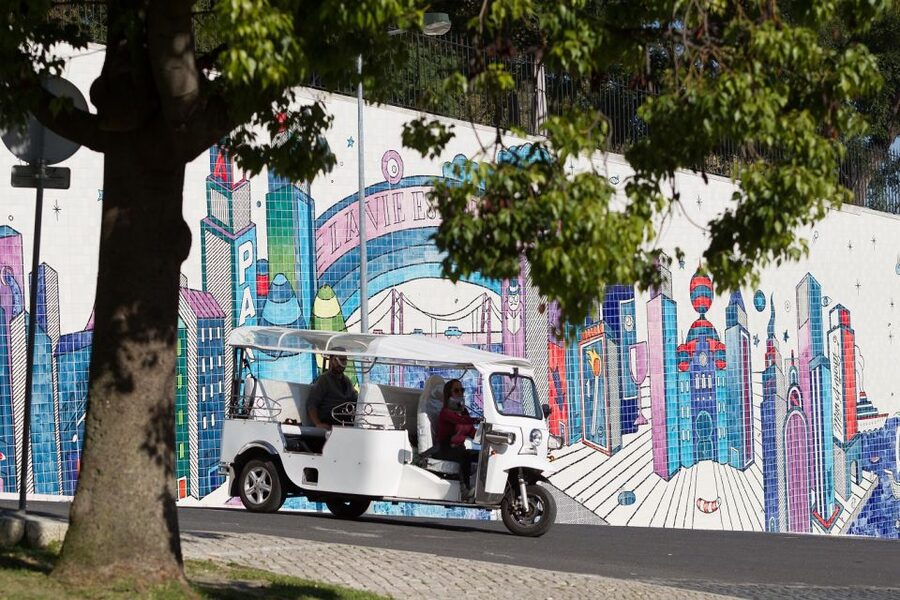
At $94 per person for a 2-hour private tour, the value isn’t just the murals. It’s the combination of things that would be annoying to piece together yourself: hotel pickup and drop-off, a local guide, private transport in an electric tuk tuk, and insurance included.
If you’ve ever tried to build a street-art route on your own, you know what costs time: getting to the right neighborhoods, figuring out where to stop, and then trying to learn enough context to understand what you’re seeing. This tour packages the learning and the positioning into a short time window.
Also, the small group setup helps. With limited occupancy (up to 6 total), you’re more likely to get personal attention from the guide, especially when they’re pointing out details and explaining how techniques connect to street art history.
Entrance fees for monuments are not included, so if you want to go inside any sight with a ticket, you’ll need to budget separately. But for the viewing parts—walls, corners, and viewpoints—you’re not waiting on tickets.
Comfort, pace, and who should book (and who should skip)
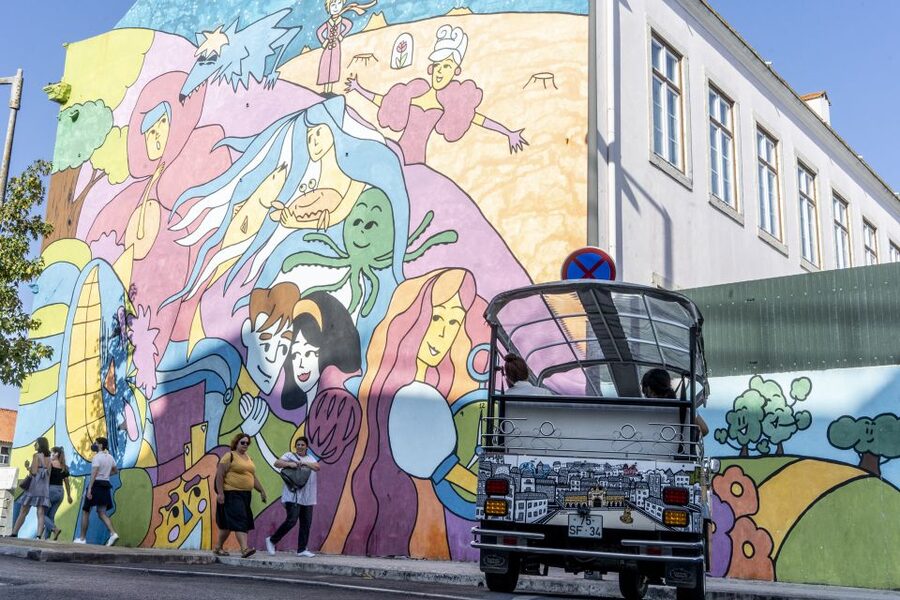
This tour is short, but it’s not a “sit and watch” experience. You do need a little movement: some level of mobility is required to climb into the tuk tuk. And since older streets can involve cobblestones, you should expect some bumpiness.
It’s also not listed as suitable for people with mobility impairments, people with back problems, pregnant women, or children under 4. If you fall into any of those categories, it’s worth being cautious.
On the group side, the maximum occupancy is 6 total, and it tends to be most comfortable for up to 4 adults and 2 children. That small size is part of the appeal. You get private transport without feeling like you’re stuck in a large group where your guide can’t slow down for questions.
My practical advice: wear shoes that handle uneven streets, keep your camera strap secure, and plan for stops that are photo-first, explanation-forward. You’ll get the most out of it when you’re ready to look, listen, and pause.
Booking thoughts: who this Lisbon street art tuk tuk tour is perfect for
Book this tour if you want a focused street art experience without spending half a day walking between neighborhoods. It’s a great fit for first-timers who want both Lisbon sightseeing and street art context in one go, especially if you like learning about the “why” behind the “wow.”
It’s also a smart choice if you’d rather be guided to good walls than wander. Guides like Claudio, Tiago, Tomas, and Felipe have been praised for their humor, care, and deep knowledge of the local spots and art history—so you’re likely to leave with a clearer read on the murals.
Skip it if you can’t manage the small climb into the vehicle or if cobblestone roughness is a deal-breaker for you. Street art is visible from the streets, but this tour is still moving through older Lisbon streets.
FAQ
How long is the Lisbon Street Art TukTuk Tour?
The tour lasts 2 hours.
Is this a private tour or a shared group?
It’s a private group.
What neighborhoods will we visit during the tour?
You’ll stop around Baixa de Lisboa, Alfama, Graça Historic District, and Xabregas.
Do we get time for photos?
Yes, there are photo stops included at multiple points during the tour.
What’s included in the price?
The price includes the tuk tuk ride, a local guide, hotel pickup and drop-off, and insurance.
Are monument entrance fees included?
No. Entrance fees for monuments are not included.
What languages are available for the live guide?
The guide is available in English, French, Portuguese, Spanish, and German.
Is luggage allowed?
No luggage or large bags are allowed.
Is the tour suitable for young children or limited mobility?
It is not suitable for children under 4 years old. It also isn’t suitable for pregnant women, people with back problems, or people with mobility impairments. Some mobility is required to climb into the vehicle.
Can I cancel or change my plans?
Yes. You can cancel up to 24 hours in advance for a full refund, and you can reserve now and pay later.