REVIEW · JOHANNESBURG
Johannesburg: Maboneng Street Art & Culture Tour
Book on GetYourGuide →Operated by One Day Africa · Bookable on GetYourGuide
Street art here makes Johannesburg readable fast. This walk starts at the Hallmark House rooftop, one of the best sunset-and-city-view spots in Joburg, then heads into Maboneng’s murals with artist stories behind every pause. You’ll see how the art connects to identity, resistance, and hope, all while learning what’s changing in the post-apartheid city.
I especially like that you’re not just looking at walls—you’re getting context at the key pieces. The guides linked to this experience, including Refiloe, Mulalo, and Clement, are praised for turning street art into real conversations, not a hurried photo stop.
One possible drawback: there’s no hotel pickup and the tour doesn’t include food or drinks, so you’ll want to plan your timing and bring a little extra cash for shops if you feel like browsing.
In This Review
- Key points to know before you go
- Hallmark House Rooftop: where you get your bearings in Joburg
- Maboneng Precinct murals: identity, resistance, and hope on the wall
- The Cosmopolitan Lounge stop: a short detour that helps you read the area
- Access City and Artisan Lofts: markets, crafts, and buying with context
- Jewel City: the bridge between street art and modern gallery space
- 264 Fox St: the final look that makes the walk feel complete
- Price and value for a $37, 2-hour street art walk
- Who should book this Johannesburg Maboneng tour
- Should you book it?
- FAQ
- How long is the Johannesburg Maboneng Street Art & Culture Tour?
- Where does the tour start, and where should I meet?
- Is hotel pickup or drop-off included?
- Are food and drinks included in the price?
- What language is the tour guide?
- Is there free cancellation?
Key points to know before you go
- Hallmark House rooftop start for a quick reset and skyline views before the walking begins
- Murals with meaning, not just images, with pauses to unpack context and symbolism
- Meet-and-greet energy with local creatives and artists you might not find on your own
- Market time in areas like Access City and Artisan Lofts, where browsing can turn into buying
- Good vibes + safety with a guide, with many guests saying they felt comfortable while walking
- A clean 2-hour format that works well for first-timers who want culture without a full day commitment
Hallmark House Rooftop: where you get your bearings in Joburg
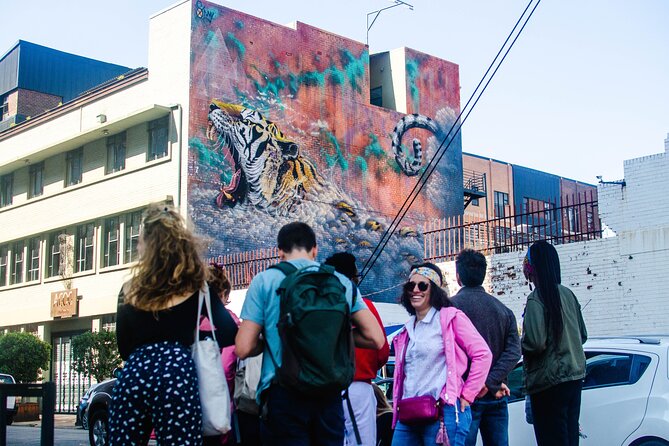
The tour kicks off at Hallmark House, and the first move is smart: start high, look out, then walk in. If you arrive early, the instruction is simple—wait inside Hallmark House at the coffee shop. That rooftop viewpoint is one of the most famous in the area, and it sets the tone fast. You can see the city’s layers at once, which makes the street art stops later feel more grounded and less random.
I like this approach because it helps you read Maboneng like a story. Street art is usually explained through symbols and style, but the best explanations also include place—what the neighborhood is becoming and why that matters. Starting at Hallmark House makes the later murals hit harder because you already understand the setting.
You’ll also notice how the guide’s role is more than pointing. In this experience, guides like Refiloe and Mulalo are repeatedly praised for talking through the what and the why: why these walls look the way they do, and what the creators are trying to say.
You can also read our reviews of more tours and experiences in Johannesburg.
Maboneng Precinct murals: identity, resistance, and hope on the wall
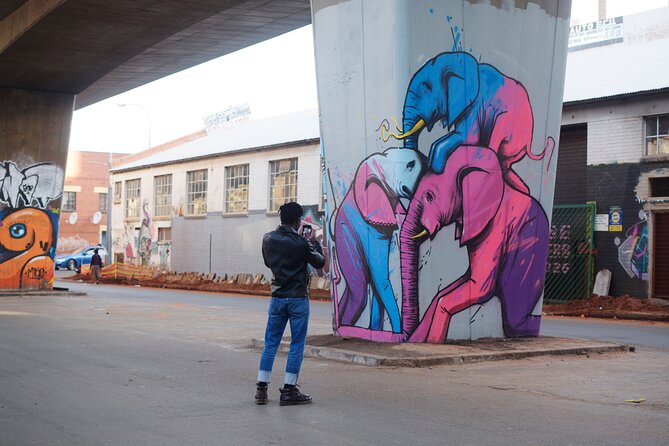
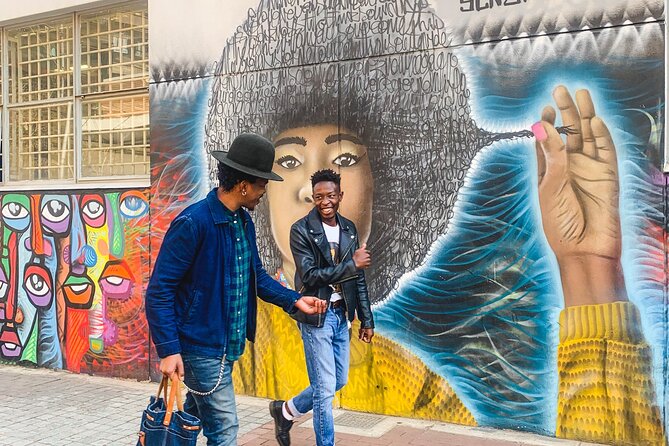
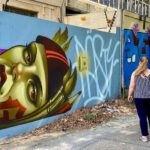
Maboneng is where the tour really turns on. You’ll spend time walking through the Maboneng Precinct, including photo stops and guided viewing at specific artworks. The big idea here is that the art isn’t just decoration—it’s communication. Many murals in this part of Johannesburg function like public storytelling: identity made visible, resistance made visible, and hope made visible.
What you’ll get from a good guide makes all the difference. In the feedback, Refiloe stands out for explaining details that people often miss when they’re only scanning for cool pictures. Guides are also noted for spotting meaning in technique and choices—colors, figures, and style—then connecting that to Johannesburg’s complicated story and the city’s post-apartheid shift.
At several points, the group pauses so you can slow down. That’s key. Street art reads differently when you’re close enough to see the brushwork or the layering, and when you can hear the context instead of sprinting to the next wall.
Practical thought: bring your photo energy, but don’t treat every mural like a checklist. The pauses are the whole point. If you’re the type who asks questions, this part of town is built for that.
The Cosmopolitan Lounge stop: a short detour that helps you read the area
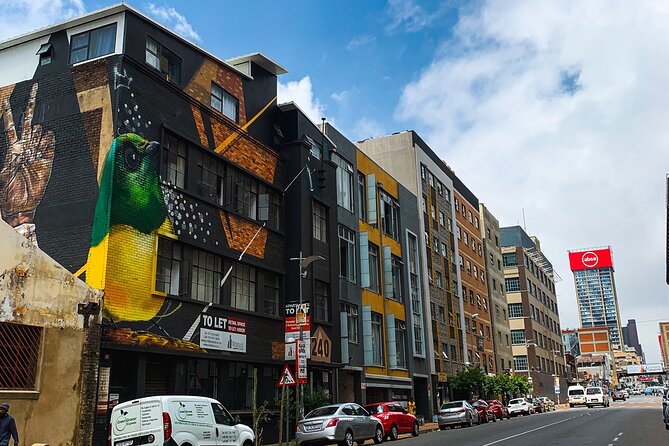
Not every stop is a mural mega-moment. The tour includes a quick visit around the Cosmopolitan Lounge, mostly as a photo and guided walk-by moment. It might sound minor, but these short pauses can matter because they help you understand street art’s ecosystem.
Street art doesn’t live alone. It sits next to lounges, shops, galleries, and everyday foot traffic. A quick stop like this gives you a sense of how people actually move through the area. It also helps you connect what you’re seeing on walls to what you might later experience nearby—coffee, conversation, and that in-between feeling of street culture and curated space.
If you’re trying to time your day, this section helps too. It’s brief, so you’re not stuck waiting around while the group catches up. You stay in rhythm: view, learn, move.
Access City and Artisan Lofts: markets, crafts, and buying with context
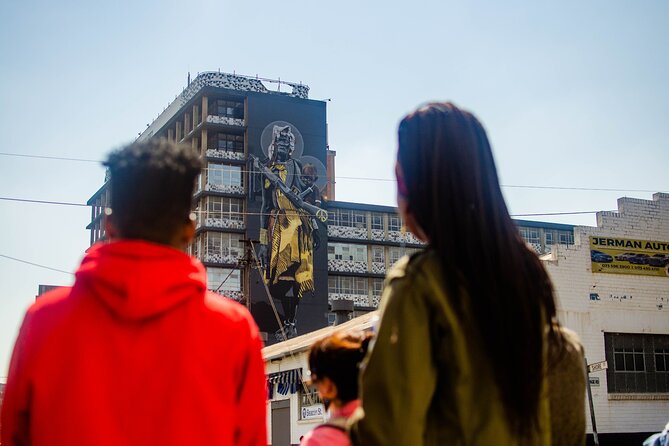
As the walk continues, you’ll head toward Access City and then Artisan Lofts. These stops include guided walking and time at arts and crafts markets. This is where the tour goes beyond murals and shows you how the creative economy works on the ground.
I like this part because it’s optional in the best way. You don’t have to buy anything to enjoy it. But if you want a tangible memory, this is one of the easiest places to do it. And because you’re coming after the art explanations, you’re more likely to ask smart questions: who makes what, what materials they use, and why certain styles show up in this neighborhood.
One practical note: market browsing can tempt you to impulse-buy. Set a small budget in your head before you arrive. Think of it like collecting postcards—small, meaningful, and not heavy.
Guides associated with this experience are also noted for giving suggestions afterward, including pointers for restaurants and artists around Maboneng. That makes the market portion feel like more than shopping; it’s part of learning how to keep exploring after the walk ends.
Jewel City: the bridge between street art and modern gallery space
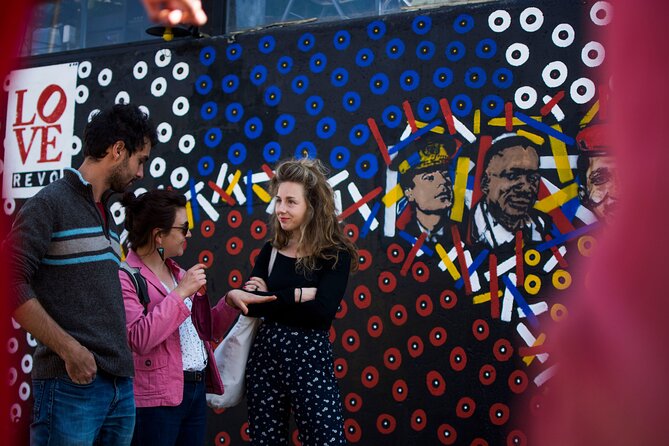
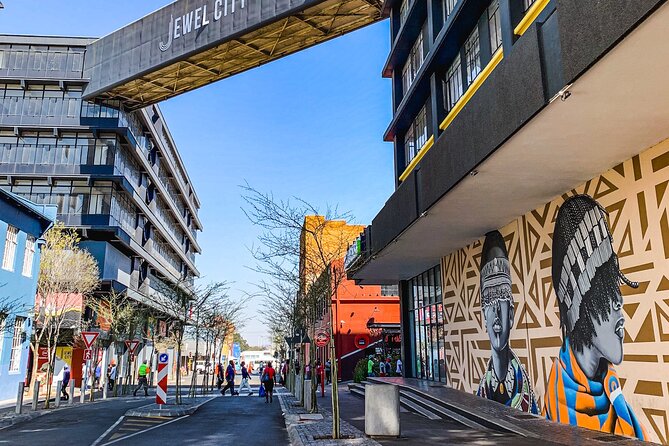
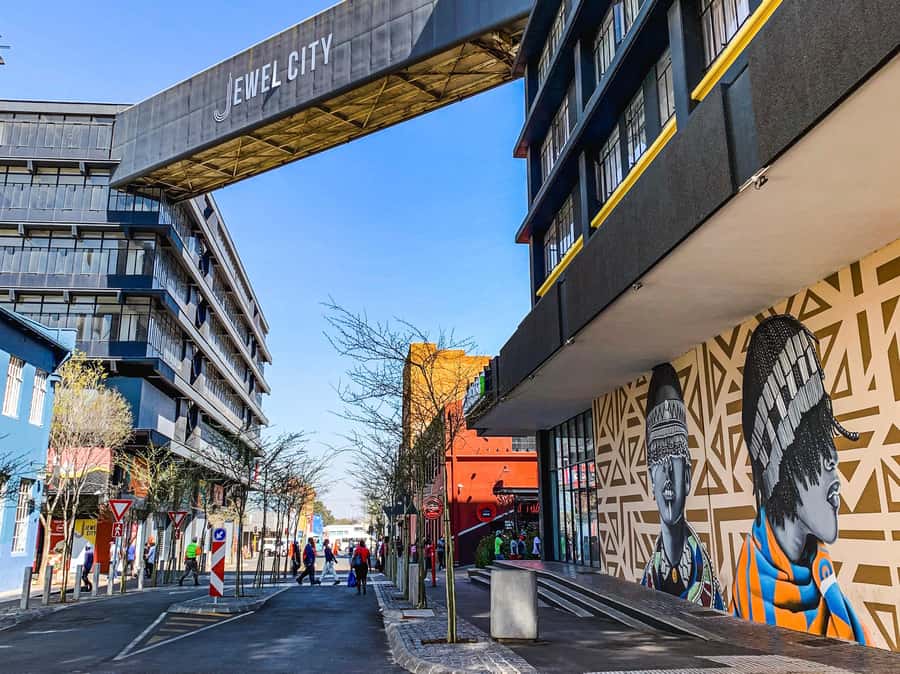
Next up is Jewel City, another key creative area for understanding how Joburg’s urban regeneration is playing out in real time. You’ll have a photo stop and guided exploration, with time around galleries and opportunities to meet local vendors and creatives.
This stop is valuable because it changes your mental category. Instead of only thinking street art is for sidewalks and walls, Jewel City helps you see how urban art connects to more formal art spaces and newer cultural scenes. In other words, you start with murals, then you get the “where it goes next” angle.
If you’re into technique, this is also where you might hear more about how artists think and work—how they’re motivated, and how they tell stories in ways that resonate locally and beyond. The tour framing here emphasizes the idea of inner-city transformation: not a clean marketing slogan, but a real shift in what the area represents.
Also, this is a good checkpoint for your energy level. After enough walking and explanations, gallery-style spaces give your brain a chance to rest while you still learn.

264 Fox St: the final look that makes the walk feel complete
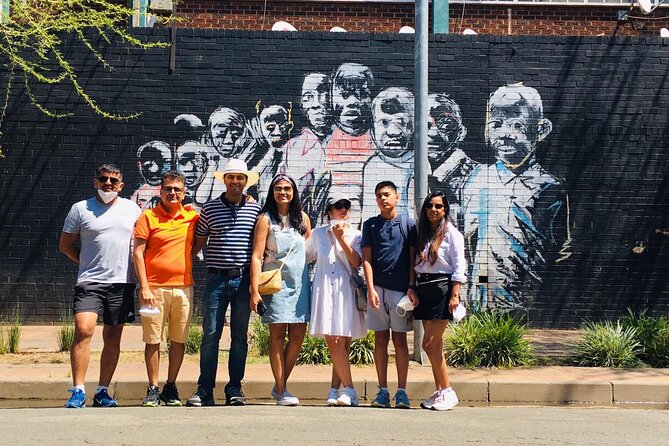
The walk finishes around 264 Fox St, with photo stops and then a guided segment right there. I find this kind of ending important. A street art tour can feel unfinished if it never returns to the feeling of being in the neighborhood itself—like you never really stood inside the culture.
Stopping at 264 Fox St gives you that closer-to-home effect. You’re seeing art in the same context it was meant for: a living part of the city where people come and go. By the time you reach this area, you’ll likely notice patterns you missed at the beginning—recurring themes, the way different styles communicate different emotions, and how the neighborhood’s identity shows up in what’s painted and what isn’t.
If you like photography, this is a strong moment to slow down and shoot a few careful frames. If you like conversation, this is also a good time to ask your last questions. Guides in this experience have a reputation for being friendly and answering questions without rushing you out.
Price and value for a $37, 2-hour street art walk
At about $37 per person for roughly 2 hours, this tour looks like a “small time, big learning” option. Street art tours can get expensive when they include transportation or long day trips. Here, you’re paying for a guided walk, structured stops at specific places, and a guide who can explain what you’re actually seeing.
Is it worth it? For me, it’s a yes if you want meaning, not just murals. The guides are repeatedly praised for making the experience informative and fun—especially for people who don’t know much about Johannesburg’s street art scene going in. That context helps you appreciate the work instead of treating it like wallpaper.
Two value realities to keep in mind:
- Food and drinks aren’t included, so you’ll need to plan a snack or meal before or after.
- There’s no hotel pickup or drop-off, so you’ll either be walking in from nearby or using your own transport to get to Hallmark House.
That said, the meeting point is clear, and once you’re there, the flow is efficient. You get rooftop views, key mural zones, creative hubs, and finishing context—without spending your entire day in transit.
Who should book this Johannesburg Maboneng tour
This is a great fit if you:
- Want a culture-focused introduction to Johannesburg’s creative side without committing to a full-day tour
- Love street art and want the stories behind the images
- Prefer small, guided walking experiences where you can ask questions
- Like marketplaces and gallery-adjacent neighborhoods, not just mural hunting
It’s also a good “after a safari bus” reset for people who want something urban and thoughtful once they’re back on the road. The walk format keeps it from feeling like a lecture, and the guide explanations keep it from feeling like sightseeing on autopilot.
If you’re very short on time, 2 hours is workable. If you hate walking or don’t like going into shops, you might feel impatient—though the tour is structured so you’re not stuck for long at any one spot.
Should you book it?
I’d book this tour if you’re going to be in Johannesburg and you want to understand Maboneng through the art makers, not just through photos. The best reason is the guide component: the experience consistently highlights passionate guides like Refiloe, Mulalo, and Clement, with a strong focus on context, safety, and making the walk feel welcoming.
The main reason to hesitate is practical: no hotel pickup, no food or drinks. If you don’t want to coordinate your own arrival, or you’re hungry and don’t plan ahead, pick a time that lets you eat first.
If you’re okay handling those logistics, this is an efficient way to catch a side of Joburg that’s hard to find on your own—and easier to remember because the stories stick.
FAQ
How long is the Johannesburg Maboneng Street Art & Culture Tour?
The tour lasts 2 hours.
Where does the tour start, and where should I meet?
You meet at Hallmark House. If you arrive before the tour starts, wait inside Hallmark House at the coffee shop.
Is hotel pickup or drop-off included?
No. Hotel pickup and drop-off are not included.
Are food and drinks included in the price?
No. Food and drinks are not included.
What language is the tour guide?
The tour includes a live guide in English.
Is there free cancellation?
Yes. Free cancellation is available up to 24 hours in advance for a full refund.