REVIEW · JOHANNESBURG
Colours of Johannesburg: A Graffiti & Street Art Tour
Book on GetYourGuide →Operated by City Skate Tours Pty Ltd · Bookable on GetYourGuide
Graffiti looks simple until someone explains the rules. This tour turns Johannesburg walls into a lesson plan, led by Ayanda with a focus on Graffiti vs Street Art. I especially liked how you get the background stories behind what you’re seeing, and how the stop at the local graffiti store makes it feel connected to real artists, not just photos. One catch to plan around is timing: the store visit depends on whether the shop is open, and any visiting graffiti artist is only possible if they’re available.
You’ll spend about 3.5 hours moving through three inner-city areas—Braamfontein, Newtown, and Maboneng—with transport included between neighbourhoods. The tour starts at Skinner Café on 70 Juta Street and ends at Home of the Bean, so you’re not stuck with vague directions and hope.
In This Review
- Key things I’d circle on this tour
- What makes Colours of Johannesburg more than a photo walk
- Meeting at Skinner Café on 70 Juta Street: quick logistics that actually help
- Braamfontein Precinct: street art’s role since the early 2000s
- The short secret stop: shopping time without the hard sell
- The local graffiti store stop: supplies, merch, and an art room if open
- Newtown: arts-and-culture energy inside an area with history back to 1886
- Maboneng precinct: international murals and local writing side by side
- Transport between neighbourhoods: value in keeping the momentum
- Price and value: why $43 can feel fair here
- Safety, pace, and what to bring
- The guide factor: Ayanda’s storytelling changes what you notice
- Should you book this graffiti and street art tour?
- FAQ
- Where do I meet for the tour?
- How long is the Colours of Johannesburg tour?
- Is the tour offered in languages other than English?
- What’s included in the price?
- What should I bring?
- Can a graffiti artist join the tour?
Key things I’d circle on this tour
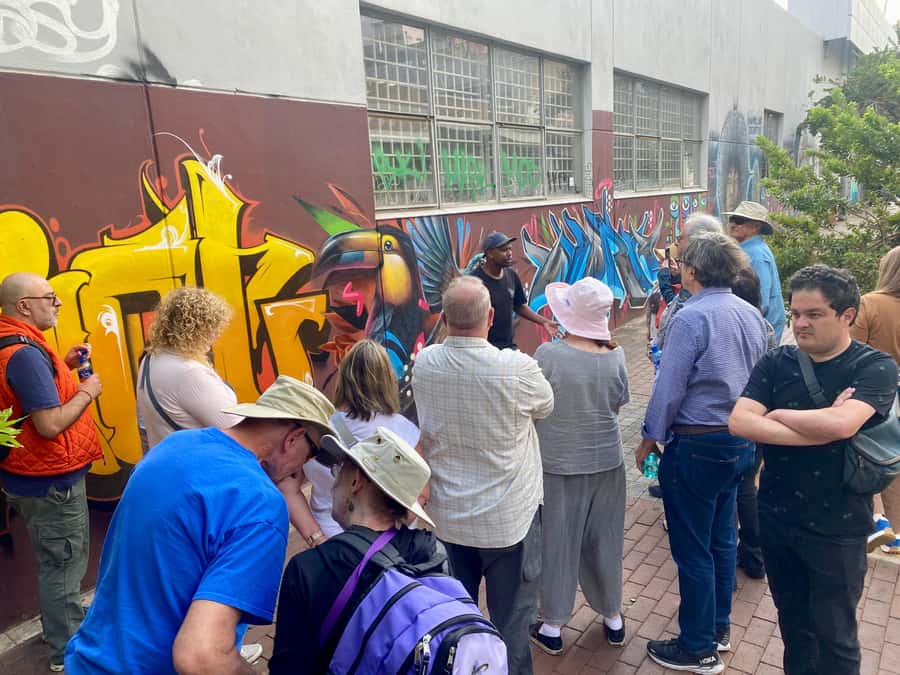
- Braamfontein murals with city-change context from the early 2000s
- A clear explanation of Graffiti vs Street Art, plus how they relate
- Local graffiti store stop when open for supplies, merchandise, and an exhibition room if it’s running
- Newtown and Maboneng as two different “street culture” moods inside the inner city
- Optional visiting graffiti artist, but never guaranteed
- English-only guide with real city knowledge from someone who lives this culture
What makes Colours of Johannesburg more than a photo walk
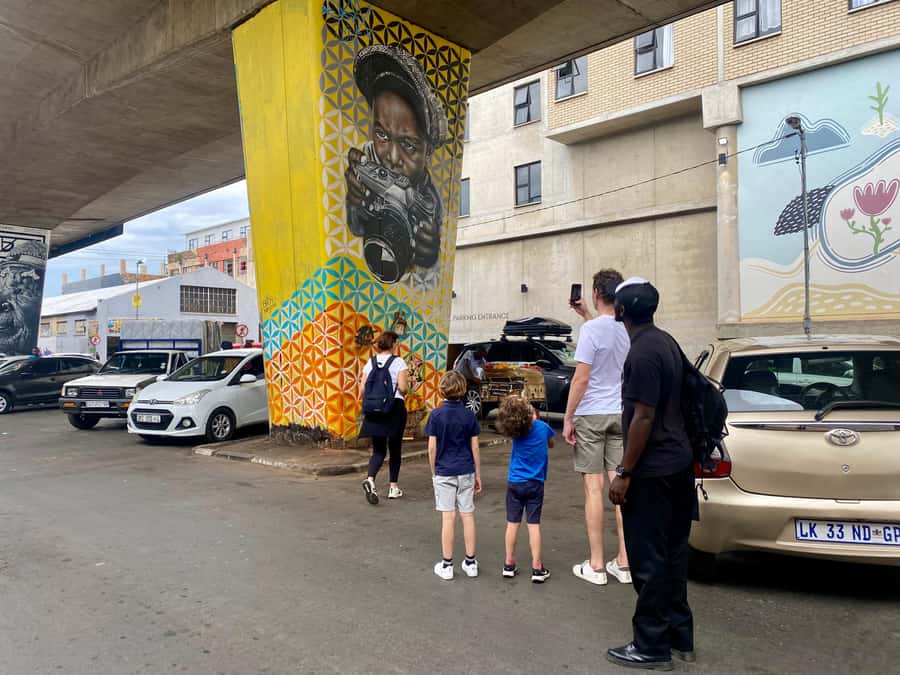
Street art can look like decoration from far away. Up close, it’s communication—sometimes political, sometimes personal, sometimes just a signature done in public. On this tour, I like that you don’t only look at walls. You learn the relationship between graffiti writing and street art murals, and that shift matters fast: you start noticing tags, styles, and placement choices like they mean something (because they do).
The other thing that made this worth my time is the way the guide builds context as you walk between neighbourhoods. Johannesburg isn’t one single “look.” Block to block, the city changes, and the street art changes with it—so you end up seeing how the culture moves across Braamfontein, Newtown, and Maboneng, not just a random collection of murals.
You can also read our reviews of more tours and experiences in Johannesburg.

Meeting at Skinner Café on 70 Juta Street: quick logistics that actually help
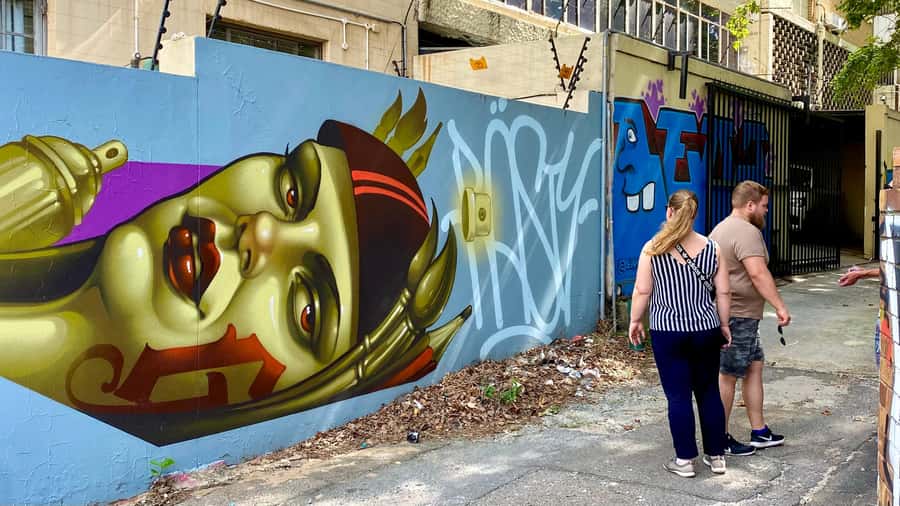
You meet inside Skinner Café at 70 Juta Street. The café is easy to spot because it’s the green café at the corner with large see-through windows and a small seating area outside along Juta Street. It’s a simple meet point that saves time and stress, especially in a city centre where the streets can be busy and confusing.
Right after you gather, there’s a safety briefing at a local restaurant. That matters because this is an active street walk, and the tour’s focus is on inner-city areas where you want to know where you’re going and how you’re moving.
The total tour time is 210 minutes, but you’re not stuck walking every minute. Transport is included between neighbourhoods during the tour, so you get both a guided walk and efficient jumps to the next wall-heavy area.
Braamfontein Precinct: street art’s role since the early 2000s
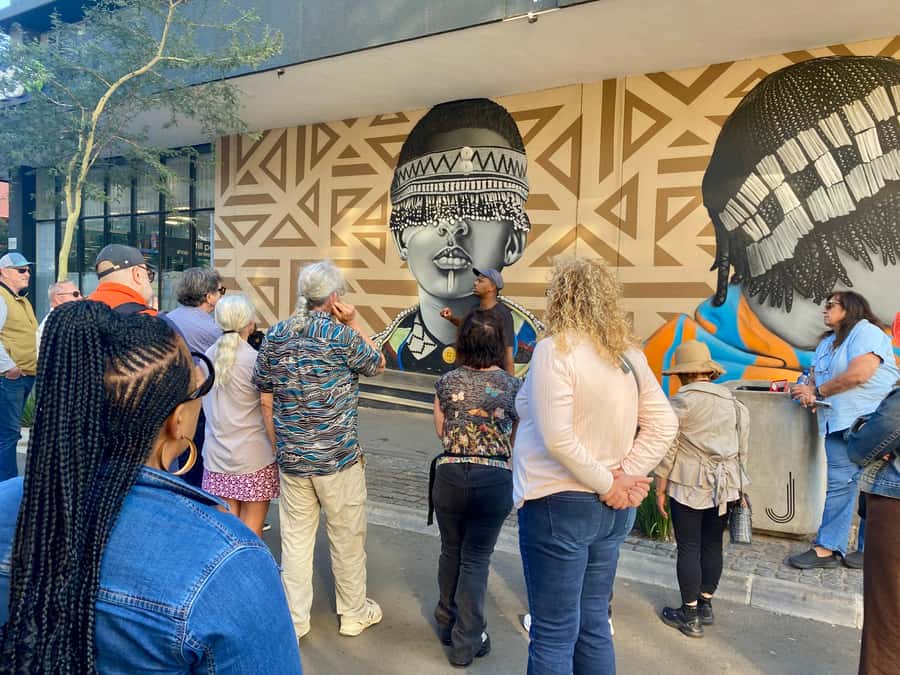
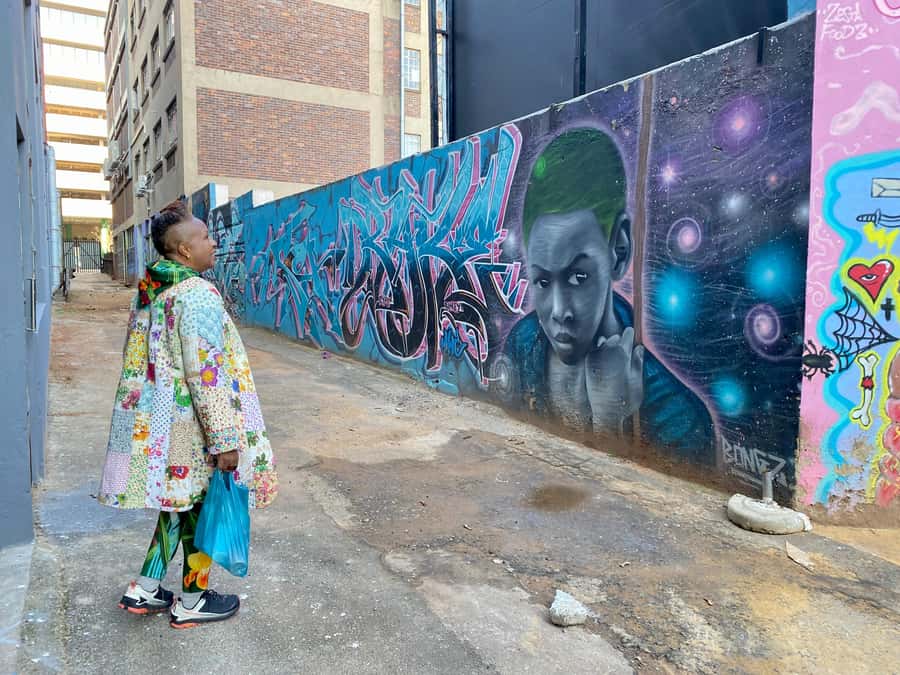
Your first big block of time is in Braamfontein. This area is packed with large and small street art murals on walls across the precinct, and the guide uses that density to teach you how to “read” what you see.
You’ll go with a guided walk and sightseeing for about an hour. What I found helpful here is that the tour doesn’t treat murals as isolated art. It frames the impact of street art on the development of Braamfontein starting in the early 2000s, so you’re not just learning styles—you’re seeing how public art can shape the vibe and identity of an area.
This is also where you start spotting tags from prolific graffiti artists and looking at how different writers build their visual language. If you’ve ever thought graffiti is only about a name, Braamfontein is where you start noticing the craft: layout, repetition, and how a tag can become part of a bigger mural scene.
What to watch for: look for the difference between a quick tag and a more developed piece. The tour’s focus on the Graffiti vs Street Art relationship starts paying off as soon as you see how those two forms share wall space.
The short secret stop: shopping time without the hard sell
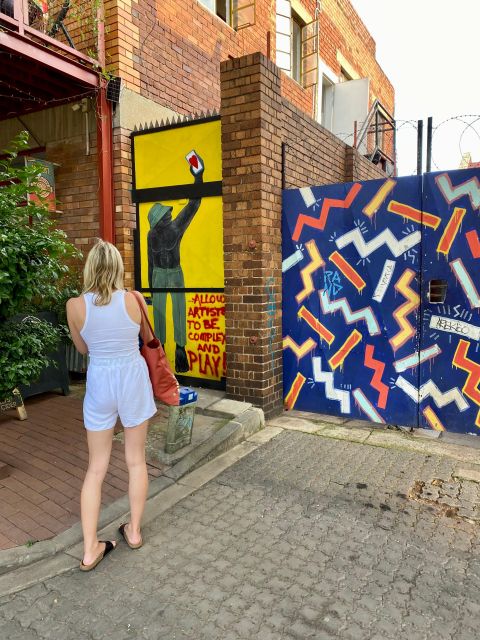
Mid-tour, you hit a short stop described as a secret visit with shopping for about 15 minutes. Because the exact location isn’t specified in the outline, I treat it as a “time window” to browse and buy small items rather than a guaranteed must-see landmark.
This is also where you’ll feel the rhythm of the tour: you’re moving with purpose, but you still get a break and the chance to pick up something that fits what you just learned. If you like souvenirs that are actually tied to local street culture, this time slot can be useful.
The local graffiti store stop: supplies, merch, and an art room if open
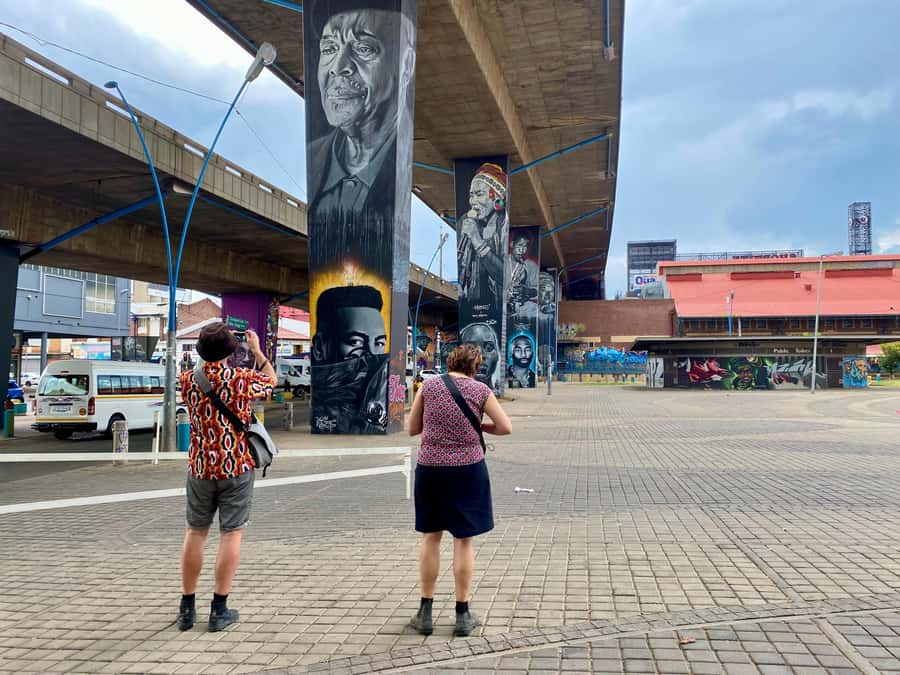
One of the most practical parts of the tour is the planned visit to a local graffiti store in Braamfontein. The idea is simple: learn about graffiti beyond the walls.
When the shop is open, you can do more than just look. The store is where local artists get their supplies, and it’s also an opportunity to engage with graffiti culture in a way that feels real. Depending on opening status, you may also be able to step into an exhibition room when works are on the walls.
If you want street art that you can take home without guessing, this stop is where the merchandise comes in. You might find T-shirts designed by local graffiti artists, plus other items connected directly to the scene you just saw outside.
Possible drawback to plan around: the graffiti store visit is only included “when open.” If it’s closed for a festive period (the outline notes 24 Dec to 20 Jan), you’ll still do the rest of the tour, but that specific “hands-on culture” moment may be shorter or different.

Newtown: arts-and-culture energy inside an area with history back to 1886
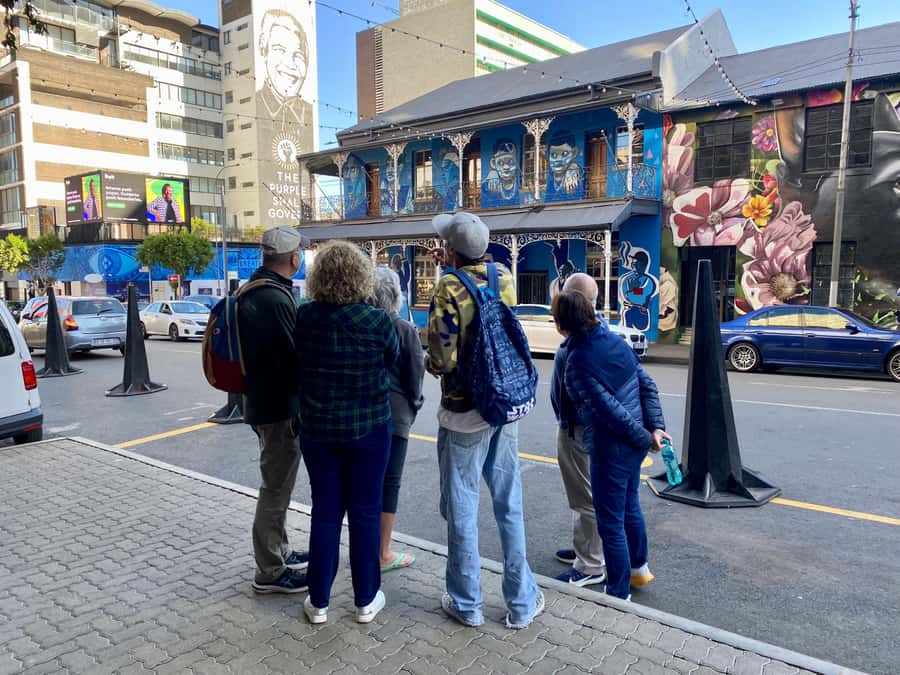
Next you head to Newtown, about 45 minutes of walking and sightseeing time plus a photo stop. Newtown is described as the inner city’s spiritual home of arts and culture, with a history dating back to 1886. That long timeline matters because street art didn’t appear in a vacuum; it grows alongside other underground creative scenes.
This is also where the tour leans into graffiti connected to Johannesburg’s underground movement. You’ll see some of the city’s best graffiti work here, and the guide’s job is to help you connect what you see now to the cultural context of the area.
What I’d do differently next time: in Newtown, pause and take your time with the details. Tags and murals can look similar in quick photos, but up close you start seeing differences in lettering, colour choices, and how the piece is placed in relation to surrounding buildings.
Maboneng precinct: international murals and local writing side by side
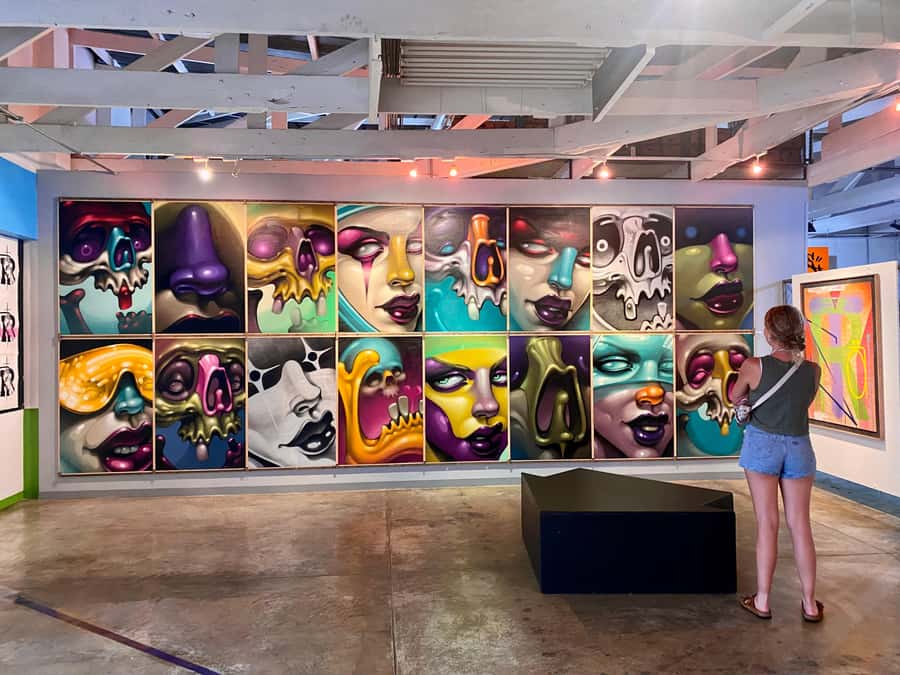
Your final neighbourhood is Maboneng. Like Braamfontein, Maboneng has lots of mural work across its walls, but the mix can feel different—especially because you’ll encounter intricate works by international artists alongside well-known tags of local graffiti writers.
The guided time here is about 45 minutes, with sightseeing and shopping woven in. There’s also an aerial view component mentioned, which is a nice change from “ground-level only.” It helps you understand how a cluster of murals forms a broader visual story rather than just separate art pieces.
This is where the tour’s theme really lands: Johannesburg’s street art culture reflects the city’s diversity. As you move block to block, the style shifts, the mood shifts, and the meanings shift too.
Practical tip: if you’re buying something at the store or on your shopping stop, keep your hands free here. You’ll want both attention and easy access to your phone/camera during the best sight lines in Maboneng.
Transport between neighbourhoods: value in keeping the momentum
At first glance, the included price might seem like “just a walking tour.” But transport between neighbourhoods is included during the experience. That means you spend more time actually looking at street art and less time stuck in the wrong place at the wrong hour.
A few details from real-world pacing make this feel efficient: you’re not forced to walk long distances between Braamfontein, Newtown, and Maboneng. You still get the street-level experience where it counts—then you jump, regroup, and keep moving with the guide.
If you only have a half day and you want three areas instead of one, this structure is a strong way to do it.
Price and value: why $43 can feel fair here
The price is $43 per person for 210 minutes with a live English guide, transport between neighbourhoods, and a local graffiti store visit when it’s open.
Here’s the value math I’d use:
- You’re getting time in three distinct precincts, not a single stop.
- You’re getting guided context, including the difference and relationship between graffiti and street art.
- You’re getting a culture connection through the store stop, plus potential merchandise/exhibition room access.
Most “street art walks” are basically a map and a camera. This one is more like a guided interpretation session, which is what makes it worth paying for. When you leave knowing how to read tags and murals, you see the city differently for the rest of your trip.
Safety, pace, and what to bring
This tour includes a safety briefing at the start, and you’ll be walking through inner-city neighbourhoods with guidance. I recommend treating it like a guided city stroll: stay with the group, follow the lead, and don’t wander off for the perfect shot.
Bring:
- Comfortable shoes (you’re walking and looking up a lot)
- Water (you’ll want it during the walk segments)
The tour is English-only, so if you’re relying on translation, plan ahead. The guide is live and you can ask questions during the walking time, which is where this becomes more than sightseeing.
The guide factor: Ayanda’s storytelling changes what you notice
The reviews in the tour outline point to a recurring theme: Ayanda is passionate and puts real effort into connecting street art to the city’s story. I like that you’re not just hearing facts like a lecture. You’re hearing explanations that help you notice patterns yourself.
One strong advantage of a guide like this is that you can ask follow-up questions while you’re standing in front of the wall. When you see a tag or a mural and ask what makes it different, the answer lands instantly because you’re looking at it together, not later from memory.
Another thing I liked: the guide’s approach is professional and friendly, and it can turn into a conversation rather than a one-way talk. If you’re the kind of person who likes to ask why something is placed where it is, this tour rewards that.
Should you book this graffiti and street art tour?
Book it if you want street art with context, not just pictures. The mix of Braamfontein + Newtown + Maboneng, plus the store stop when open, makes it a solid use of a half day. It also fits well if you’re curious about how graffiti and street art relate and how they’ve influenced Johannesburg’s inner-city identity.
Consider skipping or swapping to a shorter option if you’re only interested in the art without the cultural explanations, or if you know the graffiti store will likely be closed during your dates. Also, it’s English-only, so make sure that works for your group.
If you’re ready to look at walls like they’re pages—then you’ll enjoy this.
FAQ
Where do I meet for the tour?
Meet inside Skinner Café at 70 Juta Street. It’s the green café at the corner of the street with large see-through windows and a small seating area outside on Juta Street.
How long is the Colours of Johannesburg tour?
The tour is 210 minutes (about 3.5 hours).
Is the tour offered in languages other than English?
No. The tour is offered in English only.
What’s included in the price?
You get all transport during the tour between neighbourhoods, plus a visit to the local graffiti store when it’s open.
What should I bring?
Bring comfortable shoes and water.
Can a graffiti artist join the tour?
Sometimes a graffiti artist joins, but it’s only if they’re available. There’s no guarantee they’ll join on your scheduled date.