REVIEW · BOGOTA
Graffiti Tour in La Candelaria Bogotá with Transportation
Book on GetYourGuide →Operated by Gran Colombia Tours · Bookable on GetYourGuide
Bogotá’s street art has a brain and a heart. This 3-hour graffiti tour through La Candelaria mixes artwork with the socio-political context that created it, and it keeps pointing you to real places—starting at Chorro de Quevedo Square. I also like that you see named local artists (like Wosnan and Ocio 4) and not just generic “wall art.”
You’ll walk between key downtown landmarks and off-the-beaten graffiti streets, with stops that include the La Concordia marketplace area and a finish at Café Herencia. One thing to consider: it’s a walking tour in rain or shine, and downtown streets can feel tight, steep, and busy.
In This Review
- Key moments worth planning for
- Why La Candelaria graffiti feels like a living neighborhood
- Starting at Chorro de Quevedo: the story begins where people actually gathered
- Chopping through downtown with Bolívar Square as a quick reality check
- The narrow graffiti lane: indigenous ancestry painted on a wall you can’t ignore
- Murals by Carlos Trillera, Wosnan, and Ocio 4: moving from symbols to artists
- La Concordia marketplace and park: where downtown identities collide
- Women artists and writers in the 60s: why voices matter in graffiti
- Café Herencia finish: Carlos Trillera’s work after you’ve learned to read the walls
- Transportation, timing, and the small logistics that matter
- The coca leaf tea tasting: a small stop that adds local flavor
- Value at $48: why this price can be fair (and when it’s not)
- Who this tour suits best
- Should you book this La Candelaria graffiti tour?
- FAQ
- How long is the graffiti tour in La Candelaria?
- Where does the tour start and finish?
- What’s included in the price?
- What languages are available for the tour guide?
- Is lunch included?
- Does the tour run if it rains?
Key moments worth planning for
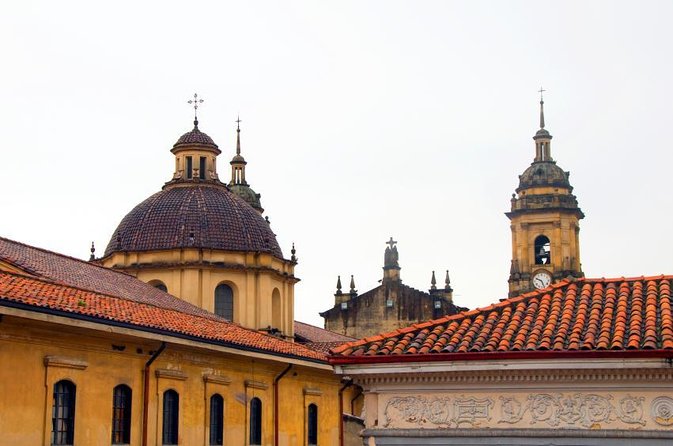
- Chorro de Quevedo Square as the storytelling starting point for Bogotá’s street art history
- Indigenous ancestry graffiti on a narrow lane where the street itself feels like the gallery
- Park of La Concordia + marketplace as a real mixing zone of ideas and influences
- Women’s graffiti voices and what that changes in a male-dominated art conversation
- Promenade toward Journalists Park—where writers and journalists gathered in the 60s
- Café Herencia finish to see Carlos Trillera’s artworks after you’ve decoded the murals
Why La Candelaria graffiti feels like a living neighborhood
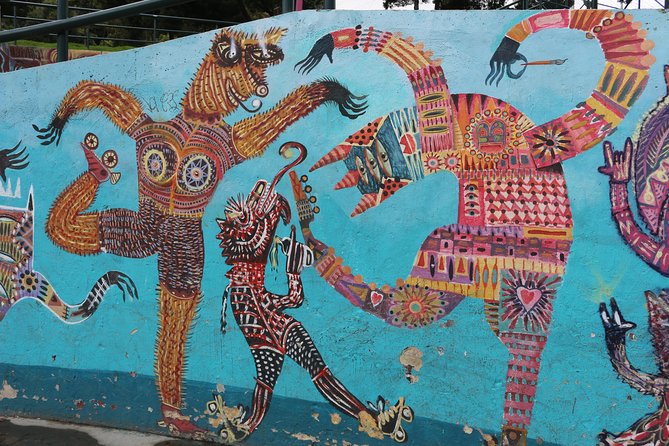
La Candelaria isn’t just “a place with murals.” It’s a neighborhood with layers—colonial streets, political pressure, migration waves, neighborhood pride, and ongoing social debate. This tour makes that clear fast by pairing what you see on the walls with why the city’s artists paint the way they do.
I particularly like how the tour connects graffiti to identity. The stops aren’t random; they’re picked because they match themes like indigenous ancestry, downtown tensions, and the way art becomes public debate. You’re also not stuck staring at the same wall for long. You move, turn corners, and watch the neighborhood change as you go.
You can also read our reviews of more tours and experiences in Bogota.
Starting at Chorro de Quevedo: the story begins where people actually gathered
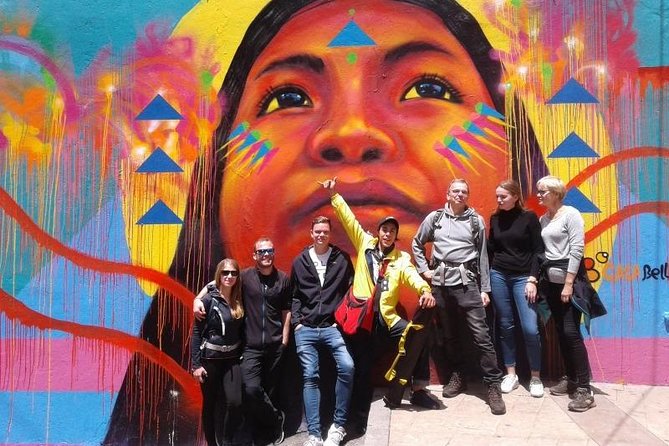
Most tours start with a map. This one starts with Chorro de Quevedo Plaza, a sensible place to get your bearings in downtown Bogotá. You’ll get a guided introduction to how graffiti and street art grew in the city—and how artists use images to comment on power, history, and community.
From there, you’ll be shown pieces by local names such as Ledania and 3 Manos, plus Wosnan and Ocio 4. Even if you’re not a street-art superfan, you’ll pick up a useful habit: looking for symbols first, then color and style. That changes the whole experience. Murals stop being decoration and start acting like posters from the street.
You’ll also get a quick taste of what the guide’s doing right: not just pointing, but explaining. In past tours, guides named Lenora, Lorena, Luis, Gerald, and Natalie have been praised for being friendly, clear, and strong on symbolism—so the art has meaning, not just visuals.
Chopping through downtown with Bolívar Square as a quick reality check
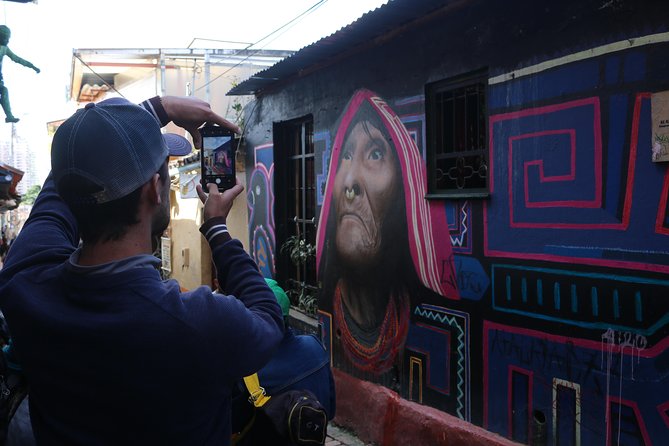
After the main start, the route includes short stops near Bolívar Square. The time here is brief, but that’s the point. You’re not being asked to spend the whole tour sightseeing from a distance; you’re using the landmark to understand what downtown tension looks like, then moving back into street-level artwork.
That short stop also helps if you’re timing your day in Bogotá. You get context without losing your legs. Bonus: it’s a good moment to grab quick photos before you head into tighter, more mural-packed streets.
The narrow graffiti lane: indigenous ancestry painted on a wall you can’t ignore
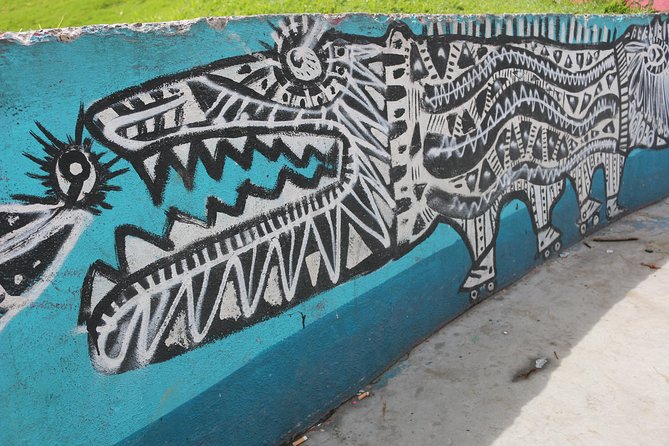
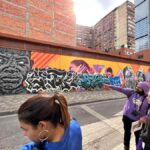
One of the most memorable parts of the route is a narrow street packed with graffiti that retells indigenous ancestry. This is where the tour becomes more than “look at art.” The guide’s framing helps you see how visual language can carry memory—especially when written history feels distant or incomplete.
Practically, you’ll want to slow down here. Tight lanes don’t give you much room for big photo angles, and the walls fill your peripheral vision fast. If you like street art, you’ll love the intensity. If you dislike crowds or tight walking spaces, it might feel a bit much, but the payoff is real: you’re standing in a living narrative, not a theme-park version of downtown.
Murals by Carlos Trillera, Wosnan, and Ocio 4: moving from symbols to artists
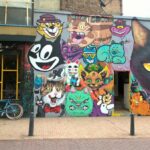
The route then shifts into a more artist-focused rhythm. You’ll learn more about specific creators—Carlos Trilleras/Carlos Trillera is part of the tour’s story—and you’ll stop by murals painted by Wosnan and Ocio 4.
This is valuable because style tells you something, but it’s not the whole story. Knowing who made a mural (and why certain images show up) helps you understand what graffiti artists are trying to do in public space. It also makes your own looking more accurate. You start noticing recurring themes and habits in lettering, figures, and political references.
One detail I appreciate: the tour doesn’t only chase the most famous names. You’re also led toward off-the-beaten murals, which often means better chances for close viewing and less “everyone is taking the same picture” pressure.
La Concordia marketplace and park: where downtown identities collide
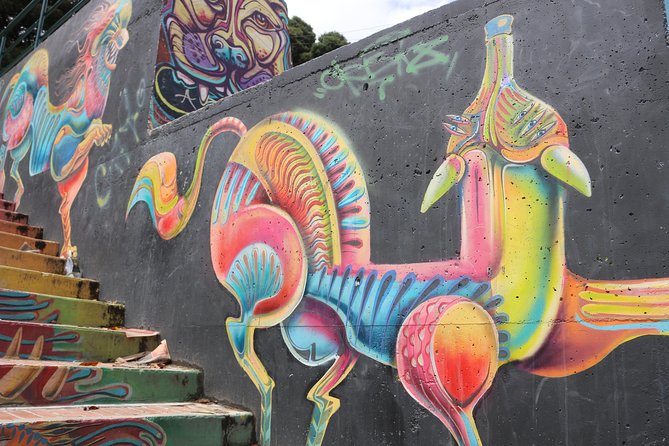
Next up is the Park of La Concordia and La Concordia marketplace, described as a tension spot and an important meeting point. That wording matters. Downtown Bogotá isn’t calm and curated, and the art reflects that.
Here’s what you’ll likely experience: you watch the neighborhood around you while the guide explains how different influences meet in this area. Art becomes a way to claim space, respond to power, and protect community identity. When you pair that with the murals you see nearby, it clicks why graffiti thrives in places like this—public walls are where arguments happen without asking permission.
You’ll also continue through picturesque streets with more graffiti along the way. The pacing is good here: enough walking to keep you moving, enough explanation to keep you grounded.
Women artists and writers in the 60s: why voices matter in graffiti
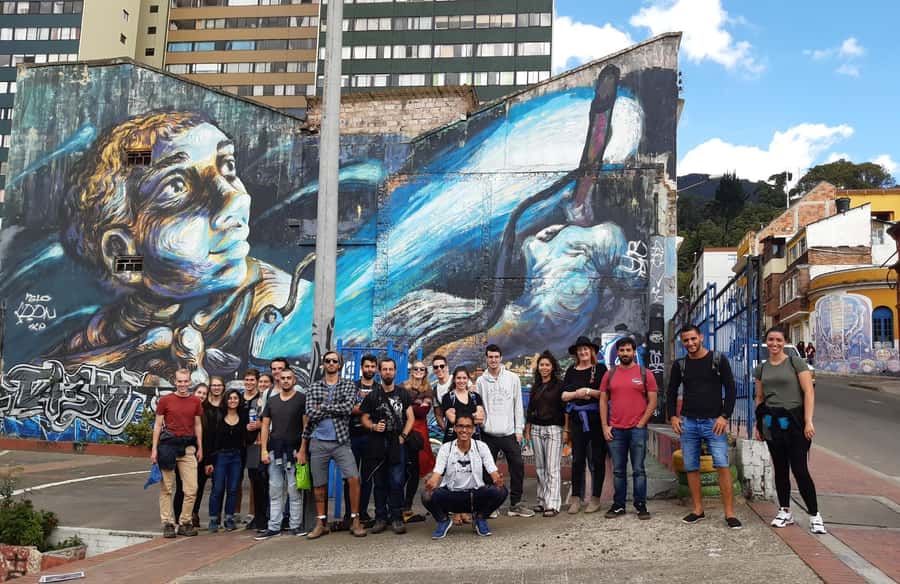
A standout theme on this tour is seeing some of the best graffiti authored by women and learning about their role in spreading this art. That’s not a side note; it changes how you interpret the whole street-art ecosystem. If you’ve only seen graffiti through a male-leaning lens, this part helps correct your expectations and makes the walls feel more human.
As the route moves along, you’ll head toward Journalists Park, where journalists, poets, and writers used to gather in the 60s. That historical link turns the tour into a bigger conversation about public speech. Murals, like newspapers and poems, are forms of communication. The guide’s context helps you connect the past gatherings to what you’re seeing now.
I also like that the tour includes a stop that functions like a slow-down moment. You get to take in more of the promenade vibe before finishing.
Café Herencia finish: Carlos Trillera’s work after you’ve learned to read the walls
The tour ends at Café Herencia, where you can admire more of Carlos Trillera’s artworks. This finish is smart. By the time you reach it, you’re already trained—at least a little—to look for symbolism and political meaning. So the final viewing feels earned, not rushed.
It’s also a good practical landing point. You’re in a café, so you can reset—use the restroom, grab a drink, and decide how you want to keep exploring downtown. The tour time is capped at 3 hours, but finishing in a place like this helps you transition smoothly to your next plan.
Transportation, timing, and the small logistics that matter
This is a private group tour with hotel pickup and drop-off plus private transportation. That matters in Bogotá because distances between neighborhoods can add up, and you don’t want to waste your limited time figuring out logistics while you’re also trying to read murals.
The duration is 3 hours, and the route is a guided walk. You’ll want comfortable shoes. Also, expect it to run rain or shine, so bring a light rain layer or plan to get a little damp. The streets can be uneven and sometimes crowded, and tight sections can feel more intense if the ground is wet.
One note from a real experience: the driver’s road style can feel a little aggressive for some people. If you’re sensitive to driving, I’d keep that in mind and plan for a calm, steady mindset during transfers.
The coca leaf tea tasting: a small stop that adds local flavor
You’ll include a coca leaf tea tasting during the tour. It’s brief, but it’s a good cultural check-in—something local to Bogotá’s broader Andean traditions. If you’ve never tried coca tea, it can taste herbal and warm rather than “medicinal,” but it’s still an acquired taste for many people, so don’t stress if you don’t fall in love with it.
Value at $48: why this price can be fair (and when it’s not)
At $48 per person for a 3-hour private tour, hotel pickup/drop-off, private transportation, a tour guide, insurance, and the coca leaf tea tasting, the value can be pretty strong—especially if you don’t want to piece together street art stops on your own.
You’re paying for:
- A structured route through La Candelaria
- Explanations tied to socio-political context (not just “here’s a cool wall”)
- Local artist names and themes (indigenous ancestry, women’s voices, downtown tensions)
- Convenience (pickup/drop-off + transport)
It may feel less worth it if you’re the type who only wants casual browsing with zero context. Also, if you end up needing more time than the fixed 3 hours, you might want a second block of independent exploring afterward.
Who this tour suits best
This graffiti tour is a great fit if you want street art with context—especially if you like learning how images connect to politics, history, and identity. It’s also ideal if you’re short on time and want a guided route that hits multiple key zones in downtown Bogotá.
It’s less ideal if you:
- Hate walking on uneven or tight streets
- Need a very slow pace and long photo stops every few minutes
- Prefer purely visual tours with no meaning-making or social history
Should you book this La Candelaria graffiti tour?
I’d book it if you want Bogotá’s street art to make sense as you see it. The route pairs famous themes (like downtown identity and public speech) with specific artists—Wosnan, Ocio 4, Ledania, Carlos Trillera/Carlos Trilleras—and it doesn’t skip the “why” behind the walls. Add in private transportation and hotel pickup, and it becomes a solid, time-efficient way to experience La Candelaria without guessing.
Skip it only if you’re likely to be uncomfortable with tight streets and rain-or-shine walking. Otherwise, this is one of those tours where the explanations genuinely change what you notice.
FAQ
How long is the graffiti tour in La Candelaria?
The tour lasts 3 hours.
Where does the tour start and finish?
It starts with pickup in Bogotá and the walk begins at Chorro de Quevedo Plaza. The tour finishes back at Café Herencia, with return transportation back to Bogotá.
What’s included in the price?
The tour includes a tour guide, hotel pickup and drop-off, private transportation, coca leaf tea tasting, and insurance.
What languages are available for the tour guide?
The tour guide is available in English and Spanish.
Is lunch included?
No. Lunch is not included.
Does the tour run if it rains?
Yes. The tour will take place rain or shine.