REVIEW · VIENNA
Street Art Tour in Vienna
Book on Viator →Operated by Prime Tours Vienna · Bookable on Viator
Vienna’s walls tell stories. This street art tour strings together five real-world spots, from the chimney at Spittelau to the long stretch of walls along the Danube Canal, in a format that’s easy to follow and actually fun.
In English, you get context on what you’re seeing and why it matters, not just a photo-stop parade.
I especially liked two things: first, the guide’s ability to explain Vienna’s street-art scene like it’s current culture (not a museum label). Second, you start learning how to recognize artists’ signatures and repeat styles as you go, so you’ll notice more art long after the walk ends.
The tour stays moving for the full 2 to 2.5 hours, and guides like Tobi have a knack for keeping a wide age range interested at once.
The main catch is taste. If you’re hoping for only big, famous mural pieces, you might find the tour spends some time on the letter-and-tag side of street art, especially around the Danube Canal walls. Also, outdoor art changes or gets overpainted, so you may not see every piece you expected on any given day.
In This Review
- Key things you’ll care about
- Street art in Vienna is a footnote until you learn the code
- Price and what $46.96 buys you (and what it doesn’t)
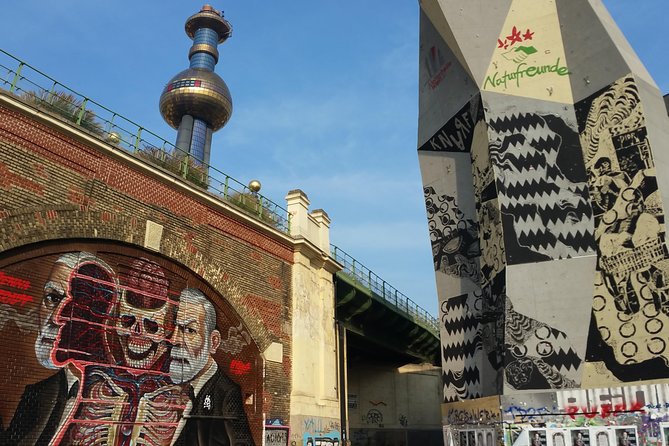
- Stop 1: Spittelau District Heating Plant, where the chimney sets the tone
- Stop 2: Das Werk, the street-art hall of fame wall
- Stop 3: Danube Canal (Donau Kanal), the long gallery of legal and non-legal walls
- Stop 4: Friedensbrücke, where overpainting is part of the story
- Stop 5: Schottenring near Flex, plus the fun of spotting signatures
- How to prepare for a smooth 2 to 2.5 hour walk
- Who this tour is for (and who may want a different style)
- Should you book this Vienna street art tour?
- FAQ
- FAQ
- How long is the street art tour in Vienna?
- How much does the tour cost?
- Is the tour offered in English?
- What’s included in the price?
- Where does the tour start and end?
- Does the tour run in bad weather?
Key things you’ll care about
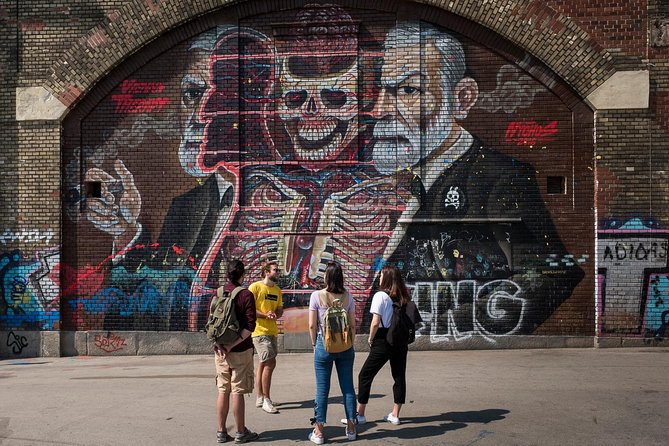
- Small group (max 20) keeps questions simple and the pace comfortable
- Mobile ticket means less fuss once you start
- Spittelau’s chimney area shows street art in an industrial, suburban setting
- Das Werk is a real hall-of-fame wall with major Viennese names like Roa, Nycos, Stratton, and Lugosi
- Danube Canal (Donau Kanal) is framed as Vienna’s longest open-air street art stretch, with legal and non-legal walls
- Friedensbrücke and Schottenring add variety and the reality that pieces get repainted
Street art in Vienna is a footnote until you learn the code
Vienna can look polished and classical at street level, so street art may feel like a surprise. That’s exactly why this tour works. You’re not just looking at images; you’re learning the way writers, crews, and styles show up across neighborhoods. After a couple of stops, you’ll catch yourself “reading” walls faster.
The route also does something smart for first-timers: it takes you away from the most obvious tourist lanes and into everyday Vienna. You get that sense of how street art lives in real time, not just as curated photos for social media.
And yes, there’s a food angle too. You’ll get tips and sampling along the way, with on-the-go staples like Austrian sausage, beer, and wine mentioned in the tour highlights. If you’re trying to balance culture with actual eating, this helps.
You can also read our reviews of more tours and experiences in Vienna.

Price and what $46.96 buys you (and what it doesn’t)
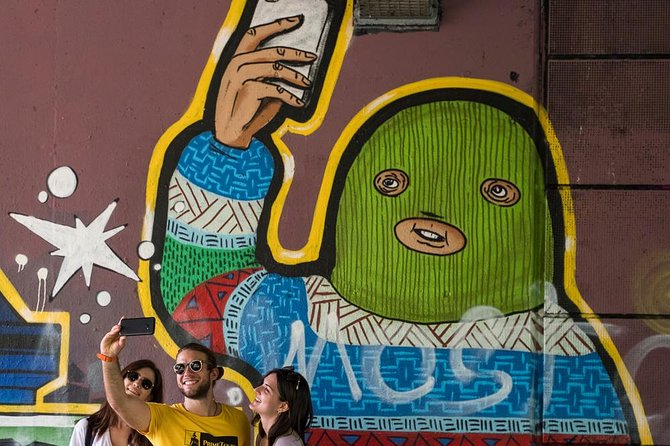
At $46.96 per person for about 2 to 2.5 hours, you’re paying for a guided walk that includes all the on-site stops and interpretation. What you’re not paying for is food and drinks, hotel pickup, and the local transport cost to get to and from the areas (the tour info lists about €2.20 one way for transportation).
Here’s how I’d judge the value for you:
- If you like street art but don’t know the scene, the guide explanations can make the difference between seeing “random graffiti” and understanding why certain pieces matter.
- If you’re mainly here for photos, the price may feel harder to justify, because the tour is also about learning tagging, crews, and context.
The tour includes a local guide plus professional guidance and a host/escort, and the pace is set for a moderate physical fitness level. The small group size (up to 20) keeps it from turning into a loud shuffle.
Stop 1: Spittelau District Heating Plant, where the chimney sets the tone
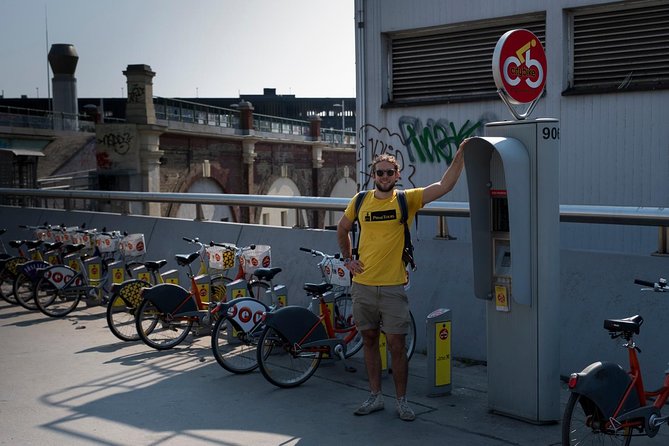
You start at Spittelau (1090 Vienna), at the district heating plant area. This is a good opening stop because it immediately places street art in a setting that feels less “pretty” and more real. Industrial edges change how you see scale, color, and placement.
You’ll also hear about the street art scene globally, which helps you understand the Vienna pieces without needing to already know the alphabet of artists. The tour notes that you may see a few famous illegal pieces near the meeting area, plus the suburban surroundings around the most famous chimney in Vienna.
What to watch for here:
- The area’s mood is part of the lesson. You’ll get why artists choose these kinds of walls and sightlines.
- It’s a shorter stop (about 15 minutes), so don’t expect a long photo session. Think of it as orientation.
Stop 2: Das Werk, the street-art hall of fame wall
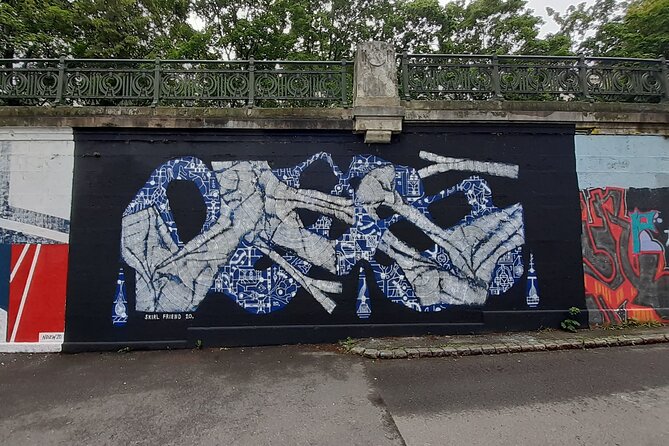
Next comes Das Werk, described as a hall of fame for Viennese street art. This is where named artists start turning from trivia into something you can actually spot.
The tour highlights big names such as Roa, Nycos, Stratton, and Lugosi. Seeing those names on the kind of walls that mark a local scene helps you connect the dots between style and identity. You’ll also get a sense of how the city’s street art has its own roster of legends, not just borrowed fame.
This stop runs around 30 minutes, so it’s long enough to slow down. I’d use that time to:
- Focus on one artist at a time, rather than trying to photograph everything
- Look at how letters, characters, and shapes repeat across different works
The value of a “hall of fame” stop is simple: it gives you a baseline. Later walls along the canal make more sense once you’ve seen what a recognized style looks like in Vienna.
Stop 3: Danube Canal (Donau Kanal), the long gallery of legal and non-legal walls
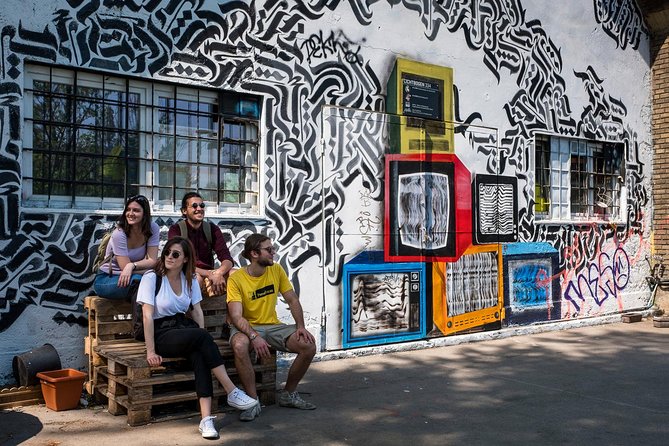
The longest part of the walk is along the Danube Canal (Donau Kanal), pitched as the longest open-air street art gallery in the world. Even if you don’t obsess over superlatives, the point is real: it’s a long stretch, and the wall-to-wall momentum keeps you engaged.
You’ll pass a mix of legal and non-legal walls, and the tour focuses on:
- a “hall of fame” feel along the stretch
- learning about tagging
- seeing pieces from prominent Viennese street artists
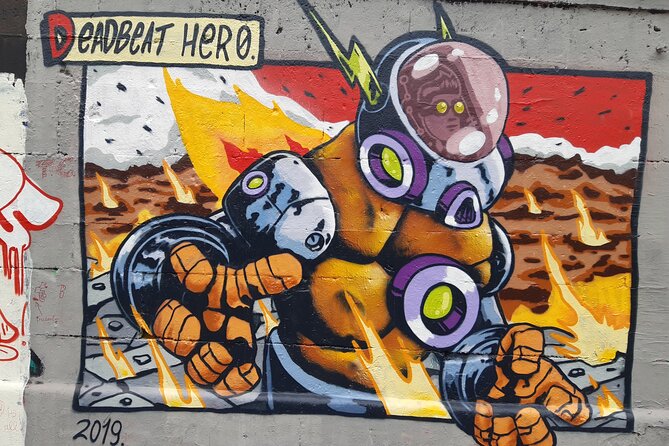
This is where the tour can feel either perfect or slightly different depending on what you like. If you love the look of big murals only, the tagging discussion may dominate some of your attention. But if you want to understand the street-art language—how writers sign, mark territory, and build a visual identity—this is the right place to learn it.
Practical note: it’s about 1 hour. You’ll want good walking shoes and the energy to look both close and far. Tagging works better when you alternate between “zooming in” and “stepping back” to see placement and flow.
Stop 4: Friedensbrücke, where overpainting is part of the story
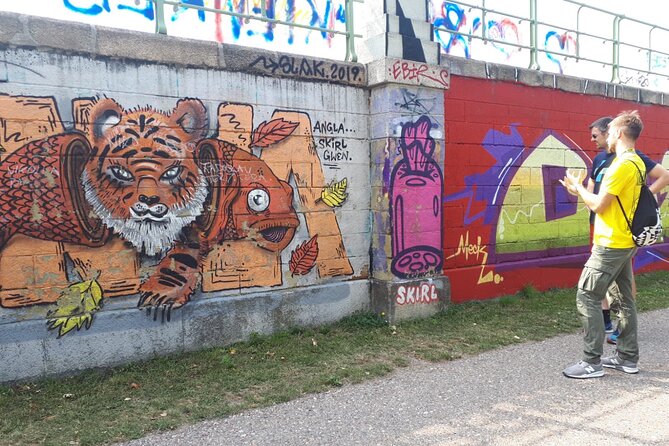
From the canal area, you head toward Friedensbrücke, another stop built for variety. Here you’ll find pieces from the TS90 local crew, plus the mention of an octopus by Manuel Muriel and other newer works on the way.
The important detail is what the tour warns you about: pieces here are often overpainted, so your experience won’t be identical to anyone else’s photos. That’s not a downside if you enjoy street art as something alive. It’s a feature of the medium.
This stop is around 30 minutes, and it’s a good moment to slow down and pay attention to:
- how older layers sometimes interact with newer ones
- the difference between finished-looking murals and faster, tag-based work
- the way crews and styles show up even when the exact piece changes
If you’re the type who likes to hunt for details, this is your stop.
Stop 5: Schottenring near Flex, plus the fun of spotting signatures
The walk wraps near Schottenring, ending close to the famous night club Flex. The final stretch adds more pieces, and the tour’s finish line comes with a specific goal: you’ll be able to spot and recognize styles and signatures more confidently than at the start.
That “recognition” part is honestly the payoff. Street art can feel random until someone gives you a simple method to look. By the end, you should be able to separate:
- signature tags vs. larger character work
- crew style patterns vs. one-off murals
- different letter shapes and color habits
The last stop is about 15 minutes, so don’t wait until the end to start looking. Keep your eyes open from the beginning; it compounds.
Once you’re done, you’ll finish at Franz-Josefs-Kai L (1010 Wien) near Schottenring U-Bahn, with lots of restaurant and café options nearby. It’s a natural place to continue the evening without rushing back to a hotel.
How to prepare for a smooth 2 to 2.5 hour walk
This tour runs in all weather conditions, so dress for rain and cooler temperatures if needed. The info also calls for moderate physical fitness, which makes sense given you’re walking between multiple walls and viewpoints rather than sitting in one spot.
A few practical tips:
- Bring a fully charged phone. A camera helps, but you’ll also want to keep your balance and eyes clear while walking.
- Wear shoes you trust for uneven pavement and curb changes.
- Use public transport. The tour is noted as being near public transportation, and it’s normal that the local transit cost isn’t included.
Good to know: it’s capped at 20 travelers, so the group feels manageable rather than hectic. You’ll also get a confirmation at booking time, and you’ll receive access via a mobile ticket.
Who this tour is for (and who may want a different style)
This street art tour is ideal if:
- you want an introduction to Vienna street art with real names and styles
- you like learning how street art works as a community, not just an artwork
- you’re traveling with mixed ages (the tour works for a wide range, from younger adults to older visitors)
It may feel less ideal if:
- you expect only famous, photo-perfect murals
- you get annoyed when the guide spends time on tagging and letter forms instead of only big images
- you need guaranteed specific pieces. Outdoor art changes, and the tour openly acknowledges overpainting in places like Friedensbrücke
Also, if you’re a hardcore collector type who needs exact viewing of one single masterpiece, this kind of street walk is more about education and seeing what’s there that day.
Should you book this Vienna street art tour?
If you’re curious about Vienna beyond palaces and museums, I’d book it. The guide-led explanations turn street art from random visuals into a language you can understand, and the stops are chosen for variety: industrial Spittelau, the Das Werk hall-of-fame wall, the long Danube Canal stretch, and the ever-changing bridge-and-neighborhood walls.
The decision comes down to your expectations. If you enjoy both big pieces and the writing/tag side of street art, this tour is strong value for your time. If you only want mural-style fame and nothing else, you may end up wishing the route leaned more in that direction.
FAQ
FAQ
How long is the street art tour in Vienna?
It runs about 2 hours to 2 hours 30 minutes.
How much does the tour cost?
The price is $46.96 per person.
Is the tour offered in English?
Yes, it’s offered in English.
What’s included in the price?
The tour includes a local guide, professional guide, tour escort/host, and all activities. Food and drinks are not included.
Where does the tour start and end?
It starts at Spittelau (1090 Vienna) and ends near Franz-Josefs-Kai L (1010 Wien), close to Schottenring U-Bahn station along the Danube channel area.
Does the tour run in bad weather?
It operates in all weather conditions. You should dress appropriately for the weather.