REVIEW · SARAJEVO
SARAJEVO STREET ART TOUR (art, history & mystery) – sARTajevo!
Book on Viator →Operated by Art and Tours Sarajevo · Bookable on Viator
Street art tells Sarajevo’s real story, and this Sarajevo street art walk turns walls into lessons in history. I love how each mural is explained with a clear why, not just a what, so you start reading the city like it’s writing back.
I also like the tight max of 5 group setup, which keeps the pace human and makes it easy to ask questions. The one consideration: it’s only 2 to 3 hours, so if you want a never-ending mural catalog, you’ll need a little extra time on your own after.
In This Review
- Key things that make this tour worth your evening
- Street art in Sarajevo that actually has a point
- Price and value: what $30.04 buys you
- Meeting at Đulagina 2 and timing your 6pm walk
- Stop 1: Bentbaša and the mural about preserving monuments
- Stop 2: Papagajka (Perrot) and early street art festival energy
- Stop 3: Academy of Fine Arts and the sticker art demo
- Stop 4: Aria, Mr. Chat, Singer (Pjevač), and Gallery Boris Smoje
- Stop 5: Ferhadija Pedestrian Street and the Srebrenica 1992/1995 mural
- Why the small group changes how you see Sarajevo
- How to make the most of the walk
- Who should book this tour
- Should you book the Sarajevo Street Art Tour?
- FAQ
- What is the price of the Sarajevo Street Art Tour?
- How long is the tour?
- What time does it start?
- Where do I meet the guide?
- Is the tour offered in English?
- Do I need a printed ticket?
- How big is the group?
- Is admission included for the stops?
- Are service animals allowed?
- Can I cancel for a full refund?
Key things that make this tour worth your evening
- Official-style guiding tied to specific murals instead of random photo stops
- Bentbaša mural themed around preserving the past—a smart opener for the whole walk
- Papagajka (Perrot) and its role in early street art festival culture
- Sticker art demo at the Academy of Fine Arts, with practical context for how it works
- Mr. Chat, Singer (Pjevač), and Gallery Boris Smoje grouped into one easy-to-follow thread
- Ferhadija Pedestrian Street and the Srebrenica 1992/1995 mural, handled with focus
Street art in Sarajevo that actually has a point
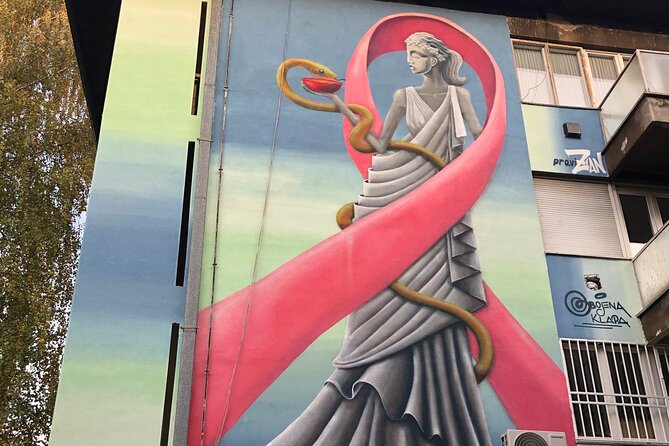
Sarajevo’s walls don’t just look cool. They talk. This tour is built for that moment when you realize the street art isn’t decoration—it’s commentary, memory, and identity, all in public view.
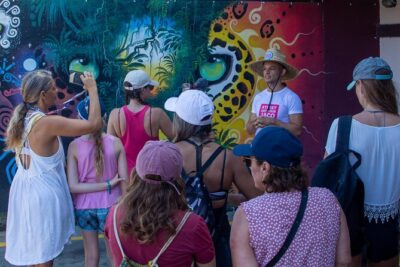
What I liked most is the way the guide keeps pulling you back to meaning. The murals are treated like living chapters, and the route is organized so each stop adds something new to the story you’re building as you walk.
And yes, you’ll still get the fun part: you’ll spot details you’d miss while scrolling on your phone. It turns the city into a visual puzzle with explanations attached.
You can also read our reviews of more tours and experiences in Sarajevo.
Price and value: what $30.04 buys you
At $30.04 per person for about 2 to 3 hours, the value here comes from two things.
First, you’re not paying for someone to point at walls from a distance. You’re paying for an accredited guide approach that ties each location to history and art context, with time built in for explanation.
Second, the tour is capped at a small group (max 5). In a place where the streets can feel like a maze, that matters. You can actually hear what’s being said, and the guide can adjust the pace instead of herding people along.
Also, the stops are set up with free admission ticket info for the tour’s listed sights, so you’re not paying extra at each point.
Meeting at Đulagina 2 and timing your 6pm walk
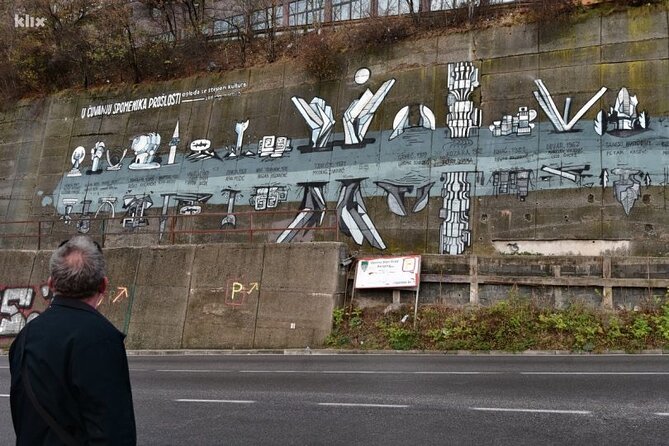
You start at Đulagina 2, Sarajevo 71000, and it loops back to the same meeting point at the end. The start time is 6:00 pm, which is a great time for street-level wandering: you still get daylight fading into evening, and the neighborhoods feel less rushed.
The tour runs in English, and confirmation comes at the time of booking. Mobile tickets are supported too, so you’re not hunting for paper.
Because this is a walk connecting multiple locations, you’ll get the best experience if you wear shoes you don’t mind cleaning later. Sarajevo sidewalks can be uneven, and your attention will be on the walls—so give your feet a little respect.
Stop 1: Bentbaša and the mural about preserving monuments
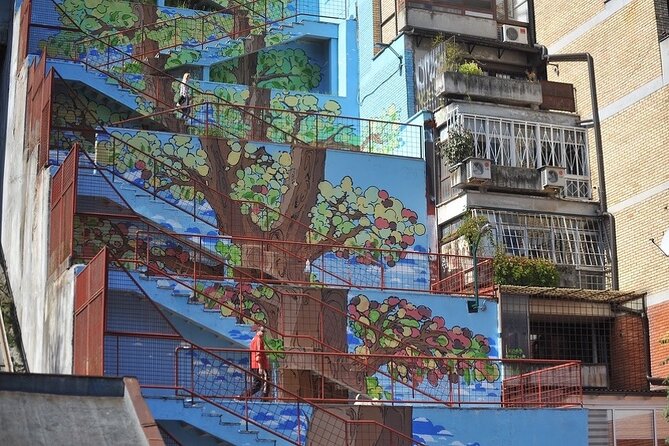
The walk begins in the Bentbaša area, anchored by the mural In the preservation of monuments of the past. This is a strong opener because it frames the central idea of the whole tour: street art here isn’t floating in time. It’s responding to what came before.
You don’t just see a mural and move on. You’re guided through what the artwork is doing and why that message matters for Sarajevo’s broader identity. It’s the kind of start that makes the next stops easier, because you already know what to listen for: memory, protection, and meaning.
At this stop, the tour time is about 20 minutes, and the admission ticket is listed as free. In practice, this means you get a real explanation without turning the first stop into a lecture hall.
Stop 2: Papagajka (Perrot) and early street art festival energy
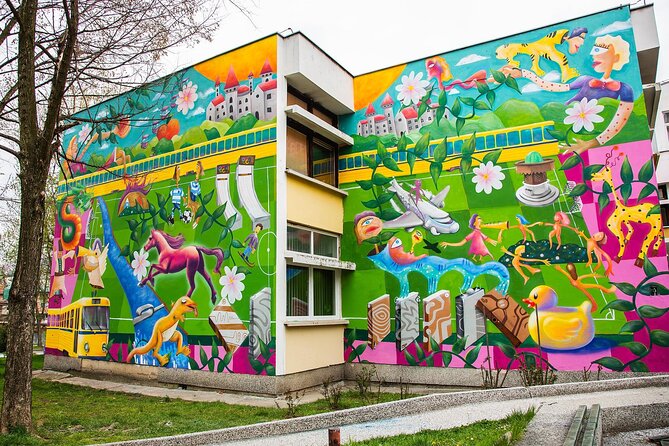
Next is Copy Papagajka, also connected with the art building Papagajka (Perrot). This is where the tour points to a key piece of street art culture in Sarajevo: it highlights that the first street art festival was held here.
That detail matters, because it places street art in a timeline. It’s not just a modern trend that popped up online. It has roots tied to places where people gathered, made art, and supported the scene.
You’ll also see wall art examples associated with the area, and the guide uses this stop to connect the physical art to street art culture. Expect a few “so that’s how it started” moments, the kind that help you stop treating the city’s walls like random decoration.
This stop is also about 20 minutes, keeping the pace brisk enough for a short 2 to 3 hour outing.
Stop 3: Academy of Fine Arts and the sticker art demo
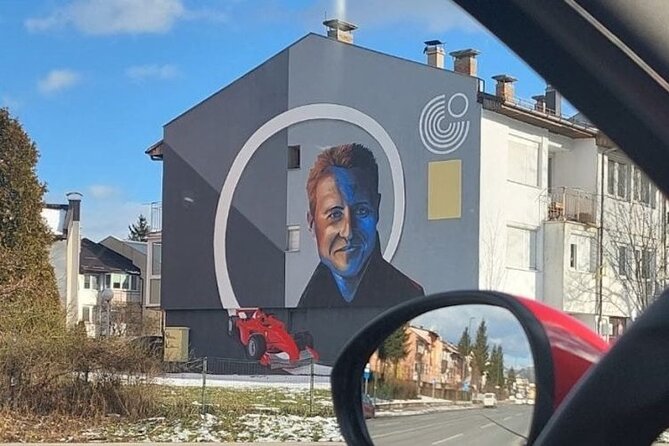
Then you head to the Academy of Fine Arts, a stop the tour positions as a perfect bridge from street art into formal art history. You’re also told this is where you’ll see what’s described as the most beautiful designed object in Sarajevo—not just a place to pass through.
Here’s the part I think is especially useful for non-art people: the tour uses the setting to explain street art techniques and decisions. You’ll get sticker art demonstrated and explained, so you understand the how and why, not only the visuals.
Sticker art can look simple from far away. Up close, it becomes a whole system—placement, message, timing, and how people interact with it in public. A short demo like this can change how you look at the rest of the city, because now you know what to look for.
This stop runs about 30 minutes, giving it enough time to land rather than rush.
Stop 4: Aria, Mr. Chat, Singer (Pjevač), and Gallery Boris Smoje
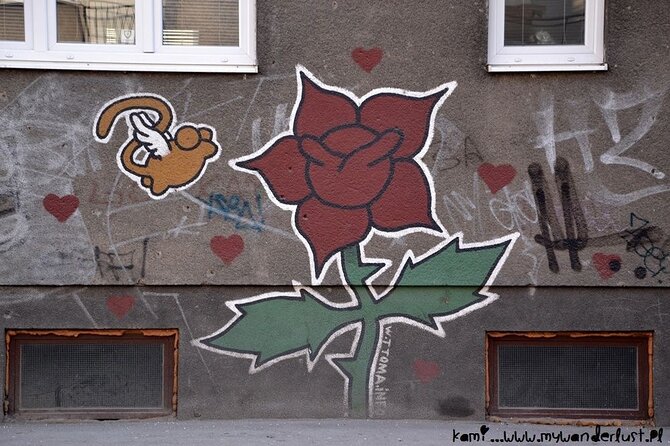
The next set of sights is grouped under Aria, where the tour guides you to locations tied to several named street art elements.
You’ll encounter concepts of Mr. Chat, the mural Singer (Pjevač), and references tied to Gallery Boris Smoje. The guide’s job here is to connect the pieces so they feel like a chain, not separate Instagram coordinates.
This is a great stop if you like art that has a character. Mr. Chat, for example, comes with a recognizable personality in street art storytelling, and the tour helps translate that into meaning in the Sarajevo context.
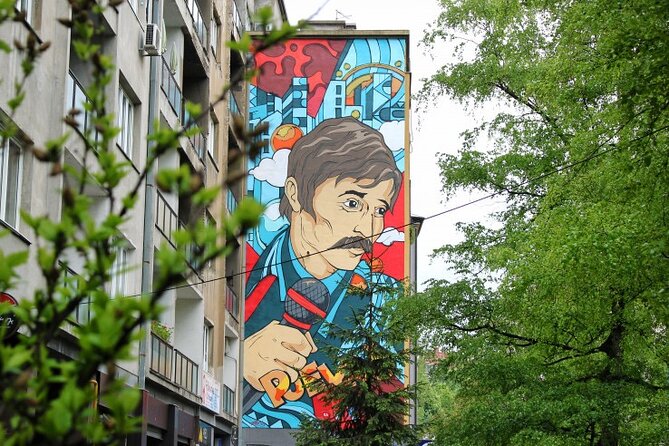
Singer (Pjevač) is also treated as more than an image. The explanations help you read it like part of a larger cultural conversation—how people express emotion, identity, and everyday life through public walls.
This stop is about 20 minutes, which means you’ll move on while things are still fresh in your mind. That’s good for attention and also good for keeping the overall walking rhythm.
Stop 5: Ferhadija Pedestrian Street and the Srebrenica 1992/1995 mural
The final stop is Ferhadija Pedestrian Street. Behind the main pedestrian flow, the tour points you toward the mural Srebrenica 1992/1995, and it uses this area to talk about the street graffiti scene you see across the street.
This is the emotional center of the route. The tour doesn’t treat it like a mural you check off. It frames it as a memory mark tied to a specific period—one that people in Sarajevo still carry in everyday life and public storytelling.
Around this point, the walking feels more reflective. You start noticing how street art can function like a public record—sometimes direct, sometimes symbolic, always present.
You’ll also get a sense of how the broader graffiti scene around Ferhadija builds on those themes. The tour spends about 30 minutes here, which helps balance the earlier stops with something heavier.
Why the small group changes how you see Sarajevo
A max group size of 5 travelers might sound like a technical detail, but it’s actually part of the experience.
With fewer people, the guide can slow down when a mural calls for more explanation. You’re less likely to lose your place when you step closer to read the details.
You also get something underrated: time for quick questions. Street art is packed with references, and the value isn’t just in seeing the artwork. It’s in understanding what it’s responding to—politics, identity, and how artists communicate under everyday conditions.
This is also why it works for different kinds of visitors. If you came for art, you’ll get the technique and context. If you came for history, the murals become a readable timeline. If you came for “mystery,” the guide’s explanations keep adding layers rather than shutting down curiosity.
How to make the most of the walk
A few practical tips can help you get more from the time you have:
Wear comfortable shoes and keep your phone charged. Street art photos are great, but you’ll be better off spending your eyes on details first.
Bring a bit of patience for moving through the city on foot. This is a short, focused route, not a bus tour.
After you finish, I’d encourage you to do one simple thing: look for recurring visual habits. Once the guide points out patterns—colors, symbols, placement choices—you start noticing similar cues around Sarajevo. It turns your next stroll into a scavenger hunt with meaning behind it.
Who should book this tour
This is a strong fit if you want art explanations that are grounded in place. You’ll likely enjoy it if you care about how public art relates to Sarajevo’s lived experience—past and present.
It’s also a smart choice if you feel unsure about street art. The tour format is designed to make it approachable, even when you don’t know names or techniques yet. You won’t be left behind looking at walls without context.
If you’re the type who wants lots of stops every minute, you might find the route short. That’s not a bad thing—just a match question. This is best for people who like a guided story rather than a long checklist.
Should you book the Sarajevo Street Art Tour?
I’d book it if you want an evening walk that teaches you how to read Sarajevo’s street art like a local language. The main strength is the way every stop is tied to history, craft, and symbolism, with time to explain instead of rushing.
I’d hesitate if you’re expecting an enormous list of every mural in town. This route is intentionally tight, and that focus is part of the charm—but it also means there’s only so much you’ll cover in 2 to 3 hours.
If you do book it, plan to add a small self-guided walk afterward. You’ll get more out of the city once you know what the guide is training your eyes to notice.
FAQ
What is the price of the Sarajevo Street Art Tour?
The tour costs $30.04 per person.
How long is the tour?
It lasts about 2 to 3 hours.
What time does it start?
The start time is 6:00 pm.
Where do I meet the guide?
You meet at Đulagina 2, Sarajevo 71000, Bosnia and Herzegovina.
Is the tour offered in English?
Yes, it is offered in English.
Do I need a printed ticket?
No. The tour uses a mobile ticket.
How big is the group?
The tour has a maximum of 5 travelers.
Is admission included for the stops?
The tour info lists admission ticket free for each of the listed stops.
Are service animals allowed?
Yes, service animals are allowed.
Can I cancel for a full refund?
Yes. You can cancel up to 24 hours in advance for a full refund.