REVIEW · NEW YORK CITY
Street art tour at Soho
Book on Viator →Operated by Chelsea Gallery Tour · Bookable on Viator
Street art in SoHo feels like a scavenger hunt. This guided 2-hour walk turns random wall paint into a clear story you can follow, from minimalist sculpture to famous mural walls. You also get an insider perspective on what you’re looking at and why it matters, without rushing.
What I like most is the tone: you can ask questions and move at a pace that actually feels comfortable. I also like the stop choices, because you don’t just see graffiti—you see how public art, community space, and mainstream art culture overlap in Manhattan. One possible catch: this is an outdoor walk, so good weather is part of the plan.
In This Review
- Key highlights to look for on the SoHo street art route
- How this 2-hour SoHo art walk works (and why it’s a good fit)
- What to expect timing-wise
- Stop 1: The Wall (Gateway to Soho) and the idea of a “monument” in motion
- A practical note
- Stop 2: Elizabeth Street Garden in Nolita—art as community space
- What I’d do during this stop
- Stop 3: Bowery Mural on E Houston St—Keith Haring’s 1982 moment
- Two ways to look at the Bowery Mural
- Guides keep the group engaged: Ortal, Adi, Avitel, Maya, Tal
- If you care about language and social context
- Beyond the three stops: how to use the tour as a springboard
- Morning logistics that actually matter in SoHo
- Value and group fit: why a flat rate for up to six can be smart
- Who should book this SoHo street art experience?
- Should you book the street art tour at SoHo?
- FAQ
- How long is the SoHo street art tour?
- Where does the tour start and end?
- What time does the tour begin?
- Is this tour private?
- What language is the tour offered in?
- Do I need a printed ticket?
- Is the tour indoors or outdoors?
- What happens if the weather is bad?
- Can I cancel for a refund?
- Is service animal access allowed?
Key highlights to look for on the SoHo street art route
- Private group experience with a flat rate for groups up to six
- Go-at-your-own-pace stops with time for questions
- Three art styles in one circuit: minimalist monument, public sculpture garden, mural wall
- The Bowery Mural context tied to Keith Haring’s 1982 work
- A guide-driven experience that keeps the group engaged and moving
How this 2-hour SoHo art walk works (and why it’s a good fit)
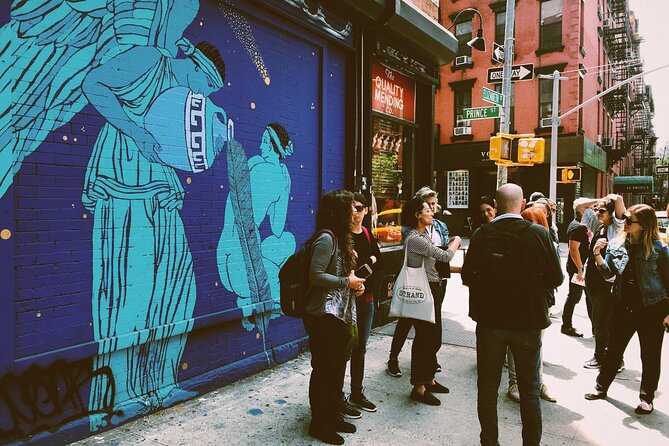
This tour is built for people who want more than photos. In about two hours, you’ll do a tight circuit in lower Manhattan that connects street art to places that shape local culture. The format is simple: you start near Broadway–Lafayette St (at E Houston St), you walk and pause often, then you finish at the Bowery Mural area on E Houston St.
Because it’s a private tour/activity (only your group participates), you’re not pushed into someone else’s pace. That matters in SoHo, where crowds can swell fast and it’s easy to get swept along without actually seeing what you came for. Here, the guide can slow down when you have questions or want a closer look.
This is also offered in English and uses a mobile ticket, so you’re not juggling printouts while you’re trying to find the meeting corner.
You can also read our reviews of more tours and experiences in New York City.



What to expect timing-wise
A 9:00 am start can be a quiet advantage. You’ll beat some of the later-day crowd energy, and you’ll have more room to study textures on concrete, brick, and sculptural surfaces. Still, since it depends on good weather, bring a backup mindset for plans if rain or extreme heat shows up.
Stop 1: The Wall (Gateway to Soho) and the idea of a “monument” in motion

Your first major stop is The Wall, also known as the Gateway to Soho. It’s a minimalist work built in 1973 by Forrest Myers. The scale is the point: it reaches eight stories high, and it was originally part of the building at 599 Broadway until 2002.
Here’s why this matters for a street art tour. It flips your expectations. When people hear “street art,” they picture tags and murals. The Wall shows another pathway: public art as a vertical landmark. Even though it isn’t street graffiti, it still lives in street life—visible from sidewalks, changing how people read that block.
As you look up, try to notice two things:
- How the minimalist form affects the street view around it.
- How scale changes the mood of a neighborhood, even without any color or lettering.
A practical note
Minimalist art can be harder to “feel” quickly than a big mural. The guide’s job is to help you read it fast. So if you’re the type who likes quick visual cues, ask early: What should I watch for here—lines, placement, height, or how it’s framed by buildings?
Stop 2: Elizabeth Street Garden in Nolita—art as community space
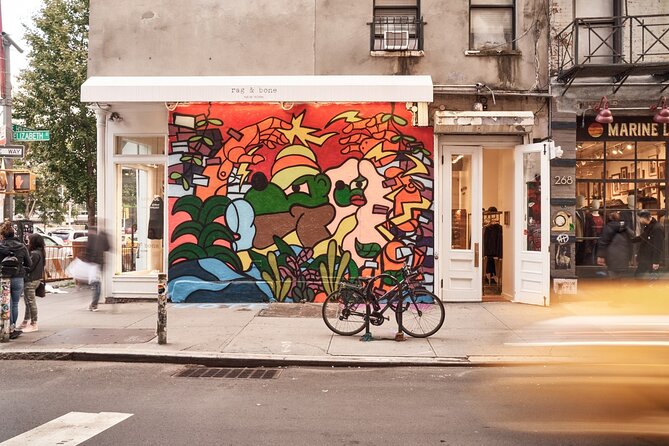
Next you shift from a minimalist monument to Elizabeth Street Garden, a 1-acre sculpture garden in Nolita. This isn’t just a pretty stop on the way; it’s an operating public space. The garden is run year-round by neighborhood volunteers, and it programs more than 200 free public events each year.
Those events cover children, seniors, and everyone who lives and works nearby, with educational, wellness, and arts-related programming. That mix is a clue to what you’re seeing: this garden is part artwork, part community service, part social glue.
On a street art tour, this stop works for one big reason: street art doesn’t only happen on walls. People create culture where they gather. When you understand that, the later mural wall makes more sense. The art you’ll see at the Bowery isn’t a random explosion—it’s connected to how the neighborhood interacts with creative expression.




What I’d do during this stop
Even if you’re not a “garden person,” slow down for a minute and watch how people use space. The best street art tours help you notice not only the artwork but the social behavior around it—where people pause, how they take photos, and how the space invites conversation.
Stop 3: Bowery Mural on E Houston St—Keith Haring’s 1982 moment
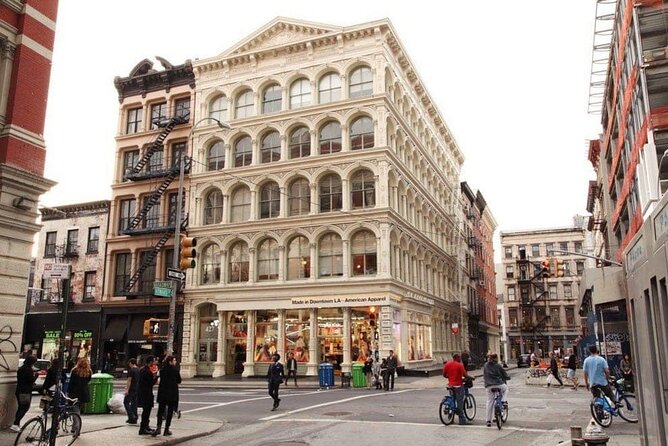
The final stop is the Bowery Mural, at 76 E Houston St near the intersection of the Bowery and Houston Street. It’s a concrete wall with major street-art gravity.
This wall was a popular graffiti spot in the early 1980s. In 1982, street artist Keith Haring created a large mural there. That’s the key story beat on this tour: the same wall that drew graffiti culture also became part of art history through a recognizable, influential figure.
Even if you’ve seen images of Haring’s work before, seeing the mural in the actual street setting changes how you read it. Concrete absorbs and holds energy. The wall isn’t a museum backdrop—it’s part of the urban conversation, with the street all around it.
Two ways to look at the Bowery Mural
- As street communication: graffiti and mural walls historically served as visual speech for the people on the ground.
- As cultural crossover: the moment a famous artist engages a wall like this, the street becomes a bridge between subcultures and mainstream art attention.
If you’re a person who loves context, this stop is where the tour pays off. It connects the idea of street art to a timeline you can remember.
Guides keep the group engaged: Ortal, Adi, Avitel, Maya, Tal
A big theme in the best-rated versions of this experience is the guide energy and communication style. Names that show up in strong feedback include Ortal, Adi, Avitel, Maya, and Tal.
The vibe described in those accounts is consistent:
- The guide stays light-hearted but organized.
- The person leading the tour pays attention to what the group is reacting to.
- The tour doesn’t feel like a lecture—you get prompts, room for questions, and explanations that make the visuals easier to read.
One review also highlighted that the guide recommended other places to check out afterward, including ideas for restaurants and museums. That’s practical help. After you walk a route like this, you don’t want to guess what to do next.
If you care about language and social context
One comment specifically called out the fit for Hebrew speakers with interest in art and social understanding. Even though the tour is listed as English, that kind of note can be comforting if you want a guide who can work well with the room and explain ideas clearly.
Beyond the three stops: how to use the tour as a springboard
One of the most useful parts of a street art tour is what happens after. This one specifically aims to give you recommendations on other wall murals to see after the route. That’s smart, because SoHo street art isn’t one mural—it’s layers.
Here’s how you can get the most out of those suggestions:
- Ask the guide for murals that match your mood. Do you want bold characters? political messages? minimalist work? big color?
- If you’re short on time, ask for the closest options to where you’ll be walking next after the tour ends on E Houston St.
If you do that, the tour becomes a map. Instead of wandering with no plan, you’ll know what’s worth your attention.
Morning logistics that actually matter in SoHo
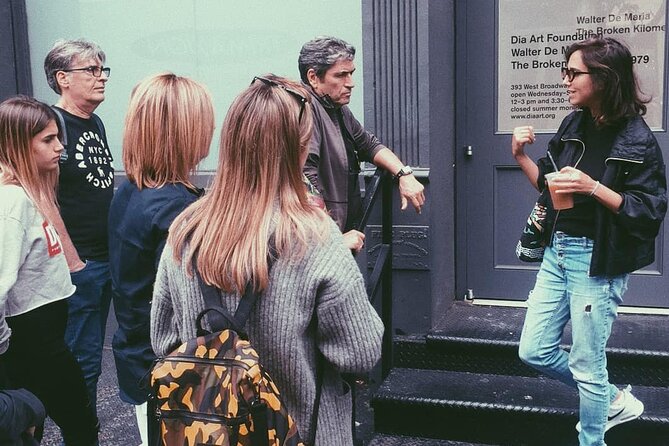
This experience includes a near public transportation meeting area, and it uses a mobile ticket. Those details sound minor until you’ve tried to start a walk in lower Manhattan with printed directions that don’t match what’s on the ground.
A few practical tips based on how this route behaves:
- Wear comfortable shoes. You’ll be on sidewalks for about two hours, and you’ll stop often.
- Bring water if the weather turns warm. The tour requires good weather, but “good” can still mean hot.
- Have a simple photo plan. You’ll likely want close-up shots of surfaces, not just wide street views. Holding your phone lower often shows texture better.
Also, because it’s a private group and capped by a flat rate for up to six people, this is a good option when you want to travel with friends or family and keep the pacing controlled.
Value and group fit: why a flat rate for up to six can be smart
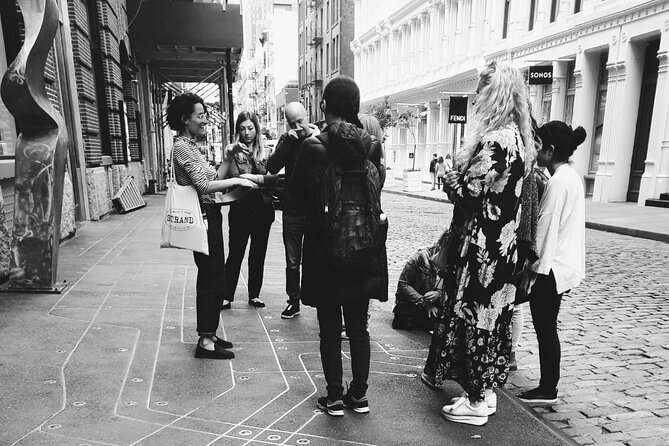
Street art tours vary a lot: some are designed for big groups, which can dilute the experience. Here, you get a private tour where only your group participates, plus a flat rate model for groups as large as six.
That combination tends to be good value for a few reasons:
- You’re not competing with strangers for the guide’s attention.
- You can ask questions without feeling rushed.
- The guide can slow down for your group’s interests, whether you’re into minimalist forms, community art spaces, or the Keith Haring connection.
It’s also a strong choice if you’ve visited NYC before and you want something newer than classic sights. SoHo changes, and street art is especially time-sensitive. Even when you’ve seen lower Manhattan before, this tour helps you see it differently.
Who should book this SoHo street art experience?
Book this if you want:
- A two-hour art walk that’s not too long but still substantive
- A guide-led route that ties street visuals to clear stories
- A mix of art types: minimalist, community garden, and mural wall with Keith Haring’s 1982 work
Skip it (or consider adjusting expectations) if:
- You only care about very large, colorful murals and want zero explanation
- You dislike walking outdoors and can’t be flexible with weather
Should you book the street art tour at SoHo?
Yes—if you like your NYC art with context and you want an organized way to navigate SoHo’s wall culture. The strongest reason to book is the balance: you’re not just staring at images, you’re learning how different kinds of public art live side by side, from Forrest Myers’ minimalist Gateway to Soho to Elizabeth Street Garden’s community programming and ending at the Bowery Mural tied to Keith Haring.
If your group is small (up to six) and you want questions answered, this private format is a practical win. And if you’re the type who always asks what to see next, you’ll likely walk away with a short list of murals to chase after you finish at E Houston St.
FAQ
How long is the SoHo street art tour?
The tour is about 2 hours.
Where does the tour start and end?
It starts at Broadway–Lafayette St (Lafayette St & E Houston St), New York, NY 10012 and ends at 76 E Houston St, New York, NY 10012 near the Bowery Mural.
What time does the tour begin?
The start time listed is 9:00 am.
Is this tour private?
Yes. It’s a private tour/activity, and only your group will participate.
What language is the tour offered in?
The tour is offered in English.
Do I need a printed ticket?
No. You get a mobile ticket.
Is the tour indoors or outdoors?
It takes place outdoors and requires good weather.
What happens if the weather is bad?
If it’s canceled due to poor weather, you’ll be offered a different date or a full refund.
Can I cancel for a refund?
You can cancel for a full refund up to 24 hours in advance of the experience’s start time.
Is service animal access allowed?
Yes. Service animals are allowed.