Street art shows up when you slow down. This Budapest tour walks District VII streets with ET, helping you read the city’s messages on walls, stickers, and murals.
I love the small group of eight, because you actually get to ask questions and talk with the guide. I also love the slow pace on tiny streets, where ET explains not just what you’re seeing, but what it’s communicating.
The one thing to consider is that it’s walking-heavy, so comfortable shoes matter more than usual.
In This Review
- Key things that make this street art tour worth your time
- Street Art Walk in Budapest’s District VII with ET
- Price for a Two-Hour City-Reading Lesson
- Start at Telep-Art Galéria, Finish at Szimpla Kert
- A Tiny-Street Route That Teaches You How to Look
- What You’ll See: Stickers, Smart-Art, Murals, and Bronze
- Politics and Meaning: Why the Walls Say What They Say
- Small Group Energy Keeps It Interactive
- Comfort and Practical Stuff You Should Know
- After the Tour: Keep Spotting Messages All Over Budapest
- Who This Tour Is Best For (and Who Might Skip It)
- Should You Book This Street Art Alternative Tour?
- FAQ
- How long is the street art tour in Budapest?
- What language is the tour offered in?
- What is the group size limit?
- Where do I meet and where does the tour end?
- Do I get a mobile ticket?
- When will I receive confirmation after booking?
- Are service animals allowed?
- Can I cancel for a full refund?
Key things that make this street art tour worth your time
- Max 8 people: small group energy, easy questions, and a real conversation
- ET’s guide style: interactive, enthusiastic, and focused on meaning, not just photos
- District VII focus: a neighborhood angle that many first-timers miss
- Many forms of street art: stickers, smart-art images, bronze sculptures, and large murals
- Slow walks on tiny streets: you’ll notice details you’d skip on your own
- Ends at Szimpla Kert: a natural cool-down stop after the walk
Street Art Walk in Budapest’s District VII with ET
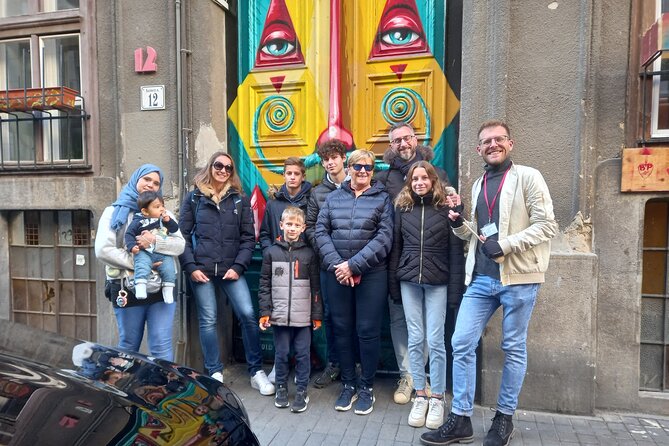
If Budapest is your first stop in Europe, you’ll quickly learn that the city runs on more than grand buildings. This tour is your shortcut to the other Budapest: the one that speaks through paint, paste-up stickers, and wall-sized statements.
What makes it click is the guide, ET. He treats street art like a language, not a decoration. You’ll walk, stop, look up, and then get the context that turns a random wall into a clear message.
This is also one of those rare tours where the topic feels current. The art you see often points at social issues, politics, and the way artists process the world around them.
You can also read our reviews of more tours and experiences in Budapest.

Price for a Two-Hour City-Reading Lesson
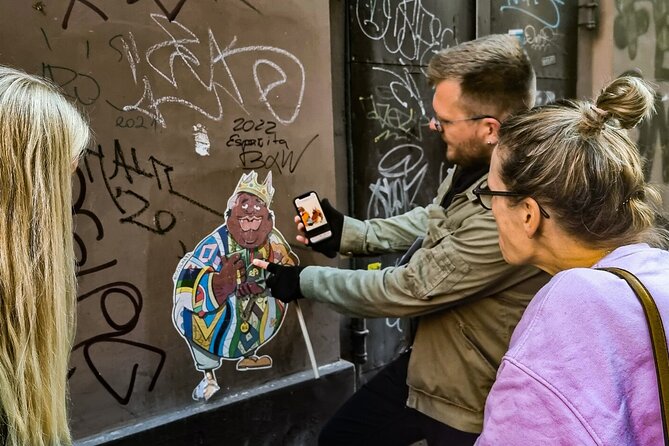
At $36.20 per person for about 2 hours, this isn’t priced like a budget stroll. But you’re paying for something practical: guidance that helps you interpret what you’re seeing as you’re seeing it.
Street art is easy to enjoy and easy to miss. Without context, you might think it’s just random visuals. With ET’s explanations, you learn how to “read” the city—messages, symbolism, and why certain styles show up where they do.
So for me, the value is in the translation. You’re not just buying movement; you’re buying a new way to look at Budapest for the rest of your trip.
Start at Telep-Art Galéria, Finish at Szimpla Kert
The tour starts at Telep-Art GalériaBudapest, Madách Imre út 8, 1075 Hungary. It’s a fitting kickoff because it puts you into an art mindset before you even step out into the streets. If you like warming up with a little context, this starting point helps.
You end at Szimpla Kert, Kazinczy u. 14, 1075 Hungary. This place matters because it’s one of the symbols of Budapest’s ruin bar culture—an easy way to land the tour and keep the evening going. After a couple of hours focused on walls, it’s nice to shift gears to a spot that feels built for lingering.
If you’re the kind of person who likes to plan a full afternoon, consider this structure: start with learning, finish with a drink or snack nearby so you’re not scrambling at the end.
A Tiny-Street Route That Teaches You How to Look
The core of the experience is simple: you walk slowly through tiny streets while ET points out street art you’d otherwise pass. The pace is intentional, which is great news if you get frustrated on tours that feel like a sprint with stop signs.
This is the kind of walk where you learn how to scan a wall like a local. You pay attention to small details: what’s placed where, how pieces relate to each other, and which parts look newly added versus older work.
A practical note: because you’ll be stopping often, the tour feels longer than a strict two-hour count. That’s not a downside if you like walking and looking—but it’s the main trade-off.
What You’ll See: Stickers, Smart-Art, Murals, and Bronze
This tour isn’t stuck on one style of street art. ET shows you multiple mediums, so you see how street messages adapt to different formats.
From what you can expect during the walk, you’ll likely spot:
- Stickers and other paste-up style work
- Smart-art images (a specific category you’ll learn how to read)
- Large wall murals
- Bronze sculptures as part of the street art language
- Other mixed forms that reflect the scene’s creativity
Seeing all these kinds in one route helps you understand something important: street art isn’t one aesthetic. It’s a set of tools artists use to communicate, whether they’re working small, bold, or somewhere in between.
And if you’re worried it will be mostly big murals, don’t. The mix includes the smaller stuff too—the pieces you’d miss unless someone teaches you where to look.






Politics and Meaning: Why the Walls Say What They Say
Street art can look fun from far away, but it often carries heavy meaning close up. ET’s focus is on explaining the messages behind murals and street pieces, including how local conditions and political events can influence what artists create.
This is also why the tour works for people who aren’t sure they’re “into art.” You’re not only learning art history vocabulary. You’re learning to connect visuals to ideas—criticisms, opinions, and observations about daily life.
One of the strongest themes is how the tour makes street art feel like part of the neighborhood’s identity. Instead of treating it like outsider graffiti, you get a sense that it’s a voice—sometimes loud, sometimes subtle, always intentional.
Small Group Energy Keeps It Interactive
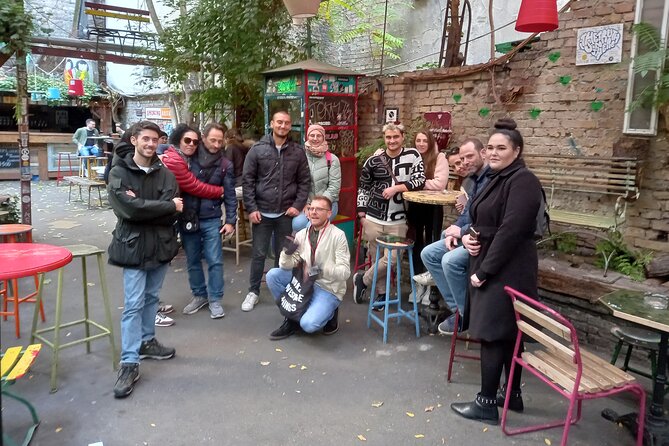
The group cap is eight travelers, which changes the whole vibe. With fewer people, you don’t end up watching the guide talk past you. ET can slow down for questions, and the group becomes part of the experience.
You’ll also get an interactive feel from the way ET explains things. He shares context as you move between pieces, and he’s quick to answer questions about what you’re seeing and why it matters.
A practical bonus: when the group is small, you can naturally stay together without getting lost in a crowd. And since the route is on tiny streets, that matters. It’s easy to wander off on your own—this tour is designed to keep you oriented.
Comfort and Practical Stuff You Should Know
This is an English-language experience, so you won’t be guessing what you’re looking at. ET guides the walk and keeps the explanations easy to follow, even when the topic gets political or symbolic.
The tour also fits a range of travelers, with service animals allowed and the meeting area near public transportation. Still, “most travelers can participate” doesn’t erase the reality of the walking portion.
If you’re picking shoes for the day, prioritize comfort. Think supportive soles and clothes you don’t mind getting slightly travel-dust on. Street art tours are the kind of activity where you’ll naturally angle your phone upward and slow down repeatedly.
Also, it uses a mobile ticket. That’s one less thing to manage, which always helps when you’re hopping between neighborhoods.
After the Tour: Keep Spotting Messages All Over Budapest
One of the best outcomes isn’t what you learn during the walk—it’s what you start noticing afterward. By the end, you’ll likely find yourself looking at walls differently, scanning for symbols and messages rather than just color.
ET also shares resources during the experience, including Instagram pages you can follow. That’s useful because street art changes fast, and those links can help you keep tracking what’s happening in Budapest’s scene.
If you’re staying in the city for more than a day, this tour can become a “multiplier” for everything else you do. Even when you’re not on the route, you’ll have a new skill for spotting meaning in plain sight.
Who This Tour Is Best For (and Who Might Skip It)
This works especially well if you:
- Want something alternative to the usual postcard route
- Like art that connects to real-world issues
- Prefer a small group with conversation
- Enjoy walking as a way to learn neighborhoods
It can also suit families and different age groups because art doesn’t require a specific background to appreciate it. The tour approach is about curiosity and interpretation, not gatekeeping.
You might consider skipping if you:
- Have limits on walking time or distance
- Prefer art that stays purely decorative (no political context)
- Hate slow-paced stops to look closely
Should You Book This Street Art Alternative Tour?
I’d book it if you want Budapest to feel personal, not just scenic. For two hours, you get a focused walk in District VII with ET, and you come away with a way to read street art instead of just viewing it.
Book it early if your schedule is fixed—this tour is typically booked ahead. And if you’re trying to choose between a standard sightseeing walk and something more local, this is the one that teaches you how to see the city from street level.
If your plan is “one afternoon that changes how I notice Budapest,” this is a smart pick.
FAQ
How long is the street art tour in Budapest?
It’s listed as approximately 2 hours.
What language is the tour offered in?
The tour is offered in English.
What is the group size limit?
The tour has a maximum of 8 travelers.
Where do I meet and where does the tour end?
You meet at Telep-Art GalériaBudapest, Madách Imre út 8, 1075 Hungary, and the tour ends at Szimpla Kert, Kazinczy u. 14, 1075 Hungary.
Do I get a mobile ticket?
Yes, the tour includes a mobile ticket.
When will I receive confirmation after booking?
You’ll receive confirmation at the time of booking.
Are service animals allowed?
Yes, service animals are allowed.
Can I cancel for a full refund?
Free cancellation is available if you cancel up to 24 hours in advance for a full refund.