REVIEW · HOUSTON
Houston’s Official City & Mural Tour!
Book on Viator →Operated by Houston City Tours · Bookable on Viator
Downtown Houston looks new in 80 minutes. This Houston City & Mural Tour is built for first-timers: an open-air bus loop that hits major downtown sights and street art without making you plan every turn. You also get a map and orientation, which makes the city feel less like a maze.
I like that it’s designed to give you the big-picture lay of the land, then zoom in on murals and architecture with short photo moments when it makes sense. On some departures, I’ve heard guides bring the stories to life, like Yolanda and Antonio, with friendly, city-specific commentary.
One caution: it’s an outdoor, open-top style ride, and hot or rainy weather can make the experience less comfortable. You’ll want to plan for sun, wind, and rain, and choose your seating with that in mind.
In This Review
- Key things to know before you go
- Entering The Houston City Tours visitor zone (and how the ride actually starts)
- The 80-minute loop: what you’ll see and why it works
- A park stop in the Convention Center district
- The mother church and a historic landmark feel
- Old union train station area turned Astros home
- Last original buildings of historic downtown
- Market Square Park and the first commerce-and-government spot
- City Hall and a brief photo window near Hermann Square
- Theater District passing spots for music and opera
- A Downtown Aquarium-style area with sea life exhibits
- A 1923 Spanish-style historic public library
- Apollo 11 commemoration in a downtown park
- Buffalo Bayou and the 1836 Allen brothers founding story
- Houston Rockets basketball arena area
- JP Morgan Chase Tower: the tallest structure in Texas
- Houston Graffiti Building and a short photo hop
- Historic homes and museums by old Sam Houston Park
- The statue of the 41st President overlooking Buffalo Bayou
- Live guides on weekends, audio on weekdays: how to make it work
- Open-air reality check: heat, rain, and where to sit
- Price and value: is $44.95 worth it?
- Who this tour suits best (and who might want another option)
- Quick practical checklist before you board
- Should you book Houston’s Official City & Mural Tour?
- FAQ
- How much does the Houston City & Mural Tour cost?
- How long is the tour?
- Where do I meet the tour?
- Is hotel pickup and drop-off included?
- What language is the tour offered in?
- Is there a live guide or audio?
- How many people are on the tour?
- Is the bus open-air?
- What is the cancellation policy?
Key things to know before you go
- Get your bearings fast: The route is made for an easy first pass through downtown.
- Murals plus landmarks: You’re not just seeing buildings; you’re also seeing Houston’s street-art voice.
- Short photo hops: A couple of stops are set up for brief off-the-bus time when conditions allow.
- Hybrid guiding: Live help is available on weekends, and weekdays use pre-recorded audio.
- Weather matters: Heat and storms can affect comfort on an open-air bus.
Entering The Houston City Tours visitor zone (and how the ride actually starts)
The tour begins at 1302 Dallas St, at the Houston City Tours Visitor Center. This is not a “we pick you up at your hotel” kind of experience, so you’ll want to build in time to get there on your own. The upside is that it keeps everything simple: you meet, you board, and you’re rolling through downtown.
Expect a quick check-in and an easy start to the day. Staff are set up to get you sorted fast, and the day-to-day rhythm feels smoother when you arrive early rather than sprinting in at the last minute.
The bus itself is open-air, with seating that lets you look out over the streets. That matters because this tour’s core goal is visual: murals on building walls, historic downtown facades, and the city’s skyline.
You can also read our reviews of more tours and experiences in Houston.


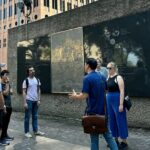
The 80-minute loop: what you’ll see and why it works
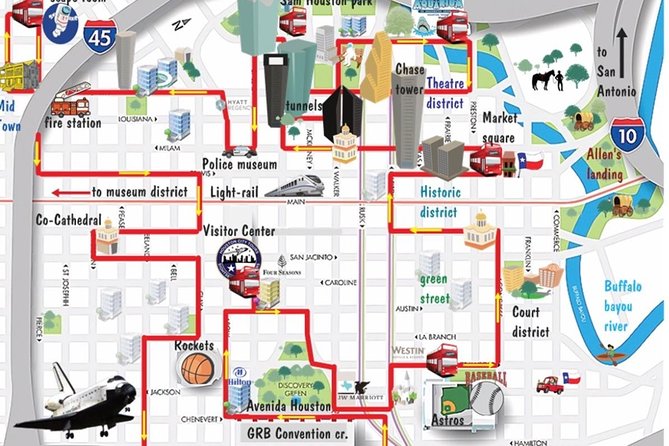
This is about 1 hour 20 minutes on average, and that timing is a big part of why it’s good value. You’re getting a lot of downtown variety—city hall glamour, theater district landmarks, museum-y historic stops, and iconic sports and skyline viewpoints—without the fatigue of a half-day charter.
Also, the tour returns to its original departure point. That’s handy if you want to keep the rest of your day open for food, shopping, or a second, slower look at a neighborhood you liked.
Here’s how the route reads in real life.
A park stop in the Convention Center district
The first stop is a park area in the heart of the Convention Center district. I like starting here because it frames the downtown layout right away. It gives your eyes landmarks to anchor to before you hit the more specific buildings and street-art blocks.
If you’re sensitive to heat, this is a good moment to notice where shade might be available along the route. It won’t fix summer Texas, but it helps you make smarter choices for the rest of the ride.
The mother church and a historic landmark feel
Next comes a stop centered on the mother church of Catholicism in Houston, noted as a historic landmark. This is where you get a break from modern glass and steel. You’ll see Houston’s older “bones,” not just the newest skyline angles.
It’s also a reminder that this city’s downtown story isn’t only about the present-day boosterism. Houston built a layered identity here, and this stop helps you spot it quickly.
Old union train station area turned Astros home
The route then points you toward the old union train station area, now associated with major league baseball and the Houston Astros. It’s a fun historical contrast: transportation-era history mixed with modern sports energy.
Even if you’re not a baseball superfan, this kind of stop helps you understand how downtown Houston keeps reusing major sites instead of clearing them away.


Last original buildings of historic downtown
You’ll also pass the last original buildings of the historic downtown district. That phrasing might sound vague, but from the road it matters: it tells you where the city’s older street rhythm still exists, even when everything around it has changed.
For architecture lovers, these are the moments to slow your camera and look closely at details. For everyone else, it’s the difference between seeing a generic downtown drive and getting a real sense of Houston’s evolution.
Market Square Park and the first commerce-and-government spot
The tour then shares the historic place where the first Houstonians built their original areas for commerce and government, tied into Market Square Park. This is one of those stops that turns the city’s current energy into something you can trace back.
If you like walking neighborhoods after a tour, this is a strong place to remember for later. It’s the kind of area you can revisit for photos and a slower, on-foot version of what you just saw from the bus.
City Hall and a brief photo window near Hermann Square
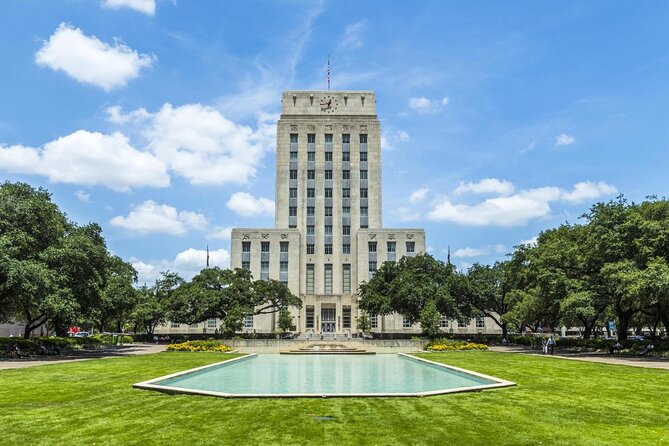
Stop 1 is City Hall: an Art Deco 1939 building in front of Hermann Square. You may be able to hop off for about 5 minutes for photos, depending on weather and construction or traffic.
This is a classic “Houston looks official” scene. If your time in the city is short, seeing it early helps you connect the visual to the meaning of downtown governance and civic life.
Practical tip: City Hall is a big-photo target. Even with only a few minutes, you can get what you need if you’re already aiming for the best angles from the bus.
Theater District passing spots for music and opera
The route then moves through the Theater District area, including stops tied to the Houston Symphony and the Houston Grand Opera. The key here is that you don’t just pass by “theater buildings.” You pass through a 17-block theater district zone, which helps you understand the scale of performing arts in Houston.
If you’re into arts, this is also where you’ll start noticing how downtown isn’t only for office towers and sports. It’s for culture, schedules, and late-evening crowds—just concentrated in one area.
A Downtown Aquarium-style area with sea life exhibits
One stop passes by the area filled with seafood restaurants and a major sea life attraction, with mentions of touch pools and shark tank-style displays. Depending on timing, you might get a short photo moment.
Even if you’re not buying admission, I like that the tour includes this because it gives you a sense of what families and visitors actually gravitate toward. Downtown Houston isn’t only “business downtown.” It has tourist-friendly energy too.
A 1923 Spanish-style historic public library
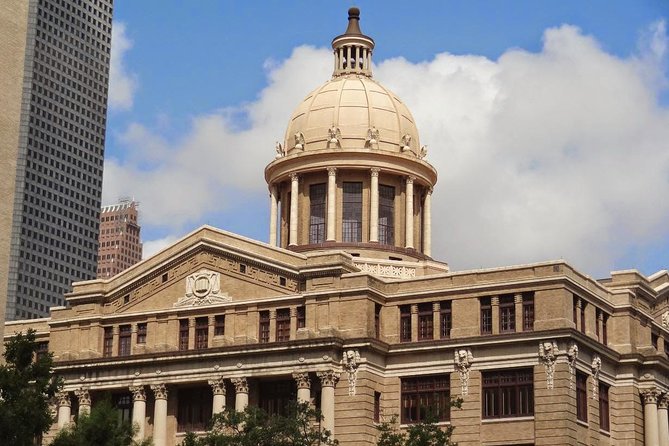
Next up: a 1923 Spanish style historic public library. This is a softer, more detailed stop compared with big civic buildings and arenas.
Spanish-style architecture tends to have visual cues—arches, warm tones, and design flourishes—that pop even from a moving bus if you’re looking at the right angle. It’s a good stop for people who enjoy noticing craftsmanship, not just headline landmarks.
Apollo 11 commemoration in a downtown park
The route includes a beautiful urban park that commemorates the Apollo 11 mission controlled from Houston. This is a Houston signature topic, because the city’s space story is part of why Houston became Houston.
If you’re a space fan, you’ll likely feel a little spark here. If you’re not, it still works because it places Houston’s identity in a global context.
Buffalo Bayou and the 1836 Allen brothers founding story
Then you head toward a bridge on Buffalo Bayou where, in 1836, John and Augustus Allen founded Houston. This stop is important because it ties the city’s origin story to the waterway that shaped growth.
Even if you can’t see every detail from the bus, Buffalo Bayou gives you a natural geometry to the city. And that helps you make sense of why certain areas feel separated or connected.
Houston Rockets basketball arena area
You’ll also pass the home of the Houston Rockets. Sports stops can feel like filler on some tours, but in Houston they make sense because stadiums and arenas create major downtown rhythms—traffic patterns, crowd movement, and that pre-game downtown buzz.
If you’re visiting on game night, knowing what you’re passing can help you plan around it later.
JP Morgan Chase Tower: the tallest structure in Texas
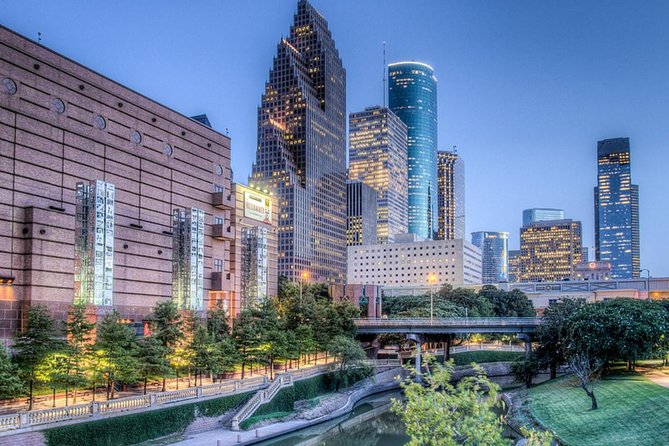
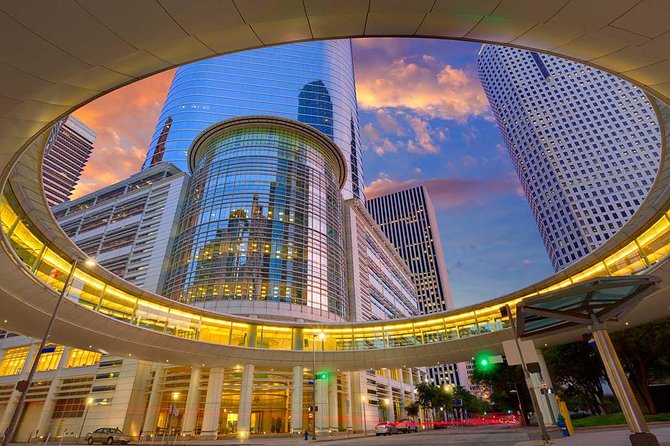
The route includes the 75-story building that’s described as the tallest structure in Texas. It also mentions an observation deck, which signals you’re in the skyline zone where Houston wants you to look up.
From the road, this is one of the clearest “wow” moments. If your phone battery is low, charge it before you reach this part of the route.
Houston Graffiti Building and a short photo hop
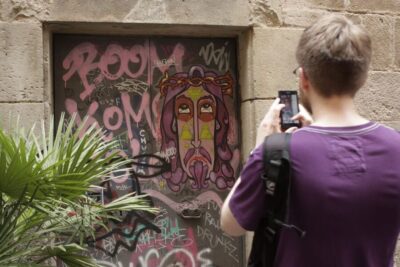
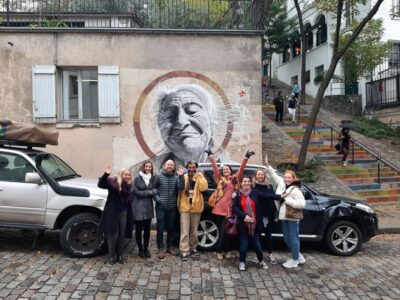
Stop 2 is the Houston Graffiti Building, with amazing street art and expressions around the area. Depending on conditions, you may be able to hop off for about 5 minutes to take photos, and the stop mentions free admission.
This is where art lovers tend to get the most satisfaction. The bus gives you the overall shape of the street, but the murals are the point. Try to time your photos with a quick look for color consistency and wall-to-wall themes.
Historic homes and museums by old Sam Houston Park
You’ll then see 11 historic homes and museums next to the old Sam Houston Park. This is more of a “pass and appreciate the setting” moment than a full visit, but it’s still valuable. It signals that downtown Houston has preserved domestic and cultural spaces, not only commercial buildings.
If you later want to do a deeper museum afternoon, this is a useful cue for where to aim.
The statue of the 41st President overlooking Buffalo Bayou
The tour ends with views over Buffalo Bayou and the statue of the United States’ 41st President. This is a clean wrap-up: you return to the idea of Buffalo Bayou as a spine of the city.
It’s also a way to close on something you can remember: a recognizable figure set against water views.
Live guides on weekends, audio on weekdays: how to make it work
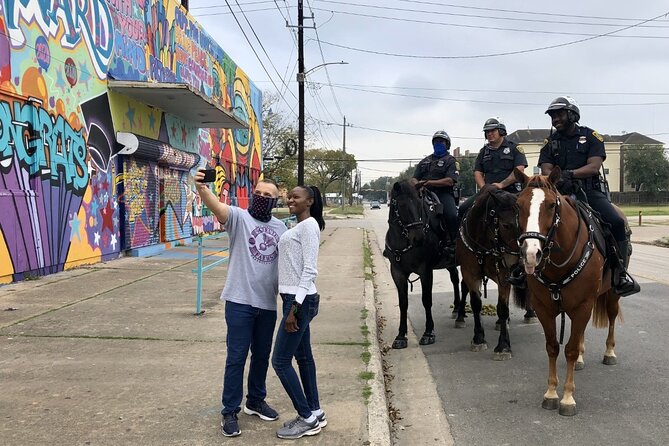
The tour includes an in-person tour guide on weekends, while weekdays use pre-recorded audio. Either way, you’ll get commentary designed to match the sights outside your window. That’s the big benefit of this setup: you don’t have to guess what you’re seeing.
In the feedback I’ve taken in, the best moments are often when the driver brings energy and stays connected to the actual street art and city details. Yolanda has been described as fun and entertaining, and Antonio was praised as excellent. Another operator, Madden, was noted as accommodating when reservation details changed.
Still, not every rider’s experience is the same. One person said commentary felt too personal or not relevant, and another said audio was hard to understand. One also mentioned loud music affecting the experience. So if you want crisp audio, you might consider sitting in a place where you can hear best and keep your expectations realistic.
Open-air reality check: heat, rain, and where to sit
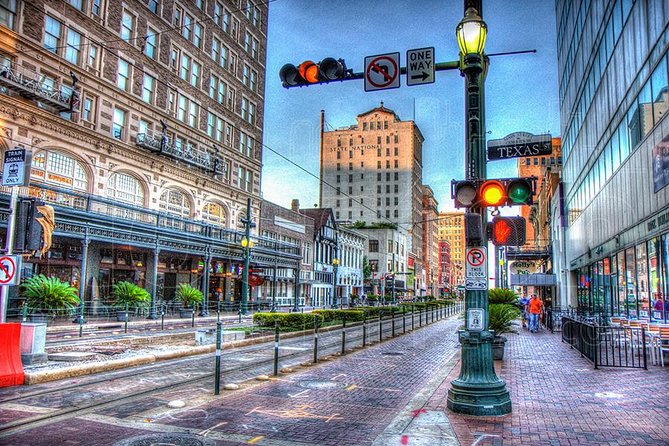
This is the part you can control the most. Since it’s an open-air style bus, weather changes the experience quickly.
In summer, upper seating can feel intense. You’ll want to bring water, sunscreen, and sunglasses, and plan for a hat if you’re out in direct sun. One piece of practical advice that keeps showing up is to bring a portable fan if you have one. If you’re with a 78-year-old parent or anyone who doesn’t tolerate heat well, you’ll want to talk yourself into staying downstairs when possible.
About rain: this is an outdoor activity on an open-top bus, and one rider reported getting drenched during heavy storms. The operator’s guidance is straightforward: you always have the option to go downstairs for comfort and safety, but you should treat rain as a real factor, not an afterthought.
Seat tip from experience: if you’re up top, be mindful of overhead trees. One rider got a surprise “smack” when the bus passed under branches, so don’t assume you’ll have perfect visibility from every angle.
Price and value: is $44.95 worth it?
At $44.95 per person for about 1 hour 20 minutes, the value depends on what you want out of your first Houston day.
Here’s what you’re really buying:
- A tight downtown route that gives you bearings fast
- A mix of murals, architecture, and major landmarks
- A map and orientation so you can navigate afterward
- Commentary through live guiding (weekends) or pre-recorded audio (weekdays)
If you’re new to Houston, this is one of the easier ways to avoid that stuck feeling of being “near downtown” but not sure what to prioritize. It’s also helpful for art lovers because it pairs street art with the places around it, so the murals feel tied to a broader story instead of floating alone on a wall.
If you’re hoping for a huge geographic sweep outside the core downtown area, this may feel limited. One caution in the feedback is that the ride can focus mainly around civic and central downtown streets. The trade is that you don’t waste time; you get your checklist done.
Who this tour suits best (and who might want another option)

This tour is a strong fit if:
- You want a first-pass overview of downtown Houston
- You care about street art and how it connects to the city
- You like a structured experience that doesn’t eat half a day
- You’re traveling with kids and need a shorter attention-friendly format
It can be a tougher fit if:
- You’re very heat-sensitive or traveling with someone who can’t handle sun exposure
- You’re visiting during intense summer days or expect frequent rain
- You want extra long stops and deep inside-the-building visits (the tour is built around passing, viewing, and short moments)
For people who need more comfort, you might consider pairing this with a different kind of Houston tour when the weather is rough. The operator notes that air-conditioned vehicles are available for another type of tour, and air-conditioned waiting areas exist before and after the service.
Quick practical checklist before you board
Do these and you’ll enjoy the ride more:
- Bring water and sunglasses for upper seating
- Wear sunscreen and consider a hat
- If it’s hot, bring a small fan if you have one
- If it’s raining, expect an outdoor feel and plan to use the downstairs option
- Plan for photos at City Hall and the Houston Graffiti Building, which may include short off-bus photo time when conditions allow
Should you book Houston’s Official City & Mural Tour?
I’d book it if you want a low-effort, high-sight way to understand downtown Houston fast. It’s a smart choice for first-timers, art fans, and anyone who wants a short structured tour that sets you up for the rest of your day.
I’d think twice if you’re going during peak hot weather and you or your group can’t tolerate heat for long periods, or if storms are likely and you’d rather avoid an open-air experience. In those cases, consider the downstairs seating option, and if you need a more climate-controlled day, look at tour alternatives offered by the same company.
If you’re able to travel with the weather and plan your seating, this is a solid way to turn Houston’s streets—murals included—into something you can actually remember.
FAQ
How much does the Houston City & Mural Tour cost?
The price is $44.95 per person.
How long is the tour?
The tour lasts about 1 hour 20 minutes on average.
Where do I meet the tour?
You meet at 1302 Dallas St, Houston, TX 77002, USA.
Is hotel pickup and drop-off included?
No. You need to meet at the visitor center, and the tour ends back at the meeting point.
What language is the tour offered in?
The tour is offered in English.
Is there a live guide or audio?
On weekends, an in-person tour guide is available. On weekdays, pre-recorded audios are offered.
How many people are on the tour?
The tour has a maximum of 50 travelers.
Is the bus open-air?
Yes. It is described as an open-air style bus, with an option to go downstairs for comfort and safety.
What is the cancellation policy?
You can cancel for a full refund up to 24 hours in advance. If you cancel less than 24 hours before the experience start time, the amount paid is not refunded.