REVIEW · HOUSTON
Walking Tour of Houston: History, Architecture, Street Art
Book on Viator →Operated by John Gu · Bookable on Viator
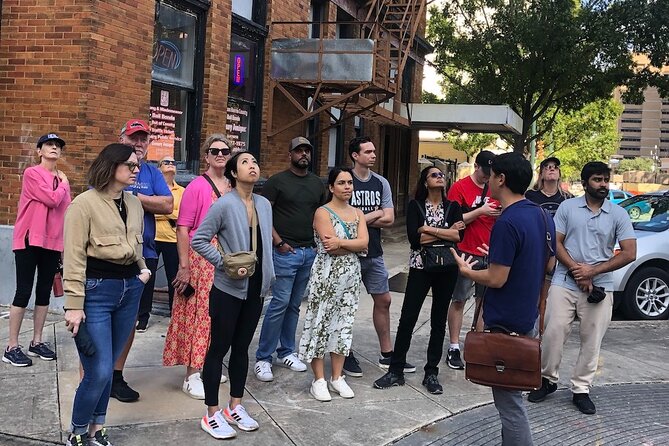
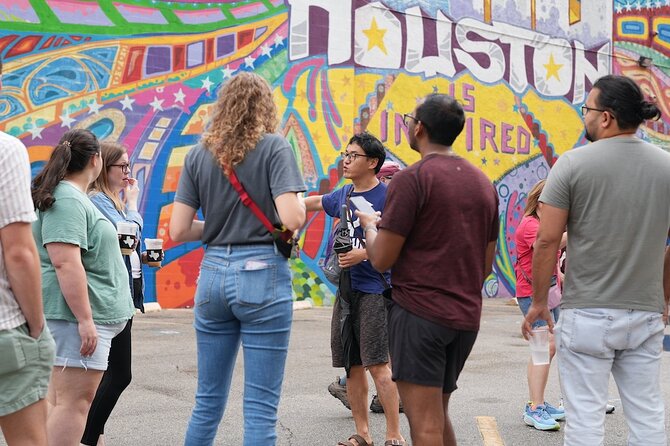
Downtown Houston comes into focus fast. This 2-hour walking tour strings together Downtown murals and landmark architecture with a local guide, so you get the city’s personality in a way maps never do. I especially like the photo moment at the Houston is inspired mural and how the guide frames it with stories about Houston’s beginnings. The walking pace is relaxed enough to enjoy the details, not just check boxes, and the guide on this tour is often John Gu.
I also like that you hit several big themes in one go: civic buildings, theaters, and a few of Houston’s most recognizable skyscraper styles. The Art Deco stops feel quick but satisfying, and the short schedule makes it easy to fit into a busy day. One consideration: the stops are brief (about 5 minutes each), and you’re walking on city sidewalks the whole time—plus snacks and bottled water are not included—so bring comfy shoes and plan for your own water.
In This Review
- Key highlights you’ll feel on the ground
- Why this Houston walking tour works for first-timers
- Where you start: Lyric Market and the Downtown launch pad
- Stop 1: Downtown Historic District Market Square and the mural photo moment
- Stop 2: The Gulf Building, 1929 Art Deco and that mural-covered lobby
- Stop 3: The Theater District, design lessons at the Alley Theater and Jones Hall
- Stop 4: City Hall in Hermann Square, 1939 Art Deco civic design
- Stop 5: Tranquility Park and the NASA connection you can actually picture
- Stop 6: The Niels Esperson Building and Italian Renaissance details
- Stop 7: 1910 Harris County Courthouse, civic architecture at its best
- The finish: Lynn Wyatt Square park and how to use the timing
- Price, pace, and practical expectations (so you’re not surprised)
- Who should book this Houston tour
- Should you book it?
- FAQ
- How long is the walking tour of Houston?
- How much does the tour cost?
- What are the start and end locations?
- Is the tour stroller accessible?
- Are service animals allowed?
- Is the tour offered in English?
- Is admission required for the stops?
- What group size should I expect?
- Can I cancel for a full refund?
Key highlights you’ll feel on the ground

- A local-eye orientation of Houston through history, architecture, and street art
- Downtown photo stop at the Houston is inspired mural in Market Square
- Iconic towers in tight time including the 1929 Gulf Building and its mural-covered lobby
- The Theater District sweep with the Alley Theater and Jones Hall called out for design and sound
- NASA connection at Tranquility Park, linking the city to space in a way that’s easy to remember
- A classic civic ending at the 1910 Harris County Courthouse, a high point of courthouse architecture
Why this Houston walking tour works for first-timers
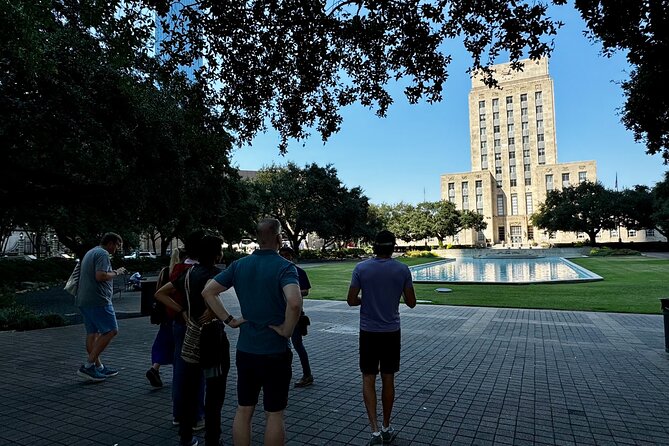
Houston can feel spread out. This walk helps you shrink the distance in your head fast. In two hours or so, you’ll move through Downtown and the Theater District and see how the city built its identity—first with historic landmarks, then with bold architecture, and finally with the public art that gives neighborhoods their voice.
The value here is not just the buildings. It’s the way the guide connects details: why a style shows up when it does, what a landmark meant at the time, and how the city’s street art fits into the story. When you do that on foot, you start noticing things on your own after the tour ends.
Also, it’s priced reasonably for what you get. For $25 per person, you’re paying for a guided route with a live local, plus a string of major outdoor sights. Many of the stop moments are free to view, so you’re not paying add-on ticket costs just to participate.
And yes, it’s built for real-life needs: stroller access is mentioned, service animals are welcome, and the group stays capped at 25, which keeps the tour from feeling chaotic.
You can also read our reviews of more tours and experiences in Houston.



Where you start: Lyric Market and the Downtown launch pad
You’ll begin at Lyric Market, 411 Smith St, near the Downtown Historic District. This is a smart starting point because it puts you close to the city’s core—easy to get to, and easy to continue from later.
The tour also ends in the Theater District area, at Lynn Wyatt Square park (near 601 Capitol St). That means you’re not finishing miles away from everything you might want to do next. If you want food right after, you’re in the right neighborhood to walk a few blocks and choose a cafe.
If you’re traveling solo, you’ll likely appreciate how organized the group format is. One of the standout points from the experience notes is that the guide checks in to make sure solo participants are included during longer pauses, not left standing around.
Stop 1: Downtown Historic District Market Square and the mural photo moment
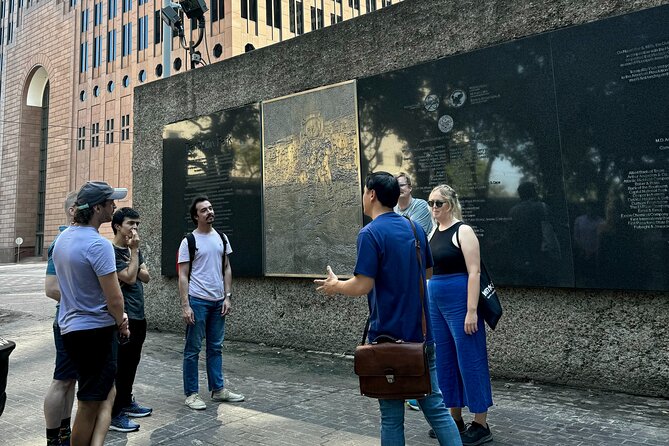
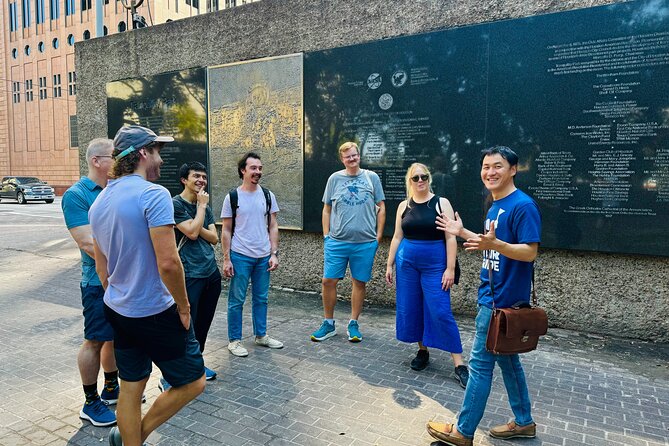
Your first stop is the Downtown Historic District Market Square, where the tour frames Houston’s origin stories as you look at older buildings around you. This is a good opener because it gives you context before the more dramatic architecture later on.
Then you get the photo moment at the Houston is inspired mural, which is one of the most recognized mural spots in the city. Even if you’re not a person who chases Instagram photos, it’s worth stopping for because it’s public art tied directly to place. It helps you understand Houston as a city with a sense of humor and civic pride, not just a skyline.
Practical tip: bring your phone ready. This is one of the quick-hit stops, so if you want a photo, line it up early rather than trying to “get it perfect” at the last second.
Stop 2: The Gulf Building, 1929 Art Deco and that mural-covered lobby

Next up is the Gulf Building, a standout Art Deco skyscraper completed in 1929. It rises 37 stories and is still a major visual landmark thanks to its setbacks and the classic stepped crown look that catches the light.
What makes this stop memorable is the attention to craftsmanship. You’ll hear about the gleaming marble look, the intricate shape as the building rises, and the fact that the lobby is mural-covered. Even if you only spend a few minutes outside, the guide’s pointing makes the building feel more than just a pretty facade.
Drawback to note: because the schedule is short, this is more of a “see it, learn it, move on” stop than a long photo session. If you’re the type who wants lots of time at one skyscraper, you may want to add a return visit after the tour.
Stop 3: The Theater District, design lessons at the Alley Theater and Jones Hall
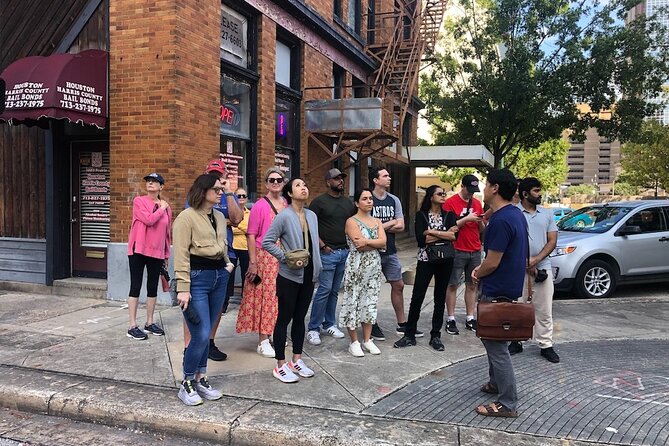
From the Gulf Building you shift into the Theater District, where Houston shows off a different kind of confidence: bold performance spaces with recognizable design identity.
You’ll get called out to key venues, including the Alley Theater, noted for its Brutalist design and its reputation for ground-level theater energy. Then you’ll look toward Jones Hall, a concert venue with a marble interior and acoustics that matter to anyone who cares about why buildings sound the way they do.
This stop is valuable because it teaches you how architecture serves a purpose. It’s not just about how something looks; it’s about how the space shapes audience experience.
If you enjoy the performing arts, you’ll probably find yourself scanning the area after the tour for show schedules or quick ways to plan a ticket day. Even if you don’t, the Theater District part helps you see Houston as a city with arts infrastructure, not just sports and business.


Stop 4: City Hall in Hermann Square, 1939 Art Deco civic design
City Hall comes next, and it’s a big contrast in style and tone. This landmark is described as Art Deco and was completed in 1939. It’s limestone-clad with geometric design and detailed friezes—plus a commanding presence in Hermann Square.
What I like about civic-building stops on walking tours is that they usually get overlooked in favor of museums and towers. Here, that’s flipped. You learn why government architecture matters: it’s meant to impress, to communicate stability, and to be seen by the public.
Because the stop is short, you should use it like a guided crash course. Look at the patterns on the facade, notice the shapes, then listen for the stories behind the building’s role. That’s the kind of attention you’ll carry back into the rest of your Houston day.
Stop 5: Tranquility Park and the NASA connection you can actually picture
Tranquility Park is where the tour brings in Houston’s relationship with NASA. This is a quick stop, but it can stick with you because it ties the city’s space ties to something you can picture in a park setting.
It’s also a good moment for a mental reset between architecture-heavy stops. Parks offer a little space to breathe, and the tour moves at a pace that lets you absorb the context rather than rushing straight through.
If you’re a space fan, this stop is a solid foundation for further exploration later. If you’re not, it still gives you a well-known Houston thread without turning it into a history lecture.
Stop 6: The Niels Esperson Building and Italian Renaissance details
The Niels Esperson Building is next, completed in 1927, and described as Italian Renaissance-style. This is another skyscraper you’ll recognize if you’ve ever seen Houston skyline photos, but the guide helps you see what makes it feel different from pure Art Deco or simple “office block” architecture.
You’ll hear it was built as a tribute to real estate magnate Niels Esperson by his wife Mellie. That personal story matters because it explains why the building feels almost temple-like in its crown and why the details are so intentional—terracotta notes, grand columns, and a regal finish near the top.
This is one of those stops where the time limit can feel tight, but the learning helps. After the tour, you’ll likely catch yourself noticing terracotta and column-like shapes on other buildings in Houston.
Stop 7: 1910 Harris County Courthouse, civic architecture at its best
The last major stop before finishing is the 1910 Harris County Courthouse. It’s framed as a majestic courthouse and a high point of civic architecture. Even with only a few minutes here, you’ll come away with a sense of how Houston wanted public institutions to look and feel at the time.
Courthouses often get treated like “just government buildings,” but on this tour, they get the spotlight. You’ll learn enough to understand why civic architecture can become part of a city’s identity—serious, orderly, and built to be seen.
Photo tip: courthouses are usually best shot with a wider angle. If your phone camera is set to portrait mode, switch to normal so the facade doesn’t get awkwardly cropped.
The finish: Lynn Wyatt Square park and how to use the timing
The tour ends at Lynn Wyatt Square park, in the heart of the Theater District. This finish is practical: you’re dropped near places to eat and near more theaters. It’s also close enough that you can walk back toward where you started if you want to keep exploring.
One thing that comes through in the experience notes is that the guide doesn’t ignore real needs. There’s mention of planned time to handle restroom breaks and allow a moment for a snack or beverage. If you start the tour already hydrated and bring a small snack just in case, you’ll enjoy the pacing even more.
If you’re coming from a meeting or another event, this ending spot makes it easier to rejoin your schedule. You’re not stuck in the middle of nowhere after the tour.
Price, pace, and practical expectations (so you’re not surprised)
At $25 per person, this tour is good value if you want a guided orientation without buying museum tickets all afternoon. The stops are mostly free to view, and the tour includes the local guide experience that ties everything together.
The pace is the main thing to expect. With roughly 5 minutes at each stop, you’ll be moving the whole time. That’s great for efficiency and for people who want a broad overview. It’s less great if you prefer slow travel, long museum hours, or deep dives at one building.
Also, snacks and bottled water aren’t included. That’s not a dealbreaker, but Houston heat (and sudden rain) are real. I suggest packing water and a small snack, even if you’re only gone for about two hours.
On weather: rain can happen. The tour is still doable, and it helps to have a light rain layer and shoes that don’t mind a damp sidewalk.
Who should book this Houston tour
You’ll get the most out of this tour if you:
- Want a fast introduction to Houston history and architecture without planning a route yourself
- Like street art moments mixed in with landmark buildings
- Are traveling with a stroller, or you need a tour that’s service-animal friendly
- Have limited time and want a local guide to point out what matters
It may not be the best fit if you want long stays at a single site. This is a “cover the area, learn the story” format, not a one-building photography marathon.
Should you book it?
If you’re visiting Houston and you want a guided way to understand Downtown and the Theater District in about two hours, I’d say yes. For $25, you’re getting a structured walk with major stops, a guide who connects art and architecture to Houston’s identity, and an ending in a neighborhood where it’s easy to keep your day going.
Book it if your priority is orientation, photos, and clear takeaways. Skip it only if you know you need longer time at fewer stops or you don’t like walking between closely spaced viewpoints.
FAQ
How long is the walking tour of Houston?
The tour lasts about 2 hours (approx.).
How much does the tour cost?
It costs $25.00 per person.
What are the start and end locations?
It starts at Lyric Market, 411 Smith St, Houston, TX 77002. It ends at 601 Capitol St, Houston, TX 77002, concluding at Lynn Wyatt Square park.
Is the tour stroller accessible?
Yes, the tour is stroller accessible.
Are service animals allowed?
Yes, service animals are allowed.
Is the tour offered in English?
Yes, the tour is offered in English.
Is admission required for the stops?
The listed stops show admission ticket free, so you will not need paid admission for those stop moments.
What group size should I expect?
The tour has a maximum of 25 travelers.
Can I cancel for a full refund?
Yes. Free cancellation is available up to 24 hours in advance for a full refund.