REVIEW · COLOGNE
Explore Cologne’s best Street Art Quarter
Book on Viator →Operated by LocalBini - The go-to platform for Experiences by Locals in Europe · Bookable on Viator
Street art on your feet beats scrolling. This 90-minute walk packs a lot of Cologne character into a tight route. You’ll see named artists, different techniques, and how graffiti and murals change the feel of each block.
I love two things right away: the small-group focus (max 8) and the way the route mixes big, recognizable walls with smaller, story-driven details. You also get a local guide who points out what’s going on in each style, not just where the art is. One heads-up: at about $152.67 per person for 1.5 hours, it’s not a long tour, so go in ready to move.
If you’re after classic museum masterpieces, this isn’t that. It’s about street-level creativity in real neighborhoods, plus a short finish at Goldmund Literatur Café for a laid-back pause.
In This Review
- Key highlights that make this walk work
- How the route strings together Cologne’s street art stories
- Starting at Goethe-Apotheke im Helioshaus (1884 architecture first)
- Heliosstraße: paste-ups, utopian murals, and technique spotting
- Bürgerzentrum Ehrenfeld: socially critical murals and mosaic detail
- Lessingstraße and the “Just Love” idea of borderless creativity
- Roа’s monochrome animal portraits near Ain Café
- Schönsteinstraße: a resistance memorial by Captain Borderline
- Ehrenfeld train station murals: street art in motion
- Captain Borderline’s Animals and Faith47’s Maria in central Cologne
- City Leaks Festival urban garden area and the Goldmund café reset
- Price and time: is $152.67 for 90 minutes good value?
- Who should book this Cologne street art walk?
- Should you book this street art quarter tour?
- FAQ
- How long is the street art tour?
- What language is the tour offered in?
- How many people are on the tour?
- Where do I meet and where does it end?
- Is food or drink included?
- Are gallery entry fees included?
- What’s the cancellation policy?
Key highlights that make this walk work
- Goethe-Apotheke im Helioshaus opening stop in an 1884 building before you hit the walls
- Heliosstraße artist variety, from ephemeral paste-ups by Sei Leise to utopian murals by Alexander Isakov
- Bürgerzentrum Ehrenfeld murals featuring social commentary by Captain Borderline and mosaic magic by Barbara Deppner
- Roа’s monochrome animal portraits, where the mood shifts fast from life to mortality
- Ehrenfeld train station street art, where works by Huami and El Bocho sit in a daily commuting setting
How the route strings together Cologne’s street art stories
What I like about this tour design is the logic of the walk. You start with real architecture (so you understand the city’s bones), then you move street by street through art that reflects different moods and messages. You’re not just ticking off photos. You’re learning how styles “talk” to each other across neighborhoods.
Cologne’s street art scene isn’t one thing. On this route you’ll see graffiti energy, mural storytelling, and even paste-ups—temporary by nature—so the art feels alive instead of fixed. And because the group stays small, you can actually follow the guide’s explanations when you’re standing close to a wall.
The best part for planning your own day: this tour gives you a guided skeleton. After 90 minutes, you’ll have names to look up and styles to notice on your own.
You can also read our reviews of more tours and experiences in Cologne.
Starting at Goethe-Apotheke im Helioshaus (1884 architecture first)
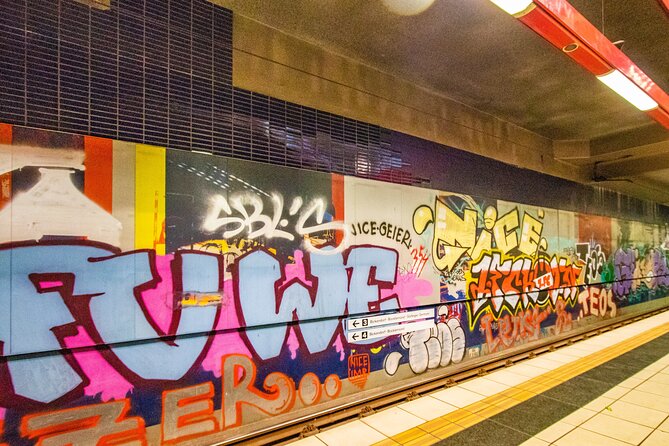
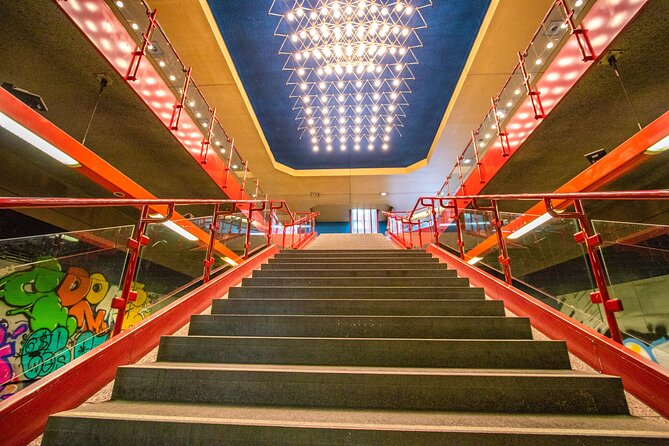
You meet at Goethe Apotheke on Venloer Str. 389. The first stop is the Goethe-Apotheke im Helioshaus, described as a classical architectural jewel from 1884 now used for medical practices. It’s an odd but smart warm-up: you get ornaments, arched facades, ornate staircases, and a light-flooded atrium right at the beginning.
Why this matters for a street art tour: it helps you “read” the neighborhood before you start reading the walls. You’ll start noticing how Cologne uses space—how facades frame streets, how staircases guide the eye upward, and how light changes what you see. That mindset makes murals and graffiti hit harder later.
Practical tip: wear shoes you can walk in without worrying. This is a foot tour, and the route is designed to keep you moving between stops.
Heliosstraße: paste-ups, utopian murals, and technique spotting
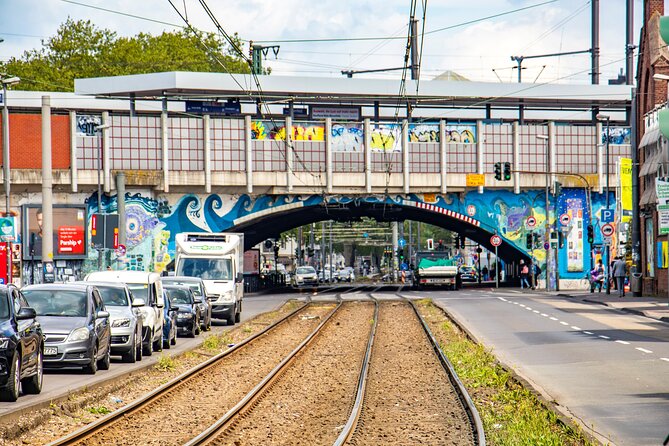
From the Helioshaus area, the walk shifts to Heliosstraße, where you’ll encounter a mix of styles and artists. This is one of the route’s strengths: the stops don’t treat street art as one category. Instead, the guide helps you separate what you’re looking at—paste-ups versus murals versus other wall interventions.
You’ll see work associated with Sei Leise, described here as ephemeral paste-ups. That word matters. Paste-ups are often meant to appear, stick around briefly, and then disappear, so they feel more like street communication than permanent decoration.
You’ll also encounter Alexander Isakov’s utopian architecture murals. That’s a different lane: instead of a quick message, you get an imagined built world painted onto real streets. When you compare the two, you start to see street art as a spectrum—some pieces want to be temporary sparks, others want to create alternate skylines.
If you like art that makes you look twice, this is a great segment. You’ll come away thinking about materials and intent, not just aesthetics.
Bürgerzentrum Ehrenfeld: socially critical murals and mosaic detail
Next you head to Bürgerzentrum Ehrenfeld, where the focus shifts toward thought-provoking mural work. This is where the tour’s commentary side earns its keep.
Captain Borderline shows up again here with socially critical masterpieces. The way this is framed matters: you’re not only looking at paint. You’re looking at a point of view placed right in public sight. And because it’s on a neighborhood canvas, the art feels less like a curated exhibition and more like a public conversation.
You’ll also see mosaic magic by Barbara Deppner. Mosaics can feel decorative at first glance, but the technique is often used to add texture and meaning—like the wall is turning into a larger image made from small parts. This is the kind of stop where the guide’s explanation helps you notice things you’d miss alone.
One minor consideration: this stop leans more “message-first” than “color-first,” so if you only want playful art, you may find some sections more serious than expected.
Lessingstraße and the “Just Love” idea of borderless creativity
On Lessingstraße, the route becomes more graffiti-forward again, with work connected to HNRX and a particular piece called Just Love. This is described as an ode to borderless creativity and the artist’s playful spirit.
Here’s why I think this stop is valuable: it changes the pace. After socially critical murals, you get something that feels like permission—art as a human impulse that shouldn’t require permission slips from institutions. Even if you don’t know the artist’s broader work, the theme gives you a clear mental frame: creativity as a boundary-free energy.
Watch for how graffiti style differs from large murals. You’ll likely notice sharper edges, faster visual rhythm, and more emphasis on lettering or tags. That contrast is one of the tour’s best teaching tools.
Roа’s monochrome animal portraits near Ain Café
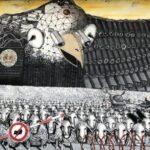
Then you get the tonal shift that makes this route memorable: you’ll see Roа’s monochrome murals, described as blending mortality and vitality through stark animal portraits.
Monochrome wall art can feel intense because it removes visual distraction. When you’re staring at an animal in black-and-white, the mood does the talking. And the theme of mortality vs. vitality gives the art a philosophical weight, which pairs well with the earlier socially critical themes—public art as reflection.
After Roа, you’ll be near Ain Café, noted for community-driven art. This is a good break in the walk because café-adjacent street art tends to feel less like a “destination” and more like part of daily life. Even if you don’t stop for anything, you’ll notice the local atmosphere around it.
Schönsteinstraße: a resistance memorial by Captain Borderline
At Schönsteinstraße, the tour reaches a memorial stop tied to the Edelweißpiraten resistance fighters, again credited to Captain Borderline.
This is street art with a historical anchor. It’s not just aesthetics; it’s remembrance placed in a modern urban environment. If you’re the type who likes to understand why an artwork exists where it does, this is one of the most meaningful parts of the route.
A practical angle: memorials can be emotionally heavy. If you want a lighter tone for the rest of your day, you might plan a calm moment afterward—like the café stop later.
Ehrenfeld train station murals: street art in motion
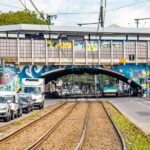
The tour also takes you to the Ehrenfeld train station area, which is a smart choice for people who want authenticity. This isn’t a quiet wall in a back alley. It’s street art where people pass by, wait, and commute—so the art sits inside real routines.
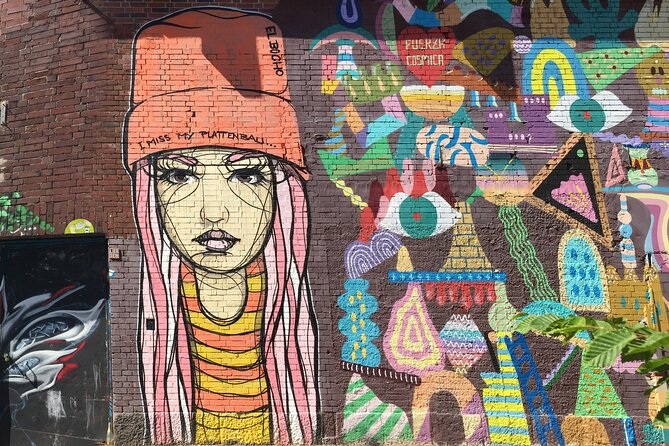
Here you’ll see works including Huami’s Freedom and El Bocho’s I miss my Plattenbau. That pairing is great because it shows two different ways street art can connect to everyday life: one leaning toward an ideal or theme, the other using local references and a playful tone.
Why the station stop matters: it shows you what street art looks like when it’s not staged for visitors. You’ll notice how color and messaging handle the fast pace of people moving through.
If you’re prone to feeling rushed by transit hubs, take your time for this stop anyway. It’s a highlight for many people because it reads like street art belongs here, not “placed for tourists.”
Captain Borderline’s Animals and Faith47’s Maria in central Cologne
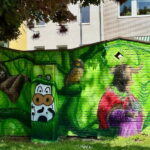
The tour continues to more murals tied to bigger named works, including Captain Borderline’s Animals and Faith47’s religiously inspired Maria. These are noted as vibrant murals in the heart of Germany—so this is where the tour brings you back to a more central sense of place.
Even if you’re not religious or not chasing symbolism, Maria is a good example of how street art can pull in cultural imagery and reinterpret it on public walls. And Animals helps you connect the earlier Roа animal mood to a different approach—so you can compare how animals become metaphors across different artists and styles.
This segment works best if you’re willing to look slowly. The tour is short, but you’ll get the guide’s pointers to help you read the details.
City Leaks Festival urban garden area and the Goldmund café reset
One of the tour’s later stops is the City Leaks Festival area, described as an urban garden setup where you’ll see murals by M-City (The Eye) and SYM1 (Captain Ehrenfeld). This is a “show us the scale” moment. Instead of one wall, you often get a festival-like environment where multiple pieces feel part of the same creative ecosystem.
Then you finish at Café Goldmund, which is specifically where the tour ends. The meeting point note even suggests rewarding your street art hunting with a piece of cake at Goldmund Literatur Café. Even if you skip dessert, this ending is a smart move: it gives you a soft landing after 90 minutes of visual input.
If you want to keep the vibe going, use the café time to plan where you’ll walk next. You’ll likely spot more street art just by continuing in the general direction of what you loved most.
Price and time: is $152.67 for 90 minutes good value?
Let’s talk money without fluff. The tour costs $152.67 per person for roughly 1 hour 30 minutes, and the maximum group size is 8. That’s a premium price for a walk, so you have to decide what you’re buying.
You’re paying for:
- guided explanations at close range (so you notice more than you would alone)
- a route that hits several named artists and multiple styles
- small-group attention
You’re not paying for:
- food or drinks (so build in your own plan)
- gallery entry fees (and the tour itself is street-focused)
Is it a drawback? One review note highlights that the experience felt like it could have been longer for the price. I agree with the logic even if I’m not judging the guide’s effort. Ninety minutes is fast. If you love street art deeply, you might want more time to linger at the walls you connect with most.
My practical take: book it when you have limited time in Cologne, when you want direction, or when street art is your main motivation. Skip it if you already know the artists well and you’d rather wander freely without paying for guided pacing.
Who should book this Cologne street art walk?
This fits best if:
- you want street art with artist names and practical style guidance
- you enjoy walking neighborhoods on foot and learning the city by street level
- you prefer small-group tours over big bus formats
It’s also a good choice if you’re an art traveler who likes contrast: paste-ups next to utopian murals, monochrome animal portraits after graffiti-style lettering, and memorial work inside everyday areas.
You might not love it as much if you need long hangs at each site. This tour is built for seeing a lot in a short time, not staying for deep reflection at one wall.
Should you book this street art quarter tour?
If you’re choosing between wandering alone and paying for guidance, I’d lean this way: book it if you want the quickest way to start noticing street art correctly. The route includes major mood shifts—temporary paste-ups, memorial themes, animal portraits, and station murals—so it teaches you how to read the scene instead of only seeing it.
Do book with realistic expectations: it’s 90 minutes. Think of it as a high-quality sampler that sets you up for independent exploring after.
And if price feels high, decide based on your time. One short guided loop can save you hours of guesswork, especially in a city where street art can be everywhere and still hard to interpret.
FAQ
How long is the street art tour?
It lasts about 1 hour 30 minutes.
What language is the tour offered in?
The tour is offered in English.
How many people are on the tour?
The experience has a maximum of 8 travelers.
Where do I meet and where does it end?
You start at Goethe Apotheke, Venloer Str. 389, 50825 Köln, Germany. You end at Goldmund Literatur Café Restaurant, Glasstraße 2, 50823 Köln, Germany.
Is food or drink included?
No. Food, drinks, and snacks aren’t included.
Are gallery entry fees included?
No. Gallery entry fees are not included.
What’s the cancellation policy?
Free cancellation is available. You can cancel up to 24 hours in advance for a full refund.