REVIEW · BANGKOK
Bangkok Heritage & Street Art Private Walking Tour
Book on Viator →Operated by WanderSiam · Bookable on Viator
Bangkok has a second personality. This private 4.5-hour walk shows the side most people miss, mixing old shophouses, churches and temples, and street art in real neighborhoods. I like that it has food built in and that it’s led by energetic guides such as Net or Nikki, who know how to keep the story moving.
Two things I really like: you get a proper meal at Prachak Roasted Duck (a local legend since 1909), and you also pass through culturally layered spots like Wat Suan Phlu and the long-running Catholic landmarks along Charoen Krung Road. It’s also the kind of tour where you’ll likely notice more than you expect—especially when street art shows up on quiet back streets.
One consideration: the walk is not ideal for people with walking disabilities, and the route ends in Talat Noi, so plan your ride back before you go.
In This Review
- Key things to know before you go
- Charoen Krung and Talat Noi: Bangkok Without the Big Crowd
- First Stop: Prachak Roasted Duck (A Meal That Actually Matters)
- Wat Suan Phlu: A Quiet Temple in a Busy Trade Corridor
- Assumption Cathedral: French-Era Catholic Architecture on Charoen Krung Road
- East Asiatique Building: The Riverfront’s 1901 Story in Italian Renaissance Style
- Bang Rak: Where Charoen Krung Road Changed Its Reputation
- Holy Rosary Church (Kalawar Church): Gothic Revival by the River
- Talat Noi: Chinatown’s Old Market Feeling (More Than Photos)
- Rong Kuak Shrine: Hakka-Chinese Heritage in a Small Space
- Pace, Food, and What’s Included (So You Don’t Spend the Whole Day Scrambling)
- Price and Logistics: Is $83.17 Good Value?
- Rain, Heat, and the Reality of Walking in Bangkok
- What You’ll Walk Away With: A Bangkok Story You Can Explain
- Should You Book This Bangkok Heritage & Street Art Tour?
- FAQ
- How long is the Bangkok Heritage & Street Art private walking tour?
- What time does the tour start?
- How much does the tour cost?
- Is hotel pickup included?
- Is the tour fully private?
- What food and drinks are included?
- Are there any admission fees for the stops?
- Where does the tour end?
- What happens if it rains?
Key things to know before you go
- Roasted duck at Prachak is a real local institution, not a tourist snack stop
- Historic temples and Catholic churches appear side-by-side along Charoen Krung Road
- Street art is worked in as you move through quieter back streets, not as a single “art block”
- Talat Noi time gives you market neighborhood energy, not just a quick photo stop
- Small meal, snacks, and water are included, so you’re not hunting for food mid-walk
- Private group only means the pace and questions can be more flexible for your party
Charoen Krung and Talat Noi: Bangkok Without the Big Crowd
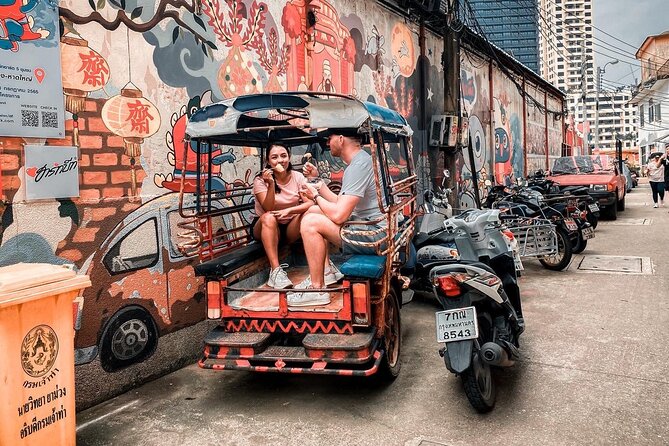
This is Bangkok at a human scale. Instead of sprinting between famous sights, you’re guided through older commercial areas and side lanes where the city still feels like it lives here, not just performs for visitors. The focus is Charoen Krung and Talat Noi—two zones with trade history, religious variety, and plenty of texture in the streets.
You’ll also walk at a pace that makes sense for culture lovers. It’s long enough to feel like you went somewhere, but short enough that you won’t be wrecked before lunch. And because it’s private, your guide can slow down for details or speed up if your group is ready.
You can also read our reviews of more tours and experiences in Bangkok.


First Stop: Prachak Roasted Duck (A Meal That Actually Matters)
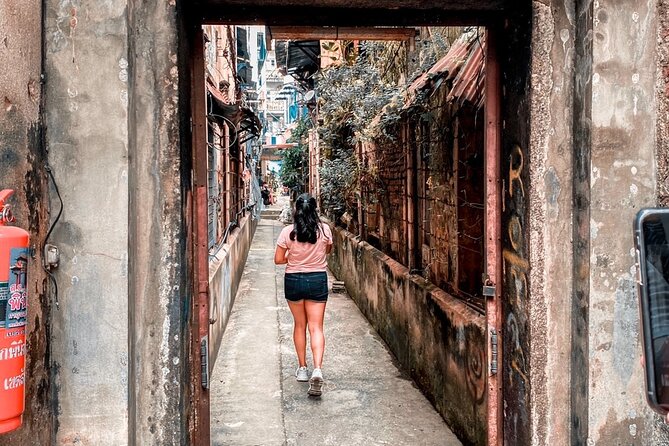
The tour kicks off with a stop at Prachak (Roasted Duck), an eatery that’s been serving hungry locals since 1909. This is the smart move: before you start interpreting buildings, faith sites, and street art, you eat something satisfying. The duck is the headline, and the restaurant’s no-frills feel keeps it grounded.
What I like about starting this way is that it changes how you experience the rest of the walk. When your stomach is happy, you notice small things: old shop fronts, warehouse scale, and the way the neighborhood shifts from one community to another. Plus, it turns the tour from a “see stuff” checklist into a full cultural outing.
Wat Suan Phlu: A Quiet Temple in a Busy Trade Corridor
Wat Suan Phlu is tucked into a quieter alley just off Charoen Krung Road. That contrast matters. You step out of a major corridor and into a calmer pocket, and you get the feeling that Bangkok’s history isn’t all grand monuments—it’s also about small, persistent places where life continues.
The temple has roots going back to the late Ayutthaya era, on land that once was betel-nut gardens. Even if you don’t know Thai history in depth, the guide’s explanation gives you a usable mental timeline: the city changed, the land use changed, but the spiritual site stayed. It’s a good moment to pause, look around, and reset your ears for what comes next.
Assumption Cathedral: French-Era Catholic Architecture on Charoen Krung Road
Next up is Assumption Cathedral, described as Bangkok’s principal Roman Catholic cathedral and located beside Charoen Krung Road near Oriental Pier in the Bang Rak district. The time period is early 1800s—built between 1809 and 1821 under French missionary influence. That alone tells you this area has always been about more than one culture.
Architecture helps here. Even in a short stop, you can pick up that the building carries European church design traditions while living inside a Thai urban setting. If you like seeing how faith travels with trade and diplomacy, this is one of the most direct links on the route.
East Asiatique Building: The Riverfront’s 1901 Story in Italian Renaissance Style
Then you hit a landmark that feels like a crossroads. The East Asiatic Company Building (on Charoen Krung Road near the historic Mandarin Oriental Hotel) was built in 1901 in an Italian Renaissance style. It’s a riverfront monument that signals how international commerce shaped the city.
This is one of those stops where you don’t need to memorize dates. You just need to notice the scale and style shift. The building makes the point that Bangkok’s modern identity wasn’t created only by local forces—it was also shaped by global business networks. And when you pair that with the nearby churches and temples, the story becomes more human: people, organizations, and communities came together in the same geography.
Bang Rak: Where Charoen Krung Road Changed Its Reputation
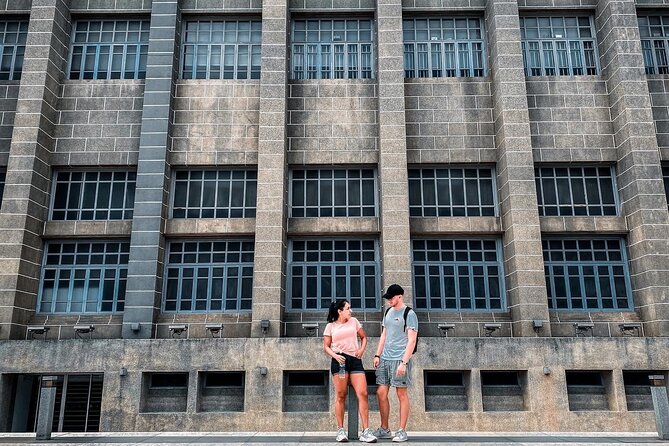
Bang Rak is where the tour’s tone subtly shifts. Charoen Krung Road used to function as a hub for diplomats and traders in the 19th century, but later it became a more forgotten corner of the city. Now it’s back in focus, with renewed energy as people return to older buildings and river-adjacent life.
This part matters because it shows Bangkok as changeable. You’re not just learning facts about structures; you’re watching the city’s “why” unfold. A neighborhood with centuries of trade logic doesn’t disappear—it shifts its center of gravity, then gets rediscovered.
Holy Rosary Church (Kalawar Church): Gothic Revival by the River
Holy Rosary Church, locally known as Kalawar Church, is one of the oldest Catholic churches in Bangkok. It’s also a striking example of Gothic Revival architecture along the Chao Phraya River.
This stop is quick, but it’s the kind of quick that makes you look harder. Gothic Revival details tend to pull your eyes upward—toward pointed shapes and strong vertical lines—so even a short visit gives you a strong visual impression. And since it’s paired with other faith sites earlier, it reinforces the tour’s theme: Bangkok’s multicultural roots aren’t theoretical. You can see them in stone.
Talat Noi: Chinatown’s Old Market Feeling (More Than Photos)
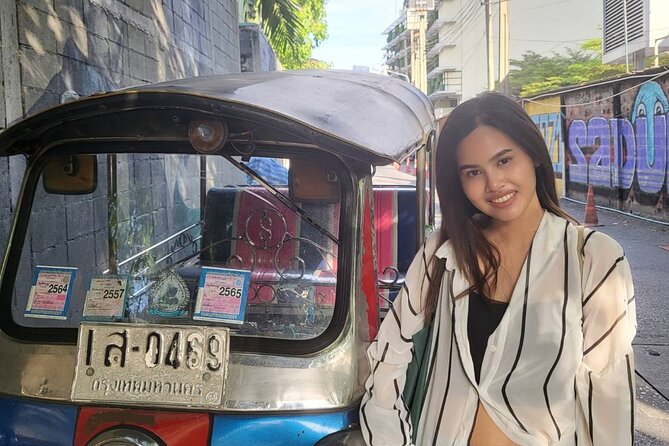
If there’s a moment where the tour gets truly fun, it’s Talat Noi. This area, meaning small market, is part of Bangkok’s wider Chinatown and is described as one of the city’s oldest communities. Here you get generations of Chinese-Thai families, layered storefronts, and the sense that commerce has its own rhythm.
You spend about an hour and a half in Talat Noi, which is long enough to do more than take a couple of pictures. It also gives you room to slow down and follow your guide’s pace through lanes. If you like seeing what “daily Bangkok” feels like, this is the section that delivers.
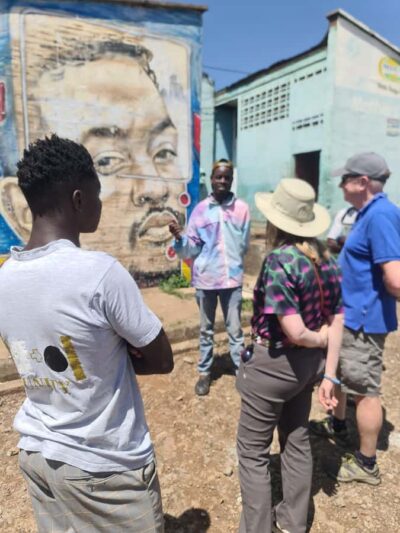
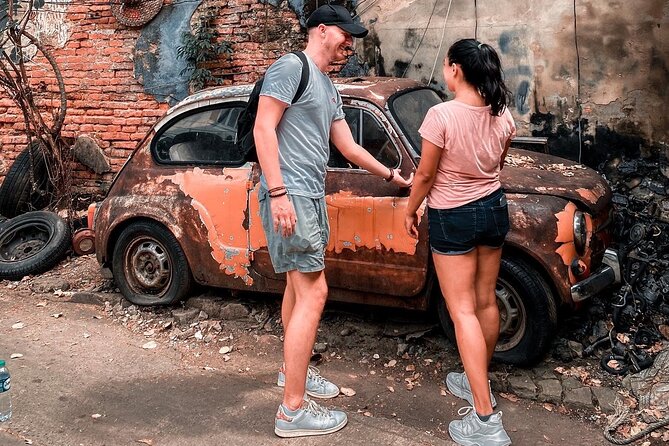
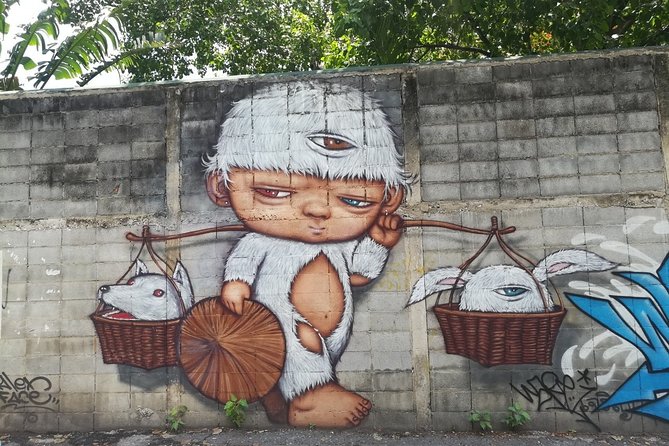
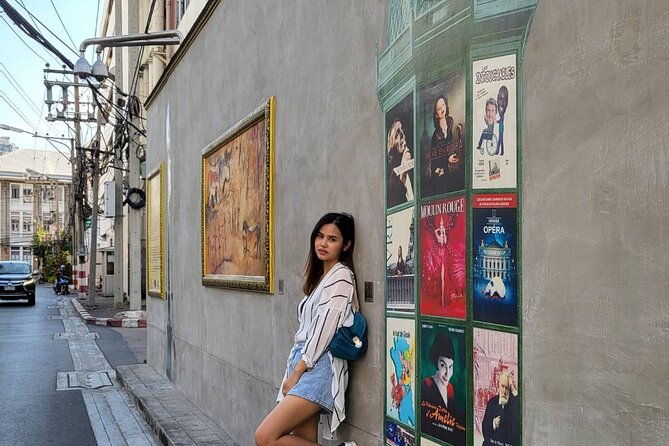
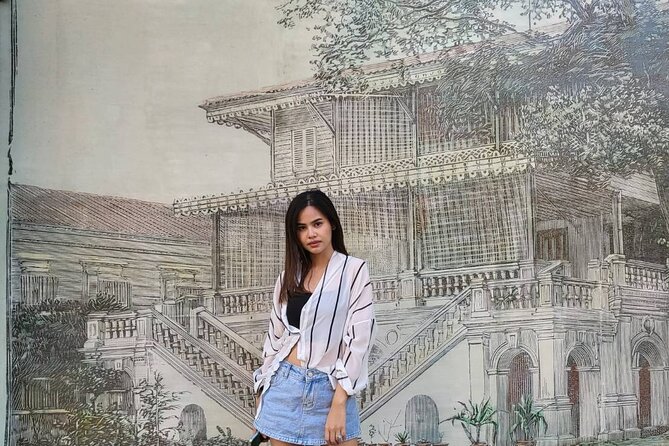
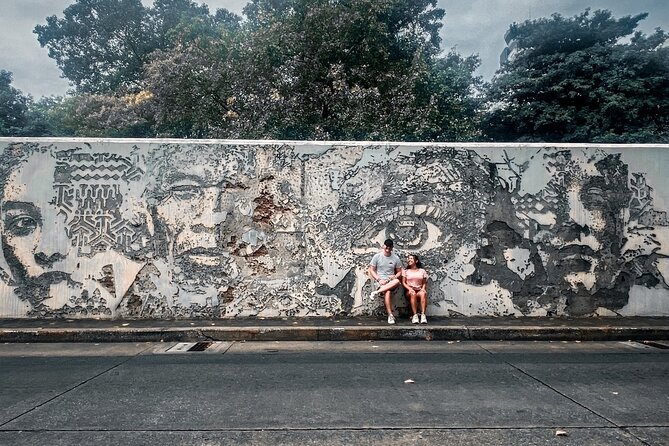
The tour also includes the cultural learning that connects street art to neighborhood identity. You may see art tucked into unplanned corners—on walls that look like they’ve held up for decades. It’s not street art as a theme park. It’s street art as a local voice.
Rong Kuak Shrine: Hakka-Chinese Heritage in a Small Space
One of the most interesting moments is Rong Kuak Shrine (also known as Chao Hon Wong Kung Shrine). This is called out as a hidden gem of Hakka-Chinese heritage, tied to early Rattanakosin era history. The deity Hon Wong Kung is revered here, and the shrine exists as a specific cultural thread within the broader Talat Noi area.
This stop is brief, but it works because it gives context. Talat Noi isn’t just markets and food—it’s also belief systems and community memory. Seeing a shrine like this makes the multicultural Bangkok story feel grounded rather than abstract.
Pace, Food, and What’s Included (So You Don’t Spend the Whole Day Scrambling)
Your time outdoors is real—about 4 hours 20 minutes—but you’re not starting hungry and you’re not left to figure everything out. Included are:
- Hotel pickup
- English-speaking guide
- Small meal
- Snacks
- Drinking water
That matters because Bangkok days can go sideways fast if you’re constantly buying water or hunting snacks. With food and water covered, you can stay focused on the walk. And if you’re traveling with picky eaters, it helps that guides on this tour have been noted for adapting to dietary needs.
One more practical note: the tour ends in Talat Noi, and there’s no transfer back to your hotel included. That’s not a deal breaker, but it does mean you should check how you’ll get home before your day starts. If you’re using Grab or public transit, have a backup plan.
Price and Logistics: Is $83.17 Good Value?
At $83.17 per person for a private walking tour lasting just over four hours, the value depends on what you compare it against. If you usually do Bangkok on your own, the inclusion of hotel pickup, an English-speaking guide, and the meal + snacks can make the total feel reasonable.
You also get a structure that’s hard to recreate without local help. Sure, you could walk Charoen Krung and wander into Talat Noi. But you’d likely miss:
- the significance of specific religious sites
- the way trade-era buildings connect to present-day neighborhoods
- how street art appears inside historic corridors
That guide context is where the money goes. And since this is private, you’re paying to tailor the experience to your group rather than sharing the route with strangers.
Logistics are generally manageable: pickup is offered, the starting time is 9:00 am, and the route is described as near public transportation. The tour also uses a mobile ticket, which usually saves time on day-of.
Rain, Heat, and the Reality of Walking in Bangkok
This tour runs rain or shine. Tropical showers can be short, but they can still be heavy. The operator’s approach is to seek shelter if needed and continue when it eases. During rainy season, a poncho or light raincoat is an easy win.
Heat is the other factor. A morning start helps, and included water reduces stress. Still, if you’re sensitive to humidity, you’ll feel better if you dress in breathable layers and wear comfortable shoes with grip. The route is not recommended for travelers with walking disabilities, so treat it as a proper walking day.
What You’ll Walk Away With: A Bangkok Story You Can Explain
This tour gives you a mental map, not just photos. When you leave, you should be able to connect:
- how Charoen Krung Road served trade and diplomacy
- how multiple Christian denominations and Thai temples co-exist in the same corridors
- why riverfront-era architecture still shapes what you see today
- how Talat Noi’s market life connects to older community shrines
- how street art can reflect present-day voices inside historic neighborhoods
And if you happen to get a guide like Net or Nikki, you’ll likely feel the energy in how the stories are told. That’s often what makes the difference between a “nice walk” and a walk you remember.
Should You Book This Bangkok Heritage & Street Art Tour?
Book it if you want Bangkok with context—culture, food, and street art in one route, not separated into random activities. It’s especially good for first-time visitors who already know the big sights and want a more local-feeling day.
Consider skipping if you need a fully accessible route or if ending in Talat Noi will be a hassle for your travel plans. Also think twice if you hate walking and quick site stops. This is designed for movement and short cultural moments, not lingering for hours in one place.
If you like neighborhoods, you’ll probably enjoy it a lot.
FAQ
How long is the Bangkok Heritage & Street Art private walking tour?
It runs for about 4 hours 20 minutes.
What time does the tour start?
The start time is 9:00 am.
How much does the tour cost?
The price is $83.17 per person.
Is hotel pickup included?
Yes, hotel pickup is included.
Is the tour fully private?
Yes. It’s private, so only your group participates.
What food and drinks are included?
A small meal, snacks, and drinking water are included.
Are there any admission fees for the stops?
The stops listed include free admission tickets.
Where does the tour end?
The tour ends in Talat Noi (transfer back to your hotel is not included).
What happens if it rains?
The tour operates rain or shine. If it rains heavily, you’ll try to find shelter and continue when the weather improves. Bring a raincoat or poncho in rainy season.