REVIEW · BANGKOK
Bangkok: Chinatown & Taladnoi Street Art Guided Walking Tour
Book on GetYourGuide →Operated by TRIPZA sightseeing · Bookable on GetYourGuide
Bangkok can feel like one big noise machine, but this walk gives it a clear shape. I love how it links Thai-Chinese heritage to real places you can point at, not just vague stories. I also love the steady, human pace: temples, markets, and craft alleys without rushing. One possible drawback: it’s a 4-hour walk, so you’ll want solid shoes and a plan for the sun.
You start at MRT Wat Mangkon Exit 3 and move deep into Yaowarat, then head toward Talad Noi’s older lanes and street art areas. The tour ends right on the Chao Phraya at River City Bangkok, so you can keep exploring, grab lunch, or hop on a boat when you’re ready.
In This Review
- Quick reasons this Chinatown-to-Talad Noi walk works
- From MRT Wat Mangkon Exit 3 into real Yaowarat lanes
- Wat Mangkon Kamalawat: seeing Chinese spiritual life in Bangkok
- Morning market energy: street food smells and incense in the open air
- Tian Fah Foundation Hospital: charity with a community story
- Wat Traimit and the Golden Buddha story
- Wat Pathum Khongkha: a peaceful, royal contrast
- Talad Noi ironworks alleys: where craft once shaped the lanes
- Talad Noi Community Museum and street art you can read
- Hidden shrines between old buildings
- River City Bangkok finish: your Chao Phraya options start here
- Price and what $19 buys you in Bangkok time
- Who will like this tour most (and who should skip it)
- Bangkok walking-day tips that matter here
- The guide effect: English storytelling that keeps the pace human
- Should you book this Chinatown & Talad Noi Street Art tour?
- FAQ
- How long is the Bangkok Chinatown & Talad Noi Street Art guided walking tour?
- Where is the meeting point?
- Is hotel pickup included?
- What’s included in the tour price?
- Are meals included?
- What should I wear or bring?
- Is this tour suitable for wheelchair users or pregnant women?
- Can I cancel and get a full refund?
- What language is the tour guide?
Quick reasons this Chinatown-to-Talad Noi walk works
- Wat Mangkon Kamalawat first: start with a major Chinese spiritual hub, then build the story street by street
- Markets that feel local: street food smells, incense, and daily commerce woven into the walk
- Stops with context: Tian Fah Foundation Hospital and the Golden Buddha story add more than photo ops
- Talad Noi’s craft alleys: old ironworks lanes connect heritage to the neighborhood’s working past
- Street art with meaning: Talad Noi Community Museum helps you read the murals and community vibe
- A clean finish point: River City Bangkok puts you back by the river instead of leaving you stranded
From MRT Wat Mangkon Exit 3 into real Yaowarat lanes
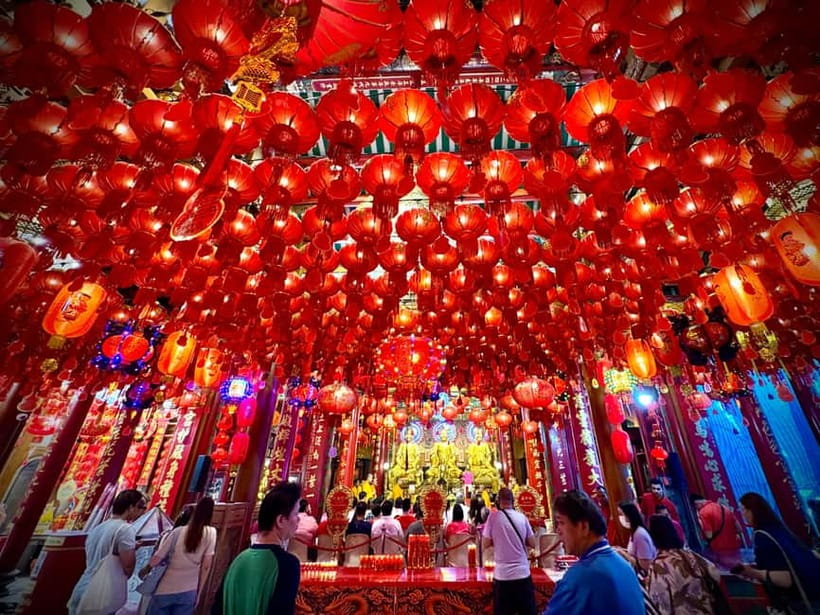
Meeting at MRT Wat Mangkon Exit 3 is simple and central. When you arrive, look for your guide holding a sign with your name. If you choose hotel pickup, you’ll meet in your lobby about 5 minutes early so you don’t lose time to Bangkok traffic math.
Once you’re moving, the main benefit is where you go. You’re not just taking the safest, most obvious Chinatown route. You’ll be guided deeper into Yaowarat, into streets where local life sits side-by-side with temples, shrines, and small storefronts. Even if you only know a few words of Thai or Chinese, the guide’s storytelling helps your brain grab onto details fast—why a shrine is there, why a building looks the way it does, and what trade and migration did to the neighborhood.
This part is also where you’ll feel the tour’s pace. It’s guided and focused, but you still get moments to stop, look around, and take photos—especially around the Chinatown area start.
You can also read our reviews of more tours and experiences in Bangkok.


Wat Mangkon Kamalawat: seeing Chinese spiritual life in Bangkok
A big early payoff is Wat Mangkon Kamalawat, described as a hub of Chinese spiritual life. This isn’t just a pretty structure. It’s a starting point that helps you understand the neighborhood’s religious and cultural rhythm.
You’ll get a real temple visit here—time to see the setting, notice what people are doing, and then connect it to the Chinese community roots that shaped Yaowarat over time. If you’ve ever wondered why Chinese temples in Bangkok feel so specific (and not like generic “tourist decor”), starting with Wat Mangkon helps everything else click later.
The main practical note: temples and shrines often mean shade is limited in spots. Wear light clothing, but also be ready for sun at the edges of open courtyards and sidewalks.
Morning market energy: street food smells and incense in the open air
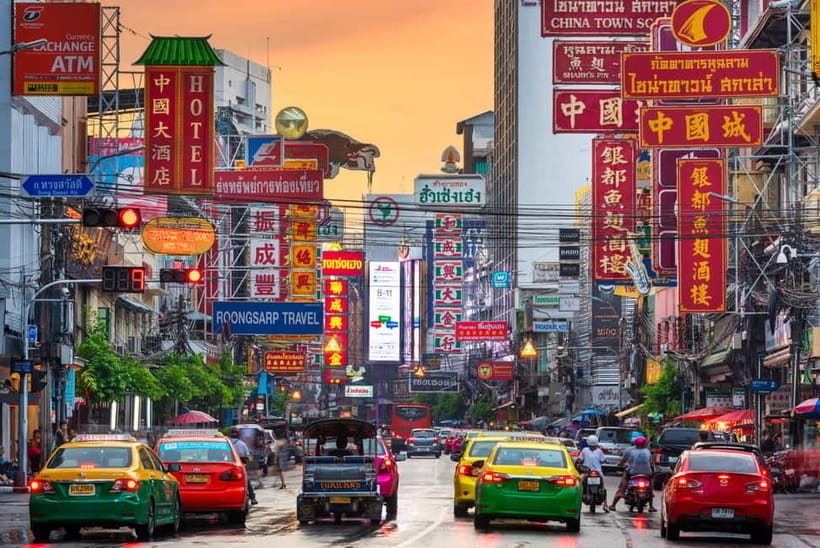
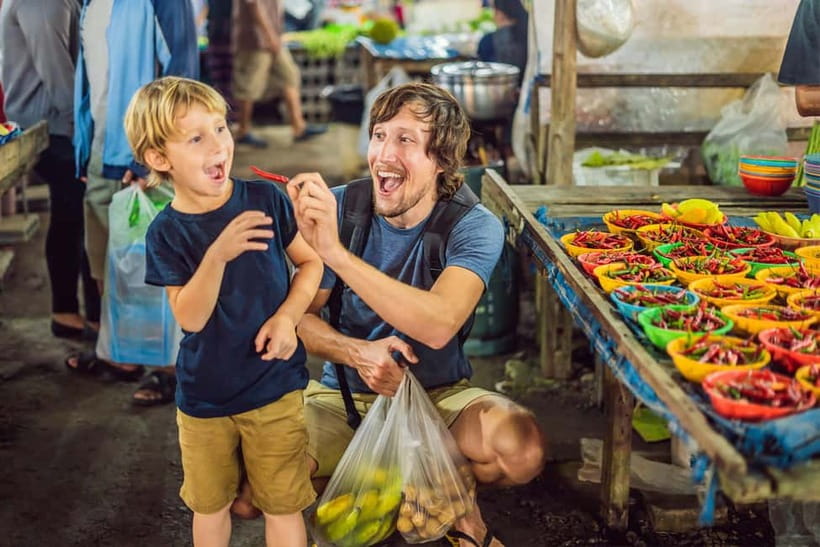
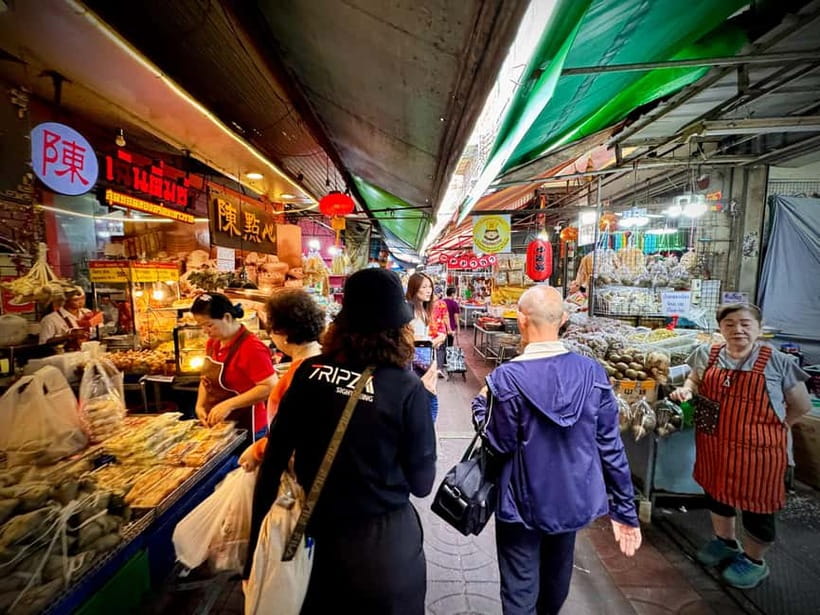
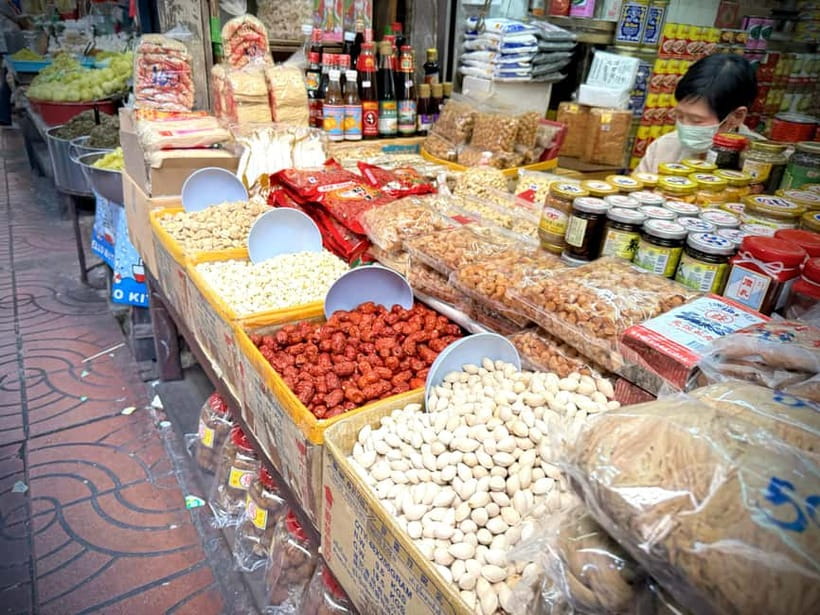
After Wat Mangkon, the walk shifts into the neighborhood’s daily rhythm with a lively morning market. This is one of the tour’s best “texture” moments—street food, incense, and people doing normal things like buying, chatting, and moving through narrow lanes.
You’re not just watching. The guide context makes it easier to understand what you’re seeing. Why certain stalls exist, what kinds of goods people tend to seek in a Chinatown market, and how food and commerce get tangled together in everyday life.
A small consideration: this is a market environment, so you’ll want to be patient with slow walkers and crowded sidewalks. You’ll also want to pace your energy—remember you have more temples and lanes coming after this.
Tian Fah Foundation Hospital: charity with a community story
One stop that adds real substance is Tian Fah Foundation Hospital, described as Thailand’s first Chinese charitable hospital. This is the kind of place that’s easy to miss on your own because it’s not always framed as a “must-see.” On a guided walk, it becomes part of the broader narrative: how community support, immigration patterns, and business networks shaped the area.
You’ll learn the story behind why this institution matters, and it changes how you interpret the neighborhood afterward. Instead of seeing Chinatown only as temples and markets, you start seeing it as a full support system—where charity and care were built alongside trade.
If you like tours that explain not only what exists but why it exists, this stop is a highlight.
Wat Traimit and the Golden Buddha story
Then comes Wat Traimit, tied to the tale of the Golden Buddha. This is a classic Bangkok storytelling hook, and it works because it’s visual—you’re standing where the story belongs, not hearing it as a trivia bite.
You’ll get a guided visit tied to what makes the Golden Buddha so famous in Thai-Chinese cultural memory. Even if you’ve heard parts of the legend before, a good guide helps you connect the dots to how the Chinese community is represented through art, faith, and historical events.
Practical tip: this is another temple stop, so keep an eye on sun and where you can rest your legs briefly. The tour doesn’t feel rushed, but you’ll still cover a lot of ground.
Wat Pathum Khongkha: a peaceful, royal contrast
Next you’ll visit Wat Pathum Khongkha, described as peaceful and royal. This is a tonal shift from the market and trade intensity you’ve been walking through.
I like contrast like this because it prevents the tour from turning into one long “Chinatown sensory overload.” Here, you get a calmer pocket—helping you reset before Talad Noi’s older industrial lanes and street art areas.
You’ll get time to see the temple in a quieter setting, guided so you understand how it fits into the larger Bangkok religious geography, not just as a standalone stop.
Talad Noi ironworks alleys: where craft once shaped the lanes
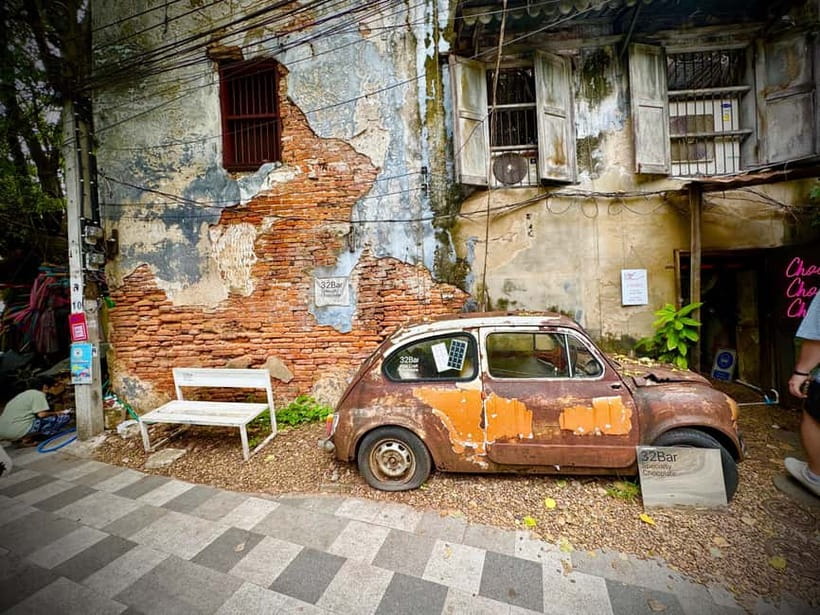
Now you move into Talad Noi, famous here for historic ironworks alleys and skilled Chinese craftsmen who once forged metal tools. This is where the tour shifts from “places of worship and shopping” into “work and making.”
You’ll walk through the ironworks lanes and hear what the area used to do for the city—how metalwork and tool production supported daily life far beyond Chinatown. It’s a grounded kind of history. Instead of big-picture dates only, you get street-level context: what kind of work belonged in these lanes, and why those buildings and alley shapes matter.
One thing to note: Talad Noi is older, and streets can be uneven. Comfortable shoes matter more here than anywhere.
Talad Noi Community Museum and street art you can read
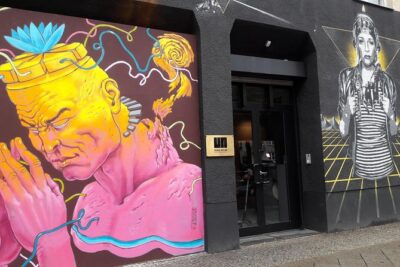
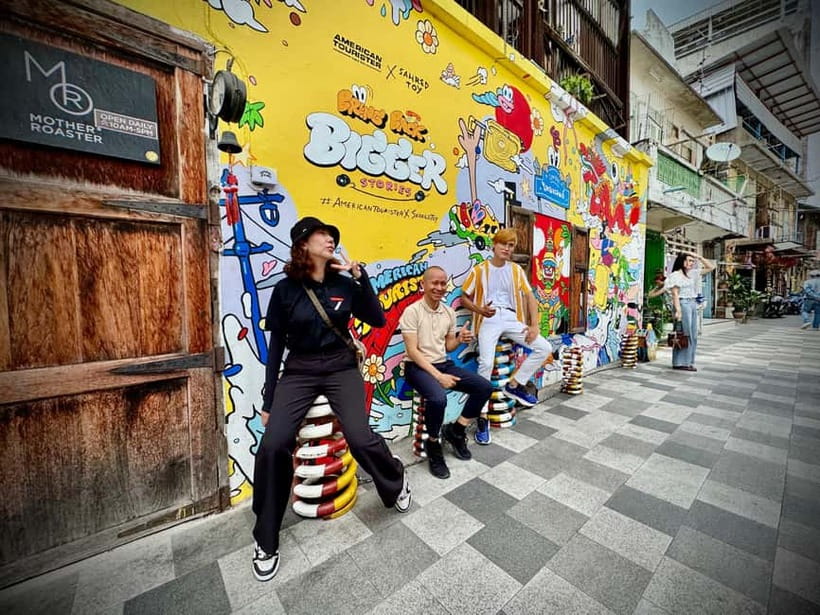
At Talad Noi Community Museum, the tour brings you into the neighborhood’s creative layer with colorful street art. The big value isn’t that it’s pretty. It’s that the museum helps you understand what the art is doing—telling community stories, expressing identity, and turning everyday walls into a language you can learn.
You’ll also get inspiration here before you continue through the area. If you’re the type who likes street art more when you understand the “why,” this stop makes a difference.
Expect more short photo moments. Think less “tourist mural check-off” and more “stop, look, and learn what you’re seeing.”
Hidden shrines between old buildings
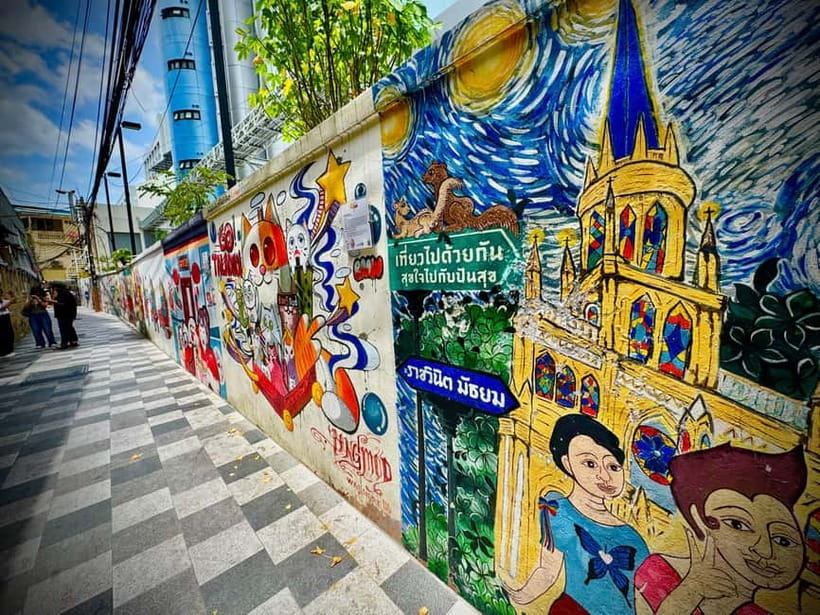
As you walk, your guide will point out hidden shrines tucked between old buildings. This is one of the tour’s sneaky strengths: it teaches you how to spot what matters without you needing a map app or a history degree.
You’ll hear stories tied to immigration, commerce, and local legend. The effect is that the neighborhood starts to feel navigable. Not easy—just understandable. By the time you reach Talad Noi’s museum area, you’ll likely notice more on your own on the way back through the lanes.
This is also where a great guide makes or breaks the experience. The best guides keep the storytelling simple, specific, and tied to what you’re literally standing near.
River City Bangkok finish: your Chao Phraya options start here
The tour ends at River City Bangkok, right on the banks of the Chao Phraya River. I love finish points like this because they reduce decision fatigue. You’re not being dropped somewhere awkward, far from your next meal or transport.
From here, you can keep the day moving with a riverside lunch or take a scenic boat ride if you want a change of pace. Even if you don’t plan it now, having the river nearby makes it easy to adapt on the spot.
If you’re planning evening plans, this is also handy because you’ll know where you are.
Price and what $19 buys you in Bangkok time
At $19 per person for about 4 hours, this is priced like a value-focused city walk. What you get is the core ingredient most DIY travelers miss: a licensed English-speaking guide plus focused timing and curated stops across multiple parts of Chinatown and Talad Noi.
Included essentials are straightforward—a fully licensed English-speaking guide and a bottle of water. Meals aren’t included, so if you want to snack on street food, treat that as a separate budget line. In my view, that actually keeps the experience flexible: you can try what looks good without feeling locked into a set meal.
For the cost, the real win is the mix of sites: a major temple hub, a charitable hospital stop, the Golden Buddha story, a royal-ish temple contrast, craft alleys tied to ironworks, then museum and street art. That’s a lot of “different Bangkok” in one guided block.
Who will like this tour most (and who should skip it)
This works best if you like walking tours that explain what you see, not just where to stand for photos. It’s a strong fit for:
- First-time visitors who want Chinatown and Talad Noi without getting lost
- People who enjoy temples and markets but also want context for the neighborhood’s community side
- Anyone who wants street art with meaning, not just Instagram backdrops
It’s not suitable for pregnant women or wheelchair users, based on the tour’s requirements.
If heat and uneven sidewalks can wear you down, build in breaks for water and shade. There is a break time during the Talad Noi portion, but you’ll still do plenty of walking.
Bangkok walking-day tips that matter here
The practical checklist is simple and worth following:
- Wear comfortable shoes (Talad Noi lanes can be rougher underfoot)
- Bring a hat and sunscreen to handle the sun
- Carry your own water bottle, even though the tour includes one bottle of water
- Light clothing helps, but plan for humidity
Also, bring a little patience. Chinatown sidewalks can get tight around markets and temple entrances. A guided group keeps the day moving, but your best experience comes when you slow down enough to look.
The guide effect: English storytelling that keeps the pace human
This tour’s consistency comes from the guides. Names you might meet include Jenny, Nok, Mai, Mariyah, Ploy (including a training period), Jib, and Toto—and the common thread is how they explain things clearly while staying attentive and flexible.
Several guides are described as patient and friendly, and some tailor the walk to your interests. If you prefer more time for photos, they tend to work with that. If you want extra explanation, they lean in. I also like that the guides show up prepared for real-world issues—like handling late arrival due to pickup issues with a calm, problem-solving attitude.
If you’re traveling with kids, there’s also a strong sense that the tone can work for families, not just adults racing from stop to stop.
Bottom line: the guide isn’t a side character here. It’s the engine that turns street scenes into a story you can remember.
Should you book this Chinatown & Talad Noi Street Art tour?
I’d book it if you want Chinatown that feels specific—temples and markets tied to migration, commerce, and community. The Talad Noi portion adds a satisfying shift into street art and craft alleys, so the day doesn’t blur together.
Skip it only if you know walking 4 hours through mixed sidewalk conditions will stress your body. If you want museums or air-conditioned stops instead of street walking, you might feel the time.
For $19, with a licensed English guide and a finish right by the river, it’s a smart way to spend a morning in Bangkok without guessing your way through the city’s maze.
FAQ
How long is the Bangkok Chinatown & Talad Noi Street Art guided walking tour?
It lasts about 4 hours.
Where is the meeting point?
Meet your guide at MRT Wat Mangkon Exit 3.
Is hotel pickup included?
Pickup is optional. If you choose it, the guide will pick you up and hold a sign with your name.
What’s included in the tour price?
The tour includes a fully licensed English-speaking guide and a bottle of water.
Are meals included?
No, meals are not included.
What should I wear or bring?
Wear comfortable shoes and light clothing, and bring a hat and sunscreen. Carry a water bottle to stay hydrated.
Is this tour suitable for wheelchair users or pregnant women?
No. It is not suitable for pregnant women or wheelchair users.
Can I cancel and get a full refund?
Yes. You can cancel up to 24 hours in advance for a full refund.
What language is the tour guide?
The tour is guided in English.