REVIEW · TORONTO
Toronto Graffiti Alley Street Art Walking Tour with an Expert
Book on Viator →Operated by Tour Guys · Bookable on Viator
Graffiti turns alleys into loud classrooms, and this Toronto walk makes it a real conversation. I like the both-sides debate that covers property owners, police, the City of Toronto, the public, and artists. I also like how the tour threads through Queen Street West so you’re set up to keep exploring right after. The only catch is the tour moves on schedule, so if you want long photo stops every few minutes, you may feel slightly rushed.
This is a 1 hour 30 minute (approx.) walking tour with an English-speaking guide, usually for small groups up to 25 people. You’ll get a mobile ticket, it runs near public transportation, and service animals are allowed.
In the past, guides like Jackie, Ulysses, and Robert have brought the alley walls to life with stories about styles, notable Toronto names, and even political pieces. Expect lots of stopping and looking, plus reminders to get your camera ready.
In This Review
- Key things I’d circle before you go
- Starting at MEC on Queen St W: the easiest meet-up in the neighborhood
- Queen Street West alleys: how the route stays interesting for 90 minutes
- Graffiti Alley street art: learning history and seeing the styles
- Hearing the debate: property, police, the city, the public, and artists
- Notable Toronto artists: writers, competing styles, and political messages
- Guides and group feel: small size, good conversation, and on-time discipline
- Price and value: why $29.29 feels fair for what you get
- After the tour: use the Queen Street West location to keep your day moving
- Should you book this Toronto Graffiti Alley walk?
- FAQ
- How long is the Toronto Graffiti Alley Street Art Walking Tour?
- Where do I meet for the tour?
- Is the tour offered in English?
- How many people are in the group?
- What will I see and learn during the walk?
- Is there an admission ticket required at the stops?
- What happens if I’m late or need to cancel?
Key things I’d circle before you go
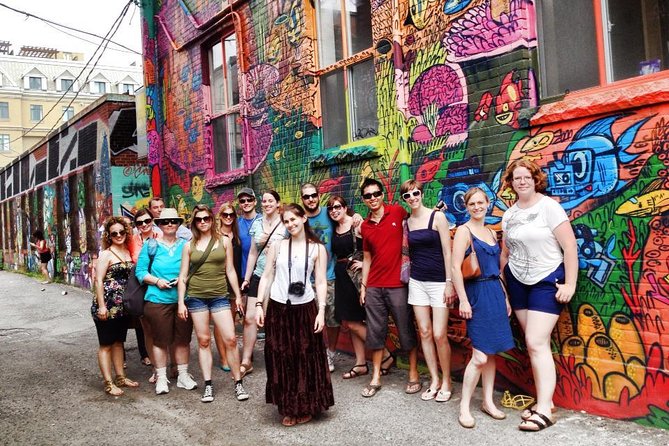
- The debate, not just the art: you’ll hear the arguments for and against graffiti from multiple sides.
- Queen Street West location: after the walk, you’re right where shops and restaurants are.
- Graffiti history + main types: the tour gives you a framework for what you’re seeing.
- Toronto-specific names: you’ll learn about notable local writers and artists.
- Political artwork included: street art isn’t just pretty; it often has a message.
- Small-group pace (max 25): better conversation than you’d get in a big group.
Starting at MEC on Queen St W: the easiest meet-up in the neighborhood
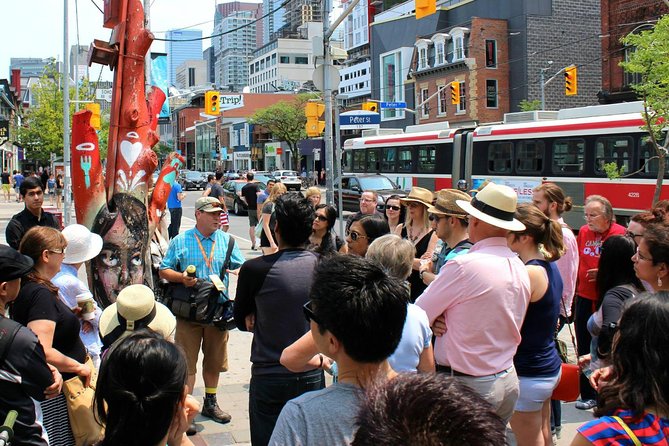
You begin at MEC Toronto, at 300 Queen St W. It’s a big, two-storey store, well known in the area, so it’s a handy landmark for finding your group fast. Meet your guide beside the store near the bike racks. Because this is right on Queen Street West, you’ll also have an easier time getting there by transit than if the tour started deep in a residential area.
The tour starts at 2:00 pm and heads back to the same meeting spot at the end. That matters because it keeps your day simple: you get a guided loop through the alleys, then you’re already back near places to eat or browse without needing extra planning.
One practical note: the tour leaves on time, and the guide cannot wait if you’re late. Plan to arrive a few minutes early and give yourself buffer time for getting turned around.
You can also read our reviews of more tours and experiences in Toronto.



Queen Street West alleys: how the route stays interesting for 90 minutes
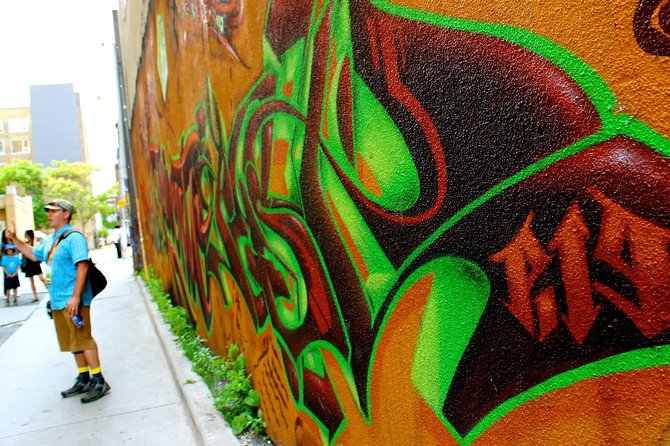
Most of the walking is centered on Queen Street West and the alleys on either side. That’s a smart choice for two reasons. First, you don’t waste time on long transfers between neighborhoods. Second, you’ll notice how graffiti changes block by block—different walls, different walls textures, different sightlines, different permission realities.
This route also works well if you’re trying to understand Toronto beyond the obvious highlights. You’re looking at the in-between spaces where street art culture grows: side streets, laneways, and those narrow corridors that normally don’t get much attention on a typical sightseeing day.
Because the tour is about 1.5 hours, it’s long enough to tell a story but not so long you feel like you’re stuck on pavement all afternoon. Bring shoes you can walk in and plan for frequent stops to look closely.
Graffiti Alley street art: learning history and seeing the styles
The core of the experience is a guided walk where you learn the history of graffiti and the main types you’ll run into around the world. This is the part that makes the alley walls “click.” Without context, graffiti can feel random. With context, you start seeing patterns: the intent, the technique, the different styles that exist within the same general world.
On this tour, your guide also points out how different styles compete for space and attention. Sometimes you’ll be looking at graffiti purists’ work, and sometimes you’ll spot street artists who mingle in the mix. Those overlaps are part of what makes the alleys feel alive rather than like a single curated exhibit.
A small tip that helps: keep an eye out for what the guide calls Uber birds. If you’re into spotting details, that kind of cue turns the walk into a fun visual scavenger hunt.
And yes, you’ll likely take a lot of photos. One very practical piece of advice from past guests is simply to get your camera ready—there are enough standout pieces that you’ll want clear shots without rushing.
Hearing the debate: property, police, the city, the public, and artists
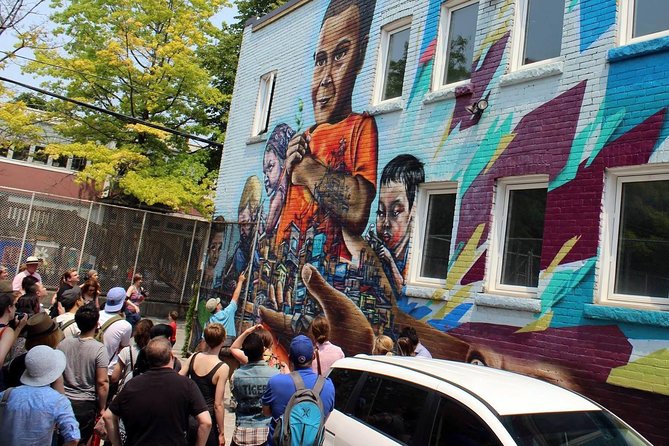
This tour doesn’t treat graffiti as a one-note topic. It’s built around discussion, with viewpoints from property owners, police, the City of Toronto, the general public, and the graffiti artists themselves. The result is that you’re not just looking at paint on a wall. You’re hearing how people argue about meaning, permission, damage, community, identity, and control.
Even if you’re on the against side, the tour is structured so you’ll still find yourself acknowledging the talent. The guide’s job is to give you enough context that you can separate the moral panic from the craft. You’ll also learn how city rules and enforcement shape what gets seen and what disappears.
If you like thinking through controversial topics while you walk, this is one of the best ways to do it in Toronto. It turns an alley into a classroom—short, street-level, and much more human than a textbook.
Notable Toronto artists: writers, competing styles, and political messages
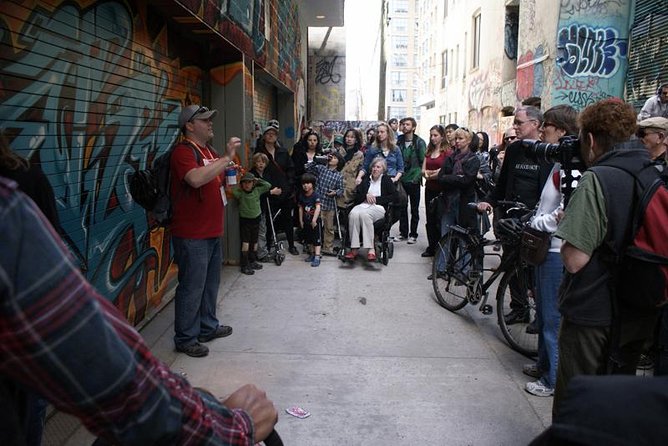
A big reason to choose a guided graffiti tour is that the walls come with names and stories, not just colors. You’ll learn about notable graffiti writers in Toronto and how their work fits into the broader street art culture.
You’ll also hear how different artists work with the wall as a canvas. Some pieces focus on tagging and lettering style, while others lean toward bigger compositions. Past explanations also covered tagging/throws, which helps you identify what you’re looking at instead of treating all graffiti as the same thing.
One standout element from the way guides explain the art: political artwork often shows up in the conversation. If you think street art is only about aesthetics, political pieces can shift your perspective fast. You start seeing the alley as a bulletin board for ideas—not just a gallery of signatures.
There can also be competition for space. Street artists and graffiti artists don’t always share the wall peacefully, and part of the storytelling is how the works overlap, get covered, or push each other visually.
Guides and group feel: small size, good conversation, and on-time discipline
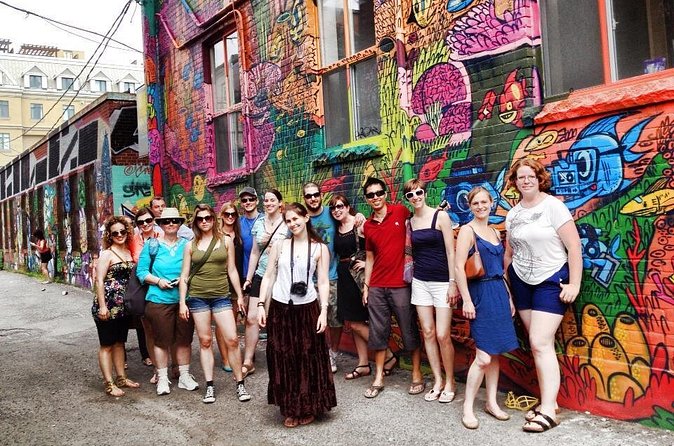
This experience runs with an English-speaking tour guide and stays capped at 25 travelers. That size matters. It makes it easier for the guide to answer questions and adjust the pace when people want more detail about a specific style or artist.
Based on past experiences with guides, the best part is the approachability. Guides like Jackie, Ulysses, and Robert have delivered both history and local detail without making the tour feel like a lecture. The walking format keeps things social, and the stop-and-look format keeps it from turning into pure debate.
Just keep one boundary clear: the tour leaves on time, and the guide cannot wait. If you’re the type who gets delayed by a quick snack run, plan ahead so you don’t have to choose between food and art.
Accessibility-wise, most travelers can participate, and service animals are allowed. The tour is walking-focused, so you’ll want to be comfortable on your feet.
Price and value: why $29.29 feels fair for what you get
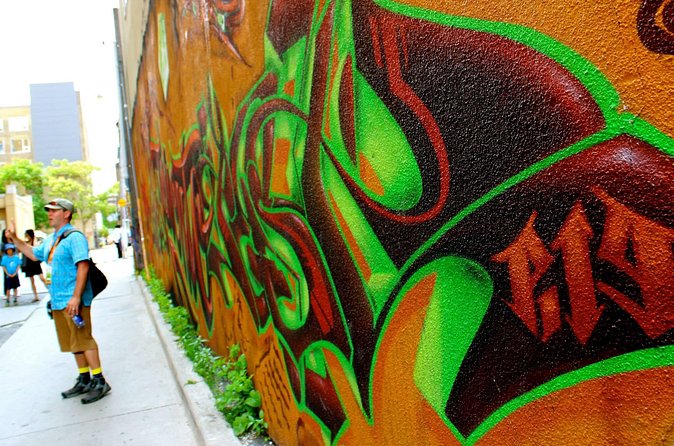
At $29.29 per person, this is a budget-friendly way to spend 90 minutes learning something that’s hard to get on your own. The big value isn’t the walls alone—it’s the expert guide translating what you see into context: history, types, Toronto names, and the debate around legitimacy and harm.
Also, the tour is booked about 22 days in advance on average. That doesn’t mean you need to panic-book, but it does suggest the time slots are popular—especially in seasons when people want street art experiences.
Included in the price is the English-speaking tour guide. There’s also no admission ticket cost listed for the main start/meeting point, and the meeting location is set up so you’re not paying to access the start area.
If you’re trying to choose between wandering the alleys alone or spending a small amount for interpretation, this is the kind of tour where paying the $29.29 tends to make the alley more meaningful. You get the story behind the spray, plus a thoughtful discussion that helps you form your own opinion.
After the tour: use the Queen Street West location to keep your day moving
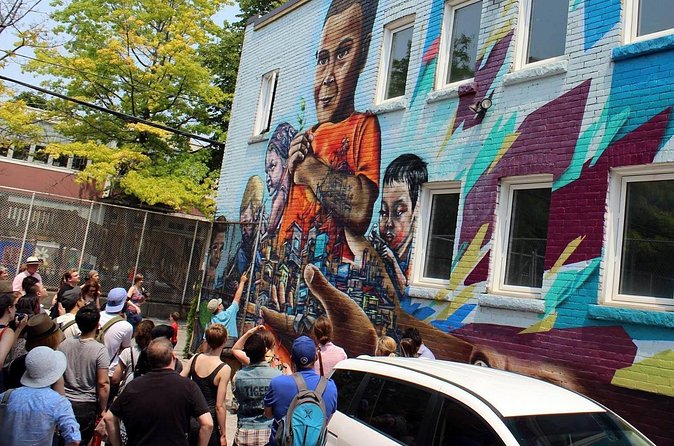
Because you start at MEC on Queen Street West and end back there, you’re positioned to keep going immediately. This matters when you’re visiting a city for a short time. You don’t need to add another transit step to find food, coffee, or a second activity.
Queen Street West is packed with places to browse, and this tour’s route helps you notice the neighborhood’s texture. Even if you don’t plan a full itinerary after, you’ll likely feel more confident walking around on your own because you’ve already learned what to look for.
Should you book this Toronto Graffiti Alley walk?
Book it if you want a practical, story-driven view of Toronto street art. This works especially well if you’re curious but not sure what you’re looking at, or if you like lively discussion more than quiet museum-style viewing. It’s also a strong choice for families with older kids who can handle a lot of walking and like learning how art culture works in real life.
Skip it (or at least temper expectations) if you’re mainly interested in slow, photo-heavy sightseeing. The tour is designed for learning in motion, and it’s time-bound. Also, if you’re truly committed to treating graffiti as only vandalism, the debate format may frustrate you, since the tour explicitly covers multiple viewpoints.
My quick take: if you want to turn a normal alley-walk into an informed experience—history, Toronto names, and the arguments people make about the walls—this one is worth the $29.29.
FAQ
How long is the Toronto Graffiti Alley Street Art Walking Tour?
It runs for about 1 hour 30 minutes.
Where do I meet for the tour?
You meet at MEC Toronto, 300 Queen St W, Toronto, ON M5V 2A2. The tour ends back at the same meeting point.
Is the tour offered in English?
Yes. It’s an English-speaking tour with the tour guide.
How many people are in the group?
The tour has a maximum of 25 travelers.
What will I see and learn during the walk?
You’ll explore Queen Street West and nearby alleys, learn the history of graffiti and main types, hear about notable Toronto graffiti artists, and discuss the debate around graffiti from multiple viewpoints.
Is there an admission ticket required at the stops?
Admission is free for the listed stops.
What happens if I’m late or need to cancel?
The tour leaves on time and the guide cannot wait if you’re late. For cancellations, you can cancel up to 24 hours in advance for a full refund. If you cancel less than 24 hours before the experience starts, it’s not refunded.