REVIEW · SAO PAULO
Street Art and Park Bike Tour
Book on Viator →Operated by Urban Bike SP · Bookable on Viator
São Paulo on a bike changes everything. This 3.5-hour ride pairs world-class street art with smart, scenic route choices, including cruising safely under the Minhocão Overpass. I especially like how the tour connects famous spots (like Batman Alley) with heavier, real-city stops such as the torn-down ruins tied to Carandiru, so you see more than just pretty murals. One heads-up: the course has hills, so go in with comfortable legs and expect some real effort.
I also like that the group stays small, with a maximum of 10 people, which keeps the pace friendly and makes it easier to stop and look closely at details. The biggest practical consideration is tickets: some stops are free, but the Museu Afro Brasil admission is not included, so budget a little extra if you want to see everything.
In This Review
- Key things to know before you pedal
- Street Art on Two Wheels: What $85 Actually Gets You
- Start in Parque Ibirapuera: Big Park Energy, Free Admission
- Museu Afro Brasil: Modern Museum Thinking with 6,000+ Works
- Rolling Through Bohemian Streets, Bars, and Niemeyer Modernism
- Cruising Under Minhocão: Safe, Scenic, and a Little Surreal
- Batman Alley: The Outdoor Gallery Stop That Moves Fast
- Museums on the Paulista Axis: Quick Stops with Big Names
- MAAU Open Museum and Carandiru Ruins: Art Meets Real Memory
- Meeting Point, Hills, and What to Bring
- Guides Make the Difference: Roberto, Pedro, Arthur, Lucas
- Who This São Paulo Bike Tour Fits Best
- Should You Book This Street Art and Park Bike Tour?
- FAQ
- How long is the Street Art and Park Bike Tour?
- What does the price include?
- What’s free versus ticketed?
- Where does the tour start?
- How big is the group?
- What happens if weather is bad?
Key things to know before you pedal
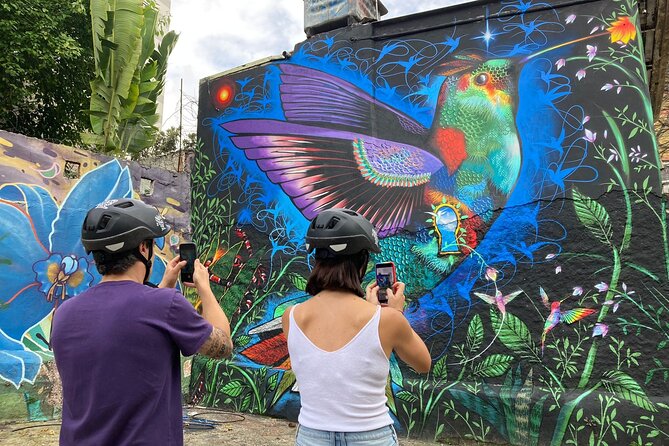
- Small group size (max 10) means more time for questions and slower looking at murals
- Minhocão Overpass segment gives you a protected, safe-feeling cruising moment under an iconic structure
- Parque Ibirapuera start is free and massive, so you get an easy win right away
- Batman Alley is quick and free—perfect if you want street art without a long wait
- Museu Afro Brasil is the one paid stop you should plan for (ticket not included)
- Carandiru ruins + Open Museum of Urban Art (MAAU) add context beyond art photos
Street Art on Two Wheels: What $85 Actually Gets You
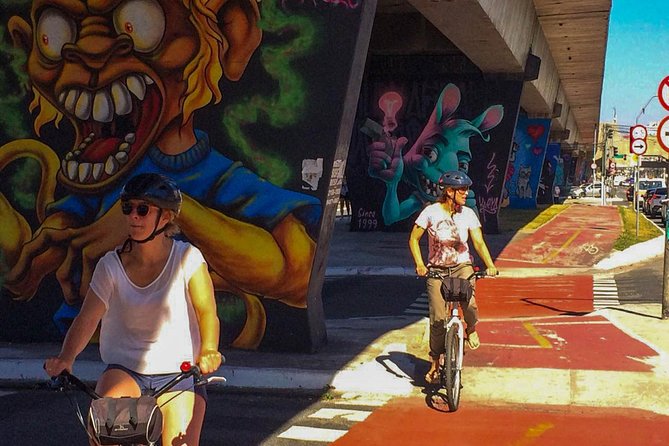
At $85 per person for about 3 hours 30 minutes, this tour is priced like an experience that does more than point out murals. You’re paying for the logistics that matter in São Paulo: a bike, helmet, a ride plan that links distinct neighborhoods, and a guide who helps you understand what you’re seeing while you’re moving.
This is the kind of tour where value comes from momentum. In a car, you’re stuck waiting at lights. On a bike, you cover ground efficiently and still get short stops to look up close. Plus, the essentials are handled for you: bottled water, a raincoat, and a coffee/tea taste plus iced tea with pão de queijo during the outing. That small food support matters in a city where a “quick bite” can become a long hunt.
If you’re thinking about skipping the tour and just riding on your own, consider what you’d otherwise miss: the way the route threads the street art world with major São Paulo landmarks and the serious history sites linked to Carandiru.
You can also read our reviews of more tours and experiences in Sao Paulo.

Start in Parque Ibirapuera: Big Park Energy, Free Admission
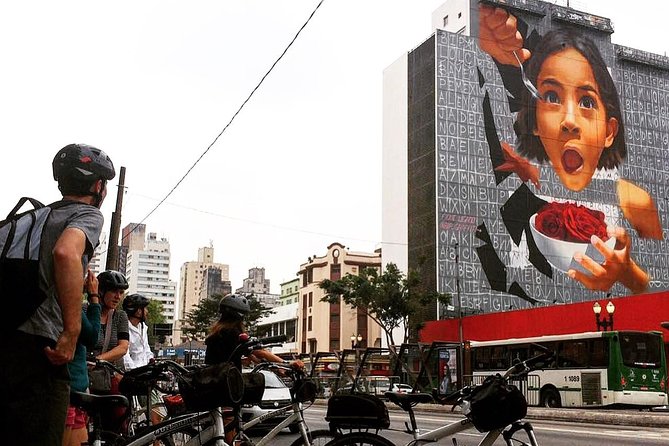
Most street-art days begin with a small alley and a big mural. This one starts in a park with serious scale: Parque Ibirapuera, inaugurated in 1954 for São Paulo’s 400th anniversary celebrations. It’s the most well-known park in town, with enormous visitor numbers—so you feel the city’s rhythm before you zoom into neighborhoods.
You’ll spend about an hour here, and the admission is free. That’s not just a nice bonus. It sets the tone: a calmer beginning where you can get oriented, take in the open space, and shake out your legs before the hills start to show up later.
If you like people-watching, you’ll get that here too. Ibirapuera draws heavy traffic during the week and peaks on weekends. Even if you only have one day, it’s a recognizable São Paulo “baseline”—the kind of place locals and visitors use to mark time in the city.
Museu Afro Brasil: Modern Museum Thinking with 6,000+ Works
After you’ve rolled through the park, the tour hits Museu Afro Brasil (Museu Afro-Brasil). This stop is different from the typical street-art add-on. It’s framed as a contemporary museum space where Black Brazilians can recognize themselves—both in the art and in the message.
The collection is huge, with more than 6,000 works spanning sculptures, documents, engravings, ceramics, paintings, contemporary art, jewelry, objects, reliefs, photographs, and textiles. It’s considered the largest Afro–American collection of its kind mentioned here, with long-term display making up over 70% of what you’ll see.
Practical note: the tour time for this stop is about 20 minutes, and admission is not included. Because it’s a major museum, a short visit can feel like a whistle-stop tour. Still, it works well in the context of a street art bike ride, since it gives you a cultural lens before you start focusing on artists, murals, and identity in public space.
Rolling Through Bohemian Streets, Bars, and Niemeyer Modernism
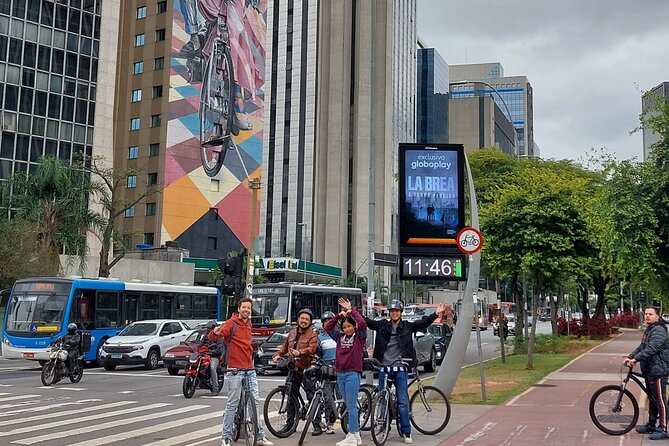
Between the major stops, the tour route moves through different faces of São Paulo. You’ll go through a bohemian neighborhood, then into areas with bars and lots of urban art. That shift matters because street art in São Paulo isn’t only about walls—it’s about where people gather, how neighborhoods evolve, and what communities choose to put on public surfaces.
The route also includes an important business center surrounded by modern buildings designed by architect Oscar Niemeyer. This contrast is a big part of the point: you’re riding through a city where contemporary identity shows up in both monumental architecture and small, quick-hit mural scenes.
You’ll feel this most if you like comparing styles. In the space of a few hours you can go from bold city-scale structure to human-scale street expressions. It’s one of those tours where the map is almost part of the story.
Cruising Under Minhocão: Safe, Scenic, and a Little Surreal
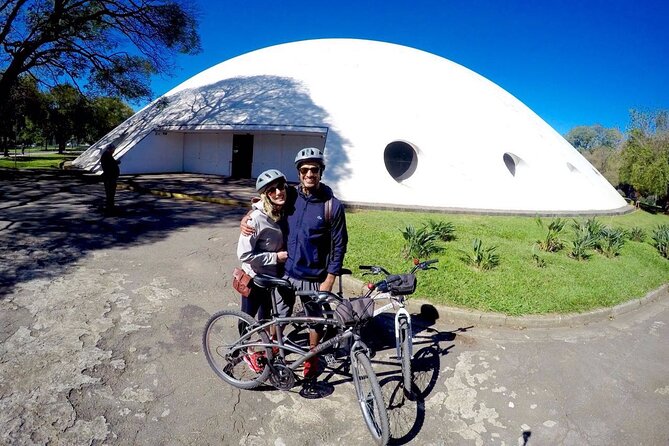
One of the highlights is cruising safely beneath the Minhocão Overpass. If you know São Paulo, you know Minhocão’s reputation as an urban machine: loud, elevated, and visually unforgettable.
On a bike tour, though, it becomes something else. You get the chance to pass through it as a viewpoint rather than an obstacle. That makes the area feel less intimidating and more like a piece of the city you’re allowed to interact with. It’s also a reminder that street art and urban culture don’t live only in pretty corners. They grow in the leftovers and in the intense, working parts of the city too.
If you’re nervous about navigating a new city traffic system, this is the type of guided route segment that helps you relax. The tour’s overall safety-focused approach shows up again later when you reach outdoor galleries where you’ll be pausing and looking upward a lot.

Batman Alley: The Outdoor Gallery Stop That Moves Fast
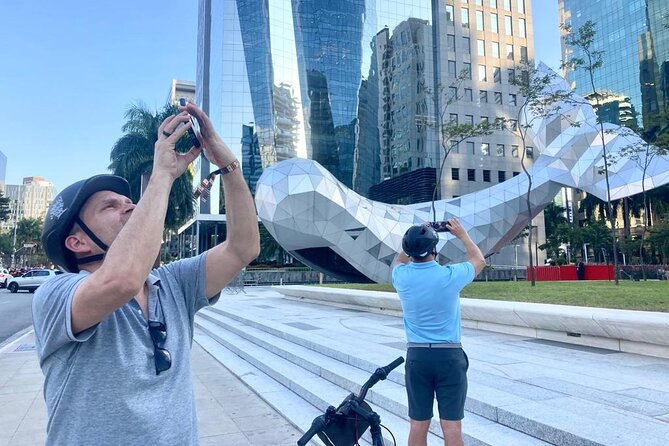
Then comes Batman Alley (Alameda Batman), one of São Paulo’s most visited street art spots. The description here is simple: it’s an outdoors urban art gallery lined with murals by notable artists from the city’s graffiti scene.
You’ll spend about 20 minutes here, and admission is free. That’s a good time window for most people. Long stops can turn into crowd-watching. Short stops can turn into speedy snapshots without really seeing anything. This lands in the middle.
What makes Batman Alley work on this tour is the bike context. You don’t just arrive, take a picture, and vanish. You’re building a mental map of what street art looks like across different neighborhood types—park edge, museum areas, commercial zones, and then this dense corridor of walls.
If you like guided storytelling, this is also where having a strong guide really helps. In past departures, guides like Arthur and Pedro were praised for explaining the background behind what you see, so the murals become more than Instagram content.
Museums on the Paulista Axis: Quick Stops with Big Names
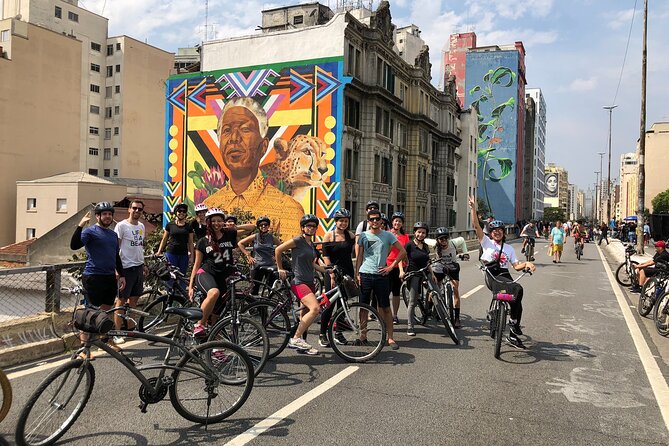
The tour also takes you through São Paulo’s iconic Avenida Paulista area—its financial and cultural heart. The avenue is lined with skyscrapers, museums, and shopping, and the energy here changes throughout the day.
What’s useful for your planning: on Sundays, Avenida Paulista opens to pedestrians, cyclists, and artists. If your schedule lines up with a Sunday ride, you may get a more street-friendly feel than you’d experience on a weekday.
During the tour, you’ll also hit several museum-oriented stops close to this cultural corridor, including Museu de Arte Moderna de São Paulo and a Museum of Contemporary Art (both listed), plus Casa das Rosas (free, with a stated 10-minute stop). You’ll also pass the Museu de arte de SP and Japan House.
Because the entry-price details aren’t listed for every museum name here, keep it practical: if you want to step inside any of these beyond the quick stop, check what’s included in the tour day and what requires a ticket. The only clearly stated free admissions are Parque Ibirapuera, Batman Alley, and Casa das Rosas, plus the tour’s built-in food support.
Even when time is short, I like how these stops give you scale. Street art is happening on the street, but art culture is also institutional nearby. Seeing both in one outing helps the city feel less random.
MAAU Open Museum and Carandiru Ruins: Art Meets Real Memory
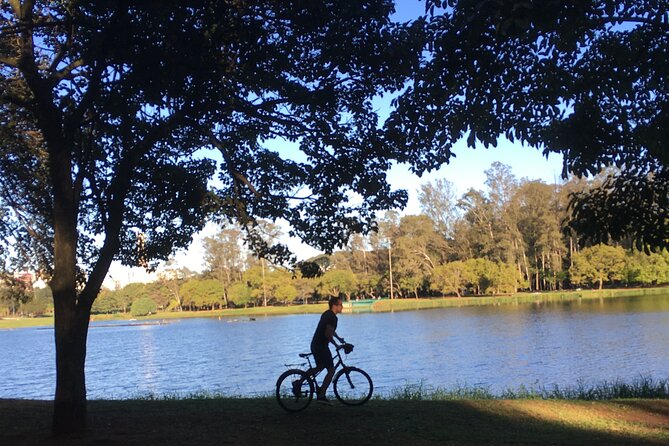
Two of the most meaningful parts of this tour come from the highlights: a visit to the Open Museum of Urban Art (MAAU) and exploring the torn-down ruins tied to Carandiru Prison.
This is where the bike ride stops being only scenic. MAAU gives you an outdoor art setting where public creativity is the main event. Carandiru, on the other hand, is a site name that signals weight. The tour specifically calls out the ruins of the infamous prison, which adds context to why street art matters in places shaped by social change.
I like tours that include both. Pure art trips can drift into decoration. Pure history trips can feel heavy and separate. This combination helps you see how people process place—through walls, through memory, and through what communities choose to transform.
The guides also play a role here. Names that have come up strongly include Roberto, Pedro, Arthur, and Lucas, with praise for staying helpful and adjusting the route based on interest. That matters most when a stop has emotional gravity, because you want the pacing to feel respectful and clear.
Meeting Point, Hills, and What to Bring
You’ll meet at R. França Pinto, 183 in Vila Mariana, São Paulo, and the tour ends back at the meeting point. There’s no hotel pickup or drop-off, so plan on getting yourself there by public transport or taxi/rideshare.
Duration is roughly 3 hours 30 minutes. The route includes hills, which shows up in guidance and feedback. The good news: some guides have been described as keeping the ride easy and making people feel safe, even with an active city route. Still, if you’re not used to cycling in hilly areas, take it seriously.
Pack common-sense items:
- Wear closed-toe shoes that won’t feel slippery if you stop frequently.
- Bring sun protection, even if you’re also getting a raincoat. Weather can change fast.
- If it’s overcast or drizzly, lean on the included raincoat instead of hoping for perfect conditions.
Also remember: this tour needs good weather. If weather causes cancellation, you’ll be offered another date or a full refund, which is a solid safety net.
Guides Make the Difference: Roberto, Pedro, Arthur, Lucas
The tour’s success often comes down to how your guide connects dots across neighborhoods. In the feedback patterns here, several guides stood out by name.
Roberto gets described as laid back and knowledgeable, with a relaxed style and extra time spent exploring the places. Arthur is praised for fun, city context, and making the day feel like a genuine hangout while still grounded in history. Pedro is credited with being extremely familiar with the city, plus choosing a route that works for the group and covering lots without feeling chaotic. Lucas is noted for being very knowledgeable about artists and the city overall, with a private-tour vibe that still feels structured.
If you can request a guide when booking, and a name like Roberto, Arthur, Pedro, or Lucas is available, it’s worth considering. Even if you don’t get your first choice, the overall tour format—small group, quick stops, and story context—supports guides who know how to pace a bike day.
Who This São Paulo Bike Tour Fits Best
This tour fits best if you want a street art experience that doesn’t stay on the surface.
Choose it if:
- You want to see multiple street art styles and key locations in one half-day.
- You like guided context, not just photo stops.
- You’re comfortable cycling in a city and can handle hills.
You might skip it if:
- You want a long museum-only day with deep time inside buildings.
- You’re looking for flat, stress-free cycling.
- You don’t want any paid admissions at the stops that require them.
Should You Book This Street Art and Park Bike Tour?
Book it if you want value that comes from movement plus meaning. The ride stitches together Parque Ibirapuera’s scale, free outdoor art corridors like Batman Alley, a major cultural museum stop at Museu Afro Brasil, and then adds heavier place context with MAAU and Carandiru ruins. That mix is hard to replicate on your own without spending time building a route and learning the story while you’re trying to ride safely.
If the hills concern you, don’t ignore it—this tour is not a stroll. But if you can pedal through a workout and you’d rather be guided than improvising streets, this is a strong choice.
FAQ
How long is the Street Art and Park Bike Tour?
It runs for about 3 hours 30 minutes.
What does the price include?
The tour includes a bicycle, helmet, bottled water, raincoat, a souvenir, and food items such as coffee/tea with iced tea and cheese bread, plus iced tea and pão de queijo for lunch during the experience.
What’s free versus ticketed?
Parque Ibirapuera and Batman Alley are listed as free. Casa das Rosas is listed as free. Museu Afro Brasil admission is not included.
Where does the tour start?
The meeting point is R. França Pinto, 183, Vila Mariana, São Paulo, SP 04016-001, Brazil. The tour ends back at the meeting point.
How big is the group?
The tour has a maximum of 10 travelers.
What happens if weather is bad?
This experience requires good weather. If it’s canceled due to poor weather, you’ll be offered a different date or a full refund.